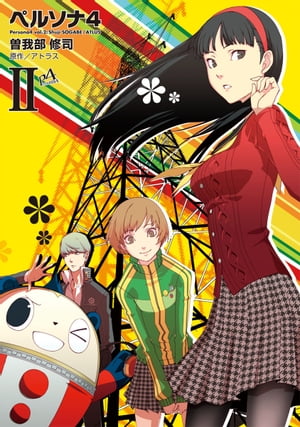
Persona 4 Review: The Game's Manga — and Why the Friendships Hit Even Harder in Print
by Shuji Sogabe
Read the first volume. If it doesn't hook you, put it down. It'll hook you.
Buy Persona 4 on Amazon →*Affiliate link — I earn a small commission at no extra cost to you.
A murder mystery set in a small Japanese town, solved by high schoolers who enter televisions to fight shadow monsters. This sounds absolutely insane. It remains one of the most emotionally resonant friendship stories I've encountered.
Quick Take
- A faithful and affectionate adaptation of Atlus's celebrated JRPG
- The Investigation Team's friendships are the heart of both the game and the manga — and Sogabe draws them beautifully
- Good entry point for non-gamers; great companion reading for fans of the game
Who Is This Manga For?
- Fans of Persona 4 (the game) who want to see the story in manga form
- Readers who want mystery, supernatural action, and genuine character friendships
- People curious about the Persona franchise who want a shorter commitment than a 100-hour JRPG
- Anyone who enjoys ensemble coming-of-age stories with darker undertones
Content Warnings & Age Rating
Age Rating: T (Teen) Content Warnings: Violence, psychological horror elements, murder mystery content, mild fan service in some volumes
The horror elements are present but not extreme.
Yu's Rating
| Category | Score |
|---|---|
| Story Depth | ★★★★☆ |
| Art Style | ★★★★☆ |
| Character Development | ★★★★☆ |
| Accessibility for Non-Japanese Readers | ★★★★☆ |
| Reread Value | ★★★★☆ |
Story Overview
Yuu Narukami (the game's protagonist) moves to the rural town of Inaba for a year while his parents work abroad. Inaba is quiet, provincial, and boring — until a serial murder case begins. The bodies are found dangling from antenna towers, and the town is frightened.
Yuu and his new friends discover the Midnight Channel: if you stare at a turned-off TV screen on a rainy night, you'll see someone in it. That person then appears dead the following day. The connection becomes clear. People are being thrown into a television world — and something in that world is killing them.
The students — Yuu, Yosuke, Chie, Yukiko, Kanji, Rise, Naoto, and Teddie — discover they can enter the TV world and fight. Each of them develops a Persona: a manifestation of their inner self, summoned through confronting their shadow — the part of themselves they've denied.
The game is famous for its "shadow confrontations" — moments where characters face the aspects of themselves they refuse to admit. Sogabe adapts these with care. Kanji's shadow confrontation (his fear about his own sexuality and masculinity) is handled with more directness than you might expect from a T-rated manga.
The mystery — who is throwing people into the TV world and why — is genuinely well-constructed and satisfying.
Characters
Yuu Narukami — The silent protagonist of the game becomes slightly more characterized in the manga. He's still defined primarily by competence and kindness, but Sogabe gives him moments of genuine personality.
Yosuke Hanamura — The most emotionally complicated of the core group. His arc about guilt, isolation, and the gap between who he wants to be and who he is makes him memorable.
Naoto Shirogane — The detective character who joins mid-series. Her shadow confrontation is one of the manga's best chapters.
Teddie — Comic relief who turns out to have the most existentially terrifying arc of anyone in the cast.
Art Style
Sogabe's work is clean and competent — the character designs are faithful to Shigenori Soejima's original designs, and the action sequences in the TV world are dynamic without being confusing. The shadow versions of the characters are properly unsettling. The mundane Inaba scenes are drawn with a warmth that makes them feel genuinely different from the supernatural sections.
Cultural Context
Persona 4 is set in what the game calls Inaba, a small Japanese rural town facing the specific anxieties of regional decline: young people leaving, traditional industries dying, the sense that the rural world is being left behind by urban Japan. This context makes the murder mystery more resonant — small towns have fewer places to hide, and the fear is more intimate.
The shadow confrontations are based on Jungian psychology — the idea of the "shadow self," the aspects of personality we repress because they don't fit our self-image. This framework is explained within the story but also just works emotionally: everyone has things about themselves they don't want to look at.
What I Love About It
I played the game for 90 hours and still found the manga worth reading, which tells you something.
What Sogabe does is compress the game's social link system — the relationships Yuu develops over a year — into something that feels natural rather than mechanical. In the game, you choose who to spend time with. In the manga, the friendships develop organically, and somehow they feel more inevitable.
The scene where the whole Investigation Team makes curry together — just cooking dinner, arguing about the recipe, being bad at it together — made me genuinely happy to read. These kids feel like a real group of friends by the end, not just a battle party.
What English-Speaking Fans Say
Warmly received among Persona fans. The consensus is that it's a good adaptation that captures what fans love about the game, with the caveat that the game has more character depth through its 80-100 hour runtime. Non-game readers tend to find the mystery and characters strong enough to stand alone.
The anime adaptation (Persona 4: The Animation) covers similar ground; most fans have a preference between the two.
Memorable Scene ⚠️ Spoiler Warning
Teddie's revelation — the moment he discovers the truth about what he is and why he exists — and the way the story handles his subsequent crisis of identity, asking whether he has a "real self" to even have a shadow, is the moment the manga earns its emotional investment. An existential crisis given to a cartoon mascot character. Somehow it works completely.
Similar Manga
| Title | Its Approach | How Persona 4 Differs |
|---|---|---|
| Persona 3 manga | Similar supernatural mystery structure | Persona 4 is warmer and more focused on friendship than tragedy |
| Danganronpa | Mystery, murder, students trapped together | Persona 4 is less nihilistic; friendship and growth are possible outcomes |
| Kekkaishi | Supernatural battles with a school setting | Persona 4 is more psychological and less action-focused |
Reading Order / Where to Start
Volume 1 straight through. The game is not required, but if you've played it, the manga adds a new angle.
Official English Translation Status
Udon Entertainment published all 10 volumes in English. Complete and available.
Pros & Cons
Pros
- Faithful to the game's emotional core and character dynamics
- The shadow confrontations are well-adapted
- Accessible to non-game readers
- The friendship dynamics feel genuine
Cons
- Can't replicate the game's 100-hour character development in 10 volumes
- The mystery resolution may feel rushed compared to the game's pacing
- Some game content is trimmed — social links are compressed
- The TV world action sequences are exciting but not as dynamic as the game's battles
- Yuu remains a somewhat passive protagonist
Is Persona 4 Worth Reading?
Yes — for game fans and curious newcomers alike. The manga captures the warmth and the mystery and the specific sadness of Persona 4 in a format that can be enjoyed in a weekend rather than a month.
Format Comparison
| Format | Pros | Cons |
|---|---|---|
| Physical | Character art looks excellent in print | 10 volumes — moderate commitment |
| Digital | Easier to access | — |
| Omnibus | No omnibus available | — |
Where to Buy
Read the first volume. If it doesn't hook you, put it down. It'll hook you.
This post contains affiliate links. If you purchase through these links, I may earn a small commission at no extra cost to you. As an Amazon Associate, I earn from qualifying purchases.
*Affiliate link — I earn a small commission at no extra cost to you.
More Manga You Might Like

Action
Legal Drug
Yu's review of Legal Drug — Kazahaya Kudo and Rikuo Himura work at the Green Drugstore and occasionally take on unusual jobs for the owner that involve their supernatural abilities; CLAMP's supernatural mystery series with boys' love subtext and the first three volumes of a story continued in Drug & Drop.
Action / Comedy
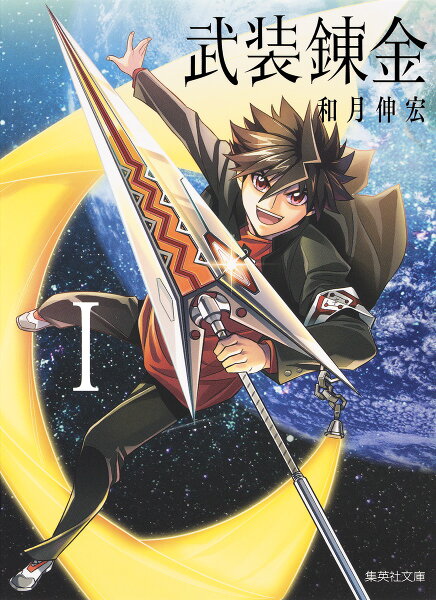
Busou Renkin
Yu's review of Busou Renkin — a boy is killed by a homunculus and revived by an alchemist warrior using a kakugane medallion; he joins the fight against the creatures threatening humanity.
Action / Supernatural
Hands Off!
A review of Hands Off! — Kasane Ichikawa's eight-volume supernatural shojo about a boy who sees visions and memories when he touches people, and the cousin who tries to protect him from the world — and vice versa.
Action / Supernatural
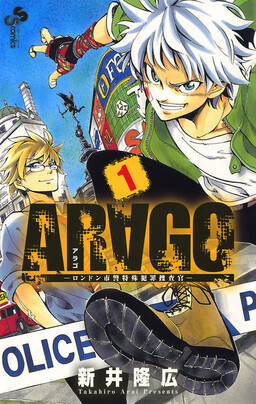
Arago
Yu's review of Arago — Takahiro Arai's 9-volume Shonen Sunday series about Arago Hunt, a London man who loses his twin brother Ewan to the body-harvesting killer Patchman, inherits his brother's arm and the decaying Brionac power, and joins the Metropolitan Police to hunt the supernatural Four Horsemen.

Comedy / Supernatural
The Disastrous Life of Saiki K.
A review of The Disastrous Life of Saiki K., the comedy manga about a supremely powerful psychic who wants nothing more than to be left alone.
Action / Adventure
Zatch Bell!
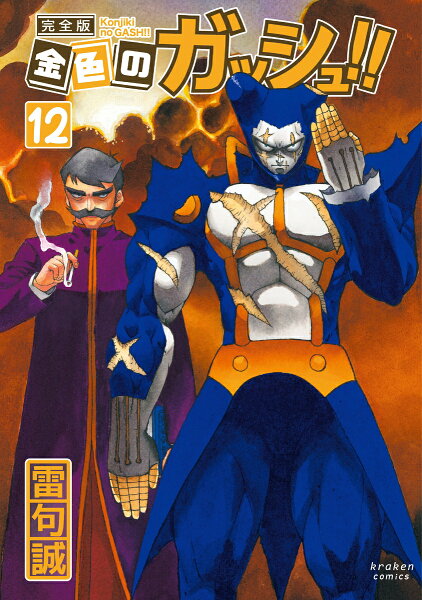
A review of Zatch Bell! — 33 volumes in Weekly Shonen Sunday. Genius middle schooler Kiyo Takamine partners with demon child Zatch Bell in a battle royale of 100 demon/human pairs competing to become King of the Mamodo World; Zatch wants to be a kind king. The manga that made an entire generation cry about a book burning. VIZ Media's English edition is complete.
Written by
Yu
Manga Enthusiast from Japan
I grew up in Japan and manga literally saved me during a tough time in elementary school. My English isn't perfect, but my love for manga is real — and I want to share it with you.
Disclosure: This post contains affiliate links. As an Amazon Associate, I earn from qualifying purchases at no extra cost to you.