
Otoko Ippiki Gaki Daisho Review: The Delinquent Who Conquered Japan One Town at a Time
by Hiroshi Motomiya
Read the first volume. If it doesn't hook you, put it down. It'll hook you.
Buy Otoko Ippiki Gaki Daisho on Amazon →*Affiliate link — I earn a small commission at no extra cost to you.
What if one person's ambition was so large that the country itself wasn't big enough to contain it?
Quick Take
- Hiroshi Motomiya's foundational delinquent manga — the work that established the template for the "conquer Japan" school of action
- Tora Otori pursues nationwide domination through loyalty, combat, and an unshakeable belief that strength and honor are the same thing
- Hugely influential on every delinquent manga that followed — 26 volumes of the original formula at its purest
Who Is This Manga For?
- Readers of Motomiya's other work (Ore no Sora, Salaryman Kintaro) who want the origin of his protagonist style
- Fans of delinquent manga who want the genre's defining early text
- Readers interested in how Shonen Jump's action identity was built in its first decade
- Anyone who wants to understand where "earn respect through fighting" manga came from
Content Warnings & Age Rating
Age Rating: T (Teen) Content Warnings: Action violence throughout. Delinquent themes of territory and hierarchy. Strong themes of loyalty and brotherhood. Appropriate for the rating.
Suitable for teen readers.
Yu's Rating
| Category | Score |
|---|---|
| Story Depth | ★★★★☆ |
| Art Style | ★★★★☆ |
| Character Development | ★★★★☆ |
| Accessibility for Non-Japanese Readers | ★★★☆☆ |
| Reread Value | ★★★★☆ |
Story Overview
Tora Otori is not a conventional delinquent protagonist. He doesn't just want to be the toughest kid in his immediate environment — he wants to be the acknowledged leader of every delinquent in Japan. This ambition drives him across the country, into conflicts with regional bosses and local powers, turning enemies into followers through a combination of combat ability and a quality that Motomiya depicts consistently: a form of charisma that makes people want to follow him.
The series follows this expansion — town by town, region by region — as Tora builds a national network of loyalty. The conflicts are not simply fights but negotiations about what delinquency is for, who deserves to lead, and what the relationship between strength and honor actually is.
Motomiya uses the delinquent genre to explore questions about leadership and community that the genre's surface suggests but rarely follows through on. Tora's goal is absurd — nobody conquers Japan like this — but Motomiya treats it with sufficient seriousness that the absurdity doesn't undermine the drama.
Characters
Tora Otori: The protagonist whose central quality is that he means everything he says. He is not strategic or calculating — he simply acts according to his beliefs and expects the world to respond to that. It usually does.
The regional bosses: Each area Tora enters has its own figure of power, each with a different conception of what strength means. These encounters are the series' most interesting moments — the clashes of different philosophies, not just different physical powers.
Art Style
Motomiya's art has the directness of early Jump action — clean, expressive, focused on characters and their emotional states. Action sequences are clear and readable; the faces carry weight that communicates what words don't need to say.
Cultural Context
Otoko Ippiki Gaki Daisho ran in Weekly Shonen Jump from 1968 to 1973, making it one of the earliest major Jump series. It helped define what Jump's action identity would be — protagonists driven by personal codes rather than institutional loyalty, strength understood as a form of character rather than mere ability.
The "conquer Japan" structure it established became a template repeated for decades.
What I Love About It
I love that the followers choose to follow.
Most delinquent manga has the boss maintaining power through fear or force. Tora's followers choose him because they believe in him — because he has shown them something they hadn't seen before. This makes the hierarchy not a structure of oppression but a structure of recognition. The people following Tora are not coerced; they are convinced. That's a more interesting and more honest account of why people follow leaders.
What English-Speaking Fans Say
Not known in English-speaking markets. Among scholars of manga history and readers of classic Jump, Otoko Ippiki Gaki Daisho is recognized as foundational — the text that established the delinquent protagonist as a vehicle for exploring honor, loyalty, and leadership.
Memorable Scene ⚠️ Spoiler Warning
A confrontation with a regional boss who has built his reputation on pure intimidation — and Tora's response, which is not to fight but to ask what the intimidation is for, what it's protecting, what it means to be the strongest person in a place and have nobody willingly follow you. The question unsettles the opponent more than any fight could.
Similar Manga
| Title | Its Approach | How Otoko Ippiki Gaki Daisho Differs |
|---|---|---|
| Rokudenashi Blues | School-based delinquent hierarchy | National ambition beyond any single territory |
| Crows | Regional delinquent power structure | Philosophical exploration of what power is for |
| Ore no Sora (Motomiya) | Corporate world "conquer" structure | Same protagonist energy, different setting |
Reading Order / Where to Start
Volume 1. The journey builds sequentially.
Official English Translation Status
Otoko Ippiki Gaki Daisho has no official English translation.
Pros & Cons
Pros
- Foundational text of the delinquent genre
- Tora is one of the most charismatic protagonists of the era
- The philosophical depth beneath the action is genuine
- Complete at 26 volumes
Cons
- No English translation
- Early Jump art style may feel rough compared to later works
- The "conquer Japan" premise requires some patience with its own logic
- The 1960s-70s delinquent context may feel distant to modern readers
Is Otoko Ippiki Gaki Daisho Worth Reading?
For anyone interested in how Japanese manga developed its action DNA, yes — this is as close to a founding document as the delinquent genre has. For readers wanting polished modern action, the vintage feel may be an obstacle. But as history and as story, it holds up.
Format Comparison
| Format | Notes |
|---|---|
| Physical | Japanese editions available |
| Digital | Available in Japanese |
| Omnibus | Collected editions available |
Where to Buy
No English release yet. That just means you find it before everyone else does.
*Affiliate link — I earn a small commission at no extra cost to you.
More Manga You Might Like
Action
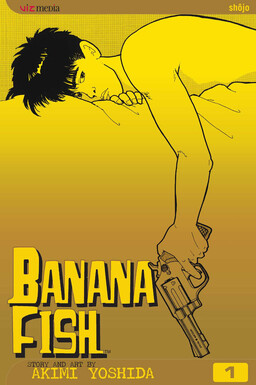
Banana Fish
Yu's review of Banana Fish — Ash Lynx is a seventeen-year-old gang boss in 1980s New York whose life collides with Eiji Okumura, a gentle Japanese photographer's assistant, when a dying man whispers the words 'Banana Fish.' Akimi Yoshida's 19-volume crime epic about a mind-control drug, the men who own the streets, and the one connection that almost saved a boy built only to kill.
Action / Drama
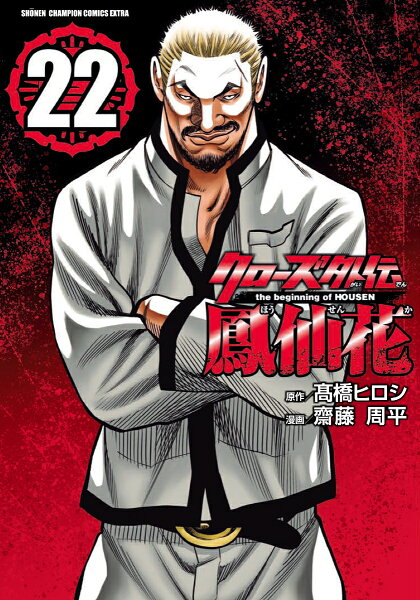
Crows
A review of Hiroshi Takahashi's Crows (クローズ) — 26 volumes in Bessatsu Shōnen Champion from 1990 to 1998. Harumichi Bouya arrives at Suzuran All-Boys High looking for a real fight and finds the most dangerous school in Japan.
Action / Comedy
Kyo Kara Ore Wa!!
Kyo Kara Ore Wa!! follows two completely ordinary high school students who, upon transferring to a new school, independently decide to reinvent themselves as the toughest delinquents around — and discover they are both surprisingly and absurdly effective at this.
Action / Comedy
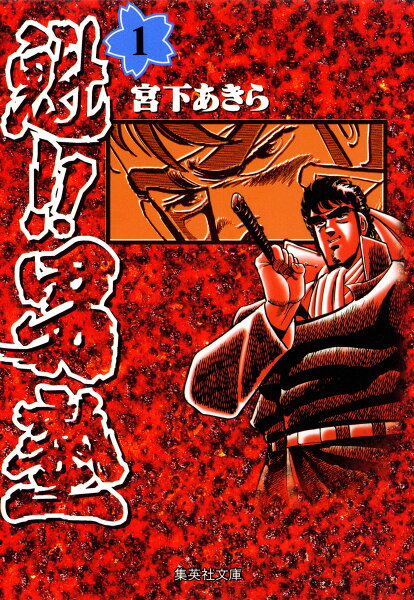
Sakigake!! Otokojuku
Otokojuku is a private school for delinquents where the curriculum consists entirely of brutal martial arts trials designed to forge men of iron will — and the manga is the story of Momotaro Tsurugi, who survives every trial while everyone else fails.
Action / Comedy
Chameleon
Chameleon follows Kazuki Edajima, an ordinary young man who wants to be a tough delinquent and keeps faking it until the situations he's created demand actual toughness — a comedy about the gap between the identity someone performs and the person they actually are.
Action / Drama
Bukko no Taku
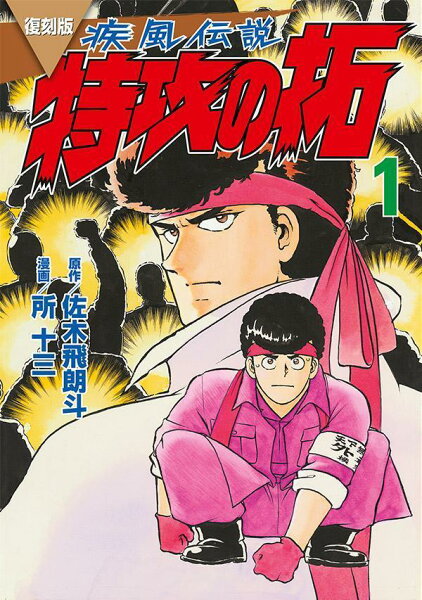
Bukko no Taku follows Takuya Asama, a high school transfer student drawn into the bosozoku (motorcycle gang) world of late-1980s Japan — a 27-volume Magazine classic that captured the bosozoku subculture during its actual cultural moment.
Written by
Yu
Manga Enthusiast from Japan
I grew up in Japan and manga literally saved me during a tough time in elementary school. My English isn't perfect, but my love for manga is real — and I want to share it with you.