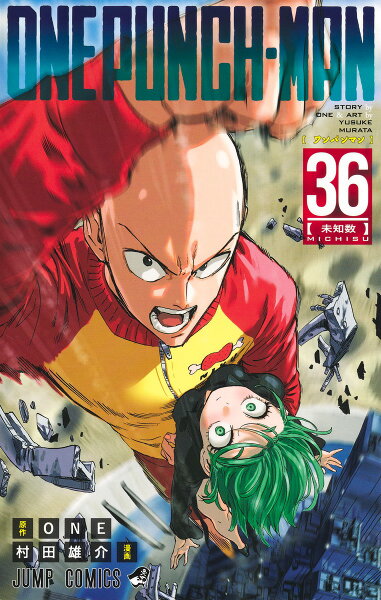
One Punch Man Review: What Happens When You're Too Strong to Enjoy Winning
by ONE (story) / Yusuke Murata (art)
Read the first volume. If it doesn't hook you, put it down. It'll hook you.
Buy One Punch Man on Amazon →*Affiliate link — I earn a small commission at no extra cost to you.
Quick Take
- The most visually spectacular action manga ever published — Murata's art is a once-in-a-generation achievement
- The premise is the joke: the strongest hero is also the most bored
- Surprisingly thoughtful about what it means to pursue strength, and what you lose when you achieve it completely
Who Is This Manga For?
One Punch Man is for you if:
- You want the most jaw-dropping action art in manga — nothing else looks like this
- You love deconstructive humor that takes its premise seriously
- You want a superhero story that asks real questions through comedy
- You want something ongoing with a large cast and escalating stakes
Content Warnings & Age Rating
Age Rating: T (Teen) Content Warnings: Action violence that is extremely intense visually (even when comedic); monster designs that are occasionally disturbing; dark humor involving death and destruction; existential themes around meaninglessness and boredom
The violence is more spectacular than graphic. The horror elements are in monster design rather than content.
Yu's Rating
| Category | Score |
|---|---|
| Story Depth | ★★★★☆ |
| Art Style | ★★★★★ |
| Character Development | ★★★★☆ |
| Accessibility for Non-Japanese Readers | ★★★★★ |
| Reread Value | ★★★★★ |
Story Overview
Saitama trained for three years. He did push-ups, sit-ups, squats, and runs, every day, until he was strong enough to defeat any enemy with a single punch.
This has made him miserable.
When you can end every fight in one punch, the excitement of combat disappears. Monsters that would terrify any ordinary person are, to Saitama, just mild interruptions. He cannot feel the thrill of a close fight. He has achieved everything a hero dreams of and gotten nothing from it except a bald head and a permanent sense of anticlimax.
This is One Punch Man's central joke, and it is an excellent one. But it is also One Punch Man's central question: What is the point of strength if strength removes all challenge? What does a person oriented entirely around becoming stronger do when they have run out of things to beat?
The manga doesn't answer this directly. Instead, it surrounds Saitama with characters for whom the answer is obvious — Genos, who wants to be strong enough to protect people; Garou, who wants to find the limits of his own ability — and lets the contrast ask the question.
Characters
Saitama — The most powerful person in the world and one of the most relatable characters in manga. His boredom is genuine, his complaints are mundane (grocery sales, video games), and his fundamental decency — he became a hero "for fun" but keeps acting heroically — is the series' moral center.
Genos — The cyborg disciple who idolizes Saitama despite having no idea what Saitama's power actually is. His earnestness is the comedy counterpoint to Saitama's indifference.
Garou — The Hero Hunter, who has declared war on heroes and considers himself a monster. His arc — the most complete in the series — is a genuine exploration of what it means to seek power without a goal beyond strength itself.
Bang (Silver Fang) — The S-class martial artist who represents the ideal Saitama might have been: someone who achieved extraordinary power and found a purpose worthy of it.
Art Style
Yusuke Murata is the greatest action manga artist working today, and One Punch Man is his masterpiece.
Every spread is a painting. The monster designs are lavishly detailed. The fight sequences achieve a level of kinetic energy and spatial clarity that has no parallel in the medium. Individual panels from One Punch Man have been mistaken for professional illustrations or painted artwork.
The original web comic by ONE — which the manga adapts — has deliberately crude art. Murata's task is to take that crude art and make it the most beautiful thing it can possibly be. He succeeds beyond any reasonable expectation.
Reading One Punch Man and stopping to look at individual panels is a legitimate experience. The art rewards that kind of attention.
Cultural Context
The superhero genre — One Punch Man is partly a commentary on superhero fiction — the notion that heroes exist on a ranked hierarchy, that power is the primary measure of worth, that the strongest being is automatically the most important. The Hero Association and its ranking system satirize this directly.
The concept of ikigai — Ikigai (生き甲斐) is a Japanese concept meaning "reason for being" — the thing that makes getting up in the morning worthwhile. Saitama has lost his ikigai. His search for meaning — disguised as a search for a worthy opponent — is the series' deepest thread.
Garou and the "monster" — Garou's decision to become a monster, and what that reveals about the difference between heroes and villains, draws on Japanese philosophical traditions around self-transformation and the social construction of good and evil.
What I Love About It
There is a panel in One Punch Man — I won't tell you which one, because finding it is part of the experience — where Saitama, in the middle of the series' most catastrophic battle, pauses.
Not because he is afraid. Not because the enemy has surpassed him. But because something about the moment has made him feel, briefly, the way he used to feel when fighting was still exciting.
The panel that follows is one of the most beautiful in manga. It lasts one page and then it's over and Saitama wins in one punch and the moment disappears.
That is One Punch Man. The most powerful hero in the world, catching the briefest glimpse of what he had before he became invincible.
What English-Speaking Fans Say
One Punch Man has one of the largest and most passionate Western fanbases in current manga. The split between ONE's original web comic and Murata's manga adaptation is a regular discussion topic — both have devoted readers.
Common praise: Murata's art is universally acknowledged as extraordinary. Garou's arc is considered one of the best in modern manga. The comedy is accessible to readers who don't usually follow action manga.
Common complaint: The publication schedule is slow due to Murata's detail level. Some readers want more Saitama focus in arcs that spend significant time on other characters.
Memorable Scene ⚠️ Spoiler Warning
Saitama vs. Boros.
Boros is the first enemy in the series who can actually survive more than one punch. The fight is One Punch Man's most kinetic sequence, a showcase for everything Murata can do. And at the end — when Boros realizes he has finally, after a lifetime of searching the universe, found someone worth fighting — Saitama admits something.
He was holding back. He always holds back.
The expression on Boros's face at that moment is the series' first genuine tragedy.
Similar Manga
If you liked One Punch Man, try:
- Mob Psycho 100 — Same creator (ONE), different tone, similar questions about power
- My Hero Academia — More serious superhero manga, similar scope
- Dragon Ball — The template One Punch Man deconstructs
- Dungeon Meshi — Different genre, same quality of using genre conventions to ask real questions
Reading Order / Where to Start
Start from Volume 1. The premise is established in chapter one and never gets old.
Official English Translation Status
Status: Ongoing English Volumes: 29+ Translator: VIZ Media Translation Quality: Excellent
Pros & Cons
Pros
- Murata's art is the most visually spectacular in manga — genuinely one of a kind
- Garou's arc is a complete, moving story inside the larger series
- The comedy works both as parody and as standalone humor
- Saitama's existential boredom is strangely relatable
Cons
- Publication pace is slow — volumes can take many months
- Some arcs focus heavily on supporting characters at Saitama's expense
- The ongoing nature means no ending is in sight
Format Comparison
| Format | Volumes | Price per vol. (approx.) | Best for |
|---|---|---|---|
| Paperback (individual) | 29+ vols | ~$10–12 | Collecting |
| Kindle | 29+ vols | ~$7–9 | Ongoing reading |
Where to Buy
Read the first volume. If it doesn't hook you, put it down. It'll hook you.
This post contains affiliate links. If you purchase through these links, I may earn a small commission at no extra cost to you. As an Amazon Associate, I earn from qualifying purchases.
*Affiliate link — I earn a small commission at no extra cost to you.
More Manga You Might Like
Action / Comedy
Gintama
A review of Gintama — 77 volumes in Weekly Shonen Jump. Gintoki Sakata runs an odd-jobs business in an alternate Edo Japan where aliens conquered the country and samurai are forbidden to carry swords. The funniest manga ever made, hiding some of the most devastating serious arcs in the genre. VIZ Media's English edition is complete.
Action / Supernatural
Dandadan
Yu's review of Dandadan — Momo believes in ghosts, Ken believes in aliens, and they make a deal to test each other's beliefs; both get immediately proven wrong and right simultaneously, and a bizarre supernatural romance begins.
Action / Comedy
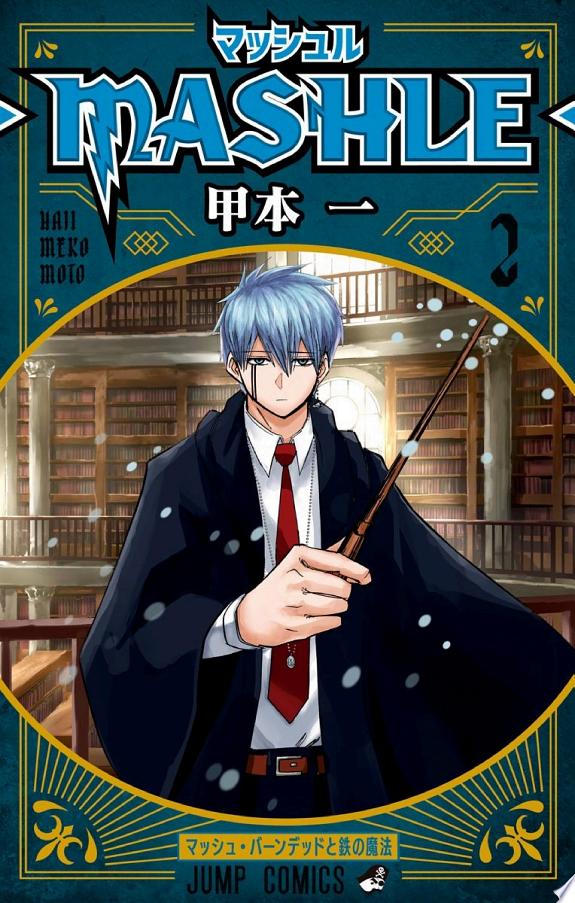
Mashle: Magic and Muscles
Yu's review of Mashle: Magic and Muscles — in a world where magic determines social status, Mash Burnedead has no magic at all; he compensates entirely through physical strength so absurd it defeats every magical opponent he encounters.
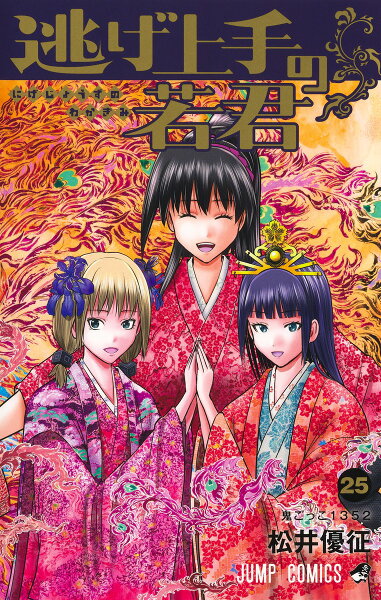
Action / Historical
The Elusive Samurai
A review of The Elusive Samurai by Yusei Matsui, following a young noble who survives the fall of the Kamakura shogunate through unmatched evasion skills.
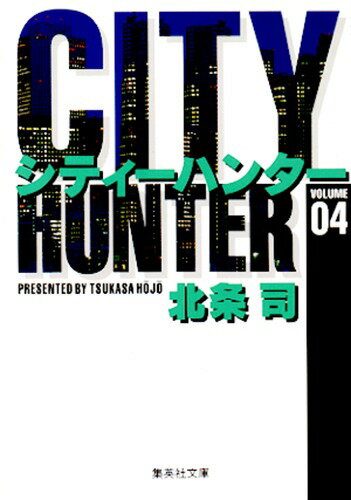
Action / Comedy
City Hunter
A sweeper for hire in Shinjuku cleans up the city's worst criminals while hiding a heart softer than anyone suspects — City Hunter is the definitive action-romance manga.
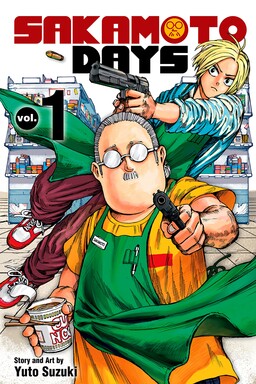
Action / Comedy
Sakamoto Days
Yu's review of Sakamoto Days — Taro Sakamoto was the most feared hitman in the world; he retired when he fell in love, married, and opened a convenience store; now overweight, domestically happy, and out of practice, he must repeatedly deal with the assassin world that cannot accept his retirement; an action comedy about a legendary fighter who would rather stock shelves.
Written by
Yu
Manga Enthusiast from Japan
I grew up in Japan and manga literally saved me during a tough time in elementary school. My English isn't perfect, but my love for manga is real — and I want to share it with you.
Disclosure: This post contains affiliate links. As an Amazon Associate, I earn from qualifying purchases at no extra cost to you.