One Piece Review: The Biggest Adventure in Manga History
by Eiichiro Oda
Read the first volume. If it doesn't hook you, put it down. It'll hook you.
Buy One Piece on Amazon →*Affiliate link — I earn a small commission at no extra cost to you.
Quick Take
- 111+ volumes and still going — the longest-running shonen manga of all time, and somehow still worth reading
- At its core, a story about freedom: the freedom to be yourself, to choose your own crew, to chase your own dream
- If you commit to this series, it will become a part of you
Who Is This Manga For?
One Piece is for you if:
- You love enormous, sprawling adventure stories with a huge cast of unforgettable characters
- You want a manga that makes you laugh one chapter and cry the next
- You believe in the idea that friendship isn't weakness — it's the most powerful thing in the world
- You're willing to invest in a long series and trust that the payoffs are real
Content Warnings & Age Rating
Age Rating: T (Teen) Content Warnings: Violence (pirate battles, some blood), themes of death and loss, darker themes increase in later arcs
One Piece starts lighter and more comedic than most shonen manga. The tone gets heavier in the later arcs — particularly around the Marineford arc — where death and tragedy are handled with real weight. Still appropriate for teens, but parents of younger readers should be aware the series matures alongside its characters.
Yu's Rating
| Category | Score |
|---|---|
| Story Depth | ★★★★★ |
| Art Style | ★★★★★ |
| Character Development | ★★★★★ |
| Accessibility for Non-Japanese Readers | ★★★★☆ |
| Reread Value | ★★★★★ |
Story Overview
Monkey D. Luffy wants to be King of the Pirates. Not for treasure. Not for power. He wants to be the freest person on the sea.
As a boy, Luffy accidentally ate a Devil Fruit that turned his body into rubber — and took away his ability to swim. Terrible trade for someone who wants to sail the world. But Luffy has a way of making everything work through sheer force of personality.
The story follows Luffy as he assembles a crew — the Straw Hat Pirates — and sails the Grand Line in search of the legendary treasure called the One Piece, left behind by the former Pirate King Gold Roger. Each island brings a new adventure. Each adventure brings new allies, new enemies, and new layers of a world that turns out to be far more complicated than it first appears.
What starts as a fun pirate adventure slowly reveals itself to be something much deeper: a story about a world run by corrupt power, about people who have had their freedom taken from them, and about one crew that refuses to leave anyone behind.
Characters
Monkey D. Luffy — Probably the most charismatic protagonist in manga. He's not the smartest or the strongest at the start, but he has this quality that makes people follow him without quite understanding why. He never explains himself. He just acts — and it's always, somehow, exactly right.
Roronoa Zoro — The crew's swordsman and the first to join. Three swords, one dream: to become the world's greatest swordsman. Loyal to Luffy in a way that never needs to be stated. His fight scenes are some of the best in manga.
Nami — The navigator, and one of the series' most important characters. Her backstory, told in the Arlong Park arc, is one of the most emotionally devastating things in the early series. She's also the one keeping the whole crew alive with actual competence.
Sanji — The cook. Stylish, powerful, complicated. His arc in the Whole Cake Island arc is one of the series' most emotionally complex storylines.
Nico Robin — The archaeologist who joins the crew carrying a devastating secret. Her story in the Enies Lobby arc — where she finally says she wants to live — might be the single most emotional moment in the series.
Usopp — The sniper and the "normal" one of the crew. Often comedic, but when he gets his moments, they hit harder than almost anyone else's.
Art Style
Oda's art is unlike anything else in manga. It's dense, chaotic, and somehow perfectly readable. His character designs are wildly varied — every character has a completely unique silhouette. No two people look alike.
As the series progresses, the art becomes increasingly detailed and ambitious. Full-page spreads in later arcs are genuinely stunning. Oda draws crowd scenes with dozens of individual characters, each with their own expression and story.
The one criticism is that the art can be visually overwhelming in later volumes — too much happening in a single panel. But even that feels intentional. The world of One Piece is enormous, and the art reflects it.
Cultural Context
The concept of "nakama" is central to One Piece. The Japanese word is usually translated as "friends" or "crewmates," but it carries deeper meaning — people you've chosen as your family, people you'd risk everything for. The Straw Hats aren't just friends. They're nakama.
Pirates in Japanese culture carry a different image than in Western media. In One Piece, pirates represent freedom from authority and self-determination — the ability to write your own story. The Marines, by contrast, often represent institutional power that serves the powerful at the expense of the weak.
The World Government as a corrupt institution is a recurring theme. For Japanese readers, this resonates with historical and cultural anxieties about power and authority that give the story an extra layer beyond simple adventure.
What I Love About It
I remember the first time I read the Arlong Park arc. I was in junior high. Nami's backstory — growing up under the rule of a monster who made her do terrible things just to protect the people she loved — hit me in a way I didn't expect.
And then Luffy puts his hat on her head. He doesn't make a speech. He doesn't explain himself. He just puts his hat on her head and says "call for help." That's it.
I think about that scene constantly. Because it captures something I've spent a long time trying to understand — what real support looks like. It's not solving someone's problem for them. It's telling them: you don't have to do this alone anymore.
One Piece has done that for me again and again over 25 years of publication. The Enies Lobby arc. Robin's "I want to live." Marineford. Ace. I have cried reading this manga more times than I want to admit.
What English-Speaking Fans Say
Western One Piece fandom is massive and passionate. The series has a reputation for slow-burning payoffs — setups planted dozens of volumes earlier that pay off in ways no reader saw coming.
Common criticism: the early arcs (volumes 1–12, East Blue Saga) are fun but feel simpler compared to what the series becomes. Many fans recommend pushing through to the Alabasta arc (volumes 13–23) where the series starts revealing its real ambitions.
The Marineford arc (volumes 56–61) is frequently cited as one of the greatest manga arcs ever written. Enies Lobby (volumes 39–45) is considered the emotional peak of the series by many.
r/OnePiece is one of the largest manga communities on Reddit and is deeply devoted to theory-crafting and lore discussion — which tells you something about how layered the storytelling is.
Memorable Scene ⚠️ Spoiler Warning
The death of Portgas D. Ace at Marineford.
Ace is Luffy's adoptive brother. The Marineford arc is literally a war that Luffy causes by trying to save him. Thousands of people fight. And after all of it — after Luffy has pushed himself beyond every limit — Ace still dies.
It's brutal in a way that feels honest. The world of One Piece is not safe. Good intentions don't guarantee happy endings. And watching Luffy completely break down, screaming in a way we've never heard from him, changes the series permanently.
Nothing is the same after Marineford. And that's exactly right.
Similar Manga
If you liked One Piece, try:
- Naruto — The other pillar of the shonen era, similar themes of found family and never giving up
- Fairy Tail — Lighter tone, clearly inspired by One Piece, great for fans who want more of the same warmth
- Black Clover — More recent, similar underdog-to-legend structure
- Vinland Saga — Also about Vikings / warriors at sea, much darker and more literary
Reading Order / Where to Start
Start from Volume 1. One Piece is a series where everything connects — skipping ahead will cost you emotional payoffs you haven't earned yet.
If you want a taste before committing:
- Volumes 1–7 (East Blue Saga, Part 1) — establishes the world and core characters
- Volumes 8–12 (Arlong Park arc) — where the series shows its emotional range for the first time
If you reach Volume 12 and still don't care, One Piece probably isn't for you. Most people are locked in by then.
Warning: this is an ongoing series at 111+ volumes. Clear your schedule.
Official English Translation Status
Status: Ongoing English Volumes: 111 (simultaneous release with Japan) Translator: VIZ Media Translation Quality: Excellent — VIZ has kept pace with Japan and the translation is consistently strong
New volumes are released in English very close to the Japanese release dates. You won't be waiting long for new content.
Pros & Cons
Pros
- The greatest cast of characters in shonen manga — every Straw Hat is essential
- World-building that rewards long-term readers with decades-deep payoffs
- Consistent quality over 25+ years of publication
- Simultaneous English release keeps you up to date
Cons
- 111+ volumes is an enormous commitment — not a casual read
- Early volumes (1–12) are lighter in tone and may not hook everyone immediately
- Ongoing series means no ending yet — you're signing up for the long haul
- Panel density in later volumes can be visually overwhelming
Format Comparison
| Format | Volumes | Price per vol. (approx.) | Best for |
|---|---|---|---|
| Paperback (individual) | 111+ vols | ~$8–10 | Collectors |
| Kindle | 111+ vols | ~$6–8 | Best for ongoing series — instant new volumes |
| Box Sets | Multiple sets available | ~$60–80 per set | Starting a physical collection |
Recommendation: For an ongoing 111-volume series, Kindle is the most practical choice. New volumes appear digitally on release day, and you won't need a dedicated bookshelf (or several).
Where to Buy
Read the first volume. If it doesn't hook you, put it down. It'll hook you.
This post contains affiliate links. If you purchase through these links, I may earn a small commission at no extra cost to you. As an Amazon Associate, I earn from qualifying purchases.
*Affiliate link — I earn a small commission at no extra cost to you.
More Manga You Might Like
Action / Adventure
Hunter x Hunter
Yu's review of Hunter x Hunter — 37 volumes of the most intelligent action manga ever written, from the creator of Yu Yu Hakusho. A series that keeps reinventing itself and never stops being the best thing it possibly can be, when it's being published.
Action / Adventure
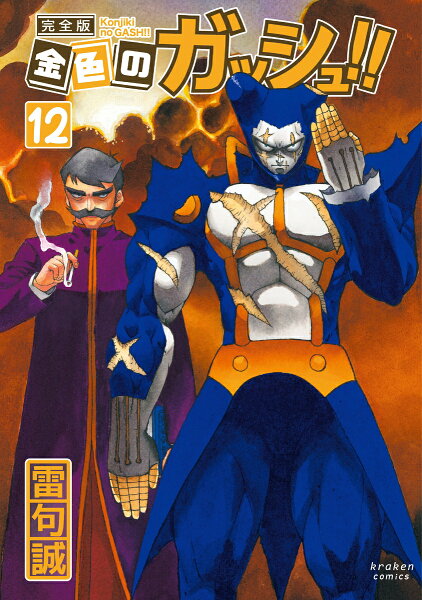
Zatch Bell!
A review of Zatch Bell! — 33 volumes in Weekly Shonen Sunday. Genius middle schooler Kiyo Takamine partners with demon child Zatch Bell in a battle royale of 100 demon/human pairs competing to become King of the Mamodo World; Zatch wants to be a kind king. The manga that made an entire generation cry about a book burning. VIZ Media's English edition is complete.
Action / Fantasy
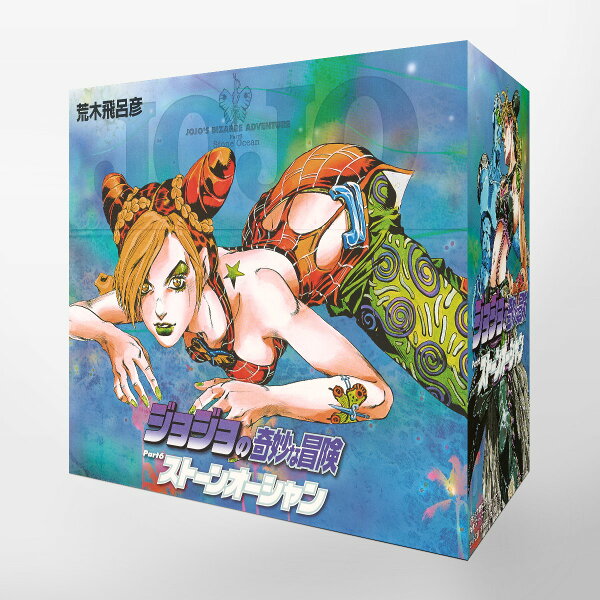
JoJo's Bizarre Adventure
Yu's review of JoJo's Bizarre Adventure — a generational saga following the Joestar bloodline across centuries and continents, each story featuring a new JoJo facing supernatural evil with increasingly creative and bizarre combat abilities.
Action / Adventure
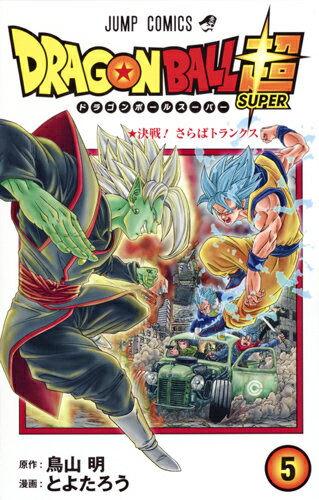
Dragon Ball
A review of Dragon Ball — 42 volumes in Weekly Shonen Jump. Son Goku's journey from a boy in the wilderness to the strongest being in the universe — the manga that defined what shonen action could be and that every battle manga since has owed something to. VIZ Media's English edition is complete.
Action / Drama
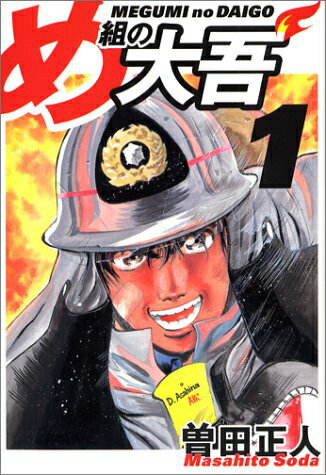
Daigo of Fire Company M
Daigo of Fire Company M follows Daigo Asahina, an extraordinary new firefighter who joins Company M — and the question of what drives a young man of exceptional ability to choose the most dangerous possible job.

Action / Comedy
City Hunter
A sweeper for hire in Shinjuku cleans up the city's worst criminals while hiding a heart softer than anyone suspects — City Hunter is the definitive action-romance manga.
Written by
Yu
Manga Enthusiast from Japan
I grew up in Japan and manga literally saved me during a tough time in elementary school. My English isn't perfect, but my love for manga is real — and I want to share it with you.
Disclosure: This post contains affiliate links. As an Amazon Associate, I earn from qualifying purchases at no extra cost to you.