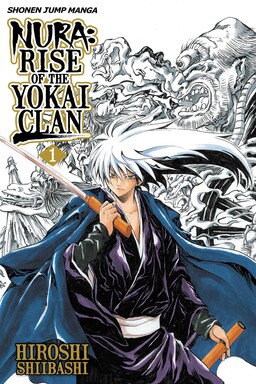
Nura: Rise of the Yokai Clan Review: One-Quarter Yokai, Fully Reluctant Supreme Commander
by Hiroshi Shiibashi
Read the first volume. If it doesn't hook you, put it down. It'll hook you.
Buy Nura: Rise of the Yokai Clan on Amazon →*Affiliate link — I earn a small commission at no extra cost to you.
Quick Take
- The yokai action manga that uses Japanese folklore more specifically than most — the Nura Clan's hierarchy and the rival clans draw from actual yokai tradition rather than generic supernatural invention
- The dual-identity structure — timid daytime Rikuo versus commanding nighttime Rikuo — is well deployed; the series earns the moment when both identities integrate
- 25 volumes complete; a substantial completed shonen with consistent escalation
Who Is This Manga For?
- Readers who want action manga grounded in Japanese yokai folklore
- Anyone who appreciates shonen protagonists who resist their destiny before genuinely earning it
- Fans of supernatural clan warfare manga with large ensemble casts
- Readers who want completed shonen with a satisfying arc structure
Content Warnings & Age Rating
Age Rating: T (Teen) Content Warnings: Supernatural battle violence throughout; some horror imagery from yokai designs; the clan warfare produces significant casualties across the series
The T rating is accurate. Dark in places but appropriate for the shonen audience.
Yu's Rating
| Category | Score |
|---|---|
| Story Depth | ★★★★☆ |
| Art Style | ★★★★☆ |
| Character Development | ★★★★☆ |
| Accessibility for Non-Japanese Readers | ★★★☆☆ |
| Reread Value | ★★★☆☆ |
Story Overview
Rikuo Nana is the grandson of Nurarihyon, the Supreme Commander of the Nura Clan, which controls most of the yokai in eastern Japan. Rikuo is three-quarters human — his mother is fully human — and wants to be a normal middle schooler. He has friends who are fascinated by the supernatural. He finds this ironic.
At night, when his yokai blood becomes dominant, Rikuo transforms: his appearance changes, his manner becomes commanding, and he is capable of leading yokai who would not follow the timid daytime version of him. His nighttime self is not exactly a different person — it is the same person without the self-consciousness.
The series escalates through increasingly powerful rival clans who challenge Nura sovereignty: the Gyuki incident, the Kyoto arc involving the demonic Hagoromo-Gitsune, and later conflicts that take the series to new geographical and supernatural territory. Each arc raises the stakes and introduces new yokai characters from Japan's extensive supernatural folklore.
Characters
Rikuo Nana — His development from reluctant heir to genuine leader is the series' primary arc. The moment when he stops resisting his identity and starts choosing it — not because he was forced but because he understands what the Nura Clan means to the yokai who have pledged their lives to it — is the series' emotional turning point.
Nurarihyon — One of manga's great grandfather figures. His specific combination of complete confidence in his grandson, genuine menace when threatened, and the specific kind of pride that refuses to be demonstrated directly is rendered with consistent warmth.
The Nura Clan — The ensemble of yokai who serve Rikuo are individually characterized — each has a distinct design, a specific loyalty, and a personality. The series' best moments are the ones where these secondary characters act on their own terms.
Art Style
Shiibashi's character designs are distinctive — the yokai designs draw on actual traditional Japanese supernatural iconography rather than generic monster design, and the more powerful yokai are rendered with genuine visual menace. The action sequences are kinetic and spatially clear. The dual-register between the daytime and nighttime versions of Rikuo is communicated visually with consistent distinction.
Cultural Context
Nura ran in Weekly Shonen Jump and engaged with the Edo-period yokai tradition — the hierarchy of supernatural creatures, the specific powers attributed to different yokai types, the concept of "hyakumonogatari" (a hundred ghost stories told at night). For readers not familiar with this tradition, the series provides enough context to follow the specific yokai references without requiring external knowledge, though those who know the folklore will recognize many of the designs and attributes.
What I Love About It
The Kyoto arc. When Rikuo leads the Nura Clan to Kyoto to confront Hagoromo-Gitsune, the series achieves the escalation that the early volumes promise — an enormous supernatural battle across a historical city, with consequences that matter to characters who have been developed across the preceding volumes. The arc demonstrates what the series is capable of when it commits fully to its premise.
What English-Speaking Fans Say
Western readers who complete the series describe the Kyoto arc as the highlight and note that the series struggles somewhat in its later arcs to maintain the same quality. The yokai designs are consistently praised. Rikuo's dual identity is cited as one of the more interesting structural choices in shonen — different from the standard power-up model.
Memorable Scene ⚠️ Spoiler Warning
The moment when nighttime Rikuo explicitly acknowledges that he is not a separate person from daytime Rikuo — that the timid schoolboy and the commanding yokai lord are the same person choosing different expressions of themselves — reframes everything preceding it and demonstrates what the series was actually about.
Similar Manga
- Kekkaishi — Supernatural clan warfare, similar folklore grounding, shonen
- Noragami — Japanese supernatural beings in contemporary setting
- InuYasha — Protagonist with human and supernatural heritage, similar era
- YuYu Hakusho — Supernatural action, similarly large yokai cast
Reading Order / Where to Start
Volume 1 — Rikuo's introduction, his dual nature, and the first challenge to Nura Clan sovereignty.
Official English Translation Status
Viz Media published the complete 25-volume English edition. All volumes available.
Pros & Cons
Pros
- Genuine engagement with Japanese yokai folklore beyond surface aesthetics
- Strong grandfather-grandson relationship as emotional core
- The Kyoto arc is one of the best shonen escalation arcs of its era
- Complete with satisfying resolution
Cons
- The cultural specificity of the yokai references requires some contextual investment
- Later arcs don't consistently match the Kyoto arc's quality
- The dual-identity structure is underutilized in the early volumes
Format Comparison
| Format | Notes |
|---|---|
| Individual Volumes | Viz Media; 25 volumes |
| Digital | Available |
Where to Buy
Read the first volume. If it doesn't hook you, put it down. It'll hook you.
This post contains affiliate links. If you purchase through these links, I may earn a small commission at no extra cost to you. As an Amazon Associate, I earn from qualifying purchases.
*Affiliate link — I earn a small commission at no extra cost to you.
More Manga You Might Like
Action / Supernatural
Ushio and Tora
Yu's review of Ushio and Tora — Ushio finds an ancient beast-spirit called Tora pinned under the temple floor; he releases Tora to fight other spirits threatening his town; Tora intends to eat Ushio eventually; they travel Japan fighting supernatural threats.
Action / Supernatural
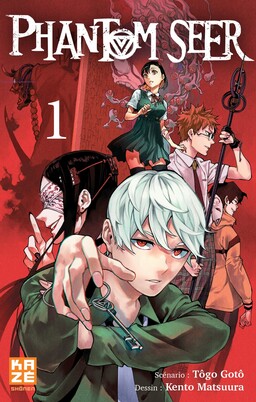
Phantom Seer
Yu's review of Phantom Seer — Iori Katanagi has always been able to see spirits and has learned to ignore them; Riku Aibetsu cannot stop attracting powerful spirits; their partnership, initially reluctant, becomes the series' central dynamic as they face increasingly dangerous supernatural encounters.
Action / Supernatural
Yu Yu Hakusho
A review of Yu Yu Hakusho — 19 volumes in Weekly Shonen Jump. Yusuke Urameshi dies heroically saving a child, is recruited as a Spirit Detective to investigate supernatural cases, and grows from a delinquent who doesn't care about anything into someone with people worth protecting. The series Togashi made before Hunter x Hunter. VIZ Media's English edition is complete.
Action / Supernatural
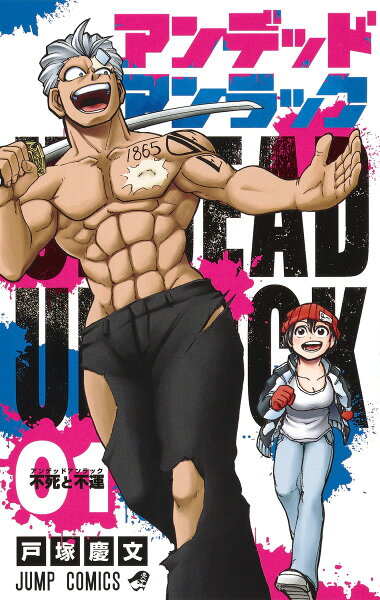
Undead Unluck
Yu's review of Undead Unluck — Fuuko, a girl whose touch causes catastrophic misfortune to anyone around her, meets Andy, an immortal who wants to die; together they join a secret organization that fights supernatural rules governing reality.
Action / Supernatural
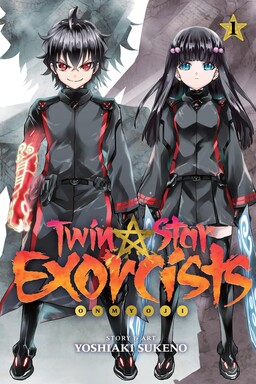
Twin Star Exorcists
A review of Yoshiaki Sukeno's Twin Star Exorcists — 30 volumes in Jump Square. Rokuro Enmado abandoned exorcism after a catastrophe killed his friends; Benio Adashino is a dedicated exorcist from Kyoto determined to surpass her own limits; the two are declared the Twin Star Exorcists, prophesied to produce the child who will destroy all evil. VIZ Media's English edition is complete.
Action / Fantasy
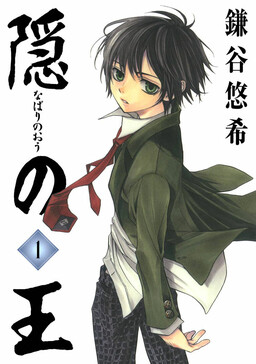
Nabari no Ou
Yu's review of Nabari no Ou — apathetic middle schooler Rokujou Miharu hosts within him the Shinrabanshou — the ultimate power of the ninja world — that every faction of the hidden world wants to control; Rokujou doesn't care about any of this, which makes him the most dangerous person in every room.
Written by
Yu
Manga Enthusiast from Japan
I grew up in Japan and manga literally saved me during a tough time in elementary school. My English isn't perfect, but my love for manga is real — and I want to share it with you.
Disclosure: This post contains affiliate links. As an Amazon Associate, I earn from qualifying purchases at no extra cost to you.