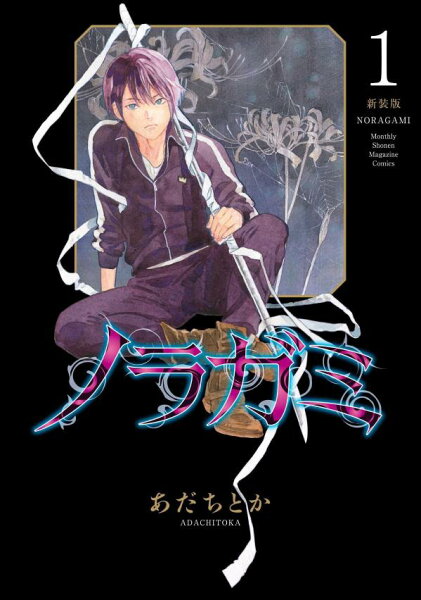
Noragami Review: The Forgotten God Who Just Wants a Single Believer
by Adachitoka
Read the first volume. If it doesn't hook you, put it down. It'll hook you.
Buy Noragami on Amazon →*Affiliate link — I earn a small commission at no extra cost to you.
Quick Take
- A minor god who does odd jobs for five yen, desperate for a single shrine and one devoted follower
- Starts as a fun supernatural comedy and deepens into something with real emotional weight
- One of the best ongoing supernatural manga for readers who want both charm and genuine darkness
Who Is This Manga For?
Noragami is for you if:
- You love Japanese mythology and want it as the backdrop for action and character drama
- You want supernatural comedy that grows into genuine emotional complexity
- You're interested in an ongoing series with a dedicated fanbase and consistent quality
- You want a protagonist whose desperation is played both for laughs and for real pathos
Content Warnings & Age Rating
Age Rating: T (Teen) Content Warnings: Action violence; supernatural horror elements in later arcs; recurring themes about the nature of death and the afterlife; psychological manipulation by certain antagonists
The series starts lighter and becomes significantly darker across its run.
Yu's Rating
| Category | Score |
|---|---|
| Story Depth | ★★★★☆ |
| Art Style | ★★★★☆ |
| Character Development | ★★★★★ |
| Accessibility for Non-Japanese Readers | ★★★★☆ |
| Reread Value | ★★★★☆ |
Story Overview
Yato is a minor god. Very minor. He has no shrine, no followers, and advertises his divine services on the side of bathroom stalls for five yen per request. He wears a ratty tracksuit and his one divine Regalia — the weapon that allows a god to fight — has just quit on him.
Then he meets Hiyori Iki, a middle school girl who pushes him out of the path of a truck and discovers that her soul now regularly slips out of her body as a result. She enlists Yato's help to fix this. He enlists a new Regalia — a boy named Yukine, recently dead — to help him fight the supernatural creatures threatening them.
This is the series' beginning: comedic, charming, with a running joke about how pathetically forgotten Yato is in a world full of great gods. But Noragami is interested in more than the joke.
The series' ongoing question — why is Yato forgotten, what is his past, and what kind of god does he want to be — deepens with each arc. The answer, when it comes, involves a history of violence that completely recontextualizes the cheerful, desperate minor god of the early chapters.
Characters
Yato — A god whose desire to be worshipped reads as vanity until you understand what being forgotten actually means for a god. His backstory — revealed slowly across many volumes — makes the comedy of his situation into something much more complicated.
Yukine — The boy who becomes Yato's Regalia. His resentment at having died young, at being used as a weapon, at not getting to have the life he deserved — is handled with real care. His arc in the early volumes is the series' most affecting.
Hiyori Iki — The human anchor who chooses, repeatedly, to stay involved in the supernatural world she stumbled into. Her loyalty to both Yato and Yukine is the series' moral center.
Bishamon — A major goddess who is Yato's enemy. Her relationship with her many Regalias — and what that relationship costs her — provides the series' most thematically rich secondary arc.
Art Style
Adachitoka's art is clean and expressive, with particularly strong character design. The supernatural creatures — Phantoms and various divine beings — have genuinely inventive visual designs that range from eerie to beautiful.
The series handles the coexistence of the mundane and the supernatural visually well — everyday school settings and intense spirit-world battles feel equally grounded.
Cultural Context
Japanese Shinto mythology — Noragami draws extensively on actual Shinto concepts: gods (kami) with specific domains, divine weapons (regalia) that are the spirits of the dead bound to service, the concept of impurity (kegare) that threatens divine beings. This is not surface-level — the series' mythology is internally consistent with Shinto thought in ways that reward readers who explore the underlying religion.
The problem of forgotten gods — In Shinto, gods exist in relation to human attention. A god without worshippers is a god in decline. The theological implications of this — that divine power is dependent on human belief — drives Yato's desperation and gives it real stakes.
Regalia as bound spirits — The system of Regalias — dead human spirits bound to serve as divine weapons — raises real ethical questions about what gods owe the dead they employ. The series takes these questions seriously.
What I Love About It
There is an arc early in the series where Yukine — Yato's Regalia — is biting, resentful, and making Yato physically ill (a Regalia who sins poisons their god). What Yukine is experiencing is grief: he died young and never got the life he wanted.
The confrontation that resolves this arc — where Yato's allies gather, not to punish Yukine, but to witness him — is the kind of thing I did not expect from a supernatural action manga. It is not a fight. It is a community of people refusing to let someone suffer alone.
I thought about the manga for days after reading that scene.
What English-Speaking Fans Say
Noragami has a devoted Western fanbase that often describes it as one of the most underrated supernatural manga in English. The anime covered early arcs with minor changes; the manga's later developments are widely considered stronger.
Common praise: Yato's depth once his history is revealed, the mythology's internal consistency, Yukine's early arc, Bishamon's arc.
Common frustration: Monthly publication makes the pace feel slow for the complex plot threads the series is developing.
Memorable Scene ⚠️ Spoiler Warning
Yato's past.
When Noragami finally reveals the full extent of what Yato was — and what he did — before the events of the series, the cheerful, pathetic minor god of volume one becomes a completely different figure. The series earns this revelation by making you care about who Yato is trying to be before it shows you who he was.
The contrast is devastating.
Similar Manga
If you liked Noragami, try:
- Blue Exorcist — Similar supernatural action with identity at its center
- Soul Eater — Similar partnership mechanic between wielder and weapon-being
- Natsume's Book of Friends — Similar Japanese supernatural setting, quieter tone
- The Ancient Magus' Bride — Similar mythological depth in a supernatural setting
Reading Order / Where to Start
Start from Volume 1. The early comedy establishes the characters before the series deepens.
Official English Translation Status
Status: Ongoing English Volumes: 27+ Translator: Kodansha Comics Translation Quality: Excellent
Pros & Cons
Pros
- Yato is one of the most interesting gods in fiction
- The Shinto mythology is handled with genuine care and depth
- Yukine's early arc is among the best character work in ongoing manga
- The humor and the seriousness coexist without undermining each other
Cons
- Monthly publication = slow story pace
- Later arcs can feel complex to the point of confusion
- Ongoing without a known endpoint
Format Comparison
| Format | Volumes | Price per vol. (approx.) | Best for |
|---|---|---|---|
| Paperback (individual) | 27+ vols | ~$10–12 | Collecting |
| Kindle | 27+ vols | ~$7–9 | Ongoing reading |
Where to Buy
Read the first volume. If it doesn't hook you, put it down. It'll hook you.
This post contains affiliate links. If you purchase through these links, I may earn a small commission at no extra cost to you. As an Amazon Associate, I earn from qualifying purchases.
*Affiliate link — I earn a small commission at no extra cost to you.
More Manga You Might Like
Action / Supernatural
Dandadan
Yu's review of Dandadan — Momo believes in ghosts, Ken believes in aliens, and they make a deal to test each other's beliefs; both get immediately proven wrong and right simultaneously, and a bizarre supernatural romance begins.
Action / Comedy
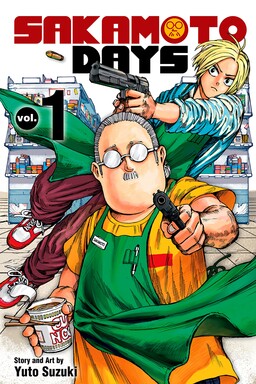
Sakamoto Days
Yu's review of Sakamoto Days — Taro Sakamoto was the most feared hitman in the world; he retired when he fell in love, married, and opened a convenience store; now overweight, domestically happy, and out of practice, he must repeatedly deal with the assassin world that cannot accept his retirement; an action comedy about a legendary fighter who would rather stock shelves.
Action / Comedy
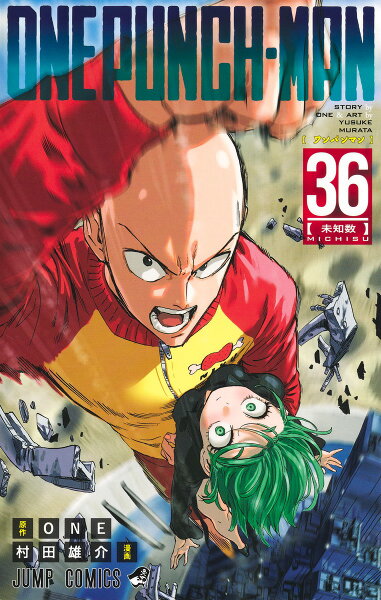
One Punch Man
Yu's review of One Punch Man — a manga about the most powerful hero in the world who can't feel excited about anything anymore because he always wins in one punch. Visually the most spectacular action manga alive. Philosophically surprisingly deep.
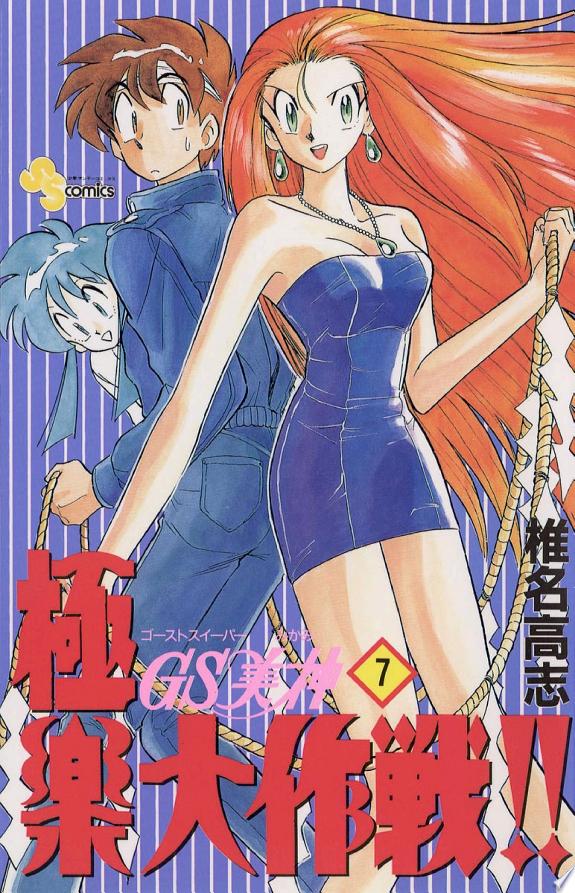
Action / Comedy
Ghost Sweeper Mikami
A glamorous exorcist runs a ghost-busting business with her hapless apprentice in '90s Sunday's most reliable comedy.
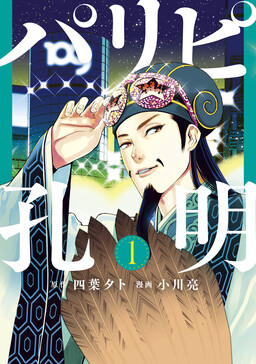
Action
Ya Boy Kongming! (Paripi Koumei)
Yu's review of Ya Boy Kongming! — Zhuge Liang, the legendary strategist of the Three Kingdoms era, reincarnates in modern Tokyo; he arrives at a Shibuya club and hears a singer named Eiko whose talent is undeniable; he becomes her manager; Yoichi Takahashi's comedy manga about military strategy applied to the music industry.
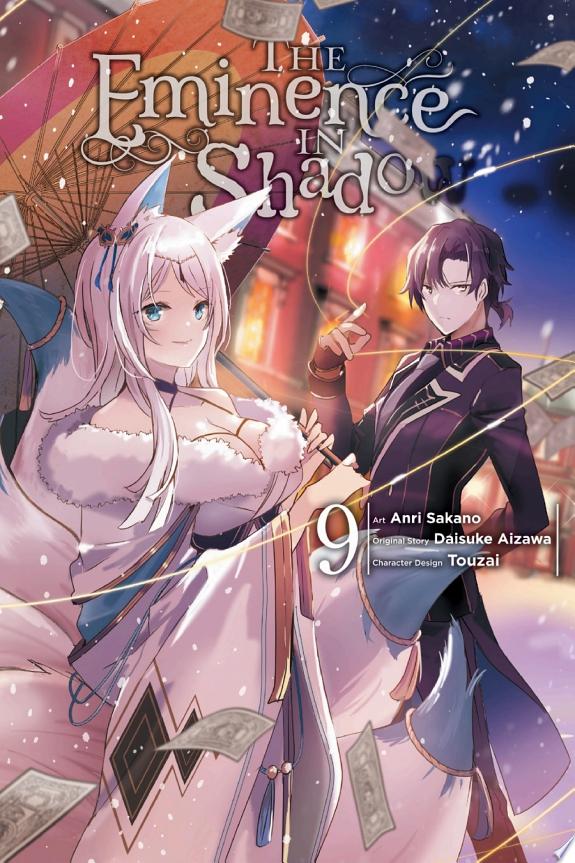
Action / Isekai
The Eminence in Shadow
Yu's review of The Eminence in Shadow — Minoru Kageno is reincarnated into a fantasy world and creates a shadow organization called Shadow Garden, inventing fictional enemies for his followers to fight; the enemies turn out to be real; the comedy is that he never knows this.
Written by
Yu
Manga Enthusiast from Japan
I grew up in Japan and manga literally saved me during a tough time in elementary school. My English isn't perfect, but my love for manga is real — and I want to share it with you.
Disclosure: This post contains affiliate links. As an Amazon Associate, I earn from qualifying purchases at no extra cost to you.