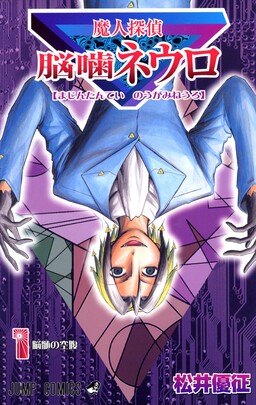
Neuro Review: A Demon Who Eats Mysteries Has Come to the Human World — Where the Mysteries Are Tastier
by Yuuki Kodama
*Affiliate link — I earn a small commission at no extra cost to you.
Quick Take
- The supernatural detective manga with the most original premise in the genre — a demon who literally eats mysteries uses a teenage girl as his public face
- The Neuro/Yako dynamic is comedically abusive in ways the series treats as dark comedy rather than romanticized
- 23 volumes complete; escalates from case-of-the-week into genuinely ambitious territory
Who Is This Manga For?
- Readers who want mystery manga with supernatural elements and dark comedy
- Fans of Weekly Shonen Jump series that subvert the genre's conventions
- Anyone who enjoys protagonists with genuinely alien motivations
- Readers who can engage with dark comedy that includes body horror elements
Content Warnings & Age Rating
Age Rating: T (Teen) Content Warnings: Action violence; mystery with horror elements; villain designs occasionally use body horror; dark comedy including Neuro's treatment of Yako; nothing gratuitous
The T rating is appropriate; the horror elements are stylized.
Yu's Rating
| Category | Score |
|---|---|
| Story Depth | ★★★★☆ |
| Art Style | ★★★★☆ |
| Character Development | ★★★★☆ |
| Accessibility for Non-Japanese Readers | ★★★★☆ |
| Reread Value | ★★★★☆ |
Story Overview
Neuro Nougami has eaten every mystery in hell. The solutions bore him before he finishes thinking them. He comes to the human world because human malice — the twisted thinking that underlies murder, deception, and elaborate crime — produces genuinely novel mysteries that he hasn't tasted before.
He finds Yako Katsuragi, a high school girl whose father was mysteriously murdered and who wants the killer found. Neuro offers to solve it if she becomes his public front — "Yako Katsuragi, brilliant high school detective" — so he can operate in the human world without exposing his demonic nature.
Yako is not particularly intelligent. Neuro is the one who solves everything; Yako is the face he presents to clients and police. The comedy of this arrangement — and Yako's gradual development of her own competencies beneath Neuro's contemptuous use of her — forms the series' ongoing dynamic.
Characters
Neuro Nougami — His contempt for humans is absolute, genuine, and consistently expressed through Yako's suffering. He is also, the series gradually reveals, genuinely invested in Yako's development in ways his behavior doesn't suggest. This tension — between his stated indifference and his actual behavior — is the series' most interesting character content.
Yako Katsuragi — Her development from helpless prop to someone who has genuine utility is the series' character arc. She doesn't become Neuro's equal — that's not the story — but she becomes her own person, which the series treats as the more interesting achievement.
Sai — The series' eventual primary antagonist, whose specific form of villainy and connection to human malice is the most conceptually ambitious element of the later volumes.
Art Style
Kodama's art is energetic and often grotesque — villain character designs in particular use body-horror elements with a creative flair that distinguishes the series visually. Neuro's own design shifts between human-appearing and demonic depending on what the scene requires.
Cultural Context
Neuro ran in Weekly Shonen Jump during a period when the magazine was experimenting with less conventional premises — alongside Death Note and Bleach — and represents the Jump approach to supernatural detective fiction from the mystery side rather than the action side.
What I Love About It
Neuro's 777 tools of the demon world. He has 777 specific tools with specific and often absurd applications; the series deploys them for both comedy and as genuine plot mechanisms. The creativity of the tool designs — and the specific situations that call for specific ones — is the series' most consistent source of entertainment.
What English-Speaking Fans Say
Western readers describe Neuro as an underrated Jump series whose premise aged better than many of its contemporaries — the supernatural detective concept and the Neuro/Yako dynamic are cited as genuinely fresh. The escalation to the Sai arc is described as the series' riskiest and most ambitious move.
Memorable Scene ⚠️ Spoiler Warning
Yako's confrontation with Sai — the specific moment when the series asks whether Yako's development across 23 volumes was real or performed, and her answer — is the series' definitive statement of what it was actually about beneath the mystery-eating premise.
Similar Manga
- Death Note — Supernatural detective premise, same Jump era
- Umineko: When They Cry — Mystery with supernatural elements
- The Promised Neverland — Puzzle-solving under pressure
- Liar Game — Psychological puzzle-solving, different register
Reading Order / Where to Start
Volume 1 — the premise and Neuro/Yako dynamic establish in the first chapter.
Official English Translation Status
Viz Media published the complete 23-volume run. All volumes available.
Pros & Cons
Pros
- The supernatural detective premise is genuinely original
- The Neuro/Yako dynamic generates consistent comedy and eventual emotional depth
- The 777 tools are a sustained source of creative invention
- Complete in 23 volumes with ambitious escalation
Cons
- Neuro's treatment of Yako requires acceptance of dark comedy framing
- The body horror villain designs are polarizing
- The later arcs are more ambitious and less consistent than the case-of-the-week format
Format Comparison
| Format | Notes |
|---|---|
| Individual Volumes | Viz Media; standard |
| Digital | Available |
Where to Buy
This post contains affiliate links. If you purchase through these links, I may earn a small commission at no extra cost to you. As an Amazon Associate, I earn from qualifying purchases.
*Affiliate link — I earn a small commission at no extra cost to you.
Written by
Yu
Manga Enthusiast from Japan
I grew up in Japan and manga literally saved me during a tough time in elementary school. My English isn't perfect, but my love for manga is real — and I want to share it with you.
Disclosure: This post contains affiliate links. As an Amazon Associate, I earn from qualifying purchases at no extra cost to you.