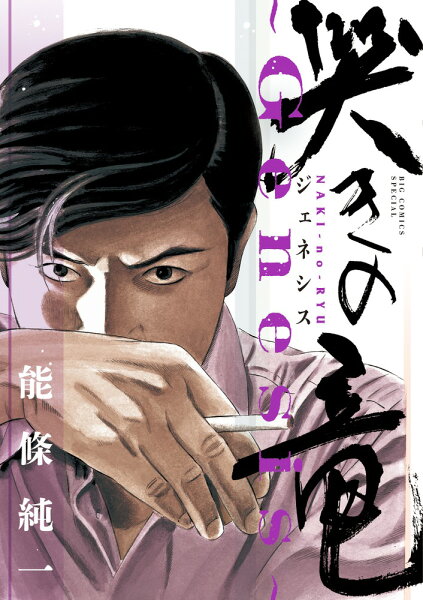
Naki no Ryu Review: The Mahjong Manga Whose Hero Cried Because Winning Cost Something
by Junichi Nojo
Read the first volume. If it doesn't hook you, put it down. It'll hook you.
Buy Naki no Ryu on Amazon →*Affiliate link — I earn a small commission at no extra cost to you.
He cried at the table because winning meant somebody else would be ruined. He played anyway.
Quick Take
- Junichi Nojo's mahjong-yakuza manga — Ryu, the legendary "crying mahjong" master who weeps as he wins because he understands what winning costs others
- 13 volumes of yakuza-stakes mahjong, where winning a game can determine power structures in the underworld
- One of the foundational works of the yakuza-mahjong subgenre
Who Is This Manga For?
- Mahjong manga readers who want the genre's yakuza-flavored variant
- Akagi fans who want another take on mahjong as moral test
- Yakuza fiction readers who want the gambling-as-power-struggle approach
- Anyone interested in what it means to be exceptionally good at something morally compromised
Content Warnings & Age Rating
Age Rating: M (Mature) Content Warnings: Yakuza violence, gambling consequences, criminal underworld settings.
For mature readers.
Yu's Rating
| Category | Score |
|---|---|
| Story Depth | ★★★★☆ |
| Art Style | ★★★★☆ |
| Character Development | ★★★★☆ |
| Accessibility for Non-Japanese Readers | ★★★☆☆ |
| Reread Value | ★★★★☆ |
Story Overview
Ryu is the "crying mahjong" master — the player whose name is whispered in the underworld because his presence at the table changes the game's meaning. He doesn't enjoy what he does. He cries while winning because he understands that mahjong played at his level always costs someone something they couldn't afford to lose.
Yakuza factions call him in to play games whose stakes are not money but power, allegiance, or life. Ryu plays because he is what he is, but his weeping at the table is the series' moral signature: this man knows that his gift is a curse to those across from him.
The series is structured around discrete games, each with its own stakes and antagonist. Across 13 volumes, Ryu's reputation builds and the implications of his work become harder to escape. The mahjong is depicted with technical accuracy — readers who know the game can follow strategies — but the games' meaning is always larger than the tiles.
Characters
Ryu: A protagonist whose competence is also his moral burden — his tears are not weakness, they are the recognition of what his gift does.
The yakuza commissioners: Each represents a different vector into the criminal world — different motivations for needing Ryu, different consequences for hiring him.
The opponents: Each game's antagonist is rendered with enough specificity to make their loss feel real rather than procedural.
Art Style
The art has the heavy, atmospheric quality of seinen drama — close-ups on tense faces, the visual texture of smoky underground rooms, expressive hands during play. Mahjong sequences are drawn with technical accuracy that lets knowledgeable readers follow strategy.
Cultural Context
Naki no Ryu ran from 1985 to 1991. The series belongs to the broader yakuza-manga tradition that flourished in Japanese seinen magazines through the 1980s and 1990s, and to the mahjong-manga subgenre that produced contemporaneous classics like Akagi and Tetsuya.
The "crying" character has roots in older Japanese narrative traditions of conflicted protagonists — heroes who suffer the consequences of their own competence.
What I Love About It
I love that he cries.
A lesser version of this character would be cool, detached, untroubled by the suffering his gift produces. Naki no Ryu refuses that. The crying is not a quirk; it is the series' moral architecture. Ryu sees what he does to people, refuses to look away, and continues anyway because the alternative is to abandon the gift. The conflict is unresolvable, and the series respects that.
What English-Speaking Fans Say
Limited international audience without translation. Among classic-manga enthusiasts familiar with the work, recognized as one of the better yakuza-mahjong works of its era.
Memorable Scene ⚠️ Spoiler Warning
A game where Ryu's opponent fully understands what is happening before the final hand — the recognition between two players who both know the game's actual stakes. The scene's quiet weight comes from mutual understanding rather than dramatic confrontation.
Similar Manga
| Title | Its Approach | How Naki no Ryu Differs |
|---|---|---|
| Akagi | Mahjong with prodigy and supernatural intensity | Naki no Ryu is yakuza-grounded and morally heavier |
| Tetsuya | Postwar mahjong hustler narrative | Different era and tonal register — Naki no Ryu is more dramatic |
| Mukobuchi | High-stakes contemporary mahjong | Naki no Ryu emphasizes moral cost over pure technique |
Reading Order / Where to Start
Volume 1. Ryu's reputation builds across the series.
Official English Translation Status
Naki no Ryu has no official English translation.
Pros & Cons
Pros
- The crying-master concept gives the series its moral seriousness
- Mahjong sequences are technically accurate
- Yakuza atmosphere is rendered with conviction
- Complete at 13 volumes
Cons
- No English translation
- Mahjong knowledge significantly enhances appreciation
- Yakuza fiction conventions may feel dated
- The episodic structure limits long-arc development
Is Naki no Ryu Worth Reading?
For mahjong manga readers and yakuza-fiction fans who want a morally serious take on both, yes — this is one of the better entries in its niche. For readers without mahjong familiarity or interest in the underworld setting, the appeal narrows. As genre-defining work, it earns its reputation.
Format Comparison
| Format | Notes |
|---|---|
| Physical | Japanese editions available |
| Digital | Available in Japanese |
| Omnibus | Collected editions available |
Where to Buy
No English release yet. That just means you find it before everyone else does.
*Affiliate link — I earn a small commission at no extra cost to you.
More Manga You Might Like
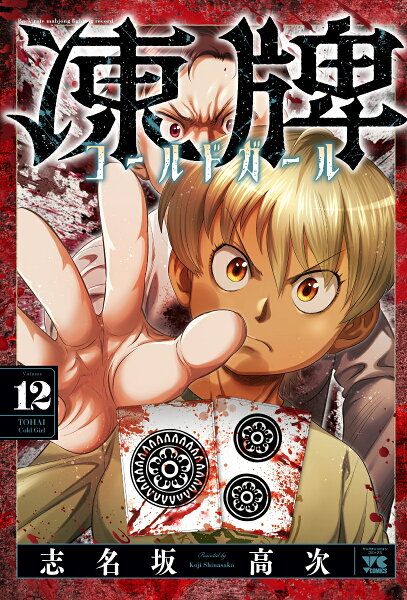
Action / Drama
Toupai
Toupai follows K, a high-school mahjong prodigy who plays in underground games where the consequences for losing extend far beyond money — a brutal modern entry in the mahjong-manga tradition where the table is a literal battlefield.
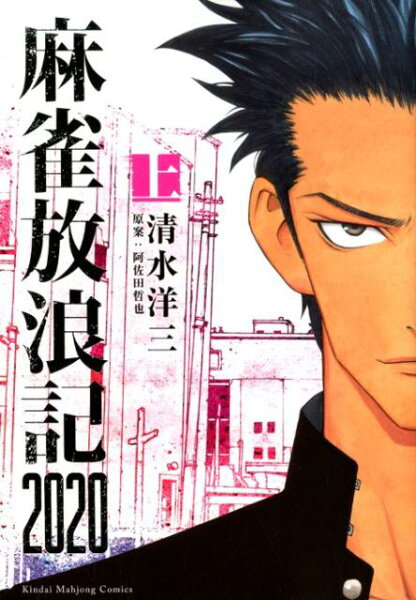
Action / Drama
Mahjong Hourouki
Mahjong Hourouki is Tatsuhiko Kuroki's manga adaptation of Tetsuya Asada's classic postwar mahjong-hustler novel — Bouya, a young drifter in the chaos of immediately-postwar Tokyo, who learns mahjong as the only way to survive the era's rubble economy.
Action / Comedy
Uchihime Obakamiko
Uchihime Obakamiko is Nobuyuki Fukumoto's lighter mahjong manga — Mieko, an enthusiastic but technically poor player whose mentor Toshio reluctantly trains her, with the comedic premise that even Fukumoto can write characters who are not psychological warlords.
Action / Drama
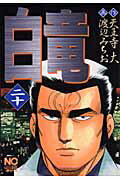
Hakuryuu
Hakuryuu follows Hakuryu, a yakuza whose intelligence and ambition take him through the Japanese underworld with the procedural precision of business fiction — Manga Goraku's 25-volume yakuza epic that treated the criminal world as a working economy.
Action / Comedy
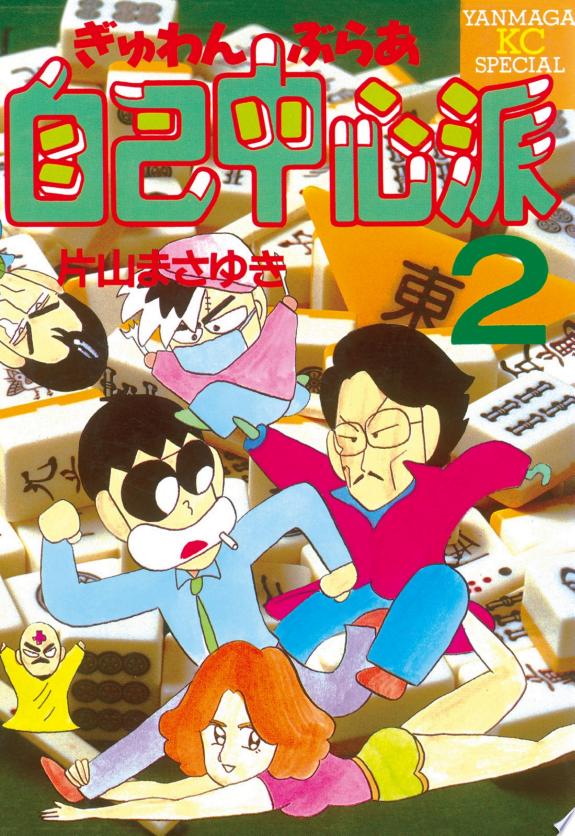
Gambler Jiko Chuushinha
Gambler Jiko Chuushinha is Masayuki Katayama's mahjong comedy from Weekly Young Magazine — a 17-volume tribute to mahjong's social culture, where the comedy comes from the players' bizarre personalities while the mahjong remains genuinely played.
Action
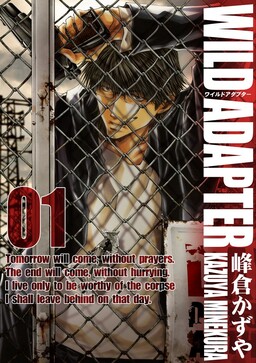
Wild Adapter
Yu's review of Wild Adapter — Makoto Kubota is a Yakuza boy genius who gets drawn into investigating Wild Adapter, a drug that turns users into monsters; he finds Tokito, a boy with no memory and a monster's hand, and takes him home; Kazuya Minekura's crime manga about an unlikely pair and the mystery of a transforming drug.
Written by
Yu
Manga Enthusiast from Japan
I grew up in Japan and manga literally saved me during a tough time in elementary school. My English isn't perfect, but my love for manga is real — and I want to share it with you.