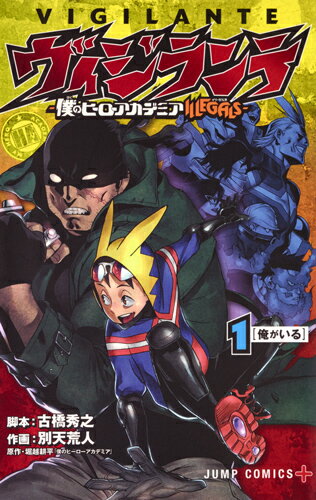
My Hero Academia: Vigilantes Review — The Street-Level Hero Story the Main Series Couldn't Tell
by Hideyuki Furuhashi (story), Betten Court (art)
Read the first volume. If it doesn't hook you, put it down. It'll hook you.
Buy My Hero Academia: Vigilantes on Amazon →*Affiliate link — I earn a small commission at no extra cost to you.
Koichi Haimawari is a college student with a Quirk that lets him slide frictionlessly across flat surfaces. It is not impressive. He did not get into UA. He is not a hero. When he starts helping people in a neighborhood that licensed heroes don't cover, he is technically breaking the law.
I'm Yu. Vigilantes is the My Hero Academia story that happens at street level, where the stakes are different and the characters have more room.
Quick Take
- Hideyuki Furuhashi and Betten Court's My Hero Academia: Vigilantes (ヴィジランテ -僕のヒーローアカデミア ILLEGALS-) ran in Shōnen Jump+ — collected in 15 volumes, complete.
- VIZ Media published the complete 15-volume English edition.
- Rated T (Teen) — action violence; dark themes; significant character deaths that carry real emotional cost.
Story Overview
Koichi Haimawari spends his days doing small unofficial good deeds: picking up litter, giving directions, helping elderly people with bags. He gets involved with Knuckleduster — a foul-mouthed, relentlessly intense vigilante who operates outside the law — and Kazuho Haneyama, a pop idol who uses her wings as cover for vigilante work.
Together they operate in the parts of the city that licensed heroes don't reach. The main series asks: what does it take to become the greatest hero? Vigilantes asks: what if greatness isn't the point?
Over 15 volumes, what begins as neighborhood-scale activism escalates into confrontations that test what Koichi is actually capable of and what he is willing to become. The series also depicts younger versions of pro heroes who will be familiar from the main series — including Eraserhead in his vigilante days.
Characters
Koichi Haimawari / The Crawler — His character arc is the series' main achievement. He starts genuinely ordinary — not particularly brave, motivated by a vague sense that he should be useful. By the end, he is something extraordinary. The transformation feels completely earned. He never stops being Koichi. He just becomes more of himself.
Knuckleduster — Difficult to summarize without major spoilers. He appears as a comedy character and becomes something much more significant. His backstory, revealed gradually, recontextualizes everything about how he's been acting.
Kazuho Haneyama / Pop Step — Her arc is one of the more emotionally complex in the series. Her relationship with Koichi is central to the story's emotional core, and what happens to her carries the most weight.
What I Love About It
I almost did not read this. I was a little tired of MHA and not sure I wanted more of the same world. It is not the same.
What I love is Koichi's specific ordinariness. He has the minor Quirk. He did not get into the hero program. He helps anyway — picking up litter, giving directions, doing small things that nobody thanks him for and that the system doesn't recognize.
The series argues that this is also heroism. That the shape of heroism isn't determined by what kind of Quirk you have or what institution validates you, but by the repeated choice to help when you could ignore the situation.
That hit me harder than most things in the main series.
Memorable Scene ⚠️ Spoiler Warning
In the final arc, Koichi ends up in a situation where no one is watching — no audience, no hero license, no recognition possible — and he still does the hero thing. The moment where he realizes this is simply who he is now, not because of any dream or reward, is handled with extraordinary quietness. Furuhashi and Court do not hammer the point. They trust the reader to feel it.
Pros & Cons
Pros:
- Street-level scale makes the victories and losses hit differently than the main series.
- Koichi's growth arc is among the most satisfying in the MHA franchise.
- Character deaths carry real weight — the series is willing to cost the characters something.
- Complete at 15 volumes with full resolution.
Cons:
- Requires sufficient main series familiarity to fully appreciate the context.
- The connections to main MHA contain significant spoilers for certain character histories.
- Some early volumes are lighter before the series commits to its darker direction.
Is My Hero Academia: Vigilantes Worth Reading?
Yes — for MHA fans who want more of the world at a different scale. The case that Vigilantes is a better story than the main series for certain readers is not difficult to make. The 15-volume commitment is worth it.
Who Is This Manga For?
- MHA readers who want the franchise's street-level story.
- Anyone who prefers smaller-scale superhero narratives over tournament arcs.
- Fans of the main series who want to see certain characters in their earlier history.
- Readers who want a completed superhero spinoff with genuine emotional stakes.
Official English Translation Status
VIZ Media published all 15 English volumes. Complete and available in print and digital.
Where to Buy
VIZ Media's complete 15-volume English edition.
Browse My Hero Academia: Vigilantes on Amazon →
This post contains affiliate links. If you purchase through these links, I may earn a small commission at no extra cost to you. As an Amazon Associate, I earn from qualifying purchases.
*Affiliate link — I earn a small commission at no extra cost to you.
More Manga You Might Like
Action / Comedy
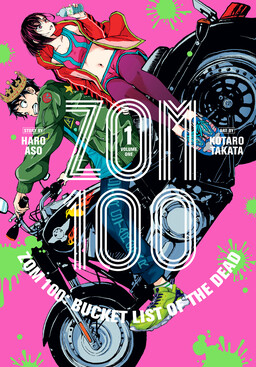
Zom 100: Bucket List of the Dead
A review of Zom 100: Bucket List of the Dead — 15 volumes in Monthly Sunday GX. Akira Tendo spent three years being worked to death at a black company; when the zombie apocalypse starts, his first thought is relief that he doesn't have to go to work; he makes a list of 100 things to do before becoming a zombie. The most original zombie premise in years. VIZ Media's English edition is complete.
Action / Comedy
Level E
Yu's review of Level E — a self-declared alien prince has crashed his ship on Earth and has conveniently developed amnesia; he moves in with Yukitaka Tsutsui, a freshman baseball prospect in rural Yamagata; the prince turns out to be the most intelligent and least cooperative being in the galaxy, and he treats everything around him as a long-running game designed for his own amusement.
Action / Comedy
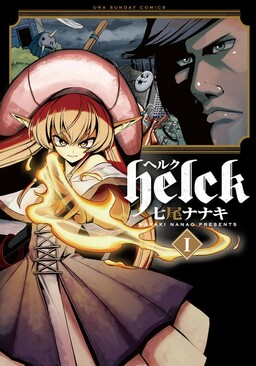
Helck
A review of Helck — 13 volumes in Shōnen Sunday S. A tournament is held to find the next Demon King; Helck, the most powerful human hero, arrives and enters claiming he wants to destroy humanity; demon captain Vermilio tries to expose him as a spy while he proves consistently, genuinely helpful. A fantasy comedy that earns its transition into something serious. VIZ Media's English edition is complete.
Action / Sci-Fi
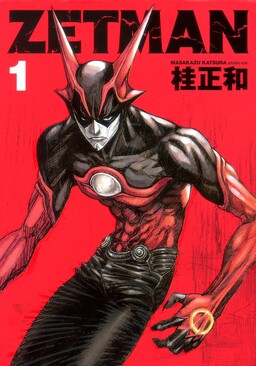
Zetman
Yu's review of Zetman — Jin Kanzaki is a boy who can transform into ZET, a living weapon created by a corporation's experiment; his story is intertwined with Kouga Amagi, heir to a company that creates its own superhero armor — two different ideas of what a hero means, in conflict and occasional partnership.
Action / Supernatural
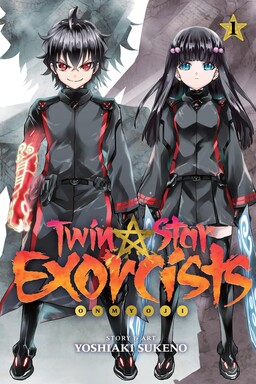
Twin Star Exorcists
A review of Yoshiaki Sukeno's Twin Star Exorcists — 30 volumes in Jump Square. Rokuro Enmado abandoned exorcism after a catastrophe killed his friends; Benio Adashino is a dedicated exorcist from Kyoto determined to surpass her own limits; the two are declared the Twin Star Exorcists, prophesied to produce the child who will destroy all evil. VIZ Media's English edition is complete.
Action / Supernatural
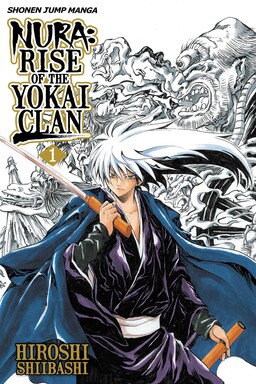
Nura: Rise of the Yokai Clan
Yu's review of Nura: Rise of the Yokai Clan — Rikuo Nana is one-quarter yokai and grandson of Nurarihyon, the Supreme Commander of all yokai; during the day he lives as an ordinary middle schooler who wants nothing to do with the supernatural; at night his yokai blood awakens and he becomes something else entirely; as rival yokai clans threaten his grandfather's domain, Rikuo must decide whether to embrace his heritage.
Written by
Yu
Manga Enthusiast from Japan
I grew up in Japan and manga literally saved me during a tough time in elementary school. My English isn't perfect, but my love for manga is real — and I want to share it with you.
Disclosure: This post contains affiliate links. As an Amazon Associate, I earn from qualifying purchases at no extra cost to you.