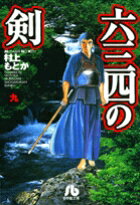
Musashi no Ken Review: The Kendo Manga That Turned Bamboo Swords Into a Conversation About Who You Want to Be
by Masami Yuuki
Read the first volume. If it doesn't hook you, put it down. It'll hook you.
Buy Musashi no Ken on Amazon →*Affiliate link — I earn a small commission at no extra cost to you.
Named after the greatest swordsman in Japanese history. The weight of that was always going to matter.
Quick Take
- Masami Yuuki's 25-volume kendo classic from Weekly Shonen Sunday — Musashi Nanaori from childhood through the competitive kendo world
- A growth narrative that uses kendo to ask what it means to inherit something you didn't choose and then make it your own
- One of Sunday's defining sports manga of the early 1980s
Who Is This Manga For?
- Kendo fans who want the sport depicted with genuine technical knowledge and competitive seriousness
- Coming-of-age manga readers who want the protagonist's growth tracked across years rather than just tournaments
- Classic shonen sports readers who want Sunday's approach to the genre at its peak
- Anyone interested in martial arts manga beyond the fantasy-power tradition
Content Warnings & Age Rating
Age Rating: T (Teen) Content Warnings: Sports competition, kendo training, family drama. Nothing concerning.
Suitable for most readers.
Yu's Rating
| Category | Score |
|---|---|
| Story Depth | ★★★★☆ |
| Art Style | ★★★★☆ |
| Character Development | ★★★★☆ |
| Accessibility for Non-Japanese Readers | ★★★☆☆ |
| Reread Value | ★★★☆☆ |
Story Overview
Musashi Nanaori is named after Miyamoto Musashi — the name is his father's ambition made literal. His father is a serious kendo practitioner; the expectation that Musashi will follow is present before he's old enough to hold a shinai. The series follows what happens when that expectation meets a boy who has to decide whether to accept it, reject it, or transform it.
The early volumes trace Musashi's childhood — the kendo lessons, the early competitions, the formation of his identity as someone for whom the sword is simultaneously a given and a choice. As he grows older, the competition becomes more serious, the opponents more skilled, and the question of what kendo means to him — not his father, not his name — becomes more urgent.
The series treats kendo with technical seriousness. The techniques are real, the competitive structure is accurate, and the moments of genuine breakthrough are earned through depicted practice rather than declared through narrative convenience.
Characters
Musashi Nanaori: A protagonist whose inheritance is both gift and burden — the name, the tradition, the expectation — and whose arc is about deciding what he does with all of it.
The father: Present as background and influence throughout — the relationship between them is the series' emotional spine.
The rivals and opponents: Each significant opponent represents a different relationship to kendo — different reasons, different traditions, different answers to the same questions Musashi is asking.
Art Style
Yuuki's art has the clean line quality of 1980s Sunday manga — kendo movement depicted with accuracy, the physicality of the sport conveyed without losing the character focus, and faces expressive enough to carry the emotional weight the story requires.
Cultural Context
Musashi no Ken ran in Weekly Shonen Sunday from 1981 to 1985. Kendo in Japanese culture carries significant weight — as martial art, as school discipline, as connection to historical tradition. A manga about a boy named after Miyamoto Musashi learning kendo is engaging with that weight explicitly.
The early 1980s Sunday era produced several defining sports manga; Musashi no Ken is among the ones that took its sport seriously as more than competitive backdrop.
What I Love About It
I love the name.
Being named Musashi is a specific kind of burden — the expectation is encoded in the character before the first panel. The series takes this seriously: it's not just a dramatic name, it's a father's hope made into an identity. What Musashi does with that identity is the series' subject, and the answer is neither simple rejection nor simple acceptance.
What English-Speaking Fans Say
Known among dedicated fans of classic Japanese sports manga and martial arts manga readers. Recognized as one of the better kendo manga of its era, with the growth narrative praised over single-tournament focused alternatives.
Memorable Scene ⚠️ Spoiler Warning
A match where Musashi, facing an opponent who has also inherited family expectation for the sport, recognizes the mirror — and the difference. The scene is the series' clearest statement on what inheritance means and what choice means.
Similar Manga
| Title | Its Approach | How Musashi no Ken Differs |
|---|---|---|
| Slam Dunk | Basketball sports manga with coming-of-age and emotional depth | Kendo tradition and inheritance weight rather than pure athletic development |
| Ashita no Joe | Boxing manga tracking protagonist from youth through professional career | Kendo's traditional/cultural dimension gives Musashi no Ken a different weight |
| Yawara! | Judo sports manga with prodigy protagonist | Kendo specificity and male protagonist's inheritance narrative |
Reading Order / Where to Start
Volume 1. The childhood foundation is necessary context for the competition-heavy later volumes.
Official English Translation Status
Musashi no Ken has no official English translation.
Pros & Cons
Pros
- The name/inheritance theme gives the sports narrative unusual depth
- Technical kendo accuracy throughout
- The growth arc covers real development rather than just tournament progression
- Complete at 25 volumes
Cons
- No English translation
- Kendo knowledge significantly enhances appreciation
- The early childhood volumes may feel slow for readers who want competition immediately
- 25 volumes requires significant commitment
Is Musashi no Ken Worth Reading?
For kendo fans and readers who want martial arts manga that treats its tradition seriously, yes — the inheritance theme elevates the sports narrative into something more resonant. For readers who want pure competition manga without the cultural weight, the pacing may feel slow. As a Sunday classic that asked real questions through a bamboo sword, it earns its length.
Format Comparison
| Format | Notes |
|---|---|
| Physical | Japanese editions available |
| Digital | Available in Japanese |
| Omnibus | Collected editions available |
Where to Buy
No English release yet. That just means you find it before everyone else does.
*Affiliate link — I earn a small commission at no extra cost to you.
More Manga You Might Like

Sports / Action
Futari Taka
Futari Taka follows two rivals in motocross — Taka Mutsu and Taka Mikuni — whose competition defines both of them and becomes the closest thing each has to a relationship with someone who truly understands them.
Action / Sci-Fi
Cobra
Cobra is the greatest space pirate who ever lived — charming, unstoppable, and armed with the Psychogun fused to his arm — in a galaxy-spanning adventure that turned stylish cool into a manga philosophy.
Action / Martial Arts
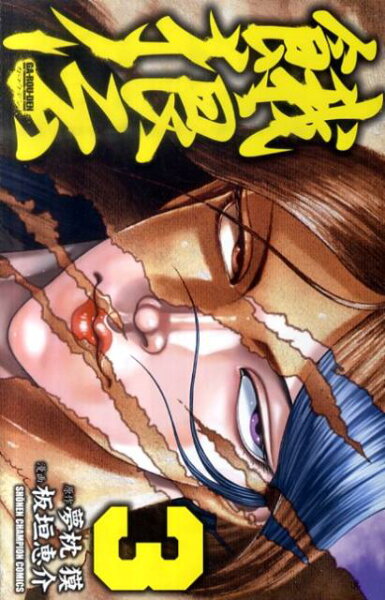
Garouden
Garouden follows Bunshichi Tanba, a former judoka who operates in the underground fighting world — a manga drawn by Jiro Taniguchi with psychological depth and physical authenticity rare in fighting manga.
Action / Adventure
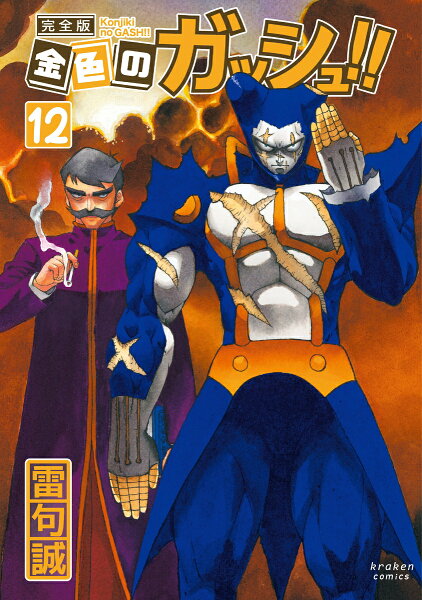
Zatch Bell!
A review of Zatch Bell! — 33 volumes in Weekly Shonen Sunday. Genius middle schooler Kiyo Takamine partners with demon child Zatch Bell in a battle royale of 100 demon/human pairs competing to become King of the Mamodo World; Zatch wants to be a kind king. The manga that made an entire generation cry about a book burning. VIZ Media's English edition is complete.
Action / Supernatural
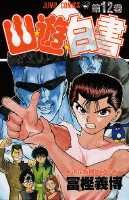
Yu Yu Hakusho
A review of Yu Yu Hakusho — 19 volumes in Weekly Shonen Jump. Yusuke Urameshi dies heroically saving a child, is recruited as a Spirit Detective to investigate supernatural cases, and grows from a delinquent who doesn't care about anything into someone with people worth protecting. The series Togashi made before Hunter x Hunter. VIZ Media's English edition is complete.
Action / Supernatural
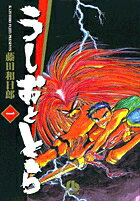
Ushio and Tora
Yu's review of Ushio and Tora — Ushio finds an ancient beast-spirit called Tora pinned under the temple floor; he releases Tora to fight other spirits threatening his town; Tora intends to eat Ushio eventually; they travel Japan fighting supernatural threats.
Written by
Yu
Manga Enthusiast from Japan
I grew up in Japan and manga literally saved me during a tough time in elementary school. My English isn't perfect, but my love for manga is real — and I want to share it with you.