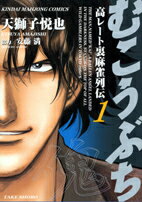
Mukobuchi Review: The Mahjong Manga Where the Best Player at the Table Was Never Playing for the Same Reasons
by Yasushi Amasaki
Read the first volume. If it doesn't hook you, put it down. It'll hook you.
Buy Mukobuchi on Amazon →*Affiliate link — I earn a small commission at no extra cost to you.
He sits down. Everyone else suddenly remembers what they were really there for.
Quick Take
- Yasushi Amasaki's long-running mahjong manga — Asakura, the enigmatic master who exposes the people he plays against
- Over 70 volumes published in Kindai Mahjong, the dedicated mahjong manga magazine
- Episodic structure with each arc a discrete game and a discrete moral examination
Who Is This Manga For?
- Mahjong manga readers who want the genre's most consistent contemporary entry
- Episodic-format fans who want self-contained intense stories rather than long arcs
- Character-study readers who want each game's antagonist to be a different psychological portrait
- Anyone fascinated by the figure of the master who reveals truth simply by being present
Content Warnings & Age Rating
Age Rating: M (Mature) Content Warnings: High-stakes gambling, criminal underworld, occasional violence.
For mature readers.
Yu's Rating
| Category | Score |
|---|---|
| Story Depth | ★★★★☆ |
| Art Style | ★★★★☆ |
| Character Development | ★★★★☆ |
| Accessibility for Non-Japanese Readers | ★★☆☆☆ |
| Reread Value | ★★★★☆ |
Story Overview
Asakura is a mahjong player whose reputation precedes him into every game. He plays in high-stakes underground sessions where the other players are typically wealthy, powerful, or both. What sets Asakura apart isn't just his skill — it's that his presence reveals what the other players are really doing at the table.
The greedy reveal their greed. The cruel reveal their cruelty. The desperate reveal their desperation. Asakura himself remains opaque — his motivations, his backstory, even his name are kept ambiguous. The series treats him as a mythic figure: not a person but a force whose function is revelation.
Each arc is essentially self-contained: a new high-stakes game, a new set of opponents, a new revelation about who they are when they think the only thing at risk is money. Across 70+ volumes, the format hasn't worn out, because human variety is the actual subject — each new opponent is a fresh psychological portrait.
Characters
Asakura: A mythic protagonist whose opacity is the series' defining choice — his masterful play reveals others rather than himself.
The opponents: Each volume's antagonists are rendered with enough specificity to make their revelations meaningful — variations on greed, pride, cruelty, and desperation.
Art Style
Amasaki's art has the steady atmospheric quality of seinen mahjong manga — close-ups on tense faces, mahjong sequences with technical clarity, the visual texture of underground gambling rooms. Asakura's design is deliberately unremarkable, which makes his presence's effect more striking.
Cultural Context
Mukobuchi began in 1996 in Kindai Mahjong (the dedicated mahjong manga magazine) and has continued for nearly 30 years. The series belongs to the dedicated-magazine tradition of mahjong manga, where readers come for the games as much as the stories.
The "Mukobuchi" of the title refers to a mahjong term meaning "the player across the table" — Asakura is always the Mukobuchi, the unknown across from you who turns out to be more dangerous than you expected.
What I Love About It
I love that Asakura never explains himself.
A lesser version of this character would have a backstory, a motivation, a reason for being who he is. Mukobuchi refuses. Asakura simply is. He shows up, plays, leaves, and what remains is what he revealed about the other players. The opacity is the moral architecture: revelation is about them, not him.
What English-Speaking Fans Say
Limited international audience. Among dedicated mahjong manga readers who have engaged with it through fan translations, regarded as one of the most consistently high-quality entries in the genre.
Memorable Scene ⚠️ Spoiler Warning
A game where a wealthy opponent realizes mid-session that Asakura has structured the game to expose his cruelty to his own associates — and the recognition that his social standing is over even before the game ends. The scene exemplifies Asakura's actual function: not winning money, but revealing truth.
Similar Manga
| Title | Its Approach | How Mukobuchi Differs |
|---|---|---|
| Akagi | Mahjong prodigy with extreme intensity | Mukobuchi is more episodic and character-study oriented |
| Naki no Ryu | Yakuza-mahjong with conflicted master | Asakura is opaque rather than tortured |
| Tenpai | Long-form mahjong career | Mukobuchi is episodic rather than career-tracking |
Reading Order / Where to Start
Volume 1. The format is consistent throughout, so any starting point works, but volume 1 introduces Asakura's mystique.
Official English Translation Status
Mukobuchi has no official English translation.
Pros & Cons
Pros
- Asakura is one of mahjong manga's most distinctive protagonists
- Episodic format keeps each arc fresh
- 70+ volumes of consistent quality
- The opacity choice gives the series moral weight
Cons
- No English translation
- Mahjong knowledge is necessary for full appreciation
- The episodic structure limits sustained character arc
- Asakura's opacity may frustrate readers wanting more access
Is Mukobuchi Worth Reading?
For mahjong manga readers who want a contemporary long-runner and appreciate episodic character studies, yes — this is one of the genre's most consistently strong works. For readers who need protagonist development or full backstories, Asakura's opacity will frustrate. As mahjong character-study, it's exemplary.
Format Comparison
| Format | Notes |
|---|---|
| Physical | Japanese editions available |
| Digital | Available in Japanese |
| Omnibus | Collected editions available |
Where to Buy
No English release yet. That just means you find it before everyone else does.
*Affiliate link — I earn a small commission at no extra cost to you.
More Manga You Might Like
Action / Drama
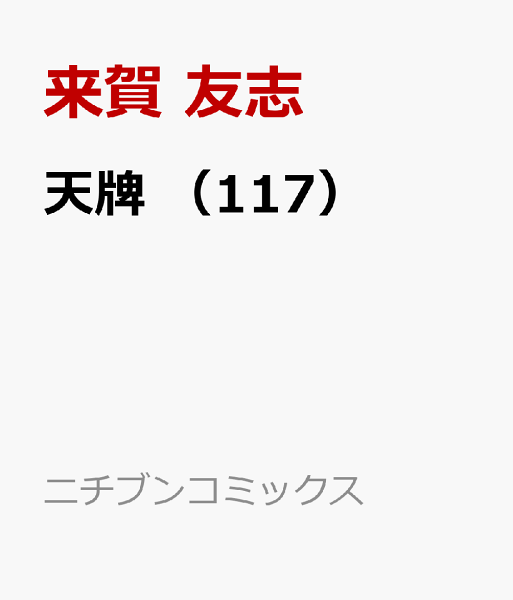
Tenpai
Tenpai is a long-running mahjong manga following Manabu Sotokawa, a young player whose talent draws him into the upper reaches of Japan's mahjong underworld — over 100 volumes of high-stakes games, mentor relationships, and psychological warfare at the table.

Action / Mystery
Case Closed (Detective Conan)
Yu's review of Case Closed (Detective Conan) — Shinichi Kudo is a teen genius detective who is given a poison by a criminal organization and shrunk to elementary school age; he lives with his childhood friend's family using a fake identity as Conan Edogawa; every volume contains multiple murder mysteries he must solve while hiding who he is.
Action / Comedy
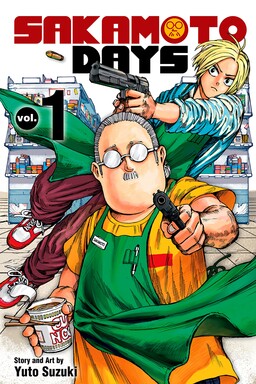
Sakamoto Days
Yu's review of Sakamoto Days — Taro Sakamoto was the most feared hitman in the world; he retired when he fell in love, married, and opened a convenience store; now overweight, domestically happy, and out of practice, he must repeatedly deal with the assassin world that cannot accept his retirement; an action comedy about a legendary fighter who would rather stock shelves.
Comedy / Action
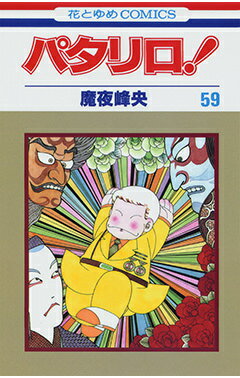
Patalliro!
A child king runs a tiny country with the help of MI6 assassins, BL romance subplots, and absolute chaos.
Action / Comedy
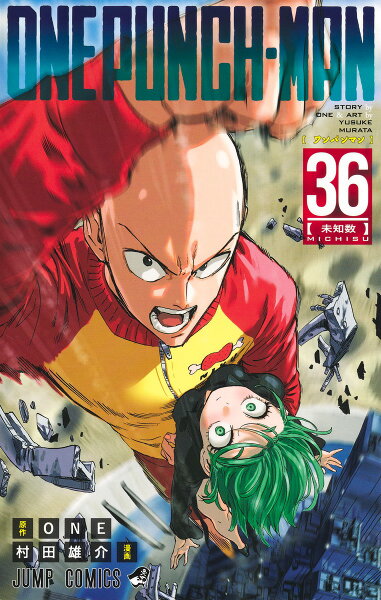
One Punch Man
Yu's review of One Punch Man — a manga about the most powerful hero in the world who can't feel excited about anything anymore because he always wins in one punch. Visually the most spectacular action manga alive. Philosophically surprisingly deep.
Action / Adventure
One Piece
Yu's review of One Piece — the manga that has been running for over 25 years and still feels alive. About freedom, friendship, and one ridiculous boy who refuses to be defined by anyone else's rules.
Written by
Yu
Manga Enthusiast from Japan
I grew up in Japan and manga literally saved me during a tough time in elementary school. My English isn't perfect, but my love for manga is real — and I want to share it with you.