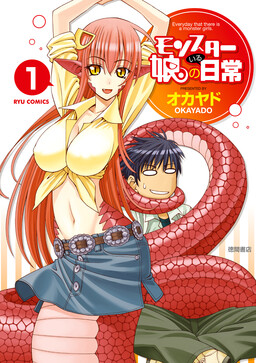
Monster Musume Review: A Man Becomes Host to Monster Girls Under Japan's Cultural Exchange Program
by Okayado
Read the first volume. If it doesn't hook you, put it down. It'll hook you.
Buy Monster Musume: Everyday Life with Monster Girls on Amazon →*Affiliate link — I earn a small commission at no extra cost to you.
Quick Take
- The monster girl premise is executed with genuine world-building — the Cultural Exchange Program creates real social questions about integration that the comedy plays against
- Each monster girl is designed with specific creature-type logic that the series uses consistently
- 17 volumes complete; the defining monster girl harem manga with heavy M-rated content
Who Is This Manga For?
- Adult readers who want harem comedy with monster girl designs and M-rated content
- Anyone interested in the world-building around monster integration into human society
- Fans of "extreme situation comedy" where the premise generates most of the humor
- Readers who accept heavy M-rated content in romantic comedy
Content Warnings & Age Rating
Age Rating: M (Mature) Content Warnings: Explicit fan service and sexual content throughout; monster girl designs emphasize physical attributes; comedic violence; mature content on nearly every page
M rating — adult readers only; the content is consistent and prominent.
Yu's Rating
| Category | Score |
|---|---|
| Story Depth | ★★☆☆☆ |
| Art Style | ★★★★☆ |
| Character Development | ★★★☆☆ |
| Accessibility for Non-Japanese Readers | ★★★★☆ |
| Reread Value | ★★★☆☆ |
Story Overview
Monster species have been living alongside humans, hidden, until now. Japan has established the Interspecies Cultural Exchange Program — monster girls (and boys) can live with human host families, integrating into society while the legal framework catches up. The law currently forbids sexual relationships between humans and monsters.
Kimihito Kurusu did not volunteer. Through a series of bureaucratic accidents, he ends up hosting Miia the lamia, then a harpy named Papi, then a centaur named Centorea, then more. Each new household member has creature-specific needs, cultural assumptions from her species, and strong feelings about Kimihito.
The series balances the harem comedy — everyone wants Kimihito, the law forbids it, chaos ensues — with genuine attention to what each creature type's biology actually implies for daily life. The lamia's temperature requirements, the harpy's bird instincts, the centaur's size — the world-building is consistent.
Characters
Kimihito Kurusu — The host whose kindness is genuine; he treats each resident's needs as real rather than as obstacles, which is why everyone is drawn to him.
Miia — The lamia who arrived first and whose snake physiology and emotional directness make her the series' central love interest.
The expanding household — Each monster girl represents a different creature type with different biology, culture, and comedic potential.
Art Style
Okayado's art is the series' primary appeal — each monster girl design integrates human and creature elements with anatomical specificity. The series is visually inventive in how it handles snake tails, wings, centaur lower bodies, and other creature features in daily situations. The M-rated content is rendered with explicit detail.
Cultural Context
Monster Musume ran in Monthly Comic Ryuu from 2012 and was one of the foundational titles of the monster girl genre's mainstream moment. The Cultural Exchange Program setup gives the series a real-world parallel to immigration and integration debates — the legal status of monsters, their rights, their obligations — that the comedy uses as backdrop without making a strong argument about it.
What I Love About It
The world-building is consistent. The creatures have biology that the series takes seriously — what a lamia actually needs in terms of warmth, how a harpy actually processes grain, what a centaur's relationship to her lower body actually means culturally. The comedy works partly because the premise is developed with genuine thought.
What English-Speaking Fans Say
Western readers describe Monster Musume as the definitive monster girl manga — specifically noted for the creature designs being more thoughtfully developed than competitors, for each girl having a distinct personality alongside her creature type, and for the world-building giving the harem premise unusual coherence. Recommended specifically for readers who want the genre at its most developed.
Memorable Scene ⚠️ Spoiler Warning
Any chapter where Kimihito has to solve a practical problem created by a specific creature's biology — and the solution reveals something about both his character and the creature type — is the series' most creatively satisfying content.
Similar Manga
- Interviews with Monster Girls — Monster beings in human society in less explicit register
- High School DxD — Harem with supernatural beings in M-rated register
- To Love-Ru — School harem with alien girls in similar content level
- Omamori Himari — Supernatural girl harem in similar action-comedy mix
Reading Order / Where to Start
Volume 1 — Miia's introduction and the Cultural Exchange Program setup establish the premise.
Official English Translation Status
Seven Seas published the complete English series. All 17 volumes available.
Pros & Cons
Pros
- Creature design is genuinely inventive
- World-building is more consistent than typical harem manga
- Each girl has real personality beyond creature type
- Complete in 17 volumes
Cons
- M-rated content is heavy and dominant
- Harem structure limits individual relationship development
- Not accessible to readers who object to content level
Format Comparison
| Format | Notes |
|---|---|
| Individual Volumes | Seven Seas; complete series |
| Digital | Available |
Where to Buy
Read the first volume. If it doesn't hook you, put it down. It'll hook you.
This post contains affiliate links. If you purchase through these links, I may earn a small commission at no extra cost to you. As an Amazon Associate, I earn from qualifying purchases.
*Affiliate link — I earn a small commission at no extra cost to you.
More Manga You Might Like
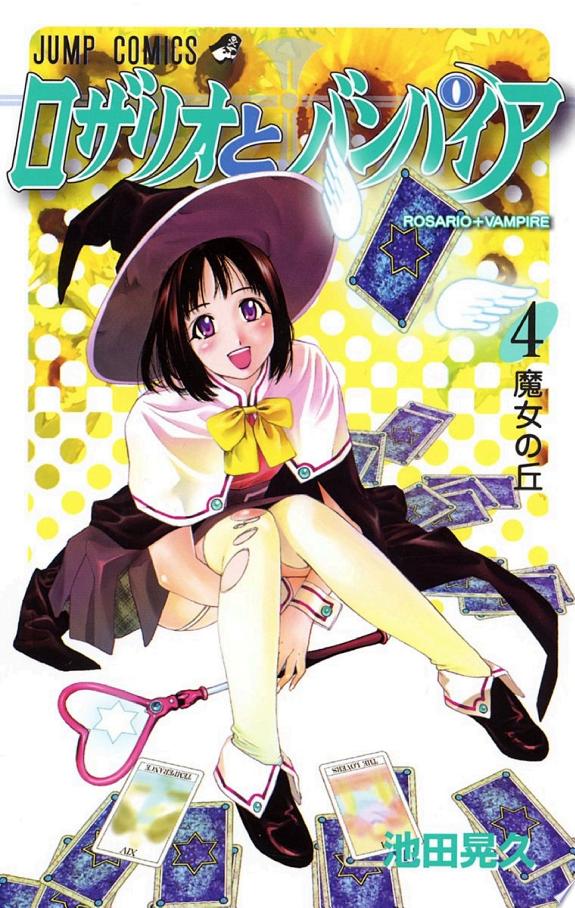
Action / Romance
Rosario+Vampire Season II
Yu's review of Rosario+Vampire Season II — the continuation of Rosario+Vampire follows Tsukune and his monster companions back to the human world and into the politics of the monster world; significantly darker and more action-focused than the first series, with genuine consequences and a more ambitious plot.

Romance / Comedy
To Love Ru
Yu's review of To Love Ru — Rito Yuuki has never been able to confess to his classmate Haruna; his situation becomes considerably more complicated when an alien princess named Lala teleports into his bathtub, decides he will be her fiancé, and brings the political complications of the galactic succession to his high school.
Action / Comedy
The Fable
Yu's review of The Fable — Akira (codename 'The Fable') is considered the deadliest assassin in Japan; his boss orders him to take a year off and live as an ordinary person without killing anyone; the comedy of an extraordinarily dangerous man trying and mostly succeeding at being normal while the criminal world swirls around him.

Action / Romance
Call of the Night
Yu's review of Call of the Night — Ko Yamori cannot sleep; unable to feel anything during the day, he starts sneaking out at night and discovers that he actually belongs in the night; when he meets Nazuna, a vampire who drinks blood from sleeping humans, he asks her to turn him into a vampire — but the only way to become one is to fall in love.
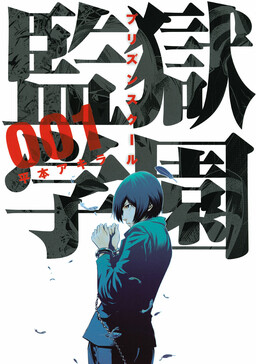
Action / Comedy
Prison School
Yu's review of Prison School — five boys enroll at a recently co-educational girls' school and are immediately imprisoned in the on-campus detention facility by the Underground Student Council for a minor violation; the series follows their attempts to escape while serving a month's sentence.
Action / Historical
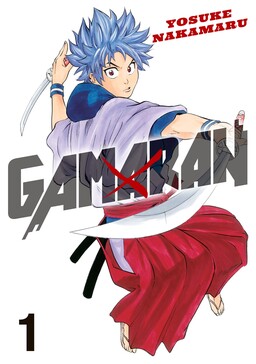
Gamaran
Yu's review of Gamaran — Gama Kurogane, son of Japan's greatest swordsman, is recruited to help a young lord win a martial arts tournament; against schools representing every style of Japanese combat, Gama's natural genius and the mysterious Ogame style are tested against opponents who may be his equal.
Written by
Yu
Manga Enthusiast from Japan
I grew up in Japan and manga literally saved me during a tough time in elementary school. My English isn't perfect, but my love for manga is real — and I want to share it with you.
Disclosure: This post contains affiliate links. As an Amazon Associate, I earn from qualifying purchases at no extra cost to you.