
Mogura no Uta Review: The Undercover Cop Manga That Made Going Deep Mean Going Forever
by Noboru Takahashi
Read the first volume. If it doesn't hook you, put it down. It'll hook you.
Buy Mogura no Uta on Amazon →*Affiliate link — I earn a small commission at no extra cost to you.
The job was to infiltrate. The risk was that infiltrating would become indistinguishable from being.
Quick Take
- Noboru Takahashi's 84+ volume Big Comic Spirits undercover-yakuza manga — Reiji's deep-cover infiltration of the Sukiya-kai
- Combines undercover thriller, yakuza fiction, and character-comedy in a way few works manage
- One of Spirits' defining 21st-century long-runners
Who Is This Manga For?
- Yakuza fiction readers who want the undercover-cop angle
- Long-running seinen fans who want a series whose world expands across decades
- Genre-blending enthusiasts who appreciate when serious and comic registers coexist
- Anyone fascinated by the question of what undercover work does to identity
Content Warnings & Age Rating
Age Rating: M (Mature) Content Warnings: Yakuza violence, sexual content, adult comedy, undercover work and its psychological costs.
For mature readers comfortable with seinen darkness combined with adult comedy.
Yu's Rating
| Category | Score |
|---|---|
| Story Depth | ★★★★☆ |
| Art Style | ★★★★☆ |
| Character Development | ★★★★★ |
| Accessibility for Non-Japanese Readers | ★★★☆☆ |
| Reread Value | ★★★★☆ |
Story Overview
Reiji Kikukawa is a police officer fired for incompetence — he is impulsive, unprofessional, frequently inappropriate. The fire is staged. He is then deep-cover-inserted into the Sukiya-kai yakuza organization with the assignment of working his way up through the ranks toward the top. His apparent flaws are actually his asset: he is the kind of man the yakuza will accept because he reads as one of their own.
The series follows his climb across many years and many volumes. He earns the trust of yakuza brothers, takes on responsibilities, becomes genuinely effective at his cover role. The question that haunts the work: at what point is his cover so deep that it stops being cover? The answer is never delivered cleanly because the actual answer in undercover work is never clean.
What makes the series long-form viable is the combination of registers. Reiji is genuinely funny — Takahashi has a gift for adult comedy that lightens the seinen weight. The yakuza politics are serious and often dark. The undercover-cop element provides ongoing tension. The blend works because Takahashi commits to all three rather than letting any dominate.
Characters
Reiji Kikukawa: A protagonist whose performed flaws and real ones become indistinguishable across the series — his transformation is the work's central subject.
The Sukiya-kai brothers: Each rendered with enough specificity to make Reiji's relationships matter — the yakuza are not abstractions.
The handlers and police contacts: The narrowing connection to Reiji's original life is one of the series' quiet themes.
Art Style
Takahashi's art has the energetic, slightly cartoonish register that supports the comedic dimension while remaining capable of seinen weight when needed. Characters are visually distinctive, action is clear, sexual content is depicted with the directness adult seinen permits.
Cultural Context
Mogura no Uta began in 2005 in Big Comic Spirits and has continued for nearly 20 years. The series belongs to Spirits' tradition of long-running seinen that defines the magazine's character. Multiple film adaptations have brought it broader cultural recognition.
The deep-cover-cop genre has a long history in Japanese fiction (Ningen Gunzo, others), but Takahashi's particular combination of comedy and seriousness is distinctive.
What I Love About It
I love that Reiji becomes effective.
A more cynical version of this story would have Reiji either fail or succeed cleanly. Takahashi does something harder: Reiji becomes good at being a yakuza. He builds real relationships, takes real responsibility, develops real competence. The reader watches him become the thing he was sent to monitor, and the becoming is what the series is actually about. The undercover premise is the structure; identity transformation is the subject.
What English-Speaking Fans Say
Limited international awareness without translation. Among readers familiar with it through fan translations or film adaptations, regarded as one of the strongest contemporary yakuza-genre works in manga.
Memorable Scene ⚠️ Spoiler Warning
A scene where Reiji, after years undercover, has to make a decision that requires choosing between his cover identity's loyalties and his original cop identity's mission — and the decision reveals which identity has actually become primary. The scene crystallizes the series' subject.
Similar Manga
| Title | Its Approach | How Mogura no Uta Differs |
|---|---|---|
| Sanctuary | Yakuza-and-politics dual narrative | Mogura no Uta is undercover and more comedic |
| Old Boy | Revenge-mystery seinen drama | Different premise but shares the seinen seriousness |
| Naniwa Kinyudo | Loan-business seinen with comedic register | Similar Spirits-tradition combination of comedy and seriousness |
Reading Order / Where to Start
Volume 1. The undercover premise and Reiji's character must establish before later developments make sense.
Official English Translation Status
Mogura no Uta has no official English translation.
Pros & Cons
Pros
- Among the strongest contemporary yakuza-undercover manga
- Reiji's transformation across 84+ volumes is a genuine achievement
- Comedy and seriousness coexist successfully
- Ongoing with continued vitality
Cons
- No English translation
- 84+ volumes is a major commitment
- Adult content (sexual, violent) limits readership
- Comic-tonal register may surprise readers expecting pure thriller
Is Mogura no Uta Worth Reading?
For yakuza fiction readers, undercover-thriller fans, and seinen long-runner enthusiasts, yes — this is among the strongest contemporary works in its category. For readers uncomfortable with adult content or unwilling to commit to the length, this isn't the right entry. As major seinen long-runner, it earns its scale.
Format Comparison
| Format | Notes |
|---|---|
| Physical | Japanese editions available |
| Digital | Available in Japanese |
| Omnibus | Collected editions available |
Where to Buy
No English release yet. That just means you find it before everyone else does.
*Affiliate link — I earn a small commission at no extra cost to you.
More Manga You Might Like
Action / Drama
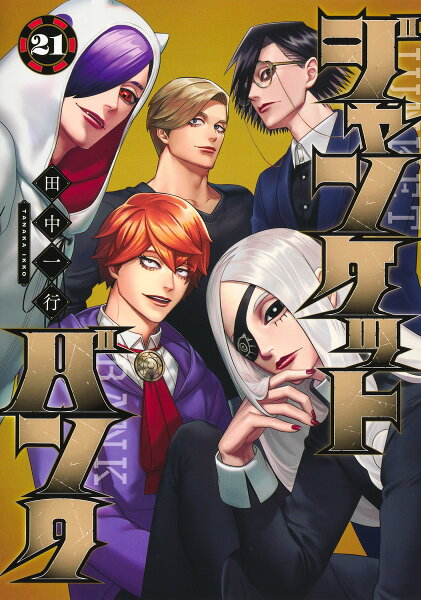
Juncket Bank
Juncket Bank follows Shinonome Ginji, a man who discovers he cannot lose at any game of chance — and a casino operator who wants to harness this ability for something far more dangerous than ordinary gambling.
Action / Drama
Hakuryuu
Hakuryuu follows Hakuryu, a yakuza whose intelligence and ambition take him through the Japanese underworld with the procedural precision of business fiction — Manga Goraku's 25-volume yakuza epic that treated the criminal world as a working economy.
Action
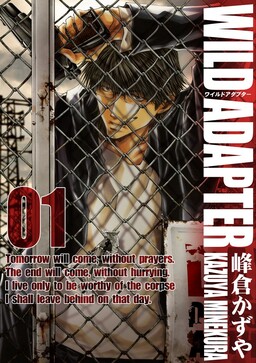
Wild Adapter
Yu's review of Wild Adapter — Makoto Kubota is a Yakuza boy genius who gets drawn into investigating Wild Adapter, a drug that turns users into monsters; he finds Tokito, a boy with no memory and a monster's hand, and takes him home; Kazuya Minekura's crime manga about an unlikely pair and the mystery of a transforming drug.
Action / Drama
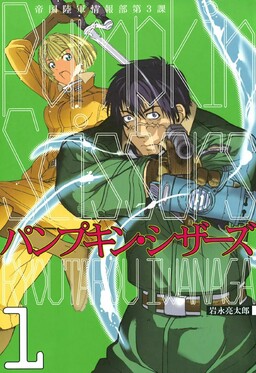
Pumpkin Scissors
Yu's review of Pumpkin Scissors — a ceasefire has ended the war between the Empire and the Republic, but the civilian population is suffering from poverty, bandit violence, and the breakdown of social infrastructure; the Imperial Army's Section III — Pumpkin Scissors — is supposed to handle war relief; Alice L. Malvin leads the section with the conviction that soldiers have an obligation to serve civilians; Randel Oland, a massive ex-soldier with a blue lantern and a traumatic past, joins.
Action / Drama
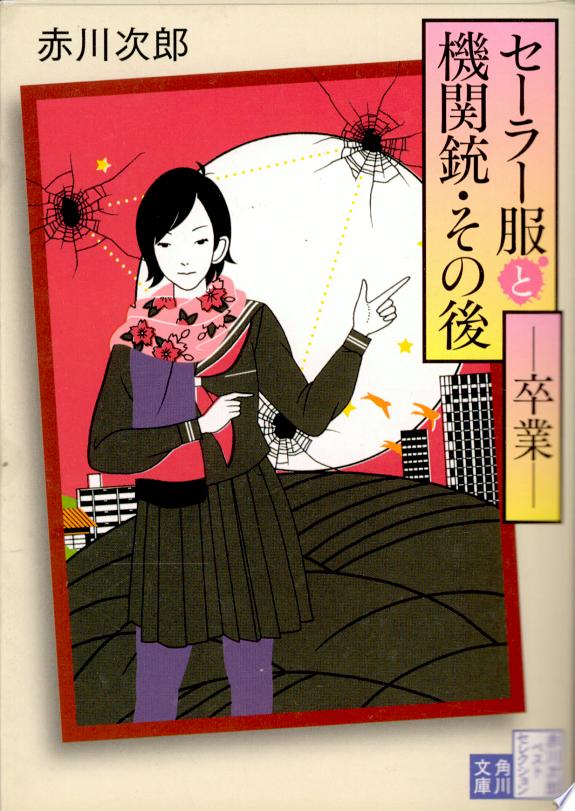
Sailor Fuku to Kikanjuu
Sailor Fuku to Kikanjuu is the manga adaptation of Jiro Akagawa's novel about Izumi Hoshi, a high school girl who inherits leadership of a small yakuza family — a compact comic-dramatic work whose premise became one of Japanese popular culture's most recognized.
Action / Drama
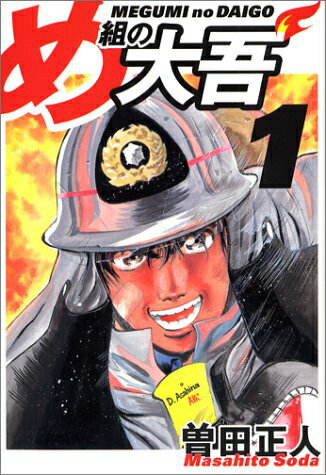
Daigo of Fire Company M
Daigo of Fire Company M follows Daigo Asahina, an extraordinary new firefighter who joins Company M — and the question of what drives a young man of exceptional ability to choose the most dangerous possible job.
Written by
Yu
Manga Enthusiast from Japan
I grew up in Japan and manga literally saved me during a tough time in elementary school. My English isn't perfect, but my love for manga is real — and I want to share it with you.