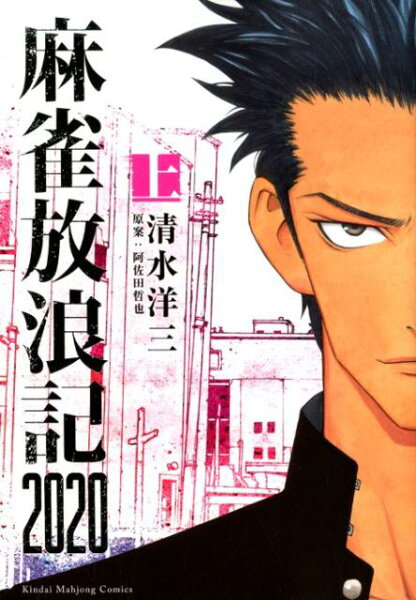
Mahjong Hourouki Review: The Postwar Manga Where Survival Meant Knowing Which Tiles Mattered
by Tatsuhiko Kuroki
Read the first volume. If it doesn't hook you, put it down. It'll hook you.
Buy Mahjong Hourouki on Amazon →*Affiliate link — I earn a small commission at no extra cost to you.
After the war, when nothing else worked, mahjong worked. Some people learned that lesson well. Some people learned it too well.
Quick Take
- Tatsuhiko Kuroki's manga adaptation of Tetsuya Asada's classic postwar novel — Bouya the drifter learning mahjong in postwar Tokyo
- 21 volumes capturing the rubble-economy era through gambling halls and the people who survived in them
- A manga adaptation of one of Japanese literature's most respected mahjong narratives
Who Is This Manga For?
- Mahjong manga readers who want the genre's literary, postwar register
- Historical fiction enthusiasts who want manga set in immediately-postwar Tokyo
- Adaptation readers who want the source novel's atmosphere translated visually
- Anyone interested in how survival and skill became indistinguishable in a particular era
Content Warnings & Age Rating
Age Rating: M (Mature) Content Warnings: Postwar poverty, criminal economy, gambling consequences, occasional violence.
For mature readers.
Yu's Rating
| Category | Score |
|---|---|
| Story Depth | ★★★★★ |
| Art Style | ★★★★☆ |
| Character Development | ★★★★☆ |
| Accessibility for Non-Japanese Readers | ★★★☆☆ |
| Reread Value | ★★★★☆ |
Story Overview
Bouya is a young man in immediately-postwar Tokyo, where the formal economy has collapsed and the informal economy of black markets, gambling halls, and survival hustles has taken its place. He learns mahjong from older players who have already adapted to this world. The game becomes both his livelihood and his education in what kinds of people the era has produced.
Each arc is a chapter in his drift through the era's gambling underworld. He encounters legendary players whose names carry weight in this small world, hustlers whose techniques he must learn to recognize, women whose presence in these halls was its own kind of survival, and yakuza whose interest in mahjong is interest in money and power rather than the game.
The series adapts Asada's source novels with respect for their literary register. The mahjong is rigorous, but the larger subject is a particular era — its texture, its desperation, its strange dignity in spaces that polite society wouldn't acknowledge. The reader emerges with a sense of postwar Tokyo as a place rather than just a setting.
Characters
Bouya: A young protagonist whose education is the series' subject — not just in mahjong but in the era's particular forms of survival.
The veteran players: Each represents a different style of postwar survival — different choices about how to live in the rubble economy.
The women of the halls: Rendered with enough specificity that they aren't simply background — their roles in the underworld are depicted with respect.
Art Style
Kuroki's art captures the period atmosphere with attention to architectural and material detail — the gambling halls, the streets, the clothing of the era. Faces during play are expressive without exaggeration; the style respects the source novel's literary register.
Cultural Context
Mahjong Hourouki is based on Tetsuya Asada's novels (1969-1972), which themselves drew on Asada's own experience in postwar mahjong halls. The novels are considered classics of postwar Japanese literature, and the manga adaptation has run since the 1990s as a continuing project to bring the source to new audiences.
Multiple film adaptations exist. The cultural memory of postwar Tokyo as depicted in this work is widely shared in Japan.
What I Love About It
I love how the manga treats the era as having dignity.
It would be easy to depict immediately-postwar Tokyo as purely degraded — poverty, crime, defeat. Mahjong Hourouki shows the dignity inside the degradation. The veteran players have codes. The hall owners have standards. Bouya's drift through this world is education in a culture that polite Japan would later prefer to forget. The manga preserves the memory of that culture without sentimentalizing it.
What English-Speaking Fans Say
Limited international awareness without translation. Among Japanese-literature readers familiar with Asada's source novels, the manga adaptation is regarded as a faithful and atmospheric rendering.
Memorable Scene ⚠️ Spoiler Warning
A scene where Bouya, late in his drift, recognizes that a veteran player who once mentored him has been broken by the era — and that the difference between survival and ruin in this world is narrower than skill alone can determine. The recognition is the series' clearest moral statement.
Similar Manga
| Title | Its Approach | How Mahjong Hourouki Differs |
|---|---|---|
| Akagi | Mahjong with prodigy in postwar setting | Akagi is supernatural in intensity; Mahjong Hourouki is grounded in literary realism |
| Tetsuya | Postwar mahjong hustler narrative | Same setting and source material relationship; both adapt the era differently |
| Onihei Hankacho | Period detective narrative | Different era, similar respect for historical specificity |
Reading Order / Where to Start
Volume 1. The drift narrative depends on the era's logic being established.
Official English Translation Status
Mahjong Hourouki has no official English translation.
Pros & Cons
Pros
- Faithful adaptation of a literary classic
- Postwar Tokyo rendered with atmospheric specificity
- Mahjong content is technically rigorous
- The era is treated with cultural respect
Cons
- No English translation
- Postwar Japan context requires significant familiarity
- Drift narrative pacing won't satisfy readers wanting tight arcs
- Mahjong knowledge enhances but isn't strictly required
Is Mahjong Hourouki Worth Reading?
For mahjong manga readers and postwar Japan enthusiasts who want literary atmosphere alongside genre rigor, yes — this is one of the most respected mahjong manga in the medium. For readers wanting fast pacing or contemporary settings, the historical drift may feel slow. As literary genre fiction, it's exceptional.
Format Comparison
| Format | Notes |
|---|---|
| Physical | Japanese editions available |
| Digital | Available in Japanese |
| Omnibus | Collected editions available |
Where to Buy
No English release yet. That just means you find it before everyone else does.
*Affiliate link — I earn a small commission at no extra cost to you.
More Manga You Might Like
Action / Drama
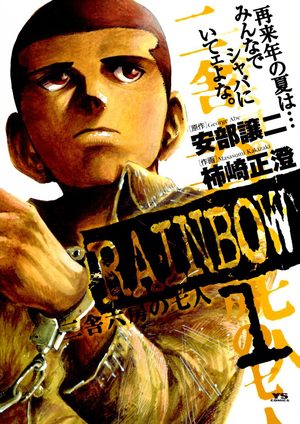
Rainbow: Nisha Rokubō no Shichinin
Yu's review of Rainbow — six juvenile delinquents are sent to a brutal reformatory in 1955 Japan and placed in Cell 6, where they bond with their cellmate Rokurouta Sakuragi, a former boxer who teaches them what it means to survive with dignity.
Action / Drama
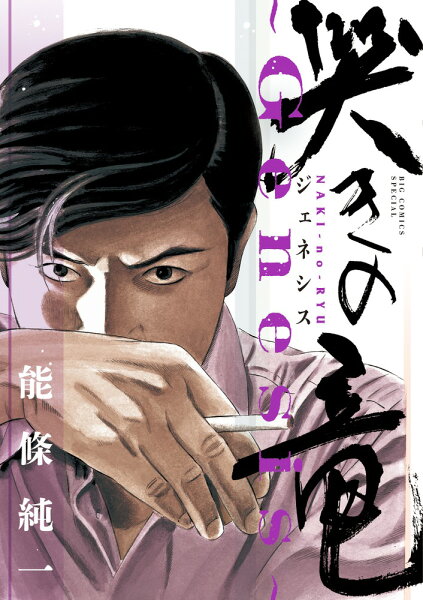
Naki no Ryu
Naki no Ryu follows Ryu, a mahjong master called by underworld figures to play games with consequences far beyond money — a yakuza-mahjong manga that turned the table into a stage where lives, allegiances, and futures were decided.
Action / Drama
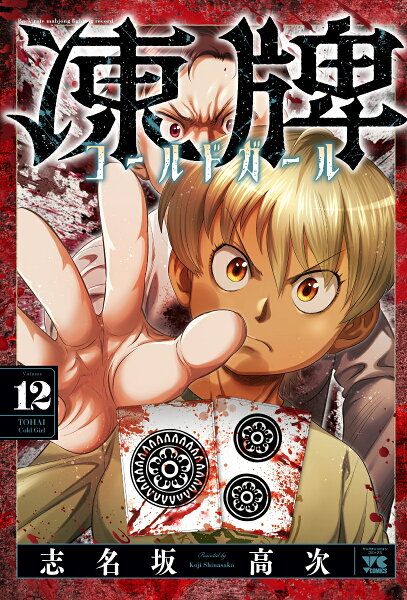
Toupai
Toupai follows K, a high-school mahjong prodigy who plays in underground games where the consequences for losing extend far beyond money — a brutal modern entry in the mahjong-manga tradition where the table is a literal battlefield.
Action / Comedy
Uchihime Obakamiko
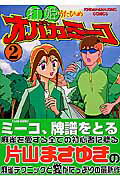
Uchihime Obakamiko is Nobuyuki Fukumoto's lighter mahjong manga — Mieko, an enthusiastic but technically poor player whose mentor Toshio reluctantly trains her, with the comedic premise that even Fukumoto can write characters who are not psychological warlords.
Action / Comedy
Gambler Jiko Chuushinha
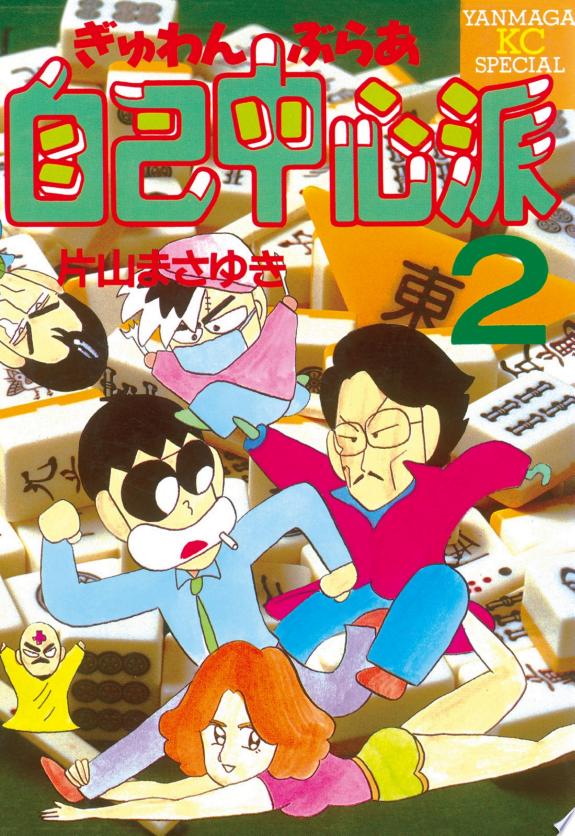
Gambler Jiko Chuushinha is Masayuki Katayama's mahjong comedy from Weekly Young Magazine — a 17-volume tribute to mahjong's social culture, where the comedy comes from the players' bizarre personalities while the mahjong remains genuinely played.
Action / Sci-Fi
Cobra
Cobra is the greatest space pirate who ever lived — charming, unstoppable, and armed with the Psychogun fused to his arm — in a galaxy-spanning adventure that turned stylish cool into a manga philosophy.
Written by
Yu
Manga Enthusiast from Japan
I grew up in Japan and manga literally saved me during a tough time in elementary school. My English isn't perfect, but my love for manga is real — and I want to share it with you.