
Magic Kaito Review — Gosho Aoyama's Phantom Thief Manga That Came Before Detective Conan and Now Lives Inside It
by Gosho Aoyama
Read the first volume. If it doesn't hook you, put it down. It'll hook you.
Buy Magic Kaito on Amazon →*Affiliate link — I earn a small commission at no extra cost to you.
I was nine years old at a Detective Conan movie. Magician of the Silver Sky. I remember the moment Kaitou Kid appeared on screen — white suit, monocle, that specific glide as he stepped off the building's edge — and the entire theater of Japanese kids made the same small sound at once. Not a cheer. Something quieter. Recognition. Half the kids in that theater had been waiting for him longer than they had waited for the actual plot.
I am still half those kids, every time.
Quick Take
- The original Kaitou Kid manga — Gosho Aoyama's pre-Conan phantom thief work from 1988, 5 volumes, on permanent hiatus
- Joyful, theatrical heists with real emotional weight underneath the showmanship
- Age rating: T (Teen) — completely safe; one of the most family-friendly entries in the Aoyama catalog
Magic Kaito vs Magic Kaito 1412: What's the Difference?
This question comes up often, so let me address it directly.
- Magic Kaito (まじっく快斗) — the original manga by Gosho Aoyama, published 1988–onwards in Weekly Shonen Sunday. 5 volumes. Currently on indefinite hiatus: Aoyama paused it in the early 1990s to start Detective Conan, and the series has only received sporadic chapters since. The last new chapter appeared in 2017
- Magic Kaito 1412 — the 2014 anime adaptation by A-1 Pictures. 24 episodes. Adapts the existing 5 volumes of manga content. The "1412" refers to Kid's first appearance time (14:12) in one of the manga's most famous heists, but also marks the anime as a 2014 modernized retelling
- Detective Conan crossovers — Kaitou Kid has been a recurring antagonist in Detective Conan since 1996. He appears in dozens of Conan chapters and headlines several of the annual Conan films. Most of Kid's actual story content since the 1990s has been published as Conan chapters, not Magic Kaito chapters
If you searched "Magic Kaito manga" expecting an ongoing series: it's not. Aoyama has prioritized Detective Conan for thirty years. If you want more Kid content beyond the 5 Magic Kaito volumes, you get it through Detective Conan.
If you searched "Magic Kaito 1412": that's the anime. The manga it adapts is the 5-volume Magic Kaito.
What Is Magic Kaito About?
Kaito Kuroba is a Japanese high school student. He lives a normal life: good grades, magic-trick hobby, friendship with his childhood neighbor Aoko Nakamori. He is unremarkable on the surface and quietly extraordinary in private — he has been practicing stage magic since he could walk because his father, Toichi Kuroba, was a world-famous stage magician.
Toichi died years before the manga begins. Officially, he died in an accident during a magic show. Kaito has spent his teen years quietly mourning him.
The manga opens with Kaito accidentally discovering a hidden passage in his house. The passage leads to a secret room. The room contains: white suits, top hats, monocles, a complete crime-fighter (or in this case crime-causing) wardrobe. His father was Kaitou Kid — the legendary "Phantom Thief 1412," a charismatic burglar who specialized in stealing high-value jewels and returning them with theatrical flourish years before Kaito was born. Toichi's accident was not an accident; he was murdered by a shadow organization searching for one specific jewel.
The jewel is Pandora — a legendary gem that, when held under the right conditions during a specific astronomical event, sheds a tear that grants immortality. Toichi was hunting for Pandora to destroy it before the organization could find it. The organization killed him before he could finish.
Kaito decides to continue his father's work. He puts on the suit. He becomes the second-generation Kaitou Kid. His goal:
- Find Pandora before the organization does, and destroy it
- Identify and stop the organization that killed his father
- Maintain his ordinary teenage life as Kaito Kuroba — and especially keep his secret from Aoko, whose own father is Inspector Nakamori, the police officer assigned to capture Kid
Across 5 volumes, Kaito pulls off elaborate heists that target every large jewel that might be Pandora. Each heist is announced in advance (Kid leaves notice cards specifying when and what he will steal). Each heist is a public spectacle. Each heist requires Kaito to defeat the police, escape Inspector Nakamori, occasionally outwit a teenage detective named Shinichi Kudo (you may know him from another series), and return the jewel publicly when it turns out not to be Pandora.
The 5 volumes are essentially a perfect introduction. The series is on hiatus. Kid's story continues, but in Detective Conan rather than Magic Kaito.
Who Is This Manga For?
- Detective Conan fans who want Kid's origin story in his own series
- Phantom-thief story enjoyers (Lupin III, Persona 5, Cat's Eye)
- Stage magic fans — Aoyama's heist tricks are built on real magic principles
- Readers wanting short, light, fun mystery manga — 5 volumes, no commitment
- Newcomers to Aoyama — a gentler entry than Conan's 100+ volumes
Content Warnings & Age Rating
Age Rating: T (Teen) — 13+ Content Warnings: Mild action sequences; comedic peril (Kid is almost never in serious danger); the murder of Kaito's father is referenced but not depicted on-page; one shadow organization (Snake) provides recurring threat that is more thematic than graphic
This is one of the most family-friendly Aoyama works. Younger teens (10+) can read it without issue.
Story Overview
Volume 1 — The discovery. Kaito finds his father's secret. The first Kid heist as the second-generation thief. Introduction to Inspector Nakamori and the Kid-cop dynamic that has now run in Japanese pop culture for nearly four decades.
Volume 2 — Building the world. Aoko's role expands. The first encounters with the Snake organization. Kid's heist methodology (the notice cards, the public announcements, the theatrical reveals) crystallizes.
Volume 3 — The Akako Koizumi arc. Aoyama introduces Akako, a witch character whose magical abilities are real within the manga's logic. The series briefly leans into supernatural territory; some readers love this, others wish the manga had stayed grounded.
Volume 4 — Hakuba Saguru, the detective from Britain who appears in some of Kid's most famous Conan crossovers, is introduced. The cat-and-mouse with Hakuba becomes the focus.
Volume 5 — The most recent published volume. Contains the last regular chapters. Ends without resolving the Pandora plot or the Snake organization.
After volume 5, Aoyama has published occasional new Magic Kaito chapters every few years — sometimes timed to a Detective Conan film featuring Kid — but the series has not had a regular serialization in decades.
Characters
Kaito Kuroba / Kaitou Kid — A protagonist whose joy is the manga's emotional engine. Kaito performs constantly — magic tricks, school pranks, the Kid persona itself — and the performance is real warmth, not deflection. He genuinely loves what he does. The grief over his father is the manga's quiet undercurrent; you see it surface in specific small moments, never in dramatic monologues. Kaito is what Shinichi Kudo (Detective Conan's protagonist) would have been if Aoyama had written him for joy rather than for puzzle-solving.
Aoko Nakamori — Kaito's childhood friend, daughter of the inspector hunting Kid. Spirited, energetic, given to physically swatting Kaito with a broom whenever he annoys her (the running gag of the series). Aoko has no idea Kaito is Kid. The dramatic irony of her hating Kid as her father's nemesis while loving Kaito as her best friend is one of the manga's most affecting threads.
Inspector Nakamori — Aoko's father. The dedicated Tokyo Metropolitan Police inspector whose career has been defined by failing to catch Kid. Aoyama writes him with respect — Nakamori is competent, hardworking, and ultimately outmatched by an opponent whose skills genuinely exceed his. The Kid-Nakamori dynamic is gentleman thief vs. honest cop in its purest form.
Saguru Hakuba — The British detective who appears in volume 4. Half-Japanese, half-British, bilingual, brilliant, formal. Suspects Kaito's identity. Their interactions are tense in a way Kid's interactions with Inspector Nakamori (who treats Kid as a separate person from anyone in his life) are not.
Akako Koizumi — Witch classmate of Kaito's. Has real magical abilities. Provides the manga's only consistent supernatural element. Romantically interested in Kaito (in a way Aoko isn't, though Aoko is the manga's actual romantic lead).
Snake — The shadow organization member who serves as Kid's primary antagonist. Sketched lightly; the larger Snake organization remains mysterious because the manga hasn't continued long enough to flesh it out.
Magic Kaito and Detective Conan: How Connected Are They?
Strongly connected, but the manga can be read independently.
Within Detective Conan: Kaitou Kid appears as a recurring antagonist (and occasional ally) approximately twice per year of Conan publication. He has appeared in nearly 100 Conan chapters and headlines or co-stars in several of the annual Conan films:
- The Last Wizard of the Century (1999) — the first Kid film
- Magician of the Silver Sky (2004)
- Lost Ship in the Sky (2010)
- Private Eye in the Distant Sea (2013)
- The Fist of Blue Sapphire (2019)
- The Bride of Halloween (2022)
- And others
The two series share continuity: Shinichi Kudo (Conan's protagonist) is the only detective who has reliably defeated Kid. Their cat-and-mouse is one of the most beloved running relationships in the Conan franchise.
For readers approaching Magic Kaito:
- If you've read Conan: Magic Kaito is the prequel/sidequel that explains who Kid is and why he steals
- If you haven't: Magic Kaito stands alone. The references to Shinichi/Conan are minor and you can follow without context
- The 5 Magic Kaito volumes plus a curated set of Kid-focused Conan chapters/films constitute the complete Kid experience
Art Style
Aoyama's late-1980s art (Magic Kaito volumes 1–3) is rougher than his current style. Volumes 4 and 5 are drawn closer to Conan-era Aoyama, which is the style most readers will be familiar with. The heist sequences are dynamic and clear; Aoyama's panel composition during action has always been strong.
The character designs are immediately recognizable to Conan readers — Kaito and Shinichi share a striking visual similarity (which is a plot point in some Conan crossovers, though Magic Kaito doesn't dwell on it). Aoko's design is one of the more distinctive female leads in the Aoyama catalog.
Cultural Context
Kaitou Kid belongs to the long Japanese tradition of the kaitou (怪盗, "phantom thief") — a noble or charismatic burglar who steals for principle or sport rather than greed. The genre's most famous Japanese entry is Arsène Lupin (translated and beloved in Japan since the early 20th century) and its native cousins include Lupin III (Monkey Punch), Cat's Eye (Tsukasa Hojo), and Rat the Phantom Thief (Akira Sakuma).
Aoyama's Kid joins this tradition with specific innovations: the public announcement system (notice cards), the stage-magic-as-method (Kid is a magician first, thief second), and the gentlemanly code (Kid never hurts anyone, returns what he steals when it doesn't contain Pandora).
The "Pandora gem" McGuffin is doing thematic work: Kid is, beneath the showmanship, on a 30-year quest to find and destroy an immortality jewel. He doesn't want the immortality. He wants the organization that killed his father to fail at getting it. The manga is, in its way, a quiet revenge story disguised as a comedy.
What I Love About It
The first heist in volume 1.
Kaito has just discovered who his father was. He has decided, in a single night, to become Kid. He puts on the suit. He goes to the venue. He announces, publicly, what he will steal. He has not practiced this. He has watched his father do it as a child but he has not done it himself.
What follows is, panel by panel, Kaito learning that he is good at this. He improvises his way past the police cordon. He uses one of his stage magic tricks in a way he had not anticipated using it. He performs — not just steals, performs — in front of a crowd of police officers and onlookers and feels, for the first time in his life, like he has found the thing he was made for.
Aoyama draws Kaito's face at the moment he realizes he is going to pull this off. The smile is not the cool Kid smile. It's the smile of a teenager who has just discovered something about himself. Bigger than the heist, bigger than the suit, bigger than the revenge plot. The smile is Kaito learning that grief can be braided into purpose, and that the father he lost taught him exactly the skills he needs to honor him.
That moment is the manga's whole emotional thesis in two panels. Kid is theatrical because he is grieving. The theater is how the grief becomes useful. Everything Kaito does for the rest of the series — every elaborate trick, every public announcement, every taunt at the police — is an extension of that first heist's discovery. He found what to do with his loss. He gets to do it on stage. The stage is wider than his school, wider than his town, wider than his father's reputation. The whole city is the stage.
I think that's why Japanese kids made that small sound when Kid appeared in the movie theater I sat in as a nine-year-old. He is what we wanted to be when we missed people. Not someone who grieves quietly. Someone who turns grief into a performance the whole city has to watch.
What English-Speaking Fans Say
Magic Kaito has a strong English-language fanbase, almost entirely built through Detective Conan crossovers and the 2014 Magic Kaito 1412 anime. The general response among readers who pick up the 5-volume manga after encountering Kid in Conan is enthusiasm — the manga is lighter, funnier, and warmer than Conan's standard register, and provides the Kid origin story the Conan chapters only hint at.
The most common criticism: the hiatus. Readers who fall in love with the 5 volumes inevitably want more, and there isn't more. The Conan chapters and films provide ongoing Kid content but don't continue the Pandora/Snake plot at the same depth.
Viz's English release is well-regarded.
Memorable Scene ⚠️ Light Spoiler
The end of volume 1 — specifically the panel after the first heist when Kaito returns home and looks at his father's photograph.
Kaito has just pulled off his first Kid heist. He should be celebrating. Instead, in the last few pages of the volume, he comes home, takes off the suit, puts it carefully back in the secret room, and stops in front of his father's photograph in the living room.
The panel is small. The lighting is dim. Kaito is in his school uniform. The photograph shows Toichi Kuroba smiling, holding a magician's hat. Kaito stands in front of it and does not say anything.
Aoyama draws Kaito's face in this panel with care. The cool Kid smile is gone. The teenage Kaito smile is gone. What's left is the face of a son talking to his father in the only way available to him now — not with words, but by having done something his father would have understood.
The next volume opens with Kaito's normal cheerful school self, back in performance mode. The grief is back underneath the surface. But the panel of him alone with the photograph is the part of the manga I keep coming back to. The Kid persona is loud. The grief is quiet. Aoyama lets both be true at once.
Similar Manga
| Title | Its Approach | How Magic Kaito Differs |
|---|---|---|
| Detective Conan (Gosho Aoyama) | Same universe; Kid is a recurring guest | Conan is mystery procedural; Magic Kaito is heist comedy |
| Lupin III (Monkey Punch) | The grandfather of phantom-thief manga | Lupin is more adult and dangerous; Kid is more youthful and theatrical |
| Cat's Eye (Tsukasa Hojo) | Female phantom thief team | Same gentleman-thief tradition, different aesthetic |
| Phantom Thief Kira (Tomoko Hayakawa) | Modern shoujo phantom thief | More romantic; Magic Kaito is more action-comic |
Reading Order / Where to Start
Volume 1. Five volumes; can be read in a weekend.
For Conan-first readers: read Magic Kaito after you've encountered Kid in a few Conan chapters or films. The manga deepens what you already love.
For Magic Kaito-first readers: read the 5 volumes, then dive into Detective Conan if you want more Kid (the Kid-focused Conan chapters and films are the unofficial continuation of Magic Kaito).
Official English Translation Status
Viz Media published all 5 volumes in English in print and digital. The series is complete as published in Japan (the hiatus means there is nothing else to translate). The 2014 Magic Kaito 1412 anime adaptation is available on streaming platforms.
Pros & Cons
Pros
- Joyful, theatrical heists with real emotional weight
- 5 volumes — a small commitment for a complete reading experience
- Kid is one of the most beloved characters in the Aoyama universe
- Gateway to Detective Conan or rewarding standalone read
- Family-friendly content with adult emotional depth
Cons
- On indefinite hiatus — the Pandora/Snake plot is unresolved
- Early-volume art is rougher than the late-volume art
- Some readers find the "Magic Kaito 1412" anime more accessible than the original manga
- The light comic-thriller tone is an acquired taste. It won't land for everyone, especially readers wanting darker mystery.
Is Magic Kaito Worth Reading?
Yes — for any fan of phantom thief stories or the Aoyama catalog. The 5 volumes are a tight, joyful, complete-enough experience even with the hiatus. The integration with Detective Conan means Kid lives on regardless of whether Magic Kaito returns.
Format Comparison
| Format | Notes |
|---|---|
| Physical (Viz) | All 5 volumes available in English |
| Digital | Available via Viz digital, Kindle, Comixology |
| Anime (Magic Kaito 1412, 2014) | 24-episode adaptation; available on streaming platforms |
| Detective Conan | Kid recurs in dozens of Conan chapters and several films; Viz publishes Conan in English |
Where to Buy
Read the first volume. If it doesn't hook you, put it down. It'll hook you.
This post contains affiliate links. If you purchase through these links, I may earn a small commission at no extra cost to you. As an Amazon Associate, I earn from qualifying purchases.
*Affiliate link — I earn a small commission at no extra cost to you.
More Manga You Might Like

Action / Historical
The Elusive Samurai
A review of The Elusive Samurai by Yusei Matsui, following a young noble who survives the fall of the Kamakura shogunate through unmatched evasion skills.

Action / Comedy
City Hunter
A sweeper for hire in Shinjuku cleans up the city's worst criminals while hiding a heart softer than anyone suspects — City Hunter is the definitive action-romance manga.

Action / Comedy
Zom 100: Bucket List of the Dead
A review of Zom 100: Bucket List of the Dead — 15 volumes in Monthly Sunday GX. Akira Tendo spent three years being worked to death at a black company; when the zombie apocalypse starts, his first thought is relief that he doesn't have to go to work; he makes a list of 100 things to do before becoming a zombie. The most original zombie premise in years. VIZ Media's English edition is complete.
Action / Comedy
The Fable
Yu's review of The Fable — Akira (codename 'The Fable') is considered the deadliest assassin in Japan; his boss orders him to take a year off and live as an ordinary person without killing anyone; the comedy of an extraordinarily dangerous man trying and mostly succeeding at being normal while the criminal world swirls around him.
Action / Comedy
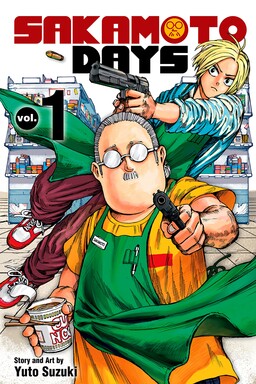
Sakamoto Days
Yu's review of Sakamoto Days — Taro Sakamoto was the most feared hitman in the world; he retired when he fell in love, married, and opened a convenience store; now overweight, domestically happy, and out of practice, he must repeatedly deal with the assassin world that cannot accept his retirement; an action comedy about a legendary fighter who would rather stock shelves.
Action / Comedy
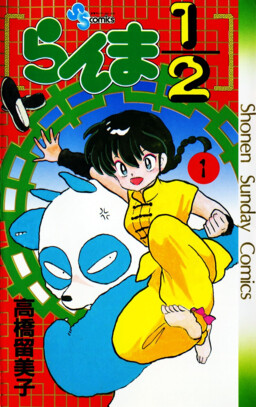
Ranma ½
A review of Ranma ½ — 38 volumes in Weekly Shonen Sunday. Ranma Saotome transforms into a girl when splashed with cold water; his father has arranged him to be engaged to Akane Tendo, who hates boys; the series follows their chaotic not-quite-relationship and increasingly bizarre martial arts challenges. Rumiko Takahashi's most kinetic work. VIZ Media's English edition is complete.
Written by
Yu
Manga Enthusiast from Japan
I grew up in Japan and manga literally saved me during a tough time in elementary school. My English isn't perfect, but my love for manga is real — and I want to share it with you.
Disclosure: This post contains affiliate links. As an Amazon Associate, I earn from qualifying purchases at no extra cost to you.