Lone Wolf and Cub Review: A Disgraced Shogunate Executioner Travels the Road to Hell with His Infant Son
by Kazuo Koike / Goseki Kojima
Read the first volume. If it doesn't hook you, put it down. It'll hook you.
Buy Lone Wolf and Cub on Amazon →*Affiliate link — I earn a small commission at no extra cost to you.
Quick Take
- One of the greatest manga ever published — Koike and Kojima's collaboration on the samurai father-and-son epic is a landmark of the medium that stands comparison with any graphic literature
- Each volume is a self-contained collection of stories within the larger revenge narrative; the episodic structure makes 28 volumes approachable without making any single volume redundant
- 28 volumes complete; essential reading for any serious manga reader
Who Is This Manga For?
- Any serious manga reader — this is one of the foundational texts of the medium
- Readers who want samurai fiction at its most philosophically serious
- Anyone interested in how manga handles violence with genuine weight and meaning
- Readers who want the experience of a complete, concluded epic narrative
Content Warnings & Age Rating
Age Rating: M (Mature) Content Warnings: Graphic samurai violence consistently throughout; adult content in some stories; infant Daigorō in situations of danger; feudal Japanese content includes period-accurate brutal elements; the violence is always meaningful but always present
M rating — the content is adult and the violence is consistent and graphic.
Yu's Rating
| Category | Score |
|---|---|
| Story Depth | ★★★★★ |
| Art Style | ★★★★★ |
| Character Development | ★★★★★ |
| Accessibility for Non-Japanese Readers | ★★★★★ |
| Reread Value | ★★★★★ |
Story Overview
Ogami Ittō was the Kaishakunin — the Shogunate's official executioner, whose role was to behead those sentenced to seppuku. The Yagyū clan, the Shogunate's shadow intelligence organization, wanted his position and framed him for treasonous rituals to take it. His wife was murdered. His position was destroyed.
He chose the Meifumadō. The road to hell. He placed his infant son Daigorō before a ball and a sword — choose the ball, and his father will kill him so he can follow his mother; choose the sword, and he chooses a life of killing. Daigorō chose the sword.
Father and son travel Edo-period Japan as assassins for hire — Ogami Ittō is available for the price of 500 ryō, which no ordinary person can pay, so his clients are extraordinary people in extraordinary circumstances. Each volume's stories follow these clients and their situations, while the background narrative of Ogami's revenge against the Yagyū clan structures the 28-volume arc.
The philosophical framework — Buddhist concepts of death and violence and the acceptance of one's path — is the series' intellectual content, and Koike deploys it with the seriousness of someone who knows exactly what he is doing.
Characters
Ogami Ittō — One of manga's greatest protagonists: a man of complete integrity to his chosen path, terrifying capability, and the specific love of a father who chose to bring his son onto the road to hell rather than leave him safe and separate.
Daigorō — An infant who grows through the series; his perspective — riding in his baby cart that conceals weapons, watching his father's work — is the series' most humanizing element.
The Yagyū — The antagonists whose plan to destroy Ogami required framing him; their own complexity, as they come to understand what they made, gives the revenge narrative depth.
Art Style
Kojima's art is perhaps the greatest in samurai manga — detailed Edo-period settings, character designs that use face and body to convey history and character, action sequences that use Japanese swordsmanship with accurate and beautiful choreography. The black and white work achieves effects that color art cannot. This is technical mastery.
Cultural Context
Lone Wolf and Cub ran from 1970 to 1976 in Weekly Manga Action, one of the defining works of gekiga — the serious, adult-oriented manga tradition that stood apart from shonen and shojo. Its influence on samurai manga, on action manga, and on international comics and films (it was directly adapted into a classic Japanese film series and influenced multiple filmmakers including George Lucas) places it among the most important works in manga history.
What I Love About It
Daigorō. He is an infant on the road to hell, in a cart filled with concealed weapons, watching his father kill. The series uses his perspective — what a child sees in what his father does, what grows from these seeds — as the human measure of the philosophical content about violence and path. The love between father and son on the Meifumadō is the series' most affecting element.
What English-Speaking Fans Say
Western readers consistently describe Lone Wolf and Cub as one of the greatest comics ever published in any language — specifically noted for Kojima's art being among the finest in manga, for Koike's plotting combining genre entertainment with genuine philosophical weight, and for the father-son relationship being the most affecting element in a series of extremely affecting elements. Essential reading.
Memorable Scene ⚠️ Spoiler Warning
The final confrontation with the Yagyū — and what Daigorō has become over the series' full run — is the conclusion of one of manga's greatest narratives.
Similar Manga
- Vagabond — Samurai manga with similar philosophical weight and exceptional art
- Blade of the Immortal — Samurai action with similar adult content and narrative seriousness
- Crying Freeman — Koike in crime setting with similarly exceptional art partner
- Lady Snowblood — Koike's revenge thriller with female protagonist
Reading Order / Where to Start
Volume 1 — but any volume can be read independently. The series rewards reading in order for the narrative, but the episodic structure means any volume is accessible.
Official English Translation Status
Dark Horse published the complete English series. All 28 volumes available.
Pros & Cons
Pros
- Among the greatest manga ever published
- 28 volumes of consistent exceptional quality
- Complete narrative with a concluded ending
- Equally accessible as episodic reading or complete experience
Cons
- M rating violence is graphic and consistent
- 28 volumes requires commitment for the full experience
- Edo-period historical context may require adjustment
Format Comparison
| Format | Notes |
|---|---|
| Individual Volumes | Dark Horse; complete 28-volume series |
| Digital | Available |
Where to Buy
Read the first volume. If it doesn't hook you, put it down. It'll hook you.
This post contains affiliate links. If you purchase through these links, I may earn a small commission at no extra cost to you. As an Amazon Associate, I earn from qualifying purchases.
*Affiliate link — I earn a small commission at no extra cost to you.
More Manga You Might Like
Action / Historical
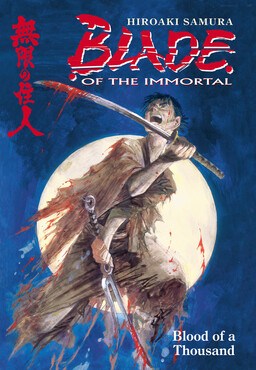
Blade of the Immortal
Yu's review of Blade of the Immortal — Manji is a ronin cursed with immortality by sacred bloodworms; to end the curse he must kill a thousand evil men, and he agrees to protect Rin Asano, a girl whose family was destroyed by the Itto-ryu sword school led by Anotsu Kagehisa. Hiroaki Samura's nineteen-year masterpiece, complete in 31 volumes from Dark Horse.
Action / Historical
Lady Snowblood
Yu's review of Lady Snowblood — Yuki Kashima was born in prison to a woman who had herself imprisoned to find the men who murdered her husband and son and raped her; Yuki's sole purpose, from birth, was to be the instrument of her mother's revenge; she was trained by a Buddhist monk and became exactly what her mother needed.

Action / Crime
Crying Freeman
Yu's review of Crying Freeman — Yo Hinomura is a Japanese potter brainwashed into becoming the world's greatest assassin for the Chinese crime syndicate 108 Dragons; he cannot resist the compulsion to kill, but weeps after each killing because he retains his soul; a woman who witnesses his first assassination and falls in love with him changes his life within the organization.
Action / Historical
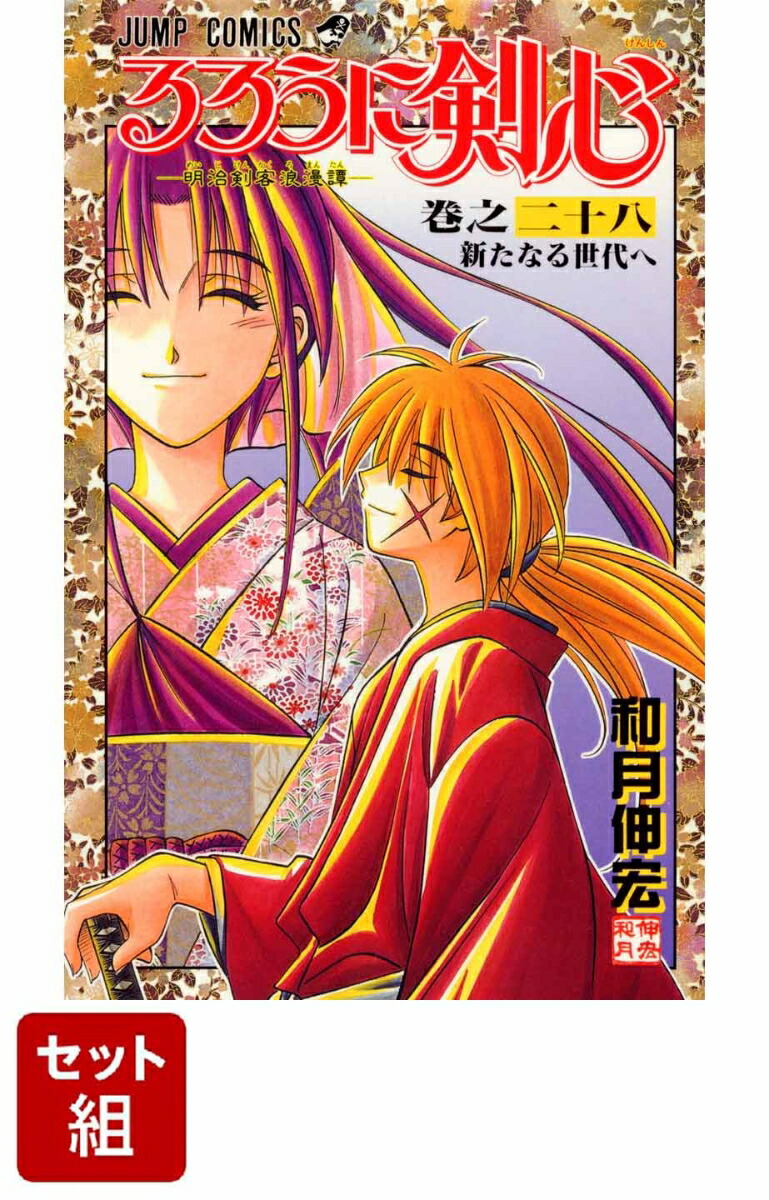
Rurouni Kenshin
A review of Rurouni Kenshin — 28 volumes in Weekly Shonen Jump. Himura Kenshin was Japan's most feared assassin of the Bakumatsu; he now wanders with a reverse-blade sword, trying to protect without killing. The Kyoto Arc is one of the greatest extended arcs in manga, and Shishio is the genre's finest villain. VIZ Media's English edition is complete.
Action / Historical
Vagabond
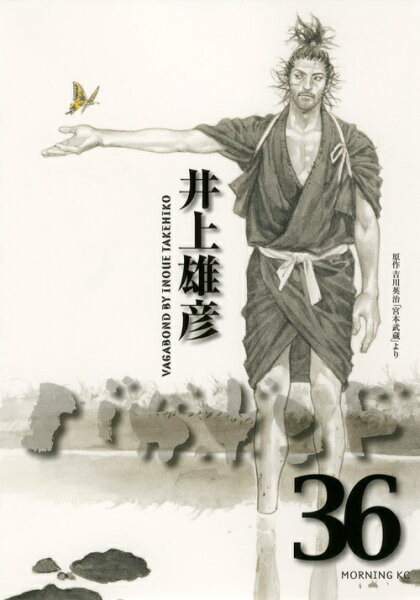
Yu's review of Vagabond — a manga about the historical Miyamoto Musashi's journey to become the greatest swordsman alive, and his gradual understanding that invincibility is not the same as wisdom. Visually the most beautiful manga ever published.

Action
Banana Fish
Yu's review of Banana Fish — Ash Lynx is a seventeen-year-old gang boss in 1980s New York whose life collides with Eiji Okumura, a gentle Japanese photographer's assistant, when a dying man whispers the words 'Banana Fish.' Akimi Yoshida's 19-volume crime epic about a mind-control drug, the men who own the streets, and the one connection that almost saved a boy built only to kill.
Written by
Yu
Manga Enthusiast from Japan
I grew up in Japan and manga literally saved me during a tough time in elementary school. My English isn't perfect, but my love for manga is real — and I want to share it with you.
Disclosure: This post contains affiliate links. As an Amazon Associate, I earn from qualifying purchases at no extra cost to you.