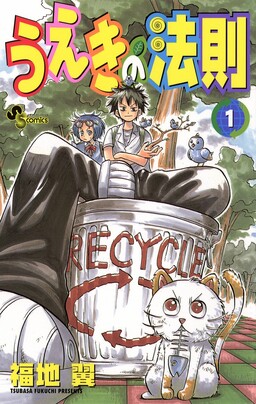
The Law of Ueki Review: A Boy Who Turns Trash into Trees — and Uses It to Fight God Candidates
by Tatsuki Fukuchi
Read the first volume. If it doesn't hook you, put it down. It'll hook you.
Buy The Law of Ueki on Amazon →*Affiliate link — I earn a small commission at no extra cost to you.
Quick Take
- A tournament manga where the rules of power and sacrifice are more interesting than the fights themselves — Ueki's power (trash into trees) is the series' most creative design choice
- 16 volumes complete; fast pacing and a genuine heart beneath the tournament structure
- The "blank talent" prize and its implications give the power fantasy an unusual ethical dimension
Who Is This Manga For?
- Readers who want tournament manga with creative, non-combat power systems
- Fans of early 2000s Shonen Sunday style (Inuyasha era, lighter tone)
- Anyone who enjoys the "power with a twist" setup over raw combat escalation
- Readers who want complete series in the 16-volume range
Content Warnings & Age Rating
Age Rating: T (Teen) Content Warnings: Tournament fighting with supernatural powers; mild action violence; nothing intense
Accessible and fairly lighthearted despite the tournament structure.
Yu's Rating
| Category | Score |
|---|---|
| Story Depth | ★★★☆☆ |
| Art Style | ★★★☆☆ |
| Character Development | ★★★★☆ |
| Accessibility for Non-Japanese Readers | ★★★★☆ |
| Reread Value | ★★★☆☆ |
Story Overview
Kousuke Ueki is an ordinary middle school student whose homeroom teacher, Koba-sen, is actually a god candidate — a being competing in the Heavenly World's tournament to select the next ruler. Each god candidate gives a human a special power; if that human wins the tournament on the candidate's behalf, the candidate becomes God. If the human wins, they receive the "blank talent" — the ability to be born with any talent they choose in their next phase of life.
Ueki's power: turn trash into trees. It is not obviously a combat power. The series' pleasure is watching Ueki develop creative applications for a power that seems useless in a fighting context.
The catch: every time Ueki uses his power to attack another person, he loses one of his own talents. Fight too much and you lose everything.
Characters
Kousuke Ueki — His fundamental decency — he cannot watch an injustice without acting, even when it costs him — is the series' moral engine. His willingness to sacrifice his own talents to protect others is what the series is actually about.
Ai Mori — His classmate who learns about the tournament and becomes his supporter; her comedic frustration at Ueki's principled recklessness is a running source of warmth.
Hanon Rei / Robert Haydn — The primary antagonist whose tragic backstory connects to the tournament's deeper cruelty is the series' most emotionally developed villain.
Art Style
Fukuchi's art is of its era — clean linework, expressive faces, solid action choreography. The creative use of tree-based combat requires visual inventiveness that the art generally delivers. Not visually striking by modern standards but effective for the material.
Cultural Context
The Law of Ueki ran in Weekly Shonen Sunday in the early 2000s alongside series like Inuyasha and Zatch Bell, representing that magazine's lighter-hearted tournament tradition compared to Jump's power escalation approach. The divine tournament premise echoes similar competitions in Shinto mythology's concept of competing divine claims.
What I Love About It
The talent sacrifice mechanic. Every time Ueki uses his power harmfully, he loses something — the ability to sing, to run fast, to do math. The series tracks this ruthlessly. By the time the major fights arrive, Ueki has given up more than the reader initially realizes. The moment you understand what he's been sacrificing the whole time is quietly devastating.
What English-Speaking Fans Say
Western readers describe The Law of Ueki as an underrated mid-2000s series that holds up better than expected — the creative powers and ethical mechanics distinguish it from straightforward tournament manga. The Ueki/Mori dynamic is frequently cited as the series' most enjoyable element.
Memorable Scene ⚠️ Spoiler Warning
The moment Ueki finally understands the full extent of what he has sacrificed through the tournament — and the specific choice he makes about what to wish for with the blank talent if he wins — reframes his entire characterization in the most emotionally honest way the series achieves.
Similar Manga
- Zatch Bell — God candidate / human partner tournament, similar emotional register
- Yu Yu Hakusho — Tournament structure, supernatural powers, similar era
- Medaka Box — Creative power systems with unusual mechanics
- The Law of Ueki Plus — Direct sequel, continuing Ueki's story
Reading Order / Where to Start
Volume 1 — the power premise and Ueki's character establish immediately.
Official English Translation Status
Viz Media published the complete 16-volume run. All volumes available.
Pros & Cons
Pros
- Creative power system with genuine strategic depth
- The talent sacrifice mechanic gives fights real stakes
- Ueki's character is more morally interesting than most tournament protagonists
- Complete in 16 volumes
Cons
- Art style is dated by current standards
- The tournament structure becomes formulaic in later arcs
- The god candidate premise raises questions the series doesn't fully answer
Format Comparison
| Format | Notes |
|---|---|
| Individual Volumes | Viz Media; standard |
| Digital | Available |
Where to Buy
Read the first volume. If it doesn't hook you, put it down. It'll hook you.
This post contains affiliate links. If you purchase through these links, I may earn a small commission at no extra cost to you. As an Amazon Associate, I earn from qualifying purchases.
*Affiliate link — I earn a small commission at no extra cost to you.
More Manga You Might Like
Action / Supernatural
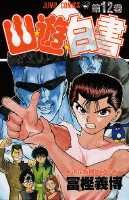
Yu Yu Hakusho
A review of Yu Yu Hakusho — 19 volumes in Weekly Shonen Jump. Yusuke Urameshi dies heroically saving a child, is recruited as a Spirit Detective to investigate supernatural cases, and grows from a delinquent who doesn't care about anything into someone with people worth protecting. The series Togashi made before Hunter x Hunter. VIZ Media's English edition is complete.
Action / Supernatural
Ushio and Tora
Yu's review of Ushio and Tora — Ushio finds an ancient beast-spirit called Tora pinned under the temple floor; he releases Tora to fight other spirits threatening his town; Tora intends to eat Ushio eventually; they travel Japan fighting supernatural threats.
Action / Comedy
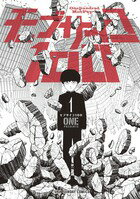
Mob Psycho 100
A review of Mob Psycho 100 — 16 volumes on Ura Sunday. Shigeo Kageyama (Mob) is the most powerful psychic alive and keeps his powers suppressed because he doesn't want to hurt anyone; he just wants to get better at talking to his crush. The best manga about emotional suppression and what actual strength looks like. Dark Horse Comics' English edition is complete.
Action / Comedy
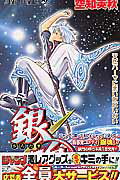
Gintama
A review of Gintama — 77 volumes in Weekly Shonen Jump. Gintoki Sakata runs an odd-jobs business in an alternate Edo Japan where aliens conquered the country and samurai are forbidden to carry swords. The funniest manga ever made, hiding some of the most devastating serious arcs in the genre. VIZ Media's English edition is complete.
Action / Supernatural
Dandadan
Yu's review of Dandadan — Momo believes in ghosts, Ken believes in aliens, and they make a deal to test each other's beliefs; both get immediately proven wrong and right simultaneously, and a bizarre supernatural romance begins.
Action / Comedy
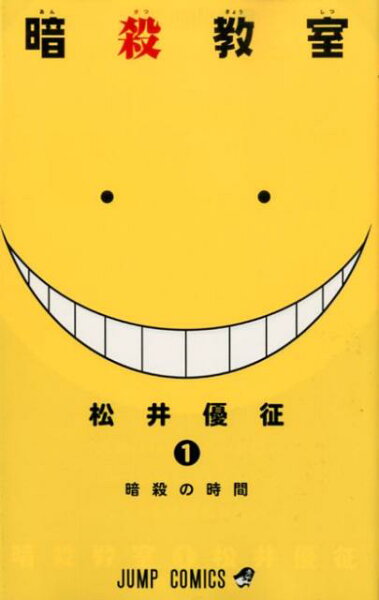
Assassination Classroom
Yu's review of Assassination Classroom — 21 volumes about a class of underachievers assigned to kill their alien teacher before he destroys the Earth. The funniest manga about murder, and the most moving manga about being seen by a teacher who refused to write you off.
Written by
Yu
Manga Enthusiast from Japan
I grew up in Japan and manga literally saved me during a tough time in elementary school. My English isn't perfect, but my love for manga is real — and I want to share it with you.
Disclosure: This post contains affiliate links. As an Amazon Associate, I earn from qualifying purchases at no extra cost to you.