
Kurenai Review: The Manga About a Child Bodyguard and a Little Girl Who Changed Everything
by Kentaro Katayama (story) / Yamato Yamamoto (art)
Read the first volume. If it doesn't hook you, put it down. It'll hook you.
Buy Kurenai on Amazon →*Affiliate link — I earn a small commission at no extra cost to you.
Quick Take
- A teenage dispute mediator protects a seven-year-old girl from a powerful family
- The relationship between Shinkuro and Murasaki is the heart — funny, warm, and eventually devastating
- 10 volumes complete in Japanese; Bandai published 5 English volumes before closing
Who Is This Manga For?
- Readers who enjoy character-focused action drama over pure battle sequences
- Those who appreciate when the emotional relationship is more interesting than the fights
- Fans of stories about unlikely guardians protecting a charge
- Readers looking for a complete, short series with real impact
Content Warnings & Age Rating
Age Rating: T (Teen) Content Warnings: Violence, child in danger (not depicted graphically), complex themes around family loyalty and captivity
Appropriate for older teen readers and above. The content is dramatic rather than explicit.
Yu's Rating
| Category | Score |
|---|---|
| Story Depth | ★★★★☆ |
| Art Style | ★★★★☆ |
| Character Development | ★★★★★ |
| Accessibility for Non-Japanese Readers | ★★★★☆ |
| Reread Value | ★★★★☆ |
Story Overview
Shinkuro Kurenai is 16 years old and works as a "dispute mediator" — which means he gets paid small amounts of money to solve problems using physical persuasion. He has a hidden technique related to an ancient martial art that activates when he is in mortal danger.
He lives simply in a very small apartment, helped by his landlord Benika.
One day, Benika brings him a job: protect Murasaki Kuhoin, a seven-year-old girl from one of Japan's most powerful aristocratic families. Murasaki has lived her entire life inside the Kuhoin's inner sanctum — a protected space where women of the family are kept isolated from the outside world.
She has never seen a shop. Never ridden public transit. Never eaten cheap ramen.
The job is to keep her hidden. The problem is that Murasaki is also a complete personality — with opinions, preferences, a streak of aristocratic pride, and a developing attachment to the first person her own age who has ever treated her like a person.
Characters
Shinkuro Kurenai is young, slightly naive, and too kind for the work he does. His dedication to protecting Murasaki — which starts as a job and becomes something much more personal — is the series' emotional core.
Murasaki Kuhoin is exceptional. A seven-year-old written with genuine intelligence and personality, not as a symbol or a device but as a person with her own arc. Her process of discovering the outside world, and her processing of what her life has been, is handled with care.
The supporting cast — Shinkuro's various neighbors in his apartment building, his classmates, and the Kuhoin family figures — are all well-drawn.
Art Style
Yamamoto's art is clean and detailed, with strong character design work. Shinkuro is drawn to look his age — young and still growing. Murasaki is drawn with the specific combination of adult vocabulary and child physicality that makes her character believable.
Action sequences are kinetic and well-choreographed.
Cultural Context
The Kuhoin family's "inner sanctum" — a sealed space where women are kept in total isolation — draws from real historical Japanese traditions around aristocratic families and the control of women. The series uses this to explore how such structures reproduce themselves and what they cost the people inside them.
Murasaki's character is specifically about someone who has been given education without experience, vocabulary without context. The gap between what she knows and what she understands about the world is part of what makes her such an interesting protagonist.
What I Love About It
The thing about Kurenai that I was not prepared for is how genuinely funny it is in the early volumes. Murasaki has never seen television. Never eaten convenience store food. Never been to a park. Watching her encounter these things for the first time, through aristocratic seriousness, is consistently delightful.
And then the series earns the right to be serious about the world she came from and what it means that she was taken out of it.
The final volume is exceptional. The conclusion of Shinkuro and Murasaki's arc is exactly right.
What English-Speaking Fans Say
Western readers who discovered Kurenai often note that it gets more emotionally complex than its initial premise suggests. The guardian-charge relationship is played with genuine feeling, and the Kuhoin family arc resolves in a way that satisfies while being honest about what it costs.
The series length (10 volumes) is tight but complete; Western readers who found the English edition often note the Bandai run stops at volume 5, right as the story deepens.
Memorable Scene ⚠️ Spoiler Warning
Late in the series, Murasaki asks Shinkuro why he has been doing all of this. His answer — which is true but incomplete — and her response to it — which is knowing and gracious — is the series' best moment.
She is seven years old and she is more perceptive than he is. The series has been building to that recognition.
Similar Manga
- Fullmetal Alchemist — different premise, same combination of action and emotional depth
- Black Lagoon — adult action manga with a child-in-danger element; much darker
- The Ancient Magus' Bride — guardian-charge relationship with fantasy elements; gentler tone
- Hinamatsuri — comedy version of the guardian-awkward-ward setup
Reading Order / Where to Start
Start from Volume 1. The series runs 10 volumes in Japanese. The Bandai English edition covers the first 5; secondary market copies of those are findable.
Pros & Cons
Pros:
- Murasaki is one of the best child characters in manga — written with specific intelligence, not as a device.
- The guardian relationship earns its emotional weight; the comedy and the seriousness come from the same place.
- Complete at 10 Japanese volumes with a satisfying conclusion.
- Yamamoto's art is clean and distinctive — Shinkuro and Murasaki are drawn to match their characters.
Cons:
- The English edition (Bandai Entertainment, 5 volumes) covers only the first half of the story; Bandai ceased operations in 2012.
- The action element is less developed than the character work — the fights serve the story rather than driving it.
- The Kuhoin family's "inner sanctum" concept requires some cultural context to fully understand.
Is Kurenai Worth Reading?
Yes — the Bandai English volumes cover a complete arc and are worth finding on the secondary market even if the run is incomplete. If you can read Japanese, the full 10-volume version is the right way to read it. The relationship between Shinkuro and Murasaki is worth the commitment.
Who Is This Manga For?
- Readers who want character-focused action where the emotional relationship is more interesting than the fights.
- Anyone who enjoyed Hinamatsuri or The Ancient Magus' Bride's guardian-ward dynamics.
- Readers looking for a complete series with a child character written with genuine respect.
Official English Translation Status
Bandai Entertainment published volumes 1–5 in English before ceasing operations in 2012. The English edition covers the first half of the 10-volume Japanese series. Used copies are findable on secondary markets. No digital English edition exists.
Where to Buy
Bandai Entertainment's English volumes 1–5 are available on the secondary market.
This post contains affiliate links. If you purchase through these links, I may earn a small commission at no extra cost to you. As an Amazon Associate, I earn from qualifying purchases.
*Affiliate link — I earn a small commission at no extra cost to you.
More Manga You Might Like
Action
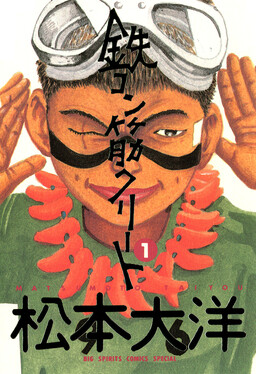
Tekkon Kinkreet
Yu's review of Tekkon Kinkreet — Black and White are two orphaned street kids who rule Treasure Town from the rooftops; when organized crime moves in to develop the city, Black and White must fight to keep what they consider theirs; a visually revolutionary manga about the psychic cost of violence and the specific love between two people who only have each other.
Action / Drama
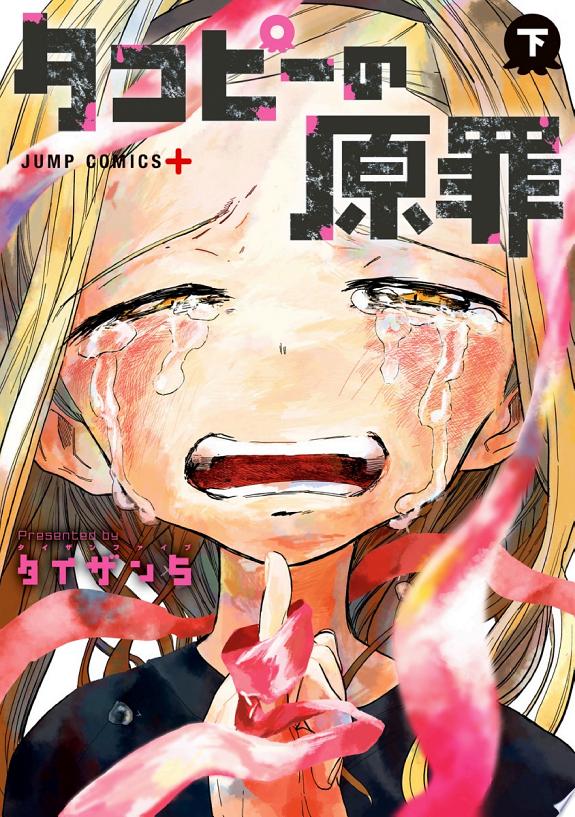
Takopi's Original Sin
Yu's review of Takopi's Original Sin — Takopi is an alien from Happy Planet sent to spread happiness on Earth; he meets Shizuka, a girl who is being bullied and whose home life is deeply troubled; the series uses Takopi's happiness abilities to examine what happiness means when suffering is real.

Action / Drama
Rainbow: Nisha Rokubō no Shichinin
Yu's review of Rainbow — six juvenile delinquents are sent to a brutal reformatory in 1955 Japan and placed in Cell 6, where they bond with their cellmate Rokurouta Sakuragi, a former boxer who teaches them what it means to survive with dignity.

Action / Drama
Beastars
Yu's review of Beastars — In a society of anthropomorphic animals where carnivores and herbivores live side by side, Legoshi is a gray wolf who is afraid of what he is. After a classmate is killed and eaten, he is pulled toward Haru, a tiny dwarf rabbit, and has to decide what kind of animal he wants to become.

Action
Banana Fish
Yu's review of Banana Fish — Ash Lynx is a seventeen-year-old gang boss in 1980s New York whose life collides with Eiji Okumura, a gentle Japanese photographer's assistant, when a dying man whispers the words 'Banana Fish.' Akimi Yoshida's 19-volume crime epic about a mind-control drug, the men who own the streets, and the one connection that almost saved a boy built only to kill.

Action / Drama
Otoko Ippiki Gaki Daisho
Otoko Ippiki Gaki Daisho follows Tora Otori, a young delinquent whose goal is not just to be the toughest kid in his school but to become the undisputed boss of the entire country — and who pursues this goal with a force of personality that makes followers out of former enemies.
Written by
Yu
Manga Enthusiast from Japan
I grew up in Japan and manga literally saved me during a tough time in elementary school. My English isn't perfect, but my love for manga is real — and I want to share it with you.
Disclosure: This post contains affiliate links. As an Amazon Associate, I earn from qualifying purchases at no extra cost to you.