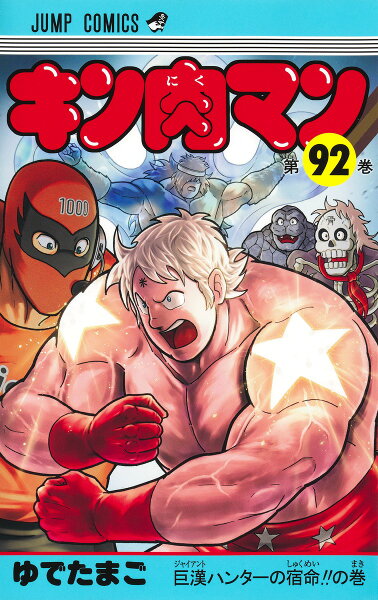
Kinnikuman Review: A 1979 Wrestling Manga That Has Been Running Long Enough to Outlast Its Own Reboot
by Yudetamago (Takashi Shimada — story / Yoshinori Nakai — art)
Read the first volume. If it doesn't hook you, put it down. It'll hook you.
Buy Kinnikuman on Amazon →*Affiliate link — I earn a small commission at no extra cost to you.
I came to Kinnikuman through my uncle, who handed me a stack of tattered Jump Comics paperbacks at Obon when I was probably eight. The pile was tall enough to be intimidating. The first volume was awful — genuinely awful — crude art, weird scatology, the kind of mid-70s shōnen comedy that doesn't survive translation. I almost gave up. But somewhere in the middle of the stack, the manga changed under my hands into something I didn't expect. It was the first time I understood that a long-running series could mean something different at volume 15 than it did at volume 1.
I'm Yu. Kinnikuman is the manga I have re-read more times than any other.
Quick Take
- Yudetamago's Kinnikuman ran in Weekly Shōnen Jump from May 1979 to May 1987, totaling 36 tankōbon volumes, then resumed on Shueisha's web magazine Shū Play News in November 2011 — a continuation that has now reached 92 total volumes as of April 2026.
- VIZ Media licensed the original 36-volume run for English digital release through Shonen Jump's digital line.
- Rated T (Teen) — wrestling violence, 1980s shōnen humor including some fanservice and crude jokes in early volumes, no explicit content.
Story Overview
The premise — and I mean this affectionately — is moronic. Kinnikuman, real name Suguru Kinniku, is a Chōjin ("Super Human"): a wrestling-strong, partially alien being from a Chōjin royal family who has come to Earth to fight bad Chōjin. He is cowardly, stupid, lazy, food-obsessed, and the worst Chōjin his planet has ever produced. He is also, by inheritance, supposed to be Earth's champion. The early volumes are about him refusing to be a champion and being one anyway.
The series's transformation happens around the 20th Chōjin Olympics arc (volumes 3-7). What was a sketch-comedy gag manga becomes a wrestling tournament book. Each Chōjin has a signature finisher; each match has stakes; the audience starts to care which fighter loses. By the time the 7 Akuma (Devil) Chōjin arc lands — Buffaloman, Stecasse King, the Black Hole, and the rest — Kinnikuman is no longer a comedy. It's a wrestling epic with comedy interludes.
The Golden Mask arc, the Dream Chōjin Tag Tournament arc, the Survivor Match for the Universe — these middle-to-late arcs of the original 1979–1987 run are the manga at its mature peak. The Choujin Olympics arc is where it learns its voice; the Tag Tournament is where it perfects it. The 2011 continuation has, against everyone's expectations including mine, picked up where the original ended and become a quietly great late-career act.
Characters
Kinnikuman / Suguru Kinniku — Crown prince of the Kinniku royal family. The thesis of the manga is that he is the worst-equipped person to be a hero — and that being a hero is the choice he makes anyway, every time, against his own better judgment. The Kinniku Driver, the Kinniku Buster, the Muscle Spark — his signature moves are named after him because he eventually earns the lineage he was born into.
Meat / Alexandria Meat — His tiny manager and only consistent friend, who has more practical sense than every Chōjin in the cast combined.
Terryman — Texas cowboy Chōjin. Kinnikuman's best friend and, structurally, the soul of the cast. Yudetamago's writing of male friendship — protective, sincere, never embarrassed about its own affection — is the part of the manga that I trust most.
Robin Mask — British noble Chōjin in full medieval armor. Begins as Kinnikuman's superior in skill and dignity. His arc bends across decades; the late-2010s continuation does something with him that I will not spoil.
Warsman — Soviet bio-Chōjin with a cyborg body. The Vulcan Shot. The Bear Claw. One of the series's most carefully written rivals; his arc in the Olympics arc is the moment the manga grew up.
Ramenman — Chinese kung-fu Chōjin. Cruel and brutal in the original Olympics arc, then redeemed slowly across the next decade until he's one of the team. Spinoff series Tatakae!! Ramenman belongs to him.
Buffaloman — Big bad of the 7 Akuma Chōjin arc, then redeemed, then a long-suffering ally. One million Chōjin Power. The shift from villain to brother is the template for the entire Yudetamago redemption pattern.
What I Love About It
What I love about Kinnikuman — what makes me reread it — is that it is the manga that taught me weekly shōnen could change.
The first three volumes are a different manga than the last three of the original run, which are a different manga than the 2011 continuation. The characters age. The art improves. The themes get heavier — the Survivor Match for the Universe is, weirdly, a meditation on what older Chōjin owe to younger ones. The early gag-comedy beats don't get pretended-away; they just stop being the point. Yudetamago kept growing on the page, in public, across decades of fan response. The continuation has now run longer than the original did, and it is, in some ways, better.
The other thing I love is the friendship. Most shōnen sells friendship as a slogan. Kinnikuman lets it be visible labor: a long history of fights, betrayals, reconciliations, public losses, private respect. Kinnikuman and Terryman's friendship — going on 47 years as of this writing — is the longest-running male friendship I have read in any medium, and I am moved by how unembarrassed it is.
Memorable Scene ⚠️ Spoiler Warning
The end of the Dream Chōjin Tag Tournament arc, late in the original run. Buffaloman and Mongolman — once an enemy and a doubtful ally — fight side-by-side in a match they will likely not survive. Buffaloman, who has spent volumes trying to atone for his early-arc villainy, makes a choice at the end of the match that is the closest thing the original Kinnikuman has to a thesis statement.
I will not describe the choice. I will say that I read it for the first time as a kid and didn't fully understand it, and re-read it in my twenties and understood it differently, and re-read it again last year and it broke me in a new way. That is what a long-running manga can do that no other medium can. The book grew up alongside its readers.
Pros & Cons
Pros:
- A 36-volume original run plus 56+ continuation volumes — a lifetime of reading if you want one.
- The friendship writing is genuinely some of the best in shōnen.
- The continuation is not a cash-in; it's a real second act and arguably as good as the original's middle stretch.
Cons:
- Early volumes are rough. Art, jokes, pacing — the manga finds itself somewhere around volume 4.
- 1980s humor has elements that have not aged well — fatphobic gags, occasional ethnic stereotyping, fanservice that reads dated.
- English digital coverage is original 36 volumes only as of writing; the continuation is not licensed in English.
Is Kinnikuman Worth Reading?
Yes — but commit to at least the first ten volumes before deciding. The series people love is not the series the first volume is.
Who Is This Manga For?
- Jojo's early-Jojo readers who want the manga it grew out of.
- Wrestling fans of any tradition; the manga's love for the sport is unfeigned.
- Long-running-shōnen completists curious how the genre looked before Toriyama and Kishimoto reshaped it.
- Readers who enjoyed Tiger Mask or Ashita no Joe and want a Jump-flavored cousin.
Official English Translation Status
VIZ Media is releasing the original 36-volume Kinnikuman in English digitally through the Shonen Jump catalog. The 2011 continuation (volumes 37–92 and counting) is not currently licensed in English. The 1990s spinoff Ultimate Muscle (a.k.a. Kinnikuman Nisei) had its own VIZ English print release in the 2000s.
Where to Buy
VIZ's digital Shonen Jump app is the practical way to read the original 36-volume run in English. Japanese-language paperbacks of the entire 92-volume run are available through Amazon Japan and Kinokuniya.
This post contains affiliate links. If you purchase through these links, I may earn a small commission at no extra cost to you. As an Amazon Associate, I earn from qualifying purchases.
*Affiliate link — I earn a small commission at no extra cost to you.
More Manga You Might Like
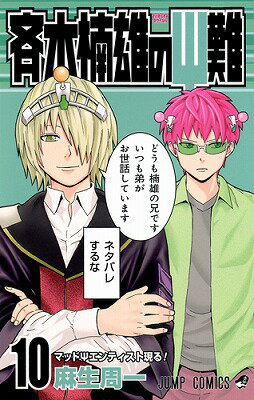
Comedy / Supernatural
The Disastrous Life of Saiki K.
A review of The Disastrous Life of Saiki K., the comedy manga about a supremely powerful psychic who wants nothing more than to be left alone.
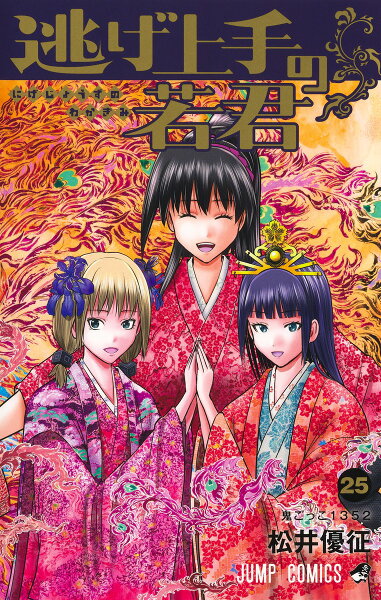
Action / Historical
The Elusive Samurai
A review of The Elusive Samurai by Yusei Matsui, following a young noble who survives the fall of the Kamakura shogunate through unmatched evasion skills.
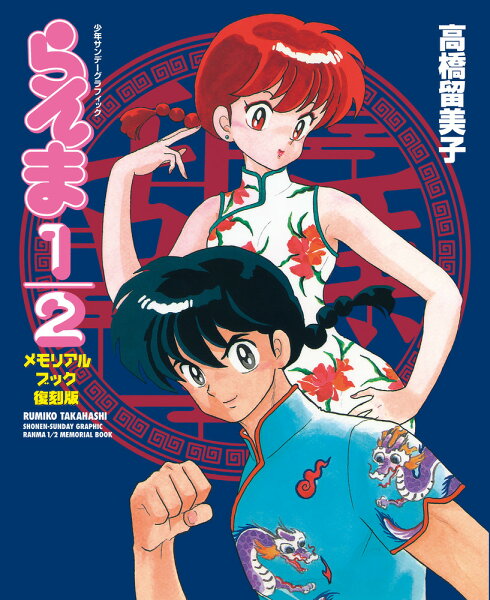
Comedy / Action
Ranma 1/2
Ranma Saotome trained in martial arts in China with his father. They fell into the cursed springs of Jusenkyo. Now Ranma transforms into a girl whenever cold water touches him (hot reverses it); his father transforms into a giant panda. Returning to Japan, Ranma discovers his father arranged a marriage to a girl he has never met. Rumiko Takahashi's 38-volume manga (1987–1996) is one of the defining works of 1990s shonen comedy. A new 2024 MAPPA anime adaptation began airing in October 2024.

Action / Comedy
City Hunter
A sweeper for hire in Shinjuku cleans up the city's worst criminals while hiding a heart softer than anyone suspects — City Hunter is the definitive action-romance manga.
Action / Comedy
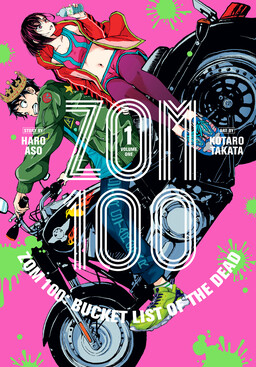
Zom 100: Bucket List of the Dead
A review of Zom 100: Bucket List of the Dead — 15 volumes in Monthly Sunday GX. Akira Tendo spent three years being worked to death at a black company; when the zombie apocalypse starts, his first thought is relief that he doesn't have to go to work; he makes a list of 100 things to do before becoming a zombie. The most original zombie premise in years. VIZ Media's English edition is complete.
Action / Comedy
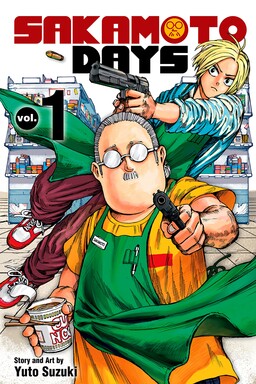
Sakamoto Days
Yu's review of Sakamoto Days — Taro Sakamoto was the most feared hitman in the world; he retired when he fell in love, married, and opened a convenience store; now overweight, domestically happy, and out of practice, he must repeatedly deal with the assassin world that cannot accept his retirement; an action comedy about a legendary fighter who would rather stock shelves.
Written by
Yu
Manga Enthusiast from Japan
I grew up in Japan and manga literally saved me during a tough time in elementary school. My English isn't perfect, but my love for manga is real — and I want to share it with you.
Disclosure: This post contains affiliate links. As an Amazon Associate, I earn from qualifying purchases at no extra cost to you.