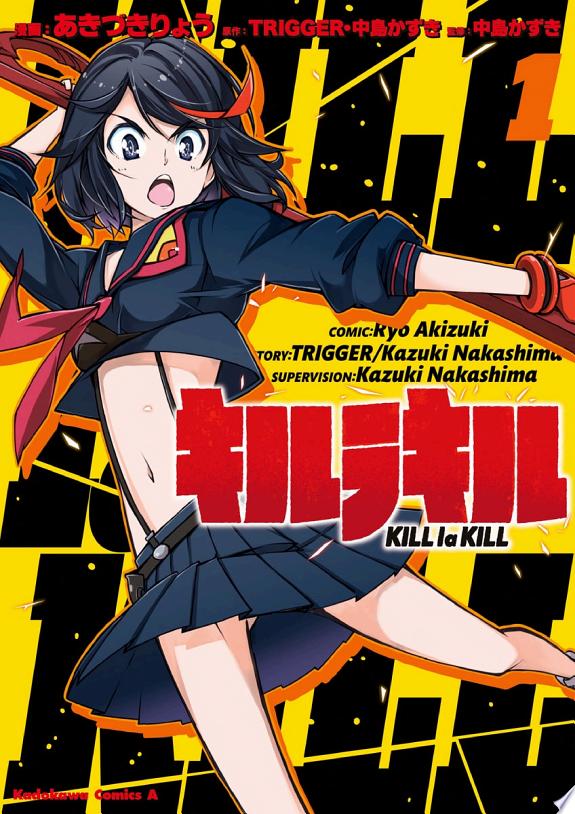
Kill la Kill Review: The Manga About Clothes That Made Me Think About Power
by Ryou Akizuki (art) / Trigger (original story)
Read the first volume. If it doesn't hook you, put it down. It'll hook you.
Buy Kill la Kill on Amazon →*Affiliate link — I earn a small commission at no extra cost to you.
Quick Take
- Anime adaptation manga about power, clothing, and a girl who will not stop fighting
- Shorter than the anime (3 volumes) but hits the key moments with excellent art
- If you watched the anime, this is a gorgeous companion piece; if you haven't, start with the anime
Who Is This Manga For?
- Kill la Kill anime fans who want the story in manga form
- Readers who enjoy over-the-top action with thematic depth underneath
- Fans of Trigger's visual style who want to see it in static art
- Those who appreciate action manga that takes its own premise seriously
Content Warnings & Age Rating
Age Rating: M (Mature) Content Warnings: Significant fan service, nudity themes, graphic violence, mature themes
Kill la Kill is deliberately provocative about bodies and clothing as expressions of power and vulnerability. It requires a mature reader who can engage with those themes. Not for younger readers.
Yu's Rating
| Category | Score |
|---|---|
| Story Depth | ★★★★☆ |
| Art Style | ★★★★★ |
| Character Development | ★★★★☆ |
| Accessibility for Non-Japanese Readers | ★★★★☆ |
| Reread Value | ★★★★☆ |
Story Overview
Ryuko Matoi arrives at Honnouji Academy to find her father's killer. Her only clue: half a Scissor Blade and the rumor that the killer has the other half.
Honnouji Academy is ruled by the student council president Satsuki Kiryuin, who distributes special uniforms called Goku Uniforms to her followers. These uniforms, woven from Life Fibers — an alien material — grant superhuman abilities proportional to their power level. The entire social hierarchy of the school is enforced through who wears what and how much.
Ryuko finds Senketsu, a sentient sailor uniform made of Life Fibers, that bonds with her and gives her power. The catch: wearing Senketsu fully requires enough of Ryuko's blood that she is left significantly underdressed.
The story escalates from school fights to the revelation that Life Fibers threaten all of humanity, and that the conflict between Ryuko and Satsuki is part of something much larger than a school hierarchy.
Characters
Ryuko Matoi is anger given form. She charges forward. She does not strategize. She just pushes. Her arc is about learning that the rage that drives her is not the same as the will to protect people — a distinction that costs her before she understands it.
Satsuki Kiryuin is one of the best antagonist-to-ally characters in recent anime/manga. Her ambition is total, her discipline is terrifying, and her actual motivations reveal a person of genuine moral weight. Her heel-face turn is earned.
Mako Mankanshoku is Ryuko's best friend and one of the most purely joyful characters in the story. She does not fight. She just believes in Ryuko with her whole body and announces it loudly.
Senketsu is Ryuko's living uniform, and their relationship — tentative, then deep, then something that defies category — is the emotional center of the story.
Art Style
Ryou Akizuki's manga art captures the Trigger animation style impressively. The action sequences are kinetic and clear. Character designs translate well to black-and-white. The clothing designs are as elaborate as in the anime and drawn with visible enthusiasm.
The art does not shy away from the fan service elements of the source material, which is worth knowing before you start.
Cultural Context
Kill la Kill is explicitly about the relationship between clothing, status, and power — a theme with deep roots in Japanese culture, where dress codes and uniforms have historically encoded social hierarchies from school uniforms to business dress to traditional formal wear.
The series takes this seriously as a metaphor: the Life Fiber uniforms are literally the hierarchy. Stripping away the uniform is stripping away the power structure. The body, vulnerable and human, is what remains underneath.
Creator Hiroyuki Imaishi and Kazuki Nakashima built this theme into every element of the original anime, and the manga adaptation preserves it.
What I Love About It
I watched the anime before reading the manga. The anime is an experience — the music, the voice acting, the visual chaos.
The manga does something different. It is quieter, necessarily, but that quietness reveals things the anime's speed sometimes blurs. Ryou Akizuki draws the character moments with real care. The scene between Ryuko and Senketsu late in the story reads differently without the score underneath it, and somehow I found it more affecting.
Also, Satsuki's backstory arc is exceptional in any format, and the manga version gives you time to sit with the reveal in a way animation cannot.
What English-Speaking Fans Say
Western readers who came from the anime almost universally consider the manga a worthwhile companion. Newcomers are generally directed to the anime first, with the manga as a follow-up.
The consensus is that the manga is beautiful but brief — 3 volumes covers a lot of ground and some character moments from the anime are compressed or omitted. This disappoints some readers and feels appropriately focused to others.
Memorable Scene ⚠️ Spoiler Warning
The moment Satsuki reveals her full plan — not the surface ambition, but what she has actually been working toward since childhood — reframes everything. In the manga, the sequence that follows, with Ryuko understanding what they have both been fighting against, is given strong visual weight.
Two people who were enemies, realizing their enemies have always been the same thing, is a reliable narrative moment. This is one of its best executions.
Similar Manga
- Gurren Lagann — another Trigger production about people who will not stop fighting regardless of odds
- Panty and Stocking with Garterbelt — same creative team's other famous work; raunchier and less serious
- Tengen Toppa Gurren Lagann — same note as above
- Needless — over-the-top post-apocalyptic action with similar energy
Reading Order / Where to Start
If you have not seen the anime, watch it first. The manga is three volumes and assumes familiarity with the world and characters. If you have seen the anime, start from Volume 1 of the manga immediately.
Official English Translation Status
UDON Entertainment published all 3 volumes in English. The series is complete. All volumes are available.
Pros & Cons
Pros
- Beautiful art that does justice to Trigger's visual style
- Complete in 3 volumes — a manageable commitment
- The story holds up as more than spectacle
- Satsuki's arc is superbly handled
Cons
- Very short — 3 volumes is not much time to develop the world
- Significant fan service may not suit all readers
- Better experienced after the anime for full context
Format Comparison
| Format | Notes |
|---|---|
| Physical | UDON volumes; good production quality |
| Digital | Available on digital platforms |
| Omnibus | The complete collection fits in one omnibus volume — good option for new readers |
Where to Buy
Read the first volume. If it doesn't hook you, put it down. It'll hook you.
*Affiliate link — I earn a small commission at no extra cost to you.
More Manga You Might Like
Action / Comedy
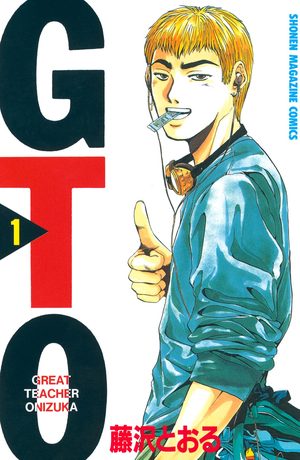
GTO: Great Teacher Onizuka
Yu's review of GTO: Great Teacher Onizuka — Eikichi Onizuka is a 22-year-old former gang leader and virgin who becomes a middle school teacher at an elite private school; what he lacks in academic credentials he compensates for with an absolute refusal to give up on any student.
Action / Supernatural
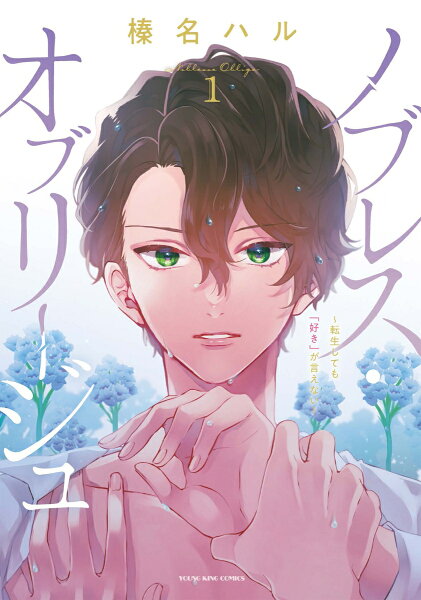
Noblesse
A review of Noblesse — 16 volumes on Naver Webtoon. Cadis Etrama Di Raizel (Rai), an ancient noble who has slept for 820 years, awakens in modern Korea, reunites with his loyal servant Frankenstein, and enrolls in high school to understand the present world while a secret organization hunts those around him. WEBTOON Unscrolled's English edition is complete.
Action / Fantasy
Trinity Blood
Yu's review of Trinity Blood — in a post-apocalyptic future where vampires and humans are at war, a vampire-eating priest works for the Vatican to maintain the fragile peace.
Action / Drama
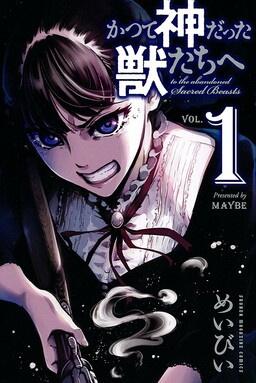
To the Abandoned Sacred Beasts
Yu's review of To the Abandoned Sacred Beasts — during a civil war, soldiers of the Northern Army were transformed into Incarnates — humans with the ability to become powerful monsters — to win; now the war is over, and the Incarnates cannot return to human society; the man who led them has become their hunter, and the daughter of one who died follows him.
Action / Drama
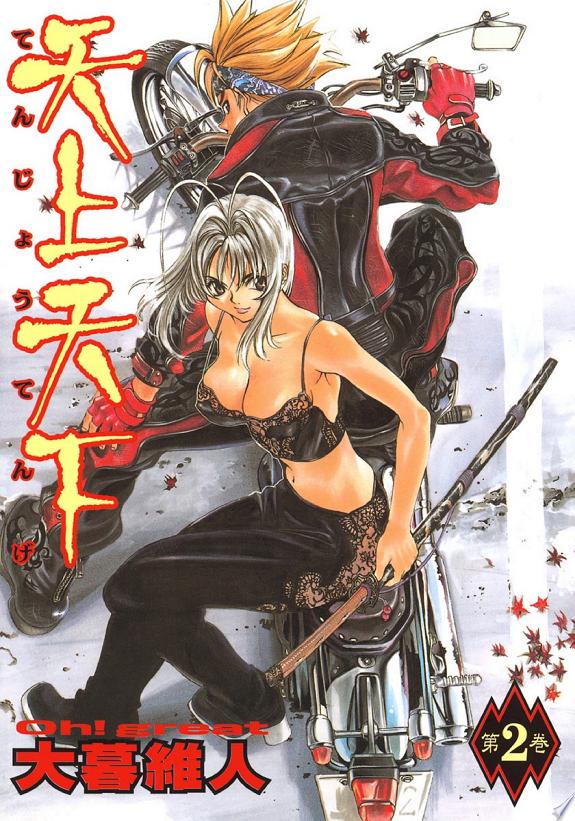
Tenjho Tenge
Yu's review of Tenjho Tenge — two street fighters who transfer to Todo Academy intending to dominate it quickly discover the school has martial arts clubs that operate by completely different rules.
Action / Fantasy
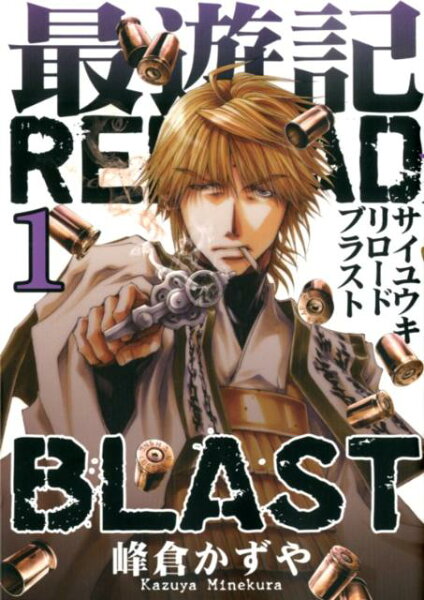
Saiyuki Reload
Yu's review of Saiyuki Reload — the sequel series to the original Saiyuki follows Sanzo and his three companions deeper west, with heavier consequences and darker character revelations.
Written by
Yu
Manga Enthusiast from Japan
I grew up in Japan and manga literally saved me during a tough time in elementary school. My English isn't perfect, but my love for manga is real — and I want to share it with you.
Disclosure: This post contains affiliate links. As an Amazon Associate, I earn from qualifying purchases at no extra cost to you.