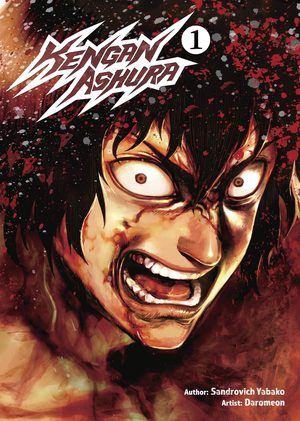
Kengan Ashura Review: Corporate Japan Settles Business Disputes With Underground Gladiator Fights
by Yabako Sandrovich / Daromeon
Read the first volume. If it doesn't hook you, put it down. It'll hook you.
Buy Kengan Ashura on Amazon →*Affiliate link — I earn a small commission at no extra cost to you.
Quick Take
- Japanese corporations settle business disputes with professional fighters in underground gladiatorial matches — this is the premise and the series commits to it completely
- Ouma Tokita ("Ashura") is among the most immediately compelling fighter protagonists in recent fighting manga
- 27 volumes complete; the sequel Kengan Omega is ongoing
Who Is This Manga For?
- Readers who want fighting manga with genuine technical depth and character variety
- Fans who enjoy tournaments where every opponent is a real threat
- Anyone who enjoyed Baki but wants slightly more character depth
- Readers who can handle graphic violence in service of a genuinely interesting fighting system
Content Warnings & Age Rating
Age Rating: M (Mature) Content Warnings: Very graphic violence in fights; some deaths; injuries depicted in detail
The violence is not gratuitous but it is intense and consistent.
Yu's Rating
| Category | Score |
|---|---|
| Story Depth | ★★★★☆ |
| Art Style | ★★★★☆ |
| Character Development | ★★★★☆ |
| Accessibility for Non-Japanese Readers | ★★★★★ |
| Reread Value | ★★★★☆ |
Story Overview
The premise: since the Edo period, wealthy Japanese merchants have employed fighters called "Kengan Fighters" to resolve business disputes through combat. This system continues into the modern era. Nogi Hideki, a small appliance company CEO, hires Ouma Tokita — a man with no known fighting background who appears from nowhere and beats everyone — to be his fighter in a tournament that will determine who leads the Kengan Association.
The tournament format gives the series a clean structure: each fight introduces a new fighter with a defined style and backstory, advances through the bracket, and escalates toward increasingly dangerous opponents.
What makes Kengan Ashura distinctive is that the non-Ouma characters — the other fighters, the businessmen, even the managers — are developed enough to matter. The series builds a world, not just a fight sequence.
Characters
Ouma Tokita — He fights barefoot, barely speaks, and defeats fighters twice his size with apparent ease. His backstory, revealed gradually, recontextualizes everything about his combat style.
Yamashita Kazuo — The salaryman assigned to manage Ouma — an ordinary middle-aged man with no combat ability dropped into an extraordinary situation. His perspective makes the world legible for the reader.
Kiryu Setsuna — The series' most unsettling fighter — someone who loves Ouma in a way that makes him the series' most complex antagonist.
Raian Gaoh — The brute force contrast to Ouma's technique; his introduction fight is the series' first major demonstration of what top-level violence looks like in this world.
Art Style
Daromeon's art handles fighting choreography better than most fighting manga — each fighter's style is visually distinct, and the kinetic impact of hits reads clearly across the page. Character designs are varied and memorable: each of the tournament's 32 fighters looks unique.
Cultural Context
The premise engages directly with Japanese corporate culture — the image of a CEO using a fighter as a proxy for business negotiation is both absurd and a pointed commentary on how real business hierarchies function. The fighters' relationships with their employers range from professional to intensely personal, reflecting different models of loyalty.
What I Love About It
The fighter profiles. Before major fights, the series provides data on each combatant — age, height, weight, fighting style, win-loss record. These are presented like sports statistics, and they work exactly like sports statistics: they set expectations that the fight then subverts or confirms. The gap between what the profile says and what the fight reveals is where the drama lives.
What English-Speaking Fans Say
Western readers consistently cite the tournament structure as among the tightest in fighting manga. The fight against Raian Gaoh is referenced most often as the moment the series signals its true ceiling of violence. The Yamashita perspective character is praised for making an extraordinarily specialized world feel accessible.
Memorable Scene ⚠️ Spoiler Warning
Ouma's fight against Julius Reinhold — the series' most physically dominant opponent — is the clearest demonstration of what the "Ashura" in the title actually means, and why Ouma is categorically different from every other fighter in the tournament.
Similar Manga
- Baki — Maximum fighting intensity, similar gladiatorial framework
- Holyland — Street fighting, more grounded
- Tough — Underground fighting, similar tournament structure
- Record of Ragnarok — Tournament of champions, mythological scale
Reading Order / Where to Start
Volume 1 — Yamashita's introduction to the world mirrors the reader's experience exactly.
Official English Translation Status
Viz Media published the complete 27-volume run digitally. Print volumes available.
Pros & Cons
Pros
- Tournament structure is exceptionally well-executed
- Fighter variety is extraordinary — 32 distinct styles
- Ouma is one of fighting manga's great protagonists
- Complete in English
Cons
- Violence is very graphic — not suitable for sensitive readers
- The corporate framing is thin — mostly a premise device
- Some fights resolve too quickly after long buildups
Format Comparison
| Format | Notes |
|---|---|
| Individual Volumes | Viz; standard |
| Digital | Available |
Where to Buy
Read the first volume. If it doesn't hook you, put it down. It'll hook you.
This post contains affiliate links. If you purchase through these links, I may earn a small commission at no extra cost to you. As an Amazon Associate, I earn from qualifying purchases.
*Affiliate link — I earn a small commission at no extra cost to you.
More Manga You Might Like
Action / Martial Arts
Air Master
A review of Air Master, Yokusaru Shibata's seinen brawler about Maki Aikawa, a 184cm ex-gymnast who quit the sport for being too tall and found the only thing that makes her feel alive: street fighting, mid-air.
Action / Martial Arts
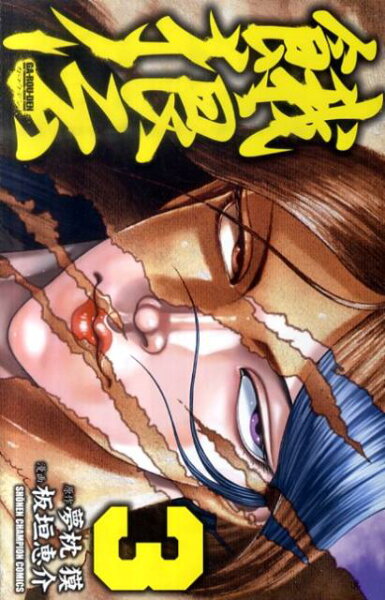
Garouden
Garouden follows Bunshichi Tanba, a former judoka who operates in the underground fighting world — a manga drawn by Jiro Taniguchi with psychological depth and physical authenticity rare in fighting manga.
Action / Crime
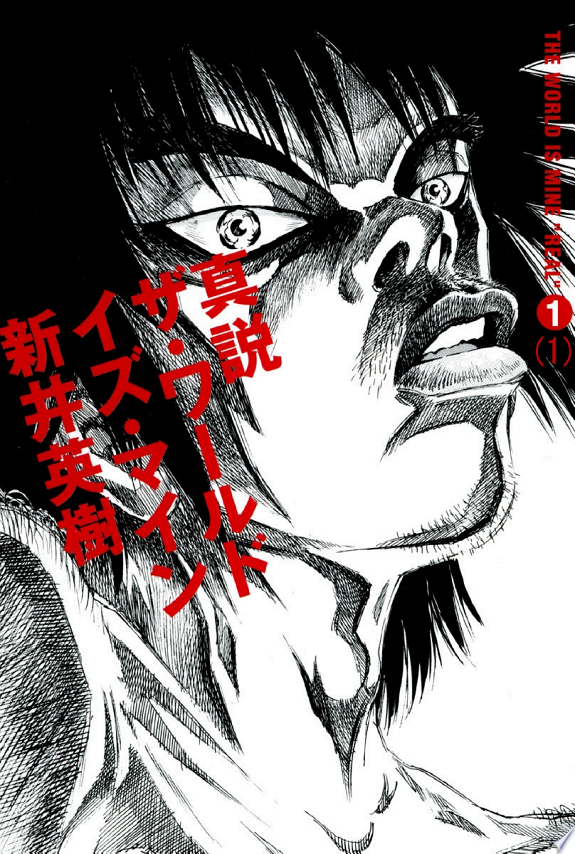
The World Is Mine
The World Is Mine follows two criminal partners — the unpredictable Mon and the calculating Toshi — on a violent crime spree across Japan, alongside a separate thread about a mysterious monster emerging in the wilderness.
Action / Comedy
Zom 100: Bucket List of the Dead
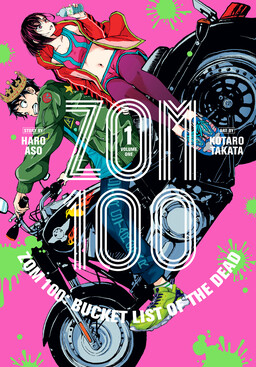
A review of Zom 100: Bucket List of the Dead — 15 volumes in Monthly Sunday GX. Akira Tendo spent three years being worked to death at a black company; when the zombie apocalypse starts, his first thought is relief that he doesn't have to go to work; he makes a list of 100 things to do before becoming a zombie. The most original zombie premise in years. VIZ Media's English edition is complete.
Action / Comedy
The Fable
Yu's review of The Fable — Akira (codename 'The Fable') is considered the deadliest assassin in Japan; his boss orders him to take a year off and live as an ordinary person without killing anyone; the comedy of an extraordinarily dangerous man trying and mostly succeeding at being normal while the criminal world swirls around him.
Action / Comedy
Ranma ½
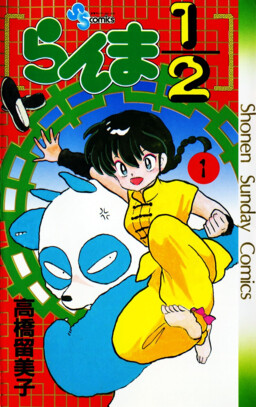
A review of Ranma ½ — 38 volumes in Weekly Shonen Sunday. Ranma Saotome transforms into a girl when splashed with cold water; his father has arranged him to be engaged to Akane Tendo, who hates boys; the series follows their chaotic not-quite-relationship and increasingly bizarre martial arts challenges. Rumiko Takahashi's most kinetic work. VIZ Media's English edition is complete.
Written by
Yu
Manga Enthusiast from Japan
I grew up in Japan and manga literally saved me during a tough time in elementary school. My English isn't perfect, but my love for manga is real — and I want to share it with you.
Disclosure: This post contains affiliate links. As an Amazon Associate, I earn from qualifying purchases at no extra cost to you.