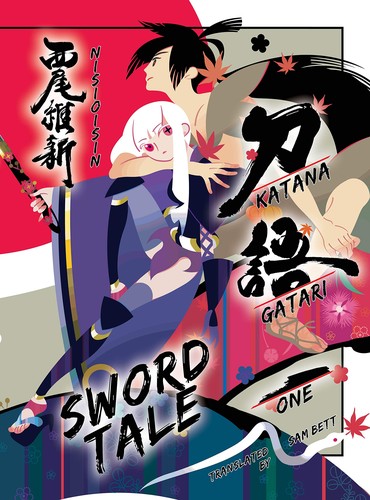
Katanagatari Review: The Sword Collection Quest That Isn't Really About Swords
by NisiOisiN (story) / Takuji Ohira (art)
*Affiliate link — I earn a small commission at no extra cost to you.
Quick Take
- NisiOisiN's most accessible work — a sword-hunting road trip that is dense with witty dialogue.
- Togame's talking is the real action of the series — her strategist's monologues are the best scenes.
- The ending is one of the most discussed in light novel/manga history — come without spoilers.
Who Is This Manga For?
- Fans of NisiOisiN fans who want his dialogue-heavy style in manga form
- Readers who enjoy readers who enjoy historical fantasy where the characters talk as much as they fight
- Anyone interested in action manga where the emotional resolution matters more than the fights
- People who like anyone who has loved an anime adaptation and wants to try the source material
Content Warnings & Age Rating
Age Rating: T (Teen) Content Warnings: action violence, philosophical dialogue, death
Safe for most readers.
Yu's Rating
| Category | Score |
|---|---|
| Story Depth | ★★★★☆ |
| Art Style | ★★★★☆ |
| Character Development | ★★★★★ |
| Accessibility for Non-Japanese Readers | ★★★★☆ |
| Reread Value | ★★★★☆ |
Overall: 4/5 — Witty, dialogue-heavy historical fantasy — the ending earns all the words that came before it.
Story Overview
Yasuri Shichika is the seventh generation of the Kyotouryuu school — a martial arts style using the body as the weapon. He has lived in isolation with his sister since childhood. Strategist Togame arrives with a commission from the shogunate: collect twelve deviant blades forged by the legendary swordsmith Shikizaki Kiki. Shichika becomes her bodyguard, and their journey across Edo Japan acquires increasingly strange complications.
Characters
The cast of Katanagatari is built around contrasting personalities that force each other to grow. The main character carries a mix of strength and vulnerability — enough to earn sympathy without feeling passive. Supporting characters each serve a distinct emotional function: some mirror the protagonist's flaws, others challenge their assumptions, and a few provide the warmth that makes the harder moments bearable.
Art Style
NisiOisiN (story) / Takuji Ohira (art)'s visual style suits the story it tells. Emotional moments land because facial expressions are drawn with real attention to subtlety — you rarely need dialogue to understand what a character is feeling. Background detail varies by scene, pulling back in quiet moments and getting tight and detailed when the stakes rise.
Cultural Context
Katanagatari comes from the Edo period Japan setting and the specific mythology around the twelve deviant blades, which draws on real Japanese sword-crafting traditions and the spiritual significance of swords in Japanese culture. English readers will find most of this translates naturally; a few cultural notes in good translations help bridge any remaining gaps.
What I Love About It
The genius of Katanagatari is that the swords are gathered one per act with perfect narrative economy — each acquisition is a complete story, each opponent a complete character. And Togame's running commentary on events, her explicit strategizing, her inability to stop explaining herself, is not annoying — it's the actual pleasure of the series. Her voice is one of the most distinctive in any genre fiction I've encountered.
What English-Speaking Fans Say
Western readers who find this series often describe it as something they wish they'd found sooner. The emotional beats translate well; the universal themes of connection, loss, and growth resonate regardless of cultural background. Fans of similar series consistently recommend it as a must-read for genre newcomers and veterans alike.
Memorable Scene ⚠️ Spoiler Warning
There is a moment — usually in the middle or final act — where the story does something unexpected with a character you thought you understood. The setup is careful and patient. The payoff is sudden and complete. Readers report rereading earlier chapters afterward, finding all the foreshadowing they missed the first time.
Similar Manga
If you enjoyed Katanagatari, try:
- Bakemonogatari — same author, similarly dialogue-heavy, supernatural setting
- Rurouni Kenshin — similar historical setting with swords as central symbolic objects
- Samurai Champloo — similar episodic sword-hunting journey structure
Reading Order / Where to Start
Start from volume 1. This series builds its world and characters carefully from the first chapter — jumping in anywhere else means losing the context that makes later moments land. Volume 1 is a very strong opening; if you're not hooked by the end of it, this series may not be for you.
Official English Translation Status
Katanagatari has been fully published in English. All 5 volumes are available.
Pros & Cons
Pros:
- Complete story with no wait for new volumes
- Strong character work and genuine emotional investment
- 5 volumes — complete, tight, no padding
Cons:
- The dialogue-heavy style is an acquired taste — not for readers who want pure action
- The ending is devastating and not for everyone
Format Comparison
| Format | Pros | Cons |
|---|---|---|
| Physical | Best art reproduction | May require ordering online |
| Digital | Instant access, cheaper | Less collector value |
| Used | Very affordable | Condition and availability vary |
Where to Buy
Find Katanagatari on Amazon:
👉 Search for Katanagatari on Amazon
This post contains affiliate links. If you purchase through these links, I may earn a small commission at no extra cost to you. As an Amazon Associate, I earn from qualifying purchases.
*Affiliate link — I earn a small commission at no extra cost to you.
Written by
Yu
Manga Enthusiast from Japan
I grew up in Japan and manga literally saved me during a tough time in elementary school. My English isn't perfect, but my love for manga is real — and I want to share it with you.
Disclosure: This post contains affiliate links. As an Amazon Associate, I earn from qualifying purchases at no extra cost to you.