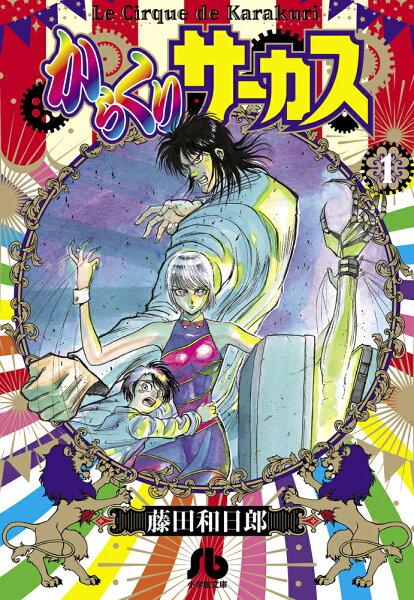
Karakuri Circus Review: The Puppet Show That Never Lets You Look Away
by Kazuhiro Fujita
Read the first volume. If it doesn't hook you, put it down. It'll hook you.
Buy Karakuri Circus on Amazon →*Affiliate link — I earn a small commission at no extra cost to you.
Quick Take
- Three heroes whose paths intertwine across decades, continents, and generations of tragedy
- Automata — mechanical dolls that hunt humans for their tears — are one of manga's most original villain concepts
- Fujita builds toward a conclusion that pays off every thread he planted in volume 1
Who Is This Manga For?
Karakuri Circus is perfect if you:
- Love long-form shonen with real stakes — characters die and it means something
- Enjoy manga that commits to its mythology — the automata lore is dense and deeply considered
- Want action that evolves — combat changes completely as the series progresses
- Appreciate emotional payoff — the ending is one of the most satisfying in shonen manga
Content Warnings & Age Rating
Age Rating: T (Teen) Content Warnings: Violence, body horror (automata designs), themes of death and manipulation, some graphic battle scenes
Not for younger readers but not gratuitously extreme. The horror comes from concept and consequence rather than explicit gore.
Yu's Rating
| Category | Score |
|---|---|
| Story Depth | ★★★★★ |
| Art Style | ★★★★☆ |
| Character Development | ★★★★★ |
| Accessibility for Non-Japanese Readers | ★★★☆☆ |
| Reread Value | ★★★★★ |
Story Overview
Masaru Saiga is a young boy who has just inherited his father's massive fortune — and immediately finds himself hunted by assassins sent by his own relatives. He runs, terrified and alone.
Narumi Kato is a man haunted by an incurable disease called Zonapha Syndrome, which can only be kept at bay by making someone laugh. He survives by performing street comedy. He stumbles into protecting Masaru almost by accident.
Shirogane is a woman who fights using a white marionette named Harlequin. She is hunting the automata — ancient mechanical dolls built to drink human tears — and she has her own history with them that goes deeper than anyone knows.
These three threads converge and separate across 43 volumes, building toward revelations about the origin of the automata and the human beings who created them centuries ago.
Characters
Masaru Saiga — the boy at the center of everything. He starts as frightened and helpless, which makes watching him grow into someone capable of real sacrifice all the more powerful.
Narumi Kato — the adult hero, and one of shonen manga's great characters. His curse is both weakness and motivation. The moments he fights while barely standing are some of the most tense in the series.
Shirogane — mysterious, skilled, carrying grief she won't share. Her backstory is revealed gradually and it reframes everything you thought you understood about her early behavior.
Arlequin/Harlequin — Shirogane's marionette. Not just a weapon. The manga makes you care about a puppet, which is a remarkable achievement.
Art Style
Kazuhiro Fujita is the author of Ushio and Tora, and Karakuri Circus shows the same commitment to big action moments and genuine emotional expression. His automata designs are genuinely unsettling — beautiful and wrong at the same time, like something that should move like a human but doesn't quite.
The circus imagery runs throughout — ring compositions, spotlight panels, the visual language of performance — in ways that feel thematically integral rather than decorative.
Cultural Context
Karakuri (からくり) refers to traditional Japanese mechanical dolls — intricate clockwork figures that were a sophisticated art form in the Edo period. Fujita builds the automata villain concept directly from this real tradition, giving the series roots in actual Japanese craftsmanship and the uncanny valley that those dolls already inhabit.
The circus framing connects to Western entertainment traditions, making the manga a genuine cultural hybrid rather than just a setting choice.
What I Love About It
I picked up Karakuri Circus because I loved Ushio and Tora and wanted more Fujita. By volume 5 I had completely forgotten I was reading it for the author's name — I was reading it because I needed to know what happened.
The thing Fujita does that almost no other shonen mangaka does: he makes the villain concept genuinely sad. The automata aren't evil. They're tragic. By the time the final arc explains their origin, I found myself mourning something that I had spent forty volumes watching be destroyed.
That's not a common experience in action manga.
What English-Speaking Fans Say
Karakuri Circus has a small but intensely devoted English-speaking fanbase. The consensus is that it is significantly underrated relative to its quality — readers who finish it consistently rank it among the best shonen manga ever made, but its length and dense mythology make it a harder sell than more accessible series.
Fans of Ushio and Tora sometimes approach it as "the harder one" and are usually surprised by how quickly it hooks them. The VIZ Media release is considered a clean translation that handles the technical circus/puppet vocabulary well.
Memorable Scene ⚠️ Spoiler Warning
The moment in the late volumes when the full history of the automata's creator is revealed — when you understand that the villain of the series is also its greatest victim, and that the enemy Narumi and Shirogane have been fighting was born out of the same capacity for love that drives the heroes — is one of the finest reversals in manga. I had to put the book down and sit with it.
Similar Manga
- Ushio and Tora — Fujita's other classic, with the same emotional DNA
- Fullmetal Alchemist — long shonen with a mystery at the center that rewards patience
- Pandora Hearts — dense mythology, tragedy, and a protagonist shaped by things they can't control
- Black Clover — for readers who want the long-form action without the darkness
Reading Order / Where to Start
Volume 1 and straight through. The early circus-chase sections establish the three protagonists before the larger mythology takes over. Don't read spoilers; every revelation hits harder cold.
Official English Translation Status
VIZ Media has published the complete 43-volume run in English. Widely available in both digital and physical editions. The translation is complete and reliable.
Pros & Cons
Pros
- One of the best shonen manga ever made
- Villain concept is genuinely original and thematically rich
- The ending earns everything it asks of the reader
- VIZ translation is complete and available
Cons
- 43 volumes is a significant commitment
- Dense mythology in the mid-series can be demanding
- Less well-known than its quality deserves — hard to get friends to start it
Format Comparison
| Format | Pros | Cons |
|---|---|---|
| Digital | Easy access, full series available | Less immersive for long reads |
| Paperback | Best for a series this long | Takes real shelf space |
| Omnibus | N/A | Not available in English |
Recommendation: Paperback is ideal for a 43-volume read — the physical progression through the shelf mirrors the journey. But digital works fine if space is an issue.
Where to Buy
Read the first volume. If it doesn't hook you, put it down. It'll hook you.
This post contains affiliate links. If you purchase through these links, I may earn a small commission at no extra cost to you. As an Amazon Associate, I earn from qualifying purchases.
*Affiliate link — I earn a small commission at no extra cost to you.
More Manga You Might Like
Action / Adventure
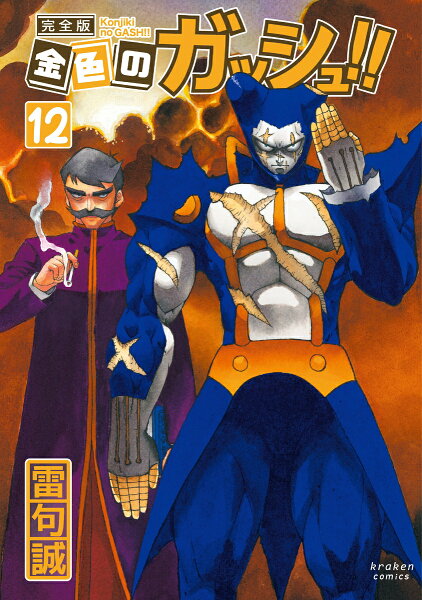
Zatch Bell!
A review of Zatch Bell! — 33 volumes in Weekly Shonen Sunday. Genius middle schooler Kiyo Takamine partners with demon child Zatch Bell in a battle royale of 100 demon/human pairs competing to become King of the Mamodo World; Zatch wants to be a kind king. The manga that made an entire generation cry about a book burning. VIZ Media's English edition is complete.
Action / Adventure
One Piece
Yu's review of One Piece — the manga that has been running for over 25 years and still feels alive. About freedom, friendship, and one ridiculous boy who refuses to be defined by anyone else's rules.
Action / Adventure
Hunter x Hunter
Yu's review of Hunter x Hunter — 37 volumes of the most intelligent action manga ever written, from the creator of Yu Yu Hakusho. A series that keeps reinventing itself and never stops being the best thing it possibly can be, when it's being published.
Action / Adventure
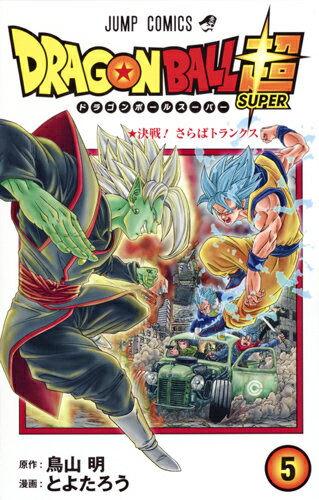
Dragon Ball
A review of Dragon Ball — 42 volumes in Weekly Shonen Jump. Son Goku's journey from a boy in the wilderness to the strongest being in the universe — the manga that defined what shonen action could be and that every battle manga since has owed something to. VIZ Media's English edition is complete.
Action / Adventure
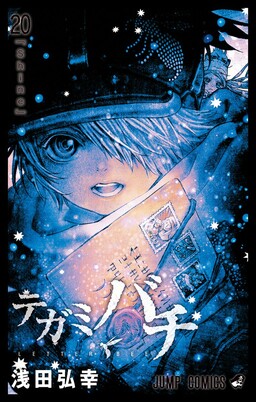
Tegami Bachi: Letter Bee
Yu's review of Tegami Bachi — in a land of perpetual night called AmberGround, Letter Bees risk their lives to deliver correspondence across insect-haunted wastelands; Lag Seeing, the child who was once delivered as a letter, grows up to become a Letter Bee and searches for the mentor who first carried him.
Action / Adventure
Sand Land
Yu's review of Sand Land — Beelzebub is the son of the Demon King; he teams up with an old sheriff named Rao to cross a desert and find a legendary lake, because the Demon Realm needs water and the king is hoarding what exists; Akira Toriyama's standalone adventure.
Written by
Yu
Manga Enthusiast from Japan
I grew up in Japan and manga literally saved me during a tough time in elementary school. My English isn't perfect, but my love for manga is real — and I want to share it with you.
Disclosure: This post contains affiliate links. As an Amazon Associate, I earn from qualifying purchases at no extra cost to you.