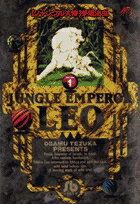
Jungle Emperor Leo Review: The Manga Disney Borrowed From (and Tezuka Never Forgave)
by Osamu Tezuka
Read the first volume. If it doesn't hook you, put it down. It'll hook you.
Buy Jungle Emperor Leo on Amazon →*Affiliate link — I earn a small commission at no extra cost to you.
Before The Lion King, before Disney, before animated films about lion royalty existed — there was Leo.
Quick Take
- Osamu Tezuka's foundational work about a white lion navigating between the human world and the wild
- Darker and more complex than you might expect from something Disney famously borrowed from
- Essential reading for understanding the origins of modern manga and animation
Who Is This Manga For?
- Tezuka fans expanding their reading beyond Astro Boy and Black Jack
- Readers interested in the history of manga and animation
- Anyone who wants a classic adventure story with surprising emotional weight
- People who enjoy stories that take the animal perspective seriously
Content Warnings & Age Rating
Age Rating: All Ages (with caveats) Content Warnings: Violence, death of major characters (including animals), themes of colonialism and exploitation of nature
"All ages" in the 1950s sense — more emotionally and thematically challenging than modern all-ages implies.
Yu's Rating
| Category | Score |
|---|---|
| Story Depth | ★★★★☆ |
| Art Style | ★★★★☆ |
| Character Development | ★★★★☆ |
| Accessibility for Non-Japanese Readers | ★★★★★ |
| Reread Value | ★★★★☆ |
Story Overview
Leo is a white lion cub born into captivity — his mother captured, his father Panja killed by hunters. He escapes and returns to the African jungle, where he eventually becomes king. But the story is not just about a lion becoming king. It's about what happens when the human world keeps encroaching on the wild world, and about a lion who dreams of a world where humans and animals can coexist.
Leo grows, leads, falls in love, has children. The second and third volumes follow not just Leo but his son Rune and the generations of change that pass through the jungle. Tezuka spans decades to ask whether the dream Leo holds is sustainable — or whether the human impulse to exploit and contain will always win.
The answer is neither triumphant nor despairing. Tezuka was too honest for easy conclusions. But the journey is full of specific moments of beauty, tragedy, and the particular weight of watching a noble creature navigate a world that was never going to simply let him exist.
Characters
Leo (Kimba in the anime dub) — Brave, idealistic, sometimes naive, ultimately irreducible. His insistence on coexistence is not stupidity — it's a choice, consciously made, in the face of evidence that the choice will cost him.
Lyra — Leo's partner and counterweight. More pragmatic, less given to idealism, and the keeper of what Leo is when his idealism fails him.
Ham Egg — The hunter antagonist. Tezuka doesn't make him a cartoon villain; he's a person who wants money and doesn't think animals count. His ordinariness is what makes him threatening.
Art Style
Early Tezuka — the style that was influenced by Disney animation and then turned back into something distinctly Japanese. Rounded, expressive character designs, clear visual storytelling, action sequences that use composition rather than detail to convey speed and power. By today's standards it looks simple; within its context, it was revolutionary in how it moved.
The jungle backgrounds are lush and detailed in ways that contrast with the character design simplicity. Tezuka always understood that environment shapes story.
Cultural Context
Jungle Emperor Leo ran from 1950-1954 and was Tezuka's first major work after Astro Boy. It reflects the post-war Japanese relationship with colonialism and nature: the jungle as a lost paradise, human "civilization" as both the source of advancement and the agent of destruction. Tezuka was working through ideas about Japan's own recent experience with expansion and loss.
The Disney controversy is real: The Lion King (1994) shares enough with Jungle Emperor Leo that Tezuka Productions raised concerns. Disney denied direct influence. The visual and story parallels are striking. Tezuka himself had died in 1989 and couldn't weigh in. The controversy remains live.
What I Love About It
The ending of Jungle Emperor Leo — I won't describe it in detail — is one of the most quietly devastating conclusions in manga history. Tezuka doesn't protect you from it. He doesn't sentimentalize it. He shows what it costs to hold a dream that the world keeps proving impossible.
And then the story continues with the next generation, and you understand: the dream doesn't die with the dreamer. It passes on. Flawed, imperfect, carrying all the losses of the generation before — but still present, still trying.
I grew up watching the anime adaptation and didn't understand the ending as a child. Reading the manga as an adult, I understood it completely.
What English-Speaking Fans Say
The Disney controversy keeps Jungle Emperor Leo in recurring discussion in English-speaking communities. Beyond the controversy, English readers who approach it on its own terms find it rich and emotionally serious in ways the Disney film is not. Tezuka's handling of death — direct, repeated, cumulative — is often cited as what distinguishes his work.
Memorable Scene ⚠️ Spoiler Warning
Leo's final sacrifice — giving everything to save a group of humans who have been his antagonists — and the way Tezuka draws the moment in the snow, silent, without melodrama, is the image the whole manga was building toward. It's not triumphant. It's not punishing. It's just what Leo would do, because that's who Leo chose to be. Heroism as character expression rather than plot requirement.
Similar Manga
| Title | Its Approach | How Jungle Emperor Leo Differs |
|---|---|---|
| Bambi (manga adaptation) | Animal protagonist facing human impact | Tezuka spans generations and takes a more political view of human-animal conflict |
| Nausicaä of the Valley of the Wind | Humans and nature in conflict | Jungle Emperor is smaller scale but more focused on individual character |
| Black Jack | Tezuka exploring moral complexity | Jungle Emperor is earlier Tezuka — less cynical, more invested in idealism |
Reading Order / Where to Start
Three volumes, read in order. The Vertical Comics edition is excellent.
Official English Translation Status
Vertical Comics published the complete 3-volume English edition. Complete and available. The classic anime (as "Kimba the White Lion") is also available.
Pros & Cons
Pros
- A foundational text of manga and animation history
- Emotionally serious and willing to follow its themes to difficult conclusions
- The generational scope makes it feel genuinely epic
- Tezuka's visual storytelling is still clear and compelling
Cons
- 1950s art style may be hard for readers accustomed to contemporary manga to settle into
- The pacing reflects its serialization era — episodic in places
- Some cultural and racial characterizations haven't aged well
- The animal characters sometimes strain the emotional register
- Three volumes covers a lot of ground — some character arcs feel compressed
Is Jungle Emperor Leo Worth Reading?
Yes — as a historical text and as a genuinely good story. The Disney controversy gives non-Japanese readers a way in, but what you find inside is something more thoughtful and more sad than any Disney film. Essential Tezuka.
Format Comparison
| Format | Pros | Cons |
|---|---|---|
| Physical | The Vertical edition is a quality release | — |
| Digital | Available | Classic line art reads fine on screen |
| Omnibus | The 3-volume set is effectively complete | — |
Where to Buy
Read the first volume. If it doesn't hook you, put it down. It'll hook you.
This post contains affiliate links. If you purchase through these links, I may earn a small commission at no extra cost to you. As an Amazon Associate, I earn from qualifying purchases.
*Affiliate link — I earn a small commission at no extra cost to you.
More Manga You Might Like
Action / Adventure
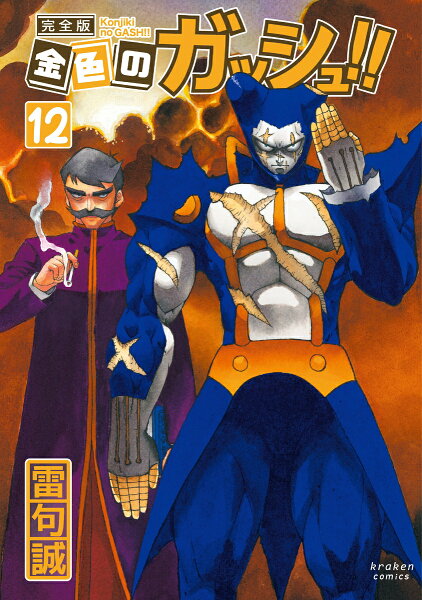
Zatch Bell!
A review of Zatch Bell! — 33 volumes in Weekly Shonen Sunday. Genius middle schooler Kiyo Takamine partners with demon child Zatch Bell in a battle royale of 100 demon/human pairs competing to become King of the Mamodo World; Zatch wants to be a kind king. The manga that made an entire generation cry about a book burning. VIZ Media's English edition is complete.
Action / Adventure
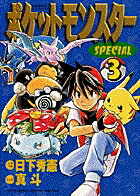
Pokémon Adventures
A comprehensive review of Pokémon Adventures — plot, characters, art style, and whether it's worth reading.
Action / Adventure
One Piece
Yu's review of One Piece — the manga that has been running for over 25 years and still feels alive. About freedom, friendship, and one ridiculous boy who refuses to be defined by anyone else's rules.
Action / Adventure
Hunter x Hunter
Yu's review of Hunter x Hunter — 37 volumes of the most intelligent action manga ever written, from the creator of Yu Yu Hakusho. A series that keeps reinventing itself and never stops being the best thing it possibly can be, when it's being published.
Action / Adventure
Dragon Ball
A review of Dragon Ball — 42 volumes in Weekly Shonen Jump. Son Goku's journey from a boy in the wilderness to the strongest being in the universe — the manga that defined what shonen action could be and that every battle manga since has owed something to. VIZ Media's English edition is complete.
Action / Adventure
Silver Fang
Silver Fang follows Gin, a silver Akita puppy who leaves his human to assemble an army of dogs and hunt down Akakabuto — a monstrous bear that has claimed an entire mountain and become a threat to everything living on it.
Written by
Yu
Manga Enthusiast from Japan
I grew up in Japan and manga literally saved me during a tough time in elementary school. My English isn't perfect, but my love for manga is real — and I want to share it with you.
Disclosure: This post contains affiliate links. As an Amazon Associate, I earn from qualifying purchases at no extra cost to you.