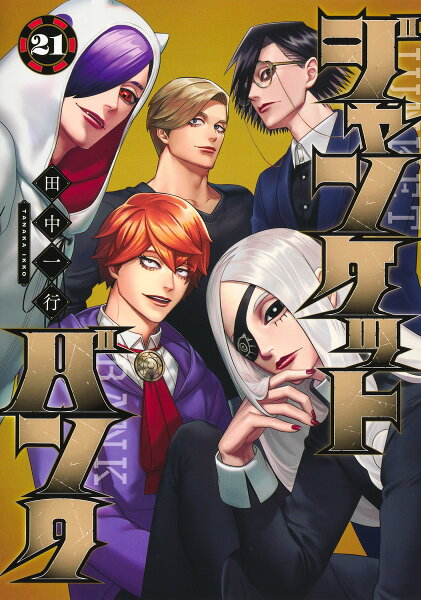
Juncket Bank Review: The Gambling Manga Where the Casino Is the Battlefield
by Yusuke Nomura
Read the first volume. If it doesn't hook you, put it down. It'll hook you.
Buy Juncket Bank on Amazon →*Affiliate link — I earn a small commission at no extra cost to you.
Quick Take
- The modern gambling manga for readers who want psychological strategy over supernatural luck
- The casino setting is used with genuine understanding of how casinos work and why they're dangerous
- Shinonome's ability creates moral problems the series takes seriously — winning is not simple
Who Is This Manga For?
- Gambling manga fans who want the genre updated for contemporary sensibilities
- Readers of Kakegurui or Kaiji who want something with more grounded stakes
- Anyone interested in casino culture and its mechanisms — the series depicts them accurately
- Psychological thriller readers who want the genre's tension in a gambling frame
Content Warnings & Age Rating
Age Rating: M (Mature) Content Warnings: High-stakes gambling with real consequences; psychological manipulation as the primary conflict mechanism; casino crime content; mature throughout
Adult content handled with seriousness.
Yu's Rating
| Category | Score |
|---|---|
| Story Depth | ★★★★☆ |
| Art Style | ★★★★☆ |
| Character Development | ★★★★☆ |
| Accessibility for Non-Japanese Readers | ★★★★☆ |
| Reread Value | ★★★★☆ |
Story Overview
Shinonome Ginji doesn't cheat. He reads situations — the mathematical probabilities, the psychological states of opponents, the specific ways that games create false impressions of chance. His ability to see through these mechanisms means he wins at games of chance with a consistency that looks impossible.
Bunta Tendo runs a junket operation — a high-level casino service that brings wealthy gamblers to play for enormous stakes. He wants Shinonome's ability applied to his clients: not to help them win, but to manipulate the outcomes in ways that extract maximum money while remaining technically fair.
The series follows the psychological game between them — Shinonome trying to use his position for his own purposes, Tendo trying to ensure the operation's profitability, both playing games within games.
Characters
Shinonome Ginji: A protagonist whose analytical ability creates its own moral complexity. He understands gambling at a level beyond his opponents, but this understanding comes with the awareness that what he's doing can hurt people.
Bunta Tendo: An antagonist who is also a professional — genuinely good at his work, which involves extracting money from people who want to lose it. His pragmatism is its own kind of honesty.
The clients: A rotating gallery of wealthy people whose relationship to gambling reveals things about them they would prefer not revealed.
Art Style
Nomura's art communicates the casino environment with atmospheric precision — the specific visual quality of high-roller rooms, the body language of gamblers, the mechanics of card games depicted clearly enough to follow the logic. Character expressions carry the psychological weight of games where stakes are real.
Cultural Context
Junket operations — private services that arrange high-stakes casino access for wealthy clients, often managing their credit and providing personalized service — are a real and specific part of international casino culture. The series depicts this world with evident research.
In Japan, gambling (with exceptions like horse racing and pachinko) is technically illegal, which gives gambling-themed manga a slightly transgressive quality and a particular audience draw.
What I Love About It
I love how the series complicates the fantasy of the unbeatable gambler.
A lot of gambling manga give their protagonist an ability and then use it to win, repeatedly, with escalating stakes. Juncket Bank asks what it means to have that ability in a context where winning is not obviously good. Shinonome's skill serves Tendo's operation. His wins are Tendo's profits. The people he wins against may be people he would rather not hurt.
The series is about the ethics of using a skill in a system you didn't design and can't easily leave. This is more interesting than the pure victory fantasy.
What English-Speaking Fans Say
Not known in English-speaking markets. Among gambling manga readers who read in Japanese, it is recognized as one of the more sophisticated recent entries in the genre — praised for its understanding of casino mechanics and its moral complexity.
Memorable Scene
A game where Shinonome realizes that the optimal play — the one that maximizes his expected outcome — is one he doesn't want to make because of what it does to the person across from him. The scene is about the gap between being the best player and being the right player.
Similar Manga
- Kaiji: The genre's foundation — different games, same psychological depth
- Kakegurui: Casino gambling, more stylized, less grounded
- One Outs: Baseball + gambling psychology, similar "unbeatable protagonist" premise
Reading Order / Where to Start
Volume 1. The premise and characters are established from the beginning.
Official English Translation Status
Juncket Bank has no official English translation.
Pros & Cons
Pros
- Sophisticated understanding of casino mechanics and gambling psychology
- Moral complexity that elevates the genre
- Ongoing — new content still arriving
- Strong character contrast between protagonist and antagonist
Cons
- No English translation
- Ongoing — no conclusion yet
- Some casino terminology is dense for non-enthusiasts
Format Comparison
| Format | Notes |
|---|---|
| Physical | Japanese editions available |
| Digital | Available in Japanese |
| Omnibus | Not available (ongoing) |
Where to Buy
No English release yet. That just means you find it before everyone else does.
*Affiliate link — I earn a small commission at no extra cost to you.
More Manga You Might Like

Action / Thriller
Usogui
Baku Madarame — known as Usogui, 'the Liar Eater' — is the most extraordinary gambler in Kakerou, an underground organization that runs games where losers forfeit their lives. 49 volumes of escalating psychological warfare, complete, unlicensed in English.
Action / Drama
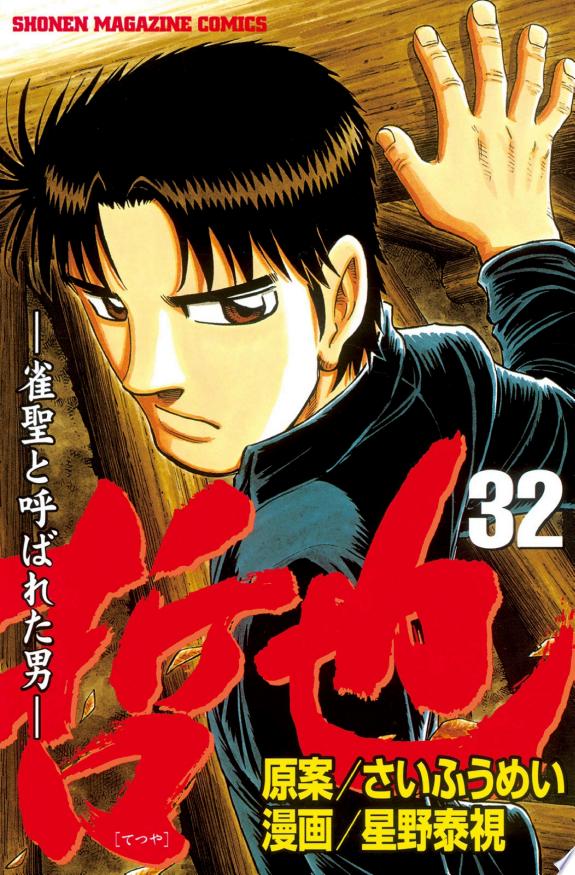
Tetsuya
Tetsuya follows a young man known as Tetsuya who becomes Japan's greatest underground mahjong player in the devastation of postwar Tokyo — using skill, psychological insight, and sometimes outright cheating to survive in a world where the stakes are always real.
Action / Drama
Pumpkin Scissors
Yu's review of Pumpkin Scissors — a ceasefire has ended the war between the Empire and the Republic, but the civilian population is suffering from poverty, bandit violence, and the breakdown of social infrastructure; the Imperial Army's Section III — Pumpkin Scissors — is supposed to handle war relief; Alice L. Malvin leads the section with the conviction that soldiers have an obligation to serve civilians; Randel Oland, a massive ex-soldier with a blue lantern and a traumatic past, joins.
Action / Drama
Gunslinger Girl
Yu's review of Gunslinger Girl — the Social Welfare Agency of Italy rescues girls from terminal illness or traumatic situations and gives them cybernetic bodies and psychological conditioning; each girl is paired with a handler and used for government counter-terrorism work; the series examines what this costs them.

Action / Psychological
Classroom of the Elite
Yu's review of Classroom of the Elite — the government's most elite school gives students full freedom and unlimited privileges, with one rule: only results matter; Class D is full of misfits and rejects; Kiyotaka Ayanokoji appears to be an ordinary student of no particular ability; he is not; the series follows the class's struggle to rise through the school's brutal social hierarchy.
Action / Drama
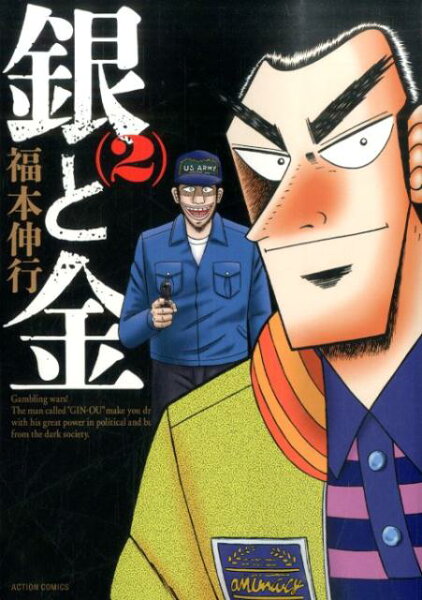
Gin to Kin
Gin to Kin is Nobuyuki Fukumoto's gambling manga about Morita Tetsuo, a young man drawn into the inner world of high-stakes underground gambling — a slower, denser predecessor to Kaiji where every game is a psychological war.
Written by
Yu
Manga Enthusiast from Japan
I grew up in Japan and manga literally saved me during a tough time in elementary school. My English isn't perfect, but my love for manga is real — and I want to share it with you.