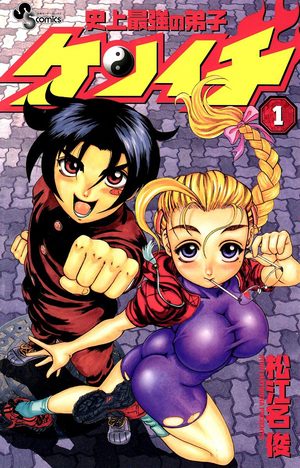
History's Strongest Disciple Kenichi Review: The Weakest Boy in School Trains With Six Masters to Become Something Else Entirely
by Syun Matsuena
Read the first volume. If it doesn't hook you, put it down. It'll hook you.
Buy History's Strongest Disciple Kenichi on Amazon →*Affiliate link — I earn a small commission at no extra cost to you.
Quick Take
- The martial arts training manga — Kenichi doesn't fight his way to strength; he earns it through consistent, brutal training from six masters who all have completely different ideas about what training means
- The masters are the series' most celebrated element: six wildly different personalities who cannot agree on anything except that Kenichi needs more training
- 61 volumes complete; one of the longest running martial arts manga in English
Who Is This Manga For?
- Readers who want martial arts manga focused on training process rather than tournament fighting
- Fans of ensemble comedy where the supporting cast is more interesting than the protagonist
- Anyone who enjoys seeing multiple fighting disciplines compared and contrasted
- Readers who appreciate long-form character development
Content Warnings & Age Rating
Age Rating: T (Teen) Content Warnings: Martial arts violence; some fanservice in the style of Weekly Shonen Sunday
Appropriate for teen readers; nothing extreme.
Yu's Rating
| Category | Score |
|---|---|
| Story Depth | ★★★☆☆ |
| Art Style | ★★★★☆ |
| Character Development | ★★★★☆ |
| Accessibility for Non-Japanese Readers | ★★★★★ |
| Reread Value | ★★★☆☆ |
Story Overview
Kenichi Shirahama is consistently beaten up. He has no fighting ability and no particular gifts. He meets Miu Furinji, a girl from a family of martial artists, and follows her home to Ryōzanpaku — a dojo that houses six masters: Hayato Furinji (judo), Akisame Koetsuji (jujutsu), Kensei Ma (Chinese kenpo), Shio Sakaki (karate), Apachai Hopachai (Muay Thai), and Shigure Kosaka (weapons).
They agree to train him, collectively, despite having completely different philosophies about how this should be done. The result is that Kenichi trains constantly, in multiple disciplines simultaneously, surrounded by people who are each the best in the world at something.
The antagonists are YAMI — an organization of master-level martial artists who believe strength should rule — and their disciple organization Ragnarok, whose members Kenichi encounters as they escalate in ability.
Characters
Kenichi Shirahama — His character trait is endurance. He is not gifted. He is not a prodigy. He absorbs more punishment than anyone around him and keeps training. His growth over 61 volumes is genuine.
The Ryōzanpaku Masters — The series' actual protagonists in terms of reader attachment. Each is defined by their discipline's philosophy: Sakaki's karate directness versus Koetsuji's psychological jujutsu approach versus Ma Kensei's fluid Chinese kenpo. Their arguments about how to train Kenichi generate the series' best comedy.
Miu Furinji — Granddaughter of the dojo master; her own martial arts ability far exceeds Kenichi's from the start, and the gap closing is part of the series' character development.
Art Style
Matsuena's art handles martial arts movement well — the different disciplines are visually distinct, and Kenichi's increasing capability is communicated through how his body and movements change across volumes. The master characters are drawn with the distinct physicality their disciplines require.
Cultural Context
The series engages genuinely with multiple martial arts traditions — Chinese kenpo, Muay Thai, judo, karate, jujutsu — not as costumes but as distinct philosophical approaches to combat. The debate between masters about the correct approach to martial arts is both comedy and genuine exploration of what different traditions value.
What I Love About It
The training sequences where two masters who disagree about method end up effectively training Kenichi in both approaches simultaneously, each trying to prove their philosophy is superior. The comedy comes from their competition; the result for Kenichi is better than either approach alone. The series understands that disagreement between teachers can be a form of education.
What English-Speaking Fans Say
Western martial arts fans describe Kenichi as the most technically varied martial arts manga in English — the range of disciplines and the genuine attempt to represent each one's philosophy gives it something most martial arts manga lack. The master ensemble is consistently rated as the series' best element; multiple readers report that they could read an entire separate series just about the Ryōzanpaku masters.
Memorable Scene ⚠️ Spoiler Warning
The fight where Kenichi faces a YAMI master alone — without any of his teachers present — and must apply everything he has learned without being able to rely on whoever is strongest standing nearby. Whether he wins or loses, what happens reveals how much he has actually internalized.
Similar Manga
- Baki — Martial arts, maximalist approach
- Kengan Ashura — Fighting tournament, multiple disciplines
- Holyland — Street fighting, training process
- Air Gear — Extreme sport training, ensemble teachers
Reading Order / Where to Start
Volume 1 — Kenichi's first day at Ryōzanpaku establishes the central dynamic.
Official English Translation Status
Viz Media published the complete 61-volume run. All volumes available.
Pros & Cons
Pros
- The master ensemble is among manga's finest supporting casts
- Kenichi's growth across 61 volumes is genuinely earned
- Multiple martial arts represented with real philosophical depth
- Complete in English
Cons
- 61 volumes is a very significant investment
- Some fanservice is present throughout
- Mid-series pacing varies considerably
Format Comparison
| Format | Notes |
|---|---|
| Individual Volumes | Viz; standard |
| Digital | Available |
Where to Buy
Read the first volume. If it doesn't hook you, put it down. It'll hook you.
This post contains affiliate links. If you purchase through these links, I may earn a small commission at no extra cost to you. As an Amazon Associate, I earn from qualifying purchases.
*Affiliate link — I earn a small commission at no extra cost to you.
More Manga You Might Like
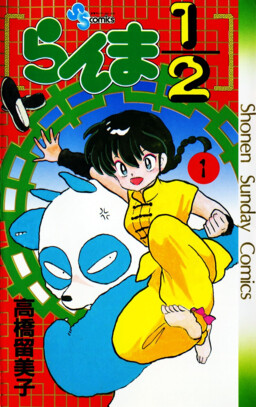
Action / Comedy
Ranma ½
A review of Ranma ½ — 38 volumes in Weekly Shonen Sunday. Ranma Saotome transforms into a girl when splashed with cold water; his father has arranged him to be engaged to Akane Tendo, who hates boys; the series follows their chaotic not-quite-relationship and increasingly bizarre martial arts challenges. Rumiko Takahashi's most kinetic work. VIZ Media's English edition is complete.
Action / Comedy
Mob Psycho 100
A review of Mob Psycho 100 — 16 volumes on Ura Sunday. Shigeo Kageyama (Mob) is the most powerful psychic alive and keeps his powers suppressed because he doesn't want to hurt anyone; he just wants to get better at talking to his crush. The best manga about emotional suppression and what actual strength looks like. Dark Horse Comics' English edition is complete.
Action / Comedy
Gintama
A review of Gintama — 77 volumes in Weekly Shonen Jump. Gintoki Sakata runs an odd-jobs business in an alternate Edo Japan where aliens conquered the country and samurai are forbidden to carry swords. The funniest manga ever made, hiding some of the most devastating serious arcs in the genre. VIZ Media's English edition is complete.
Action / Adventure
Dragon Ball
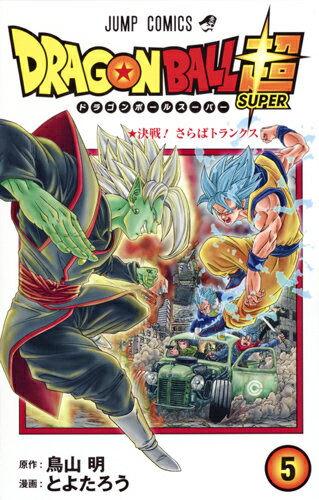
A review of Dragon Ball — 42 volumes in Weekly Shonen Jump. Son Goku's journey from a boy in the wilderness to the strongest being in the universe — the manga that defined what shonen action could be and that every battle manga since has owed something to. VIZ Media's English edition is complete.
Action / Comedy
Assassination Classroom
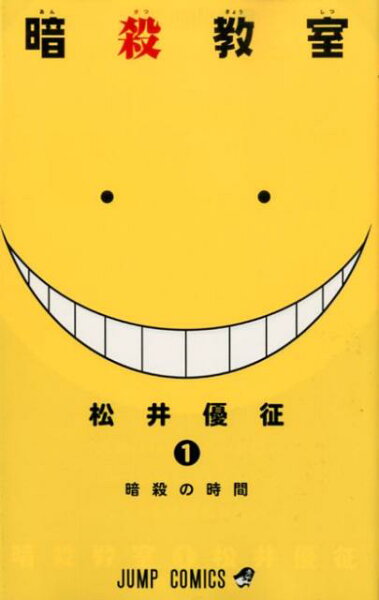
Yu's review of Assassination Classroom — 21 volumes about a class of underachievers assigned to kill their alien teacher before he destroys the Earth. The funniest manga about murder, and the most moving manga about being seen by a teacher who refused to write you off.
Action / Comedy
SKET Dance
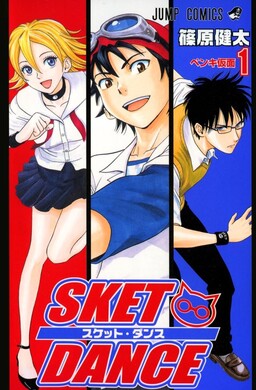
Yu's review of SKET Dance — Bossun, Himeko, and Switch form the SKET-dan, a school club that helps anyone who asks with any problem; what starts as episodic comedy gradually reveals the serious backstories behind three students who understand what it means to need help.
Written by
Yu
Manga Enthusiast from Japan
I grew up in Japan and manga literally saved me during a tough time in elementary school. My English isn't perfect, but my love for manga is real — and I want to share it with you.
Disclosure: This post contains affiliate links. As an Amazon Associate, I earn from qualifying purchases at no extra cost to you.