
Harenchi Gakuen Review — The 1968 Manga That Created an Entire Genre and a Real Moral Panic
by Go Nagai
Read the first volume. If it doesn't hook you, put it down. It'll hook you.
Buy Harenchi Gakuen on Amazon →*Affiliate link — I earn a small commission at no extra cost to you.
I am a Go Nagai fan. I have read Devilman more than once. I have read Mazinger. I think Nagai is one of the most important manga creators in Japanese history. I am also, separately, someone who has read Harenchi Gakuen and felt complicated about it.
Both things are true. The manga is essential to understanding Nagai's career. It is also, by modern standards, deeply uncomfortable in places. This review tries to be honest about both.
Quick Take
- Go Nagai's debut series. Ran in Weekly Shonen Jump from its 1968 launch year through 1972. 13 volumes
- Caused national moral panic and PTA protests. Created the conventions modern ecchi manga still uses
- The final arc ("Harenchi War") turns the comedy into mass-casualty violence — one of the strangest endings in manga history
- Age rating: M (Mature) — sexual humor, nudity, late-series graphic violence, 1968-era content
What Is Harenchi Gakuen About?
Harenchi Gakuen (ハレンチ学園, "Shameless School" / "Schoolless Modesty") opens at a Japanese coeducational middle school where the social order is openly broken in one specific direction: the male teachers and male students are constantly, publicly trying to catch the female students in compromising positions. Upskirt photographs. "Accidental" undressings. Sexual harassment played as slapstick comedy.
The protagonist is Yamagishi Yasoji (山岸 八十八), nicknamed "Oyabun" (Boss). He is the son of a butcher. He is a rough kid with a strong sense of chivalry — even though he participates in the school's general ecchi-pursuit culture, he is also the character most likely to actually protect female students from threats that have crossed lines from comedy into harm.
The heroine is Yagyu Mitsuko (柳生 みつ子), codenamed "Jubei" (十兵衛). She is a descendant of the famous Yagyu ninja clan, trained in the Shinkage-ryu sword style, capable of physically defeating most of the male characters who pursue her.
The recurring antagonist (when he is not also a comedic figure) is Hige-Gojira (ヒゲゴジラ, "Bearded Godzilla") — a teacher whose constant scheming to spy on or catch female students provides the manga with its primary ecchi engine.
The first three-fourths of the manga is structured as episodic ecchi comedy — each chapter a self-contained gag built around the basic premise. The art is energetic and rough; the humor is broad. Modern readers will find some of the gags shocking, some dated, some recognizable as the originators of ecchi-genre conventions that are still in use.
Then the final arc — the Harenchi Daisen-sou (ハレンチ大戦争, "The Great Harenchi War") — begins. The "Dai-Nippon Educational Center" (大日本教育センター, a militant educational reform organization) declares war on Harenchi Gakuen with the goal of eradicating its moral pollution. The manga's tone shifts violently. Comedic characters die. The students take up arms. Yamagishi and Yagyu themselves are apparently killed (their survival is revealed in the manga's continuation arcs).
This ending — Go Nagai's actual answer to the moral panic against the manga — is one of the strangest and most discussed conclusions in manga history.
The PTA Moral Panic: What Actually Happened
This is the historically important part of the manga's context.
1968–1970: Weekly Shonen Jump launched in 1968. Harenchi Gakuen was one of its founding serialized works. The manga's sexual humor was, even by 1968 standards, more aggressive than what Japanese kids' magazines had previously published.
1970: National newspaper coverage. Parent-Teacher Associations across Japan began organizing against the manga. The campaign was substantial: PTAs petitioned schools, boards of education investigated, the magazine received pressure from advertisers. Nagai received hate mail. The publisher (Shueisha) considered cancellation.
The cultural debate that followed was real and consequential. It was the first major Japanese national debate about manga as a medium that influences youth. The discussion shaped how Japanese society would handle similar concerns for decades afterward.
Nagai's response: he refused to soften the manga. He continued to serialize. He eventually concluded the series (the Harenchi War arc) in a way that read as a kind of authorial revenge — the people who tried to destroy the school in the manga were defeated, but only after mass casualties that the readers had not been prepared for.
Whether Nagai's response was admirable, irresponsible, or both is a question Japanese manga discourse has continued to debate.
Who Is This Manga For?
- Go Nagai fans who want to understand where his career started
- Manga historians interested in early Weekly Shonen Jump
- Readers of the ecchi genre who want to see its foundational text
- Readers of media moral-panic history generally
- Not for: most general readers; the content does not age uniformly well
Content Warnings & Age Rating
Age Rating: M (Mature) — 18+ Content Warnings: Sexual humor throughout (1968-era standards, often involving minors as setting); recurring upskirt/voyeurism gags; nudity (female; some male in later volumes); graphic violence and mass character death in the final "Harenchi War" arc; some depictions that would not pass modern editorial standards in any market
The M rating is the minimum. Modern readers should approach this as a historical document with significant content concerns rather than as light entertainment.
Characters
Yamagishi "Oyabun" Yasoji — The protagonist. Rough, loyal, willing to fight. Despite being part of the school's ecchi culture, he is the character who protects female students from outside threats. His chivalry is the manga's primary moral compass.
Yagyu "Jubei" Mitsuko — Ninja-trained female student. Physically defeats male characters who go too far. Jubei is one of Nagai's earlier strong female characters and a clear ancestor of his later capable women (Cutie Honey, the women of Devilman). She is treated as a character with agency rather than only as a target of the male characters' pursuits.
Hige-Gojira — Bearded teacher. The manga's recurring ecchi-pursuer and comedic villain. His characterization carries the brunt of the manga's most distasteful content; modern readers may find him difficult.
The other teachers and students — Function more as comedy machine parts than as individuals. Nagai's interest in this manga is in the gags and the eventual escalation, not in character interiority.
Art Style
Go Nagai's 1968–1972 art is rough and energetic, less refined than his mature style (Mazinger Z, Devilman). The visual conventions of comedic exaggeration that Nagai used throughout his career were being established here. Backgrounds are sparse. Action is dynamic without being technically precise. Female character designs reflect 1968 manga conventions; male character designs are intentionally grotesque-comic.
For Nagai completionists, the art is a baseline against which his rapid 1970s evolution can be measured.
Cultural Context
Weekly Shonen Jump launched in August 1968. Harenchi Gakuen was one of its founding serialized works. The magazine's establishment of a market position willing to publish provocative material — partly because of Harenchi Gakuen's controversy — shaped what Weekly Shonen Jump would become over the following decades.
Go Nagai's subsequent career — Devilman (1972), Mazinger Z (1972), Cutie Honey (1973), Violence Jack (1973), and many others — all emerged in the years immediately following the moral panic. The credibility (or notoriety) Harenchi Gakuen gave Nagai allowed him to pursue increasingly ambitious projects with significant authorial freedom. The manga is not just where Nagai's career started; it is where his ability to pursue serious work was, paradoxically, earned.
Sequels and continuations were periodically produced across Nagai's career — Mata mo de te kita Harenchi Gakuen (1980s), Shin Harenchi Gakuen (1990s–2000s), various movie adaptations. None matched the original's cultural impact.
What I Think About It Now
I read Harenchi Gakuen because I loved Devilman and wanted to understand where Nagai started. The reading was difficult.
The early-volume comedy is dated in ways that 21st-century readers will find off-putting. The sexual humor often involves what are clearly underage characters. Even in the manga's 1968 context, the gags push limits in directions that modern readers cannot easily reconcile with their own values. I will not pretend the manga is unproblematic.
What is also true is that the manga represents something specific in Japanese manga history: the moment when a major creator refused to be silenced by a moral panic, and the moment when the question "what is manga for, and who gets to decide" was first publicly debated in Japan at the national level. The Harenchi War arc is Nagai's authorial argument that censorship through outside pressure cannot be allowed to dictate creative work — but the argument is delivered in a manga whose own content was the cause of the pressure, which makes the argument complicated.
For modern readers, I would recommend approaching Harenchi Gakuen the way one might approach an important but problematic mid-century film: with awareness of its historical context, with willingness to be uncomfortable, and with no obligation to read past your own limits. The manga is essential for understanding Nagai. It does not have to be a comfortable read.
What English-Speaking Fans Say
Harenchi Gakuen has limited English-language presence because it has never been officially licensed. The few English-language essays about the manga are typically by manga historians (Frederik L. Schodt, Helen McCarthy, others) treating it as historical document rather than current reading.
Modern English-language reactions, when they exist, tend toward "important for context, hard to recommend as reading experience."
Memorable Scene ⚠️ Light Spoiler
The end of the Harenchi War.
I won't spoil specifics. The final arc of the manga depicts open warfare between the students/teachers of Harenchi Gakuen and the militant educational reform organization that has been petitioning to close the school. Many recurring characters die. The deaths are not played for comedy. Nagai draws them with the visual seriousness he would later use for Devilman.
The arc ends with the school destroyed and most of the cast presumed dead. Yamagishi and Yagyu are last seen in apparent fatal combat with the enemy.
What this conclusion is doing — narratively and authorially — is Nagai responding to the real-world moral panic against his manga. The "people who wanted to destroy this school" are the in-fiction representatives of the real-world PTA campaigners. The fact that they "win" in the sense of destroying the school is bitter. The fact that the in-fiction students went down fighting is Nagai's refusal to fully concede the field.
It is a complicated, uncomfortable ending. It is also one of the most authorially honest conclusions in manga history. Nagai showed his readers exactly what he thought of the people campaigning against him, and exactly what he was willing to pay to maintain his creative independence.
Similar Manga
| Title | Its Approach | How Harenchi Gakuen Differs |
|---|---|---|
| Devilman (Go Nagai) | Dark horror — Nagai's signature later work | Harenchi is where the instinct for tonal escalation began; Devilman is where it was perfected |
| Mazinger Z (Go Nagai) | Mecha action — Nagai's commercial peak | Mazinger is what Nagai earned the cultural freedom to make after Harenchi |
| Urusei Yatsura (Rumiko Takahashi) | Ecchi school comedy with warmth | Urusei Yatsura is the genre softened; Harenchi is the genre at its raw beginning |
| To Love Ru | Modern ecchi school manga | To Love Ru works in a genre tradition Harenchi Gakuen helped invent |
Reading Order / Where to Start
For most readers: don't, or only as a historical curiosity.
For Go Nagai completionists: volume 1, with awareness of the content concerns. Read the early volumes as historical context; read the Harenchi War arc as Nagai's actual response to the moral panic against him.
Official English Translation Status
Harenchi Gakuen has no official English release. Shueisha has not licensed it. The Japanese 13-volume edition is available physically; older paperback editions are common on the Japanese secondhand market.
No anime adaptation. Several Japanese live-action film adaptations exist (1970, 1971, 2010s); none have significant English availability.
Pros & Cons
Pros
- Essential context for Go Nagai's career and early Weekly Shonen Jump
- The Harenchi War arc is a unique conclusion in manga history
- Genuine moral panic case study for media historians
- Yagyu Mitsuko is an early example of a Nagai capable female protagonist
Cons
- No English translation
- The 1968-era ecchi content does not age uniformly well
- Modern readers may find sustained reading difficult regardless of historical context
- The historical-document approach is required, not optional. The manga is not light entertainment. It won't land for everyone.
Is Harenchi Gakuen Worth Reading?
For most readers: skip without guilt. The historical interest exists but the reading experience is genuinely difficult.
For Go Nagai completionists, manga historians, or readers specifically interested in the early ecchi genre or in the history of manga censorship debates: yes, as a historical document with awareness of its content concerns.
Format Comparison
| Format | Notes |
|---|---|
| Physical (Japanese) | All 13 volumes available in Japan, mostly via secondhand |
| Digital (Japanese) | Some volumes available via Japanese ebook services |
| English | None — unlicensed and unlikely to be licensed |
Where to Buy
No English release yet. That just means you find it before everyone else does.
*Affiliate link — I earn a small commission at no extra cost to you.
More Manga You Might Like
Action / Horror
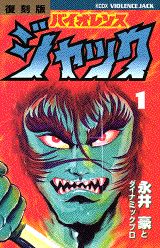
Violence Jack
Go Nagai's brutal post-apocalyptic saga following a giant warrior wandering a Japan destroyed by earthquake.
Action / Sci-Fi
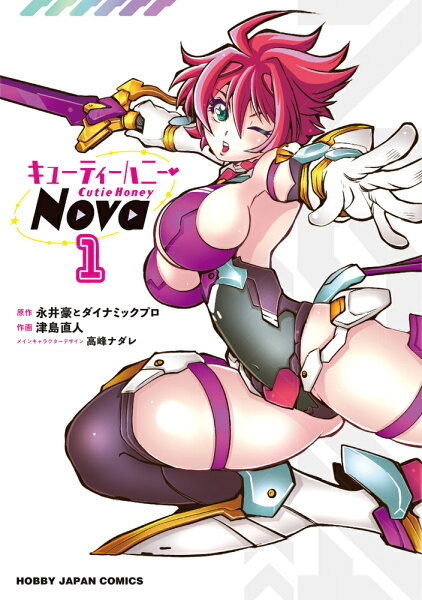
Cutey Honey
An android schoolgirl who can transform into anything she wants — the manga that helped invent the magical girl battle genre.
Action / Mecha
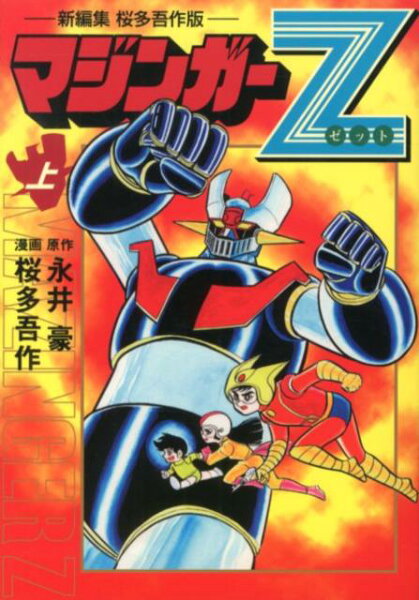
Mazinger Z
Go Nagai's foundational mecha epic about a teenage pilot and the giant robot that defined a genre.
Action / Drama
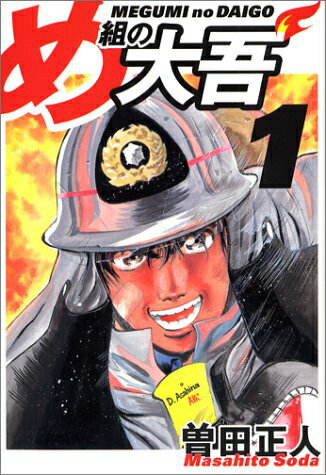
Daigo of Fire Company M
Daigo of Fire Company M follows Daigo Asahina, an extraordinary new firefighter who joins Company M — and the question of what drives a young man of exceptional ability to choose the most dangerous possible job.
Action / Sci-Fi
Cobra
Cobra is the greatest space pirate who ever lived — charming, unstoppable, and armed with the Psychogun fused to his arm — in a galaxy-spanning adventure that turned stylish cool into a manga philosophy.
Action / Martial Arts
Garouden
Garouden follows Bunshichi Tanba, a former judoka who operates in the underground fighting world — a manga drawn by Jiro Taniguchi with psychological depth and physical authenticity rare in fighting manga.
Written by
Yu
Manga Enthusiast from Japan
I grew up in Japan and manga literally saved me during a tough time in elementary school. My English isn't perfect, but my love for manga is real — and I want to share it with you.