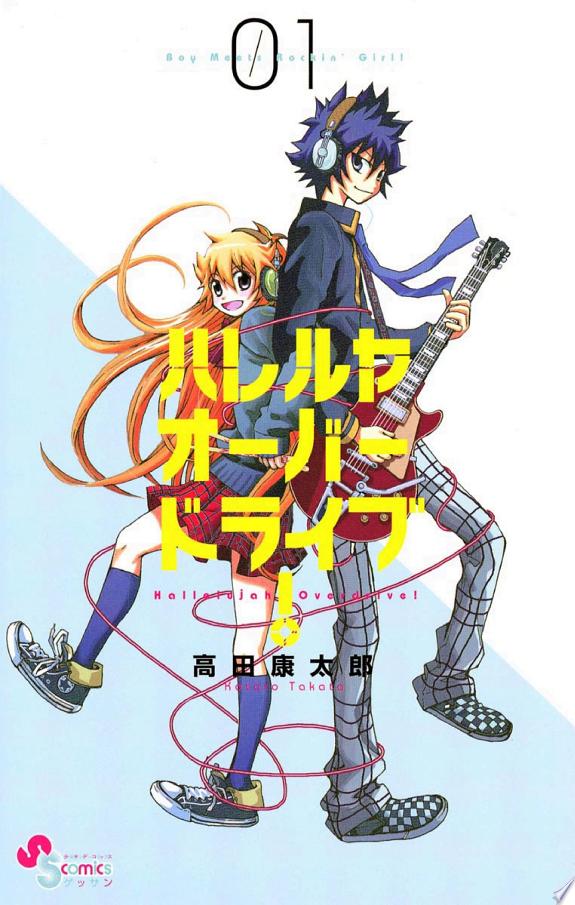
Hallelujah Overdrive! Review: The Manga That Understands Why Music Feels Like It Could Destroy You
by Kotaro Takata
Read the first volume. If it doesn't hook you, put it down. It'll hook you.
Buy Hallelujah Overdrive! on Amazon →*Affiliate link — I earn a small commission at no extra cost to you.
Some people don't discover music. Music discovers them — and the change is irreversible.
Quick Take
- A music coming-of-age manga with genuine emotional power and excellent concert sequences
- The "guitar as awakening" premise is familiar but executed with real sincerity
- Short enough (8 volumes) to feel complete without overstaying its welcome
Who Is This Manga For?
- Music manga fans who've finished Beck and want something with a different energy
- Readers who like coming-of-age stories about finding something you didn't know you needed
- People who remember what it felt like to hear a song that changed something in them
- Fans of quieter protagonists who turn out to have enormous reserves underneath
Content Warnings & Age Rating
Age Rating: T (Teen) Content Warnings: Mild action-adjacent conflict, intense emotional scenes
Very tame. The intensity is emotional rather than violent.
Yu's Rating
| Category | Score |
|---|---|
| Story Depth | ★★★★☆ |
| Art Style | ★★★★☆ |
| Character Development | ★★★★☆ |
| Accessibility for Non-Japanese Readers | ★★★★☆ |
| Reread Value | ★★★☆☆ |
Story Overview
Koharu is a quiet, unassuming high school student who does not make a particular impression on anything. Then he hears his classmate Ao play electric guitar in the hallway, and something changes. Not romantically — though that eventually becomes part of the story — but fundamentally. He needs to make that sound. He needs to understand what it is that Ao has found.
He starts learning. He gets better, faster than should be normal. He joins a band. And the story becomes about what happens when someone who has been invisible suddenly has something — music — that makes them undeniably present.
The band dynamics are well-drawn: each member has their own relationship with music, their own reason for playing, their own ceiling. The practice scenes feel accurate to what band practice actually is — frustrating, funny, occasionally transcendent. And the concert sequences have a kinetic energy that captures what live music feels like when it works.
The romance between Koharu and Ao is the emotional through-line. She plays guitar like it's a battle. He plays guitar like he's discovering a language. Together they find something neither could reach alone.
Characters
Koharu — Still water with a current underneath. His journey from transparency to presence is the story.
Ao — Intense, technically brilliant, carrying something that music helps her process. She's not the manic pixie who teaches the quiet boy to feel; she's a person with her own needs and her own limits.
The Band — Each member is distinct. Takata avoids the trap of creating a band where only the main characters matter. The supporting musicians have their own story beats.
Art Style
Clean, energetic line work that really opens up during performance sequences. Takata understands that you can't draw sound, so he draws the physical feeling of it: bodies leaning into instruments, crowd reactions, the specific way a guitarist's face changes when they find the note they were looking for.
Cultural Context
Japanese high school band culture (bando culture) is extensive — there are school music clubs, local amateur competitions, and a whole ecosystem of young musicians playing for small crowds in live houses. The manga draws on this authentically: the specific excitement of your first real gig, the local competition circuit, the complicated social navigation of being "a band kid" in a school environment.
Electric guitar has a specific cultural resonance in Japan as something slightly transgressive — cool but outside the mainstream of acceptable student behavior. Koharu picking it up is a small act of identity rebellion.
What I Love About It
What gets me is the scene where Koharu plays for the first time in front of people who aren't his bandmates. He's terrified. He doesn't know if he's good enough. He plays anyway. And the panel where you see his hands stop shaking — not because he stopped being scared, but because the music took over and the fear became irrelevant — is exactly what playing an instrument in front of people actually feels like the first time it goes right.
I played piano for years and never had that experience on stage. I have had it in practice rooms, alone, when something clicked. Takata drew that click. That's not nothing.
What English-Speaking Fans Say
A smaller English fanbase than many music manga, partly because it was published by Yen Press without major promotion. Readers who found it tend to be enthusiastic: the consensus is that it's underrated and rewards the time investment. Comparisons to Beck are common, with the caveat that the tone is much gentler.
Memorable Scene ⚠️ Spoiler Warning
Near the end of the series, Koharu plays a solo at a point in the story where he's at his lowest — the band is fractured, his relationship with Ao is uncertain — and the solo isn't triumphant. It's honest. It sounds like someone playing through a hard thing, not past it. When the crowd goes silent before the applause, you feel it.
Similar Manga
| Title | Its Approach | How Hallelujah Overdrive! Differs |
|---|---|---|
| Beck | Rock music, road trip energy, raw ambition | Hallelujah Overdrive! is more contained and emotionally intimate |
| Nana | Music as backdrop for complicated female friendship | Hallelujah Overdrive! centers the music itself more directly |
| Given | Quiet boy finds voice through music (with romance) | Hallelujah Overdrive! is less melancholic, more energetic in tone |
Reading Order / Where to Start
Volume 1, straight through. Eight volumes is a perfect length for this story.
Official English Translation Status
Yen Press published all 8 volumes in English. Complete and available digitally.
Pros & Cons
Pros
- Authentic portrayal of what music means to people who need it
- Great concert sequences with kinetic energy
- Short and complete — satisfying story arc
- The romance earns its place in the story
Cons
- The premise is familiar; what makes it work is execution, not originality
- Supporting cast is underdeveloped compared to the leads
- Resolution is somewhat predictable if you've read music manga before
- Not as raw or ambitious as Beck
- If you need your music manga to be about superstars or epic ambition, the small-scale may disappoint
Is Hallelujah Overdrive! Worth Reading?
Yes — for music manga fans and coming-of-age readers, this is a gem. Eight volumes, a complete story, and genuine emotional sincerity. Worth the afternoon.
Format Comparison
| Format | Pros | Cons |
|---|---|---|
| Physical | Concert sequences look great on the page | May be harder to find in print |
| Digital | Easy to binge in one sitting | — |
| Omnibus | No omnibus available | — |
Where to Buy
Read the first volume. If it doesn't hook you, put it down. It'll hook you.
This post contains affiliate links. If you purchase through these links, I may earn a small commission at no extra cost to you. As an Amazon Associate, I earn from qualifying purchases.
*Affiliate link — I earn a small commission at no extra cost to you.
More Manga You Might Like

Action
Weak Hero
A review of Weak Hero — the Korean manhwa about a slender, bookish transfer student who defeats much larger bullies through precise, calculated violence and zero tolerance for injustice.
Action / Adventure
Naruto
A review of Naruto — 72 volumes in Weekly Shonen Jump. Uzumaki Naruto is a boy with the Nine-Tailed Fox sealed inside him, rejected by his village, dreaming of becoming Hokage not for power but to be seen. The most emotionally resonant outcast-to-legend arc in manga. VIZ Media's English edition is complete.
Action / Comedy
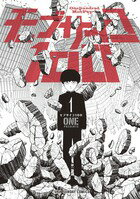
Mob Psycho 100
A review of Mob Psycho 100 — 16 volumes on Ura Sunday. Shigeo Kageyama (Mob) is the most powerful psychic alive and keeps his powers suppressed because he doesn't want to hurt anyone; he just wants to get better at talking to his crush. The best manga about emotional suppression and what actual strength looks like. Dark Horse Comics' English edition is complete.
Action / Comedy
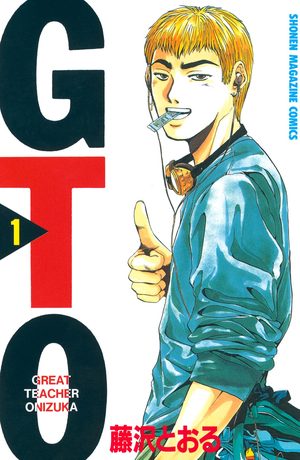
GTO: Great Teacher Onizuka
Yu's review of GTO: Great Teacher Onizuka — Eikichi Onizuka is a 22-year-old former gang leader and virgin who becomes a middle school teacher at an elite private school; what he lacks in academic credentials he compensates for with an absolute refusal to give up on any student.
Action / Comedy
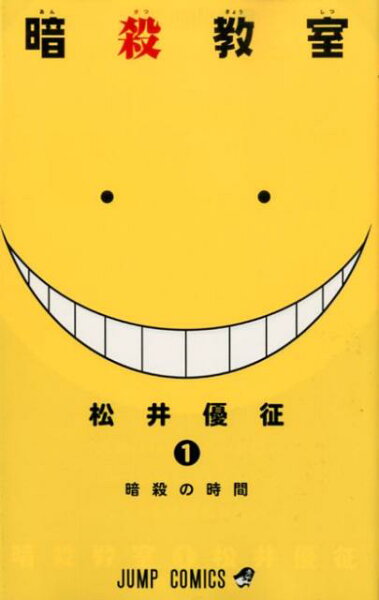
Assassination Classroom
Yu's review of Assassination Classroom — 21 volumes about a class of underachievers assigned to kill their alien teacher before he destroys the Earth. The funniest manga about murder, and the most moving manga about being seen by a teacher who refused to write you off.

Action / Comedy
MxO
Yu's review of MxO — Taiga Kuzumi fails his entrance exam to a prestigious magic school but ends up enrolled anyway through a misunderstanding; he has no magic whatsoever but must pretend he does to avoid expulsion; a fast-moving comedy about competence through bluffing, unexpected friendship, and what happens when the least magical person in a magic school keeps winning anyway.
Written by
Yu
Manga Enthusiast from Japan
I grew up in Japan and manga literally saved me during a tough time in elementary school. My English isn't perfect, but my love for manga is real — and I want to share it with you.
Disclosure: This post contains affiliate links. As an Amazon Associate, I earn from qualifying purchases at no extra cost to you.