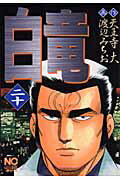
Hakuryuu Review: The Yakuza Manga That Treated the Underworld Like a Functional Society
by Dai Tennoji (writer), Michio Watanabe (art)
Read the first volume. If it doesn't hook you, put it down. It'll hook you.
Buy Hakuryuu on Amazon →*Affiliate link — I earn a small commission at no extra cost to you.
Yakuza fiction often treats the underworld as theater. This manga treated it as a workplace.
Quick Take
- You Watanabe's 25-volume yakuza manga from Manga Goraku — Hakuryu's procedural rise through the underworld
- Treats yakuza society with the same procedural seriousness business manga apply to corporate life
- One of Goraku's defining yakuza-genre works of its era
Who Is This Manga For?
- Yakuza fiction readers who want procedural detail rather than violent spectacle
- Manga Goraku enthusiasts who appreciate the magazine's tradition of serious genre fiction
- Business-fiction crossovers who want corporate-style structure applied to the criminal world
- Anyone interested in the underworld as a functional rather than purely violent society
Content Warnings & Age Rating
Age Rating: M (Mature) Content Warnings: Yakuza violence, adult themes, criminal economy in detail.
For mature readers comfortable with seinen yakuza fiction.
Yu's Rating
| Category | Score |
|---|---|
| Story Depth | ★★★★☆ |
| Art Style | ★★★★☆ |
| Character Development | ★★★★☆ |
| Accessibility for Non-Japanese Readers | ★★★☆☆ |
| Reread Value | ★★★★☆ |
Story Overview
Hakuryu is a yakuza whose distinguishing trait is intelligence. He understands his organization's politics, the broader yakuza ecosystem, the legitimate-business interfaces that the underworld depends on, and the police pressures that shape what's possible. He uses this understanding to advance — through alliances, through tactical violence, through the long-term planning that career yakuza actually require.
The series treats yakuza society with the procedural respect that, say, Shima Kosaku gives corporate Japan. The factions have histories, the territorial disputes have logic, the economic activities (some legal, some not) have details. Hakuryu's success depends on his understanding of all this; the reader's engagement depends on Watanabe's willingness to teach the system as the protagonist navigates it.
Across 25 volumes, the world becomes lived-in. Hakuryu's career has phases. The yakuza ecosystem changes as government pressures and economic conditions shift. The series is essentially business fiction with the business being yakuza operations, and the genre commitment is what gives it weight beyond the surface action.
Characters
Hakuryu: A protagonist whose intelligence and ambition shape his rise — drawn with enough complexity to make the criminal-life choice feel like a real choice rather than a default.
The faction members and rivals: Each rendered as a person operating within an ecosystem rather than as a stock yakuza type.
The legitimate-business and police contacts: The interfaces between the underworld and the legitimate world are part of the series' subject.
Art Style
Watanabe's art has the steady, atmospheric quality of seinen yakuza manga — character art consistent and individual, action sequences clear when they happen, interior settings communicating the institutional textures of yakuza life.
Cultural Context
Hakuryuu ran from 1996 to 2014 in Manga Goraku, the magazine that has hosted much of Japan's serious yakuza-genre seinen across decades. The series belongs to the broader yakuza-fiction tradition that includes Sanctuary, Old Boy, Naniwa Kinyudo, and others — each treating the underworld with seriousness rather than as cartoon material.
Yakuza society's actual history in Japan has changed substantially across the manga's run period — anti-organized-crime laws of the 2000s reshaped what yakuza could legally do, and Hakuryuu's later volumes engage with this reshaping.
What I Love About It
I love that the underworld has institutions.
A lot of yakuza manga treats the underworld as a series of violent encounters, with the broader institutional context implied rather than depicted. Hakuryuu commits to the institutional details — how factions actually relate, how decisions actually get made, how the economic activities actually work. The institutional commitment is what makes the world feel real, and what gives Hakuryu's success its plausibility.
What English-Speaking Fans Say
Limited international audience without translation. Among readers familiar with serious yakuza-genre seinen, regarded as a substantive entry that earned its long run.
Memorable Scene ⚠️ Spoiler Warning
A faction-political negotiation where Hakuryu's understanding of multiple parties' interests shapes an outcome that seems inevitable in retrospect — and the recognition that intelligence in this world means seeing the situation more completely than others. The scene exemplifies what kind of yakuza Hakuryu is.
Similar Manga
| Title | Its Approach | How Hakuryuu Differs |
|---|---|---|
| Sanctuary | Politics-and-yakuza dual narrative | Hakuryuu is purely yakuza-side; Sanctuary is split |
| Naniwa Kinyudo | Loan-business comedy-drama | Hakuryuu is more serious in tonal register |
| Old Boy | Revenge-mystery seinen | Hakuryuu is institutional rather than personal |
Reading Order / Where to Start
Volume 1. The institutional context develops across early arcs.
Official English Translation Status
Hakuryuu has no official English translation.
Pros & Cons
Pros
- Procedural depth rare in yakuza fiction
- 25 volumes of consistent seriousness
- Hakuryu's intelligence is genuinely depicted
- Engages with how the underworld changed during its run
Cons
- No English translation
- Yakuza institutional context requires familiarity
- Adult content limits readership
- Procedural pacing won't satisfy readers wanting action spikes
Is Hakuryuu Worth Reading?
For yakuza fiction readers who want procedural seriousness, yes — this is among the more institutionally committed works in the genre. For readers wanting action spectacle or unfamiliar with the institutional context, the procedural register may feel slow. As serious yakuza fiction, it earns its run.
Format Comparison
| Format | Notes |
|---|---|
| Physical | Japanese editions available |
| Digital | Available in Japanese |
| Omnibus | Collected editions available |
Where to Buy
No English release yet. That just means you find it before everyone else does.
*Affiliate link — I earn a small commission at no extra cost to you.
More Manga You Might Like
Action
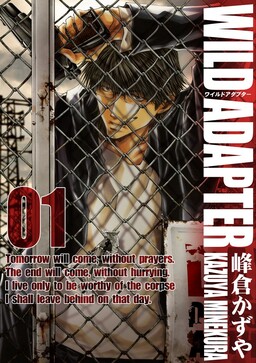
Wild Adapter
Yu's review of Wild Adapter — Makoto Kubota is a Yakuza boy genius who gets drawn into investigating Wild Adapter, a drug that turns users into monsters; he finds Tokito, a boy with no memory and a monster's hand, and takes him home; Kazuya Minekura's crime manga about an unlikely pair and the mystery of a transforming drug.
Action / Drama
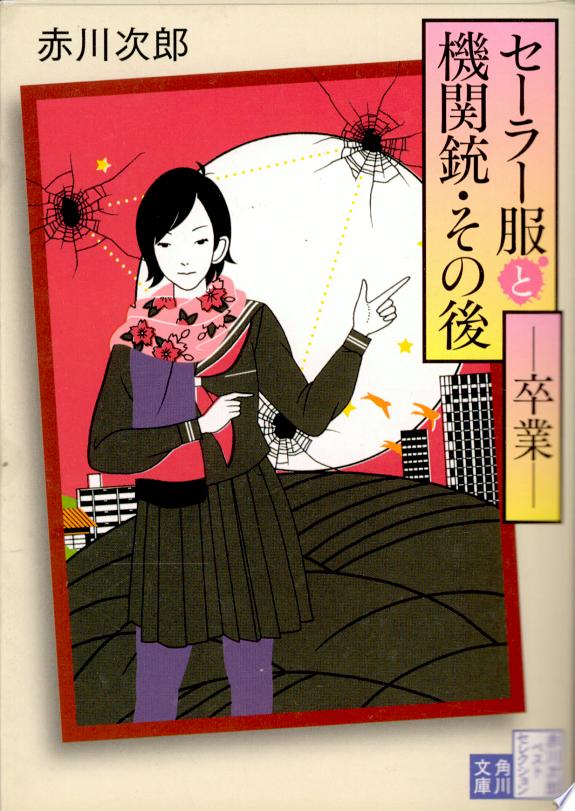
Sailor Fuku to Kikanjuu
Sailor Fuku to Kikanjuu is the manga adaptation of Jiro Akagawa's novel about Izumi Hoshi, a high school girl who inherits leadership of a small yakuza family — a compact comic-dramatic work whose premise became one of Japanese popular culture's most recognized.
Action
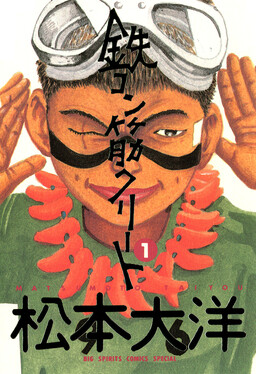
Tekkon Kinkreet
Yu's review of Tekkon Kinkreet — Black and White are two orphaned street kids who rule Treasure Town from the rooftops; when organized crime moves in to develop the city, Black and White must fight to keep what they consider theirs; a visually revolutionary manga about the psychic cost of violence and the specific love between two people who only have each other.
Action / Drama
Takopi's Original Sin
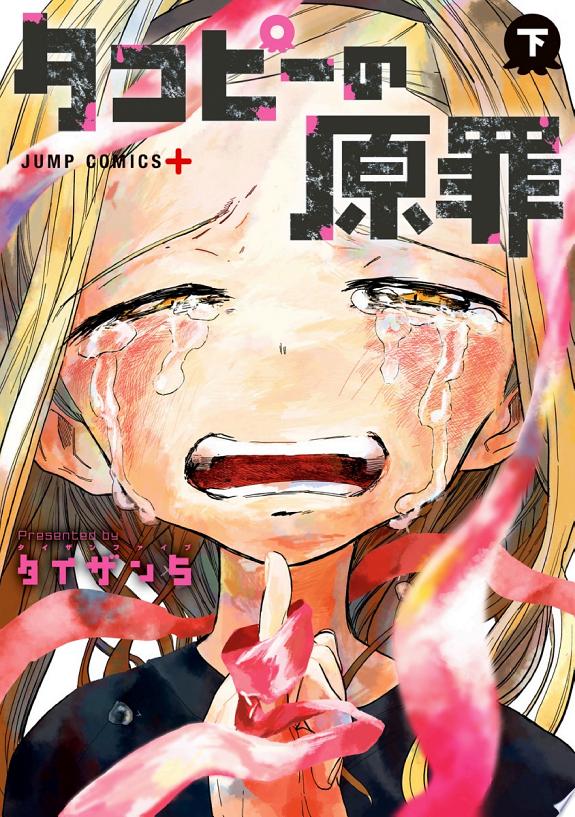
Yu's review of Takopi's Original Sin — Takopi is an alien from Happy Planet sent to spread happiness on Earth; he meets Shizuka, a girl who is being bullied and whose home life is deeply troubled; the series uses Takopi's happiness abilities to examine what happiness means when suffering is real.
Action / Drama
Rainbow: Nisha Rokubō no Shichinin
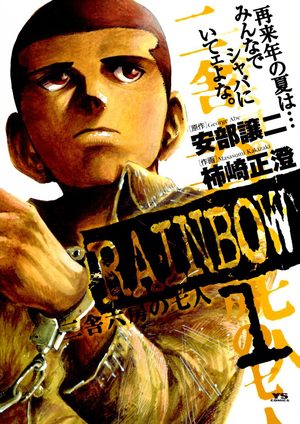
Yu's review of Rainbow — six juvenile delinquents are sent to a brutal reformatory in 1955 Japan and placed in Cell 6, where they bond with their cellmate Rokurouta Sakuragi, a former boxer who teaches them what it means to survive with dignity.
Action / Drama
Beastars
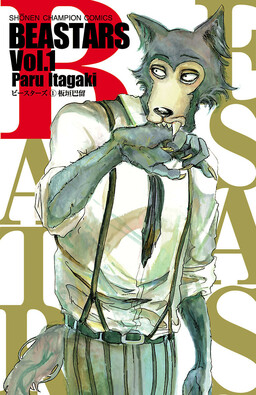
Yu's review of Beastars — In a society of anthropomorphic animals where carnivores and herbivores live side by side, Legoshi is a gray wolf who is afraid of what he is. After a classmate is killed and eaten, he is pulled toward Haru, a tiny dwarf rabbit, and has to decide what kind of animal he wants to become.
Written by
Yu
Manga Enthusiast from Japan
I grew up in Japan and manga literally saved me during a tough time in elementary school. My English isn't perfect, but my love for manga is real — and I want to share it with you.