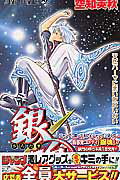
Gintama Review: The Funniest Manga Ever Made, and Secretly One of the Most Moving
by Hideaki Sorachi
Read the first volume. If it doesn't hook you, put it down. It'll hook you.
Buy Gintama on Amazon →*Affiliate link — I earn a small commission at no extra cost to you.
In an alternate-history Edo period Japan, aliens called the Amanto have arrived and conquered. The samurai are forbidden to carry swords. Gintoki Sakata — a former samurai called the "White Demon" — now runs a freelance odd-jobs business and eats too much sugar.
I'm Yu. There is an arc in Gintama where Gintoki carries someone on his back through a place that is burning around them. He's not a hero. He just can't leave someone behind. I have thought about that image many times since.
Quick Take
- Hideaki Sorachi's Gintama (銀魂) ran in Weekly Shonen Jump — 77 volumes, complete.
- VIZ Media published the complete 77-volume English edition.
- Rated T (Teen) — crude humor throughout; the serious arcs contain significant action violence and death.
Story Overview
Gintoki runs Yorozuya with two assistants: Shinpachi, the straight man with glasses; and Kagura, a girl from an alien warrior clan who eats too much and is stronger than almost anyone they'll ever fight.
Gintama has no fixed plot. Each arc might be a parody of another manga, a toilet humor story, a comedy of misunderstanding, or a devastating exploration of the characters' pasts and the cost of being a samurai who gave up his sword.
The series accumulates. By volume 30, you know these characters so well that when something finally threatens them, it threatens you. The serious arcs — when they arrive — hit harder than almost anything in the genre precisely because of everything silly that came before.
Characters
Gintoki Sakata — One of manga's greatest protagonists. Lazy, crude, addicted to sugar, deeply allergic to anything resembling effort. Also, when something he loves is at stake, one of the most fearsome fighters in the world. The gap between his daily uselessness and his absolute competence when it matters is the series' deepest joke and its deepest truth.
Kagura — The alien girl who eats too much and hits too hard. Her relationship with Gintoki — never stated explicitly but the series' most important bond — defines the emotional register of the serious arcs.
Shinpachi Shimura — Exists partly to be the butt of "glasses character" jokes and partly to ground increasingly insane situations in something recognizably human.
Hijikata and Okita (Shinsengumi) — Recurring deuteragonists whose own dynamic provides a secondary emotional through-line. Hijikata's arc is the series' single most moving standalone piece.
What I Love About It
The Yoshiwara arc. After many volumes of watching Gintoki be useless, funny, and deeply unheroic, someone important to him is in danger, and he goes to get them back. What follows is the moment Gintama revealed what it had been saving up.
The fight is spectacular. But the moment that stays with me is after — Gintoki, carrying someone on his back, moving through a place that is burning around them. He's not a hero. He just can't leave someone behind.
Memorable Scene ⚠️ Spoiler Warning
Hijikata's arc.
In a standalone arc that could be its own manga, Hijikata is separated from his sword and must face what he would be without it. The arc involves a strange boy, a specific sword, and a lesson about what we carry and what we put down.
It is not the series' longest arc. It is its most complete. It made me cry. I was not expecting to cry at Gintama.
Pros & Cons
Pros:
- The funniest sustained comedy in manga — consistently, wildly inventive across 77 volumes.
- The serious arcs are among the best in the genre, all the more powerful for the comedy preceding them.
- Gintoki is one of the greatest characters in manga history.
- Complete with a satisfying, emotional ending.
Cons:
- 77 volumes is a serious time commitment.
- The comedy humor — especially manga/anime parody — lands better with broad otaku knowledge.
- The first 10 volumes are establishing the comedy register before the emotional content arrives.
Is Gintama Worth Reading?
Yes — if you have patience for the start. The first 10 volumes are deliberately establishing what the series is before it can subvert it. Most fans recommend watching the anime through the first major serious arc first. For readers who commit, the payoff is unlike anything else in manga.
Who Is This Manga For?
- Readers who can handle absurdist, fourth-wall-breaking comedy.
- Anyone who wants a series that makes you laugh in every chapter and devastates you when it's time to be serious.
- Readers willing to invest in 77 volumes that reward patience.
- Manga readers with enough background to appreciate the parody layers.
Official English Translation Status
VIZ Media published the complete 77-volume English edition. Digital is strongly recommended for storage reasons.
Where to Buy
VIZ Media's complete 77-volume English edition.
This post contains affiliate links. If you purchase through these links, I may earn a small commission at no extra cost to you. As an Amazon Associate, I earn from qualifying purchases.
*Affiliate link — I earn a small commission at no extra cost to you.
More Manga You Might Like
Action / Comedy
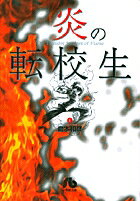
Blazing Transfer Student
Blazing Transfer Student parodies the conventions of school delinquent and transfer-student fight manga by playing every single convention completely straight — with such intensity that it becomes genuinely funny and then genuinely moving.

Action / Comedy
Mashle: Magic and Muscles
Yu's review of Mashle: Magic and Muscles — in a world where magic determines social status, Mash Burnedead has no magic at all; he compensates entirely through physical strength so absurd it defeats every magical opponent he encounters.

Action / Comedy
City Hunter
A sweeper for hire in Shinjuku cleans up the city's worst criminals while hiding a heart softer than anyone suspects — City Hunter is the definitive action-romance manga.
Action / Adventure
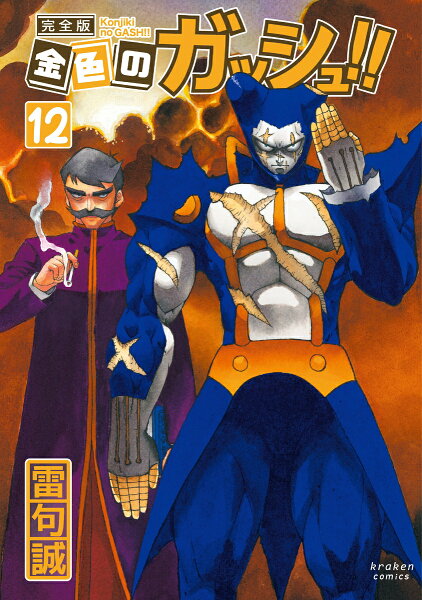
Zatch Bell!
A review of Zatch Bell! — 33 volumes in Weekly Shonen Sunday. Genius middle schooler Kiyo Takamine partners with demon child Zatch Bell in a battle royale of 100 demon/human pairs competing to become King of the Mamodo World; Zatch wants to be a kind king. The manga that made an entire generation cry about a book burning. VIZ Media's English edition is complete.
Action / Supernatural
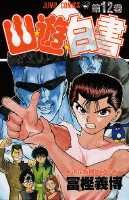
Yu Yu Hakusho
A review of Yu Yu Hakusho — 19 volumes in Weekly Shonen Jump. Yusuke Urameshi dies heroically saving a child, is recruited as a Spirit Detective to investigate supernatural cases, and grows from a delinquent who doesn't care about anything into someone with people worth protecting. The series Togashi made before Hunter x Hunter. VIZ Media's English edition is complete.
Action / Supernatural
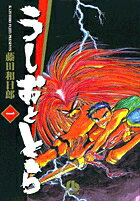
Ushio and Tora
Yu's review of Ushio and Tora — Ushio finds an ancient beast-spirit called Tora pinned under the temple floor; he releases Tora to fight other spirits threatening his town; Tora intends to eat Ushio eventually; they travel Japan fighting supernatural threats.
Written by
Yu
Manga Enthusiast from Japan
I grew up in Japan and manga literally saved me during a tough time in elementary school. My English isn't perfect, but my love for manga is real — and I want to share it with you.
Disclosure: This post contains affiliate links. As an Amazon Associate, I earn from qualifying purchases at no extra cost to you.