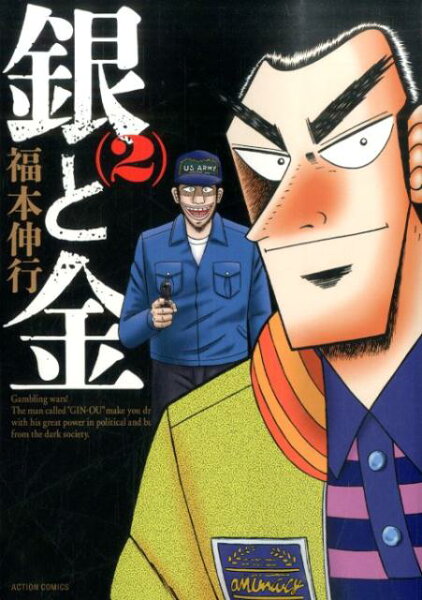
Gin to Kin Review: The Gambling Manga Where the Real Stakes Were Never the Money
by Nobuyuki Fukumoto
Read the first volume. If it doesn't hook you, put it down. It'll hook you.
Buy Gin to Kin on Amazon →*Affiliate link — I earn a small commission at no extra cost to you.
The money on the table is never the actual stake. The actual stake is who you become while reaching for it.
Quick Take
- Nobuyuki Fukumoto's gambling manga before Kaiji made him famous — denser, more cerebral, more morally ambiguous
- 11 volumes of psychological gambling games where reading the opponent matters more than the cards
- Among the most intelligent gambling manga ever produced, with the same intensity as Kaiji but in a smaller scale
Who Is This Manga For?
- Kaiji fans who want to read Fukumoto's earlier, denser work
- Psychological thriller readers who want gambling depicted as warfare
- Strategy fiction enthusiasts who want games where the rules and the meta-rules both matter
- Anyone interested in the moral education a corrupt world provides
Content Warnings & Age Rating
Age Rating: M (Mature) Content Warnings: Gambling addiction themes, psychological manipulation, occasional violence, criminal underworld depictions.
For mature readers comfortable with psychological darkness.
Yu's Rating
| Category | Score |
|---|---|
| Story Depth | ★★★★★ |
| Art Style | ★★★★☆ |
| Character Development | ★★★★★ |
| Accessibility for Non-Japanese Readers | ★★★☆☆ |
| Reread Value | ★★★★★ |
Story Overview
Morita Tetsuo is an ambitious young man who falls into the orbit of Ginji Hirai — a "cleaner" who works for a powerful client by orchestrating high-stakes underground games. Ginji teaches Morita that the games aren't really about gambling. They're about reading people, manipulating expectations, and structuring the entire situation so that what looks like luck is actually predetermined competence.
Each arc is a different game with different rules: card games, betting on physical contests, complex multi-party deceptions. Each game tests both Morita's skill and his moral threshold. The further he goes, the harder it is to leave, and the harder it is to recognize the person he is becoming.
What makes the series exceptional is Fukumoto's commitment to making the games genuinely intelligible. The reader can follow the strategies, recognize the psychological reads, understand why each move matters. The intensity comes from comprehension, not from being told the stakes are high.
Characters
Morita Tetsuo: The protagonist whose education is the series' subject — his transformation across 11 volumes is gradual, plausible, and sobering.
Ginji Hirai: The mentor whose teaching is also corruption — his competence is real, and so is the world he initiates Morita into.
The opponents: Each match's antagonist represents a different expertise — different reads, different deceptions, different challenges to overcome.
Art Style
Fukumoto's art is unmistakable — angular features, sweat beading on tense faces, the trademark "zawazawa" (atmosphere noise) effect that signals psychological pressure. The art doesn't aim for beauty; it aims for the visual register of high-stakes calculation, and it succeeds completely.
Cultural Context
Gin to Kin ran from 1992 to 1996, predating Kaiji's launch in 1996. Many fans regard it as Fukumoto's masterpiece — denser than Kaiji, more morally complex, with games that operate at a higher cognitive register. Its smaller cult status reflects accessibility rather than quality.
The work belongs to the gambling-manga tradition that includes Akagi (also Fukumoto), Tetsuya, and Naki no Ryu — but Gin to Kin's emphasis on social/political manipulation rather than pure card play distinguishes it.
What I Love About It
I love how slowly Morita falls.
The series doesn't accelerate. Each game changes him incrementally. By volume 5 he is making choices volume-1-Morita couldn't have considered, and by volume 10 he is barely recognizable. The slowness is what makes it convincing — moral collapse rarely happens in a single moment, and Fukumoto understands that.
What English-Speaking Fans Say
Among Fukumoto fans, regarded as either his masterpiece or as essential context for Kaiji and Akagi. Recognition is limited compared to those better-known works but the regard among readers who have engaged with it is exceptionally high.
Memorable Scene ⚠️ Spoiler Warning
A late-series game where Morita realizes he has just won by using a tactic that, three volumes earlier, would have horrified him. The realization happens silently — Fukumoto trusts the reader to track the change without dramatic announcement.
Similar Manga
| Title | Its Approach | How Gin to Kin Differs |
|---|---|---|
| Kaiji | High-stakes gambling with naive protagonist | Gin to Kin is more cerebral, the protagonist more ambitious, the games more political |
| Akagi | Mahjong with savant protagonist | Gin to Kin uses varied games and emphasizes situational manipulation |
| Liar Game | Tournament structure with social deception | Gin to Kin is darker, more committed to its moral education |
Reading Order / Where to Start
Volume 1. The development depends on the foundation set early.
Official English Translation Status
Gin to Kin has no official English translation.
Pros & Cons
Pros
- Among the most intelligent gambling manga ever made
- Morita's transformation is depicted with patience and integrity
- Games are genuinely comprehensible — the strategy is the story
- More morally complex than the better-known Kaiji
Cons
- No English translation
- Density requires close reading
- The slow corruption arc requires patience
- Won't satisfy readers who want sympathetic protagonists
Is Gin to Kin Worth Reading?
For Fukumoto fans, psychological thriller readers, and anyone who wants gambling fiction at its most intelligent, yes — this is among the best works of its kind. For readers wanting Kaiji's energy and dramatic spikes, this is denser and slower. As cerebral psychological manga, it's exceptional.
Format Comparison
| Format | Notes |
|---|---|
| Physical | Japanese editions available |
| Digital | Available in Japanese |
| Omnibus | Collected editions available |
Where to Buy
No English release yet. That just means you find it before everyone else does.
*Affiliate link — I earn a small commission at no extra cost to you.
More Manga You Might Like
Action / Comedy
Mob Psycho 100
A review of Mob Psycho 100 — 16 volumes on Ura Sunday. Shigeo Kageyama (Mob) is the most powerful psychic alive and keeps his powers suppressed because he doesn't want to hurt anyone; he just wants to get better at talking to his crush. The best manga about emotional suppression and what actual strength looks like. Dark Horse Comics' English edition is complete.

Action / Thriller
Usogui
Baku Madarame — known as Usogui, 'the Liar Eater' — is the most extraordinary gambler in Kakerou, an underground organization that runs games where losers forfeit their lives. 49 volumes of escalating psychological warfare, complete, unlicensed in English.
Action / Drama
Juncket Bank
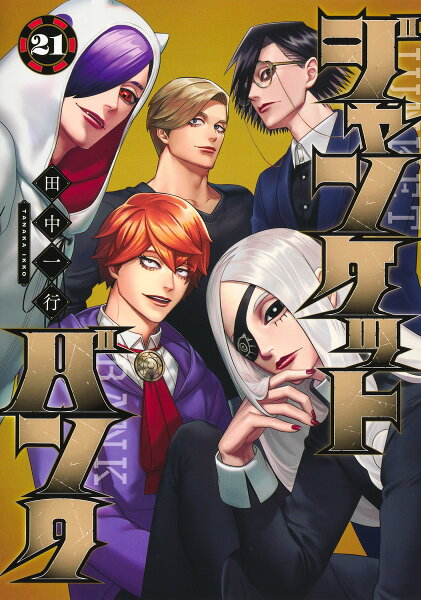
Juncket Bank follows Shinonome Ginji, a man who discovers he cannot lose at any game of chance — and a casino operator who wants to harness this ability for something far more dangerous than ordinary gambling.
Action / Comedy
Uchihime Obakamiko
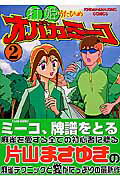
Uchihime Obakamiko is Nobuyuki Fukumoto's lighter mahjong manga — Mieko, an enthusiastic but technically poor player whose mentor Toshio reluctantly trains her, with the comedic premise that even Fukumoto can write characters who are not psychological warlords.

Action / Drama
Gunslinger Girl
Yu's review of Gunslinger Girl — the Social Welfare Agency of Italy rescues girls from terminal illness or traumatic situations and gives them cybernetic bodies and psychological conditioning; each girl is paired with a handler and used for government counter-terrorism work; the series examines what this costs them.

Action / Supernatural
Kamisama Dolls
Yu's review of Kamisama Dolls — Kyohei Kuga left his rural village and its tradition of Seki (Doll masters who control ancient wooden god-machines called Kakashi) to start a new life in Tokyo; when a murder occurs connected to his village, his sister Utao arrives with her Kakashi Kukuri, and the village's dark history follows him.
Written by
Yu
Manga Enthusiast from Japan
I grew up in Japan and manga literally saved me during a tough time in elementary school. My English isn't perfect, but my love for manga is real — and I want to share it with you.