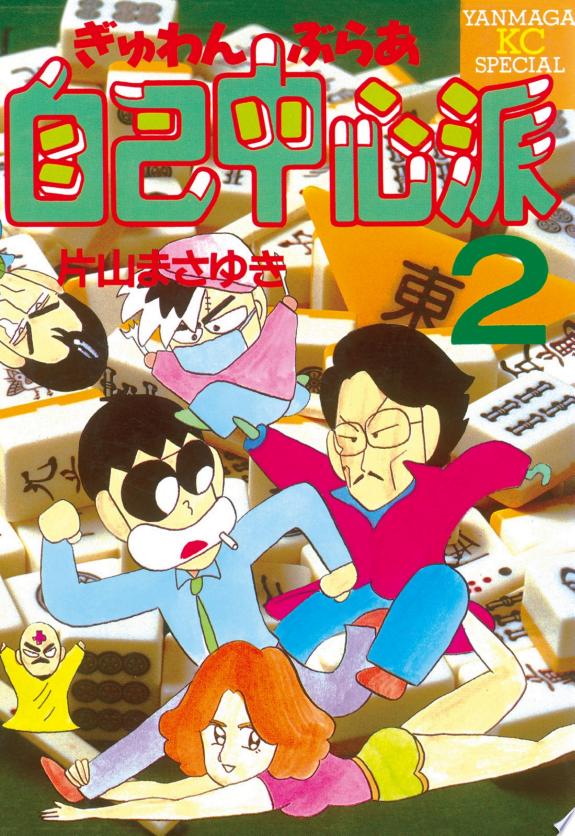
Gambler Jiko Chuushinha Review: The Mahjong Comedy That Made the Player Funny Without Making the Game Easy
by Masayuki Katayama
Read the first volume. If it doesn't hook you, put it down. It'll hook you.
Buy Gambler Jiko Chuushinha on Amazon →*Affiliate link — I earn a small commission at no extra cost to you.
Comedy mahjong is hard. Comedy mahjong where the mahjong is real is harder. Katayama nailed both for 17 volumes.
Quick Take
- Masayuki Katayama's 17-volume mahjong comedy from Weekly Young Magazine — the social culture of mahjong played for laughs
- Combines genuine mahjong content with character comedy in a way few mahjong manga manage
- A defining 1980s seinen comedy that influenced subsequent mahjong-comedy work
Who Is This Manga For?
- Mahjong manga readers who want the genre's comic register done with skill
- Young Magazine seinen readers who want one of the magazine's defining 1980s comedies
- Character-comedy fans who appreciate when comedic premises produce real characters
- Anyone interested in the social culture of mahjong as opposed to just the technical play
Content Warnings & Age Rating
Age Rating: T (Teen) Content Warnings: Mahjong gambling, comedic situations occasionally including adult humor.
Suitable for most readers.
Yu's Rating
| Category | Score |
|---|---|
| Story Depth | ★★★★☆ |
| Art Style | ★★★★☆ |
| Character Development | ★★★★☆ |
| Accessibility for Non-Japanese Readers | ★★★☆☆ |
| Reread Value | ★★★★☆ |
Story Overview
The series follows a rotating cast of mahjong players whose social lives revolve around the game. The protagonist's circle includes various recurring characters — each defined by particular mahjong-related obsessions, character flaws, and recurring patterns. The mahjong isn't competitive in tournament-arc sense; it's social, the daily and weekly activity of people whose identity is partially constituted by their relationship to the game.
The structure is episodic with strong continuity. Each chapter or short arc introduces a comic situation rooted in mahjong's social texture: the etiquette around play, the specific anxieties players develop, the small dramas of money lost or won, the friendships formed and frayed at the table. Across 17 volumes, the cast and their dynamics become rich enough to sustain ongoing comic invention.
What distinguishes the series is that the mahjong is genuinely played. Readers familiar with mahjong can follow the hands, recognize the strategies, see why characters react the way they do. The comedy emerges from the social texture without sacrificing the technical reality. Katayama treats the game with respect even as he treats the players with comic affection.
Characters
The protagonist circle: Each defined by specific mahjong-related quirks but developed enough to feel like real friends-of-the-author.
The recurring opponents and acquaintances: The broader cast that constitutes the social mahjong world expands across the volumes.
Art Style
Katayama's art has the clean, expressive quality of 1980s Young Magazine — character designs distinctive, mahjong sequences clear enough to follow technically, comic timing well-managed across panel layouts.
Cultural Context
Gambler Jiko Chuushinha ran from 1985 to 1991 in Weekly Young Magazine. The series belongs to the seinen mahjong-manga tradition but in its comic register — alongside Akagi and Tetsuya's serious entries, comedies like this one provided the genre's other side.
Mahjong's broad cultural prominence in 1980s Japan provided the audience that supported both serious and comic versions of mahjong manga.
What I Love About It
I love that the players are friends.
Many mahjong manga depict the game as solitary intensity — masters and rivals locked in psychological warfare. Katayama depicts mahjong as social activity. The players know each other, like each other (mostly), have ongoing relationships beyond the table. The mahjong is what they do together; their friendships are what the mahjong sustains. The recognition that mahjong is, for most who play it, a social rather than competitive activity is the manga's affectionate insight.
What English-Speaking Fans Say
Limited international awareness without translation. Among mahjong manga enthusiasts familiar with it, regarded as the genre's defining comedy and influential on subsequent comic-mahjong work.
Memorable Scene ⚠️ Spoiler Warning
A scene where one of the recurring characters' particular mahjong neurosis is shown to have its origin in a specific past loss — and the comedy gives way to brief affection before returning to the comic register. Katayama's gift for register-switching is on display.
Similar Manga
| Title | Its Approach | How Gambler Jiko Chuushinha Differs |
|---|---|---|
| Saki | Cute-girls-doing-mahjong with light register | Different gender focus and demographic; Katayama's work is seinen comedy |
| Uchihime Obakamiko | Fukumoto's lighter mahjong manga | Both are comedy but Katayama emphasizes social culture more |
| Akagi | Serious mahjong with prodigy intensity | Opposite registers — Katayama's comedy answer to the genre's seriousness |
Reading Order / Where to Start
Volume 1. The cast establishes across early volumes.
Official English Translation Status
Gambler Jiko Chuushinha has no official English translation.
Pros & Cons
Pros
- Among the genre's defining comedies
- Mahjong content remains technically real
- Character comedy supports rather than undermines the game
- 17 volumes of sustained quality
Cons
- No English translation
- Mahjong knowledge enhances appreciation
- 1980s comic register feels dated to modern readers
- Episodic structure limits sustained character arcs
Is Gambler Jiko Chuushinha Worth Reading?
For mahjong manga readers who want the genre's comic register and seinen comedy enthusiasts, yes — this is one of the foundational comedic works in the genre. For readers wanting mahjong intensity or unfamiliar with the game, the appeal narrows. As mahjong comedy, it's exemplary.
Format Comparison
| Format | Notes |
|---|---|
| Physical | Japanese editions available |
| Digital | Available in Japanese |
| Omnibus | Collected editions available |
Where to Buy
No English release yet. That just means you find it before everyone else does.
*Affiliate link — I earn a small commission at no extra cost to you.
More Manga You Might Like
Action / Comedy
Uchihime Obakamiko
Uchihime Obakamiko is Nobuyuki Fukumoto's lighter mahjong manga — Mieko, an enthusiastic but technically poor player whose mentor Toshio reluctantly trains her, with the comedic premise that even Fukumoto can write characters who are not psychological warlords.

Action / Comedy
Zom 100: Bucket List of the Dead
A review of Zom 100: Bucket List of the Dead — 15 volumes in Monthly Sunday GX. Akira Tendo spent three years being worked to death at a black company; when the zombie apocalypse starts, his first thought is relief that he doesn't have to go to work; he makes a list of 100 things to do before becoming a zombie. The most original zombie premise in years. VIZ Media's English edition is complete.
Action / Comedy
The Fable
Yu's review of The Fable — Akira (codename 'The Fable') is considered the deadliest assassin in Japan; his boss orders him to take a year off and live as an ordinary person without killing anyone; the comedy of an extraordinarily dangerous man trying and mostly succeeding at being normal while the criminal world swirls around him.
Action / Comedy
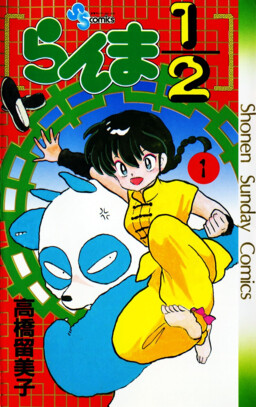
Ranma ½
A review of Ranma ½ — 38 volumes in Weekly Shonen Sunday. Ranma Saotome transforms into a girl when splashed with cold water; his father has arranged him to be engaged to Akane Tendo, who hates boys; the series follows their chaotic not-quite-relationship and increasingly bizarre martial arts challenges. Rumiko Takahashi's most kinetic work. VIZ Media's English edition is complete.
Action / Comedy
Mob Psycho 100
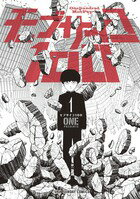
A review of Mob Psycho 100 — 16 volumes on Ura Sunday. Shigeo Kageyama (Mob) is the most powerful psychic alive and keeps his powers suppressed because he doesn't want to hurt anyone; he just wants to get better at talking to his crush. The best manga about emotional suppression and what actual strength looks like. Dark Horse Comics' English edition is complete.
Action / Comedy
Level E
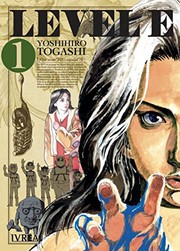
Yu's review of Level E — a self-declared alien prince has crashed his ship on Earth and has conveniently developed amnesia; he moves in with Yukitaka Tsutsui, a freshman baseball prospect in rural Yamagata; the prince turns out to be the most intelligent and least cooperative being in the galaxy, and he treats everything around him as a long-running game designed for his own amusement.
Written by
Yu
Manga Enthusiast from Japan
I grew up in Japan and manga literally saved me during a tough time in elementary school. My English isn't perfect, but my love for manga is real — and I want to share it with you.