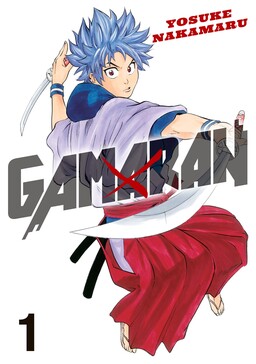
Gamaran Review: A Prodigy Swordsman Fights Through a Tournament of Japan's Deadliest Martial Arts Schools
by Yosuke Nakamaru
Read the first volume. If it doesn't hook you, put it down. It'll hook you.
Buy Gamaran on Amazon →*Affiliate link — I earn a small commission at no extra cost to you.
Quick Take
- A martial arts tournament manga that takes its combat system seriously — each school Gama faces represents a distinct historical Japanese martial style, and the fights are choreographed with understanding of how those styles actually work
- The tournament structure is efficient and the fights rarely feel like padding — Nakamaru understands that the best action manga lives or dies on the quality of individual combat sequences
- 22 volumes complete; one of the most technically impressive historical swordfighting manga in Seven Seas' catalog
Who Is This Manga For?
- Readers who want serious martial arts action with historical grounding
- Anyone who enjoys tournament-structure action manga with distinctive opponent design
- Fans of Japanese swordfighting who want technique shown rather than just implied
- Readers who want complete action manga with no loose ends
Content Warnings & Age Rating
Age Rating: M (Mature) Content Warnings: Graphic sword violence — this is a manga about lethal combat between serious practitioners; death in battle is frequent; detailed depiction of martial arts techniques including their injurious applications
An M rating that reflects the genuine lethality of the combat — not gratuitous gore, but martial arts manga that treats wounds and death seriously.
Yu's Rating
| Category | Score |
|---|---|
| Story Depth | ★★★☆☆ |
| Art Style | ★★★★★ |
| Character Development | ★★★★☆ |
| Accessibility for Non-Japanese Readers | ★★★★☆ |
| Reread Value | ★★★★☆ |
Story Overview
Gama Kurogane grew up in poverty with his father — the legendary swordsman who founded the Ogame style — absent from his life. Naturally gifted but untaught in his father's technique, Gama has developed his own raw combat instinct.
He is recruited by Naoyoshi Washitzu, a young lord who must win a martial arts tournament to prove his right to inherit his domain. The tournament brings together representatives of Japan's most powerful schools — each with their own complete system of combat, their own secrets, their own practitioners who may be genuinely unbeatable.
Gama fights through them. Each school is a different problem, a different style, a different kind of danger. The Ogame style, revealed gradually, proves to have been designed specifically to defeat any technique it encounters.
Characters
Gama Kurogane — A protagonist whose genius is real but whose development is ongoing — he is not invincible, and the series is honest about the difference between natural talent and mastered technique. His improvement across 22 volumes is genuine rather than cosmetic.
Naoyoshi Washitzu — The lord whose political situation frames the tournament — less interesting as a fighter than as the reason the tournament exists, but his relationship with Gama develops into something more than simple employment.
Zenmaru Ichinose — Gama's companion and fellow fighter whose own development runs parallel to Gama's — his growth from liability to genuine asset is one of the series' more satisfying character arcs.
The school representatives — Each designed as a complete martial arts philosophy embodied in a fighter — the opponents are the series' greatest creative achievement, each one a genuinely interesting problem for Gama to solve.
Art Style
Nakamaru's art is technically exceptional for combat — the swordfighting sequences use dynamic panel layouts that communicate both the speed and the technique of each exchange. Anatomy under physical stress, weapon positioning, the moment of contact — these are rendered with the care of someone who has studied how sword combat actually works.
Cultural Context
The martial arts schools depicted in Gamaran draw on real historical Japanese combat traditions — the variety of schools competing (sword, spear, grappling, combined weapon) reflects the genuine diversity of Japanese martial arts as they existed before standardization. For readers interested in this history, the series functions as a stylized but grounded tour of Edo-period martial culture.
What I Love About It
The fights feel consequential because the injuries are real. Gama does not emerge from each battle fresh — the accumulation of damage across the tournament affects subsequent fights, and the series is honest about what it costs a human body to fight at this level repeatedly. That honesty makes the victories meaningful.
What English-Speaking Fans Say
Western readers describe Gamaran as the martial arts manga they recommend to people who want serious technique rather than power-scaling — the emphasis is always on how you fight rather than how strong you are, and that distinction produces a different quality of action. The complete run is specifically praised for delivering satisfying conclusions to every major storyline.
Memorable Scene ⚠️ Spoiler Warning
The fight against the school specifically designed to counter the Ogame style — which should by logic be unbeatable against Gama — and how that fight resolves reveals what the series has understood about Gama all along: he is not simply executing the Ogame style, he is becoming its next evolution.
Similar Manga
- Vagabond — Historical swordfighting, deeper character study, different pace
- Blade of the Immortal — Historical action with martial philosophy, mature rating
- Shura no Toki — Martial arts tournament, similar historical setting
- Rurouni Kenshin — Historical swordfighting, more accessible, different tone
Reading Order / Where to Start
Volume 1 — The tournament setup and Gama's recruitment are established immediately.
Official English Translation Status
Seven Seas Entertainment published all 22 volumes. Complete and available.
Pros & Cons
Pros
- Combat choreography with genuine technical understanding
- Each opponent school represents a distinct martial philosophy
- Injury accumulation makes fights feel real
- Complete 22-volume run with full resolution
Cons
- M rating limits the audience
- Tournament structure means the narrative is primarily combat-driven
- Some school encounters are stronger than others
Format Comparison
| Format | Notes |
|---|---|
| Individual Volumes | Seven Seas; complete 22-volume set |
| Digital | Available |
Where to Buy
Read the first volume. If it doesn't hook you, put it down. It'll hook you.
This post contains affiliate links. If you purchase through these links, I may earn a small commission at no extra cost to you. As an Amazon Associate, I earn from qualifying purchases.
*Affiliate link — I earn a small commission at no extra cost to you.
More Manga You Might Like

Action / Supernatural
Kurokami: The Animation (Black God)
Yu's review of Kurokami (Black God) — Keita Ibuki discovers that his continued existence is statistically linked to the deaths of his 'look-alikes'; after his mother's death he meets Kuro, a powerful supernatural being called a Mototsumitama, and they form a 'Tera Contractor' bond that saves both of them — and draws them into a conflict far larger than Keita understood.

Action / Supernatural
Yu Yu Hakusho
A review of Yu Yu Hakusho — 19 volumes in Weekly Shonen Jump. Yusuke Urameshi dies heroically saving a child, is recruited as a Spirit Detective to investigate supernatural cases, and grows from a delinquent who doesn't care about anything into someone with people worth protecting. The series Togashi made before Hunter x Hunter. VIZ Media's English edition is complete.
Action / Historical
Rurouni Kenshin
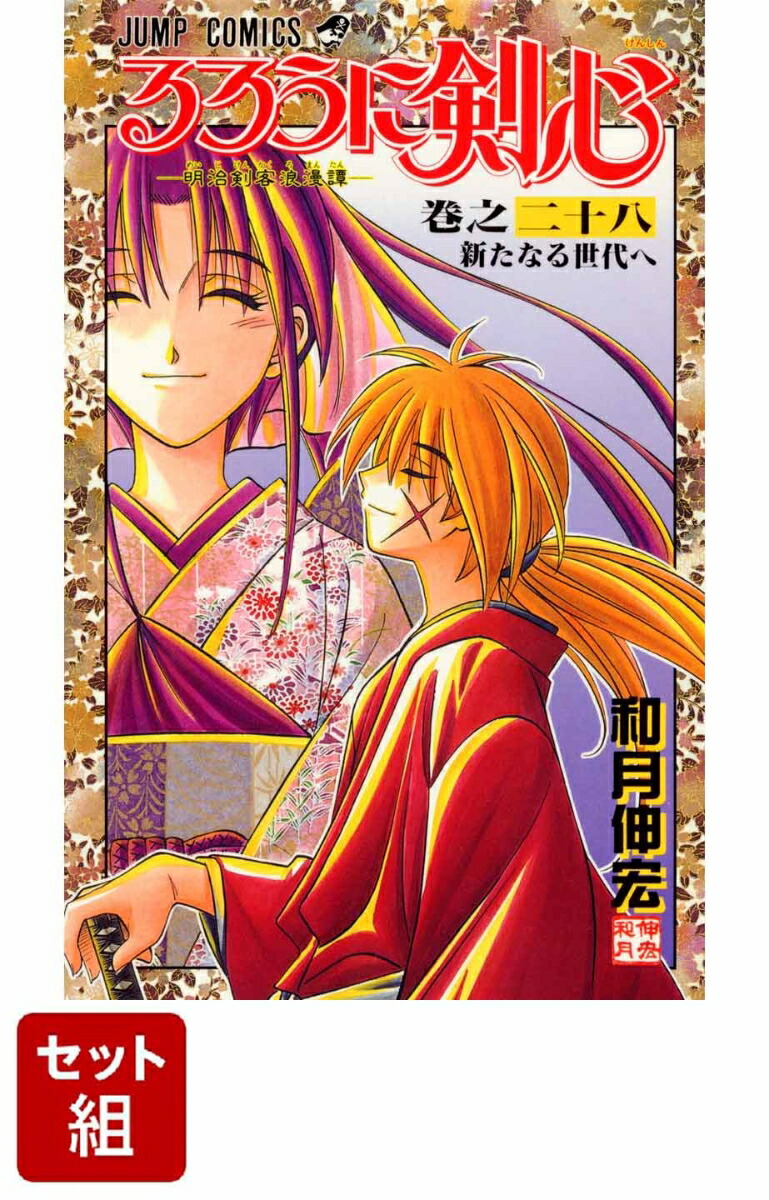
A review of Rurouni Kenshin — 28 volumes in Weekly Shonen Jump. Himura Kenshin was Japan's most feared assassin of the Bakumatsu; he now wanders with a reverse-blade sword, trying to protect without killing. The Kyoto Arc is one of the greatest extended arcs in manga, and Shishio is the genre's finest villain. VIZ Media's English edition is complete.
Action / Historical
Lone Wolf and Cub
Yu's review of Lone Wolf and Cub — Ogami Ittō was the Shogunate's official executioner; framed for treason by the Yagyū clan, stripped of his position, his wife murdered; he chose the Meifumadō — the road to hell — placing his infant son Daigorō before a ball and a sword, and the child chose the sword; they travel as assassins for hire, seeking vengeance.
Action / Historical
Blade of the Immortal
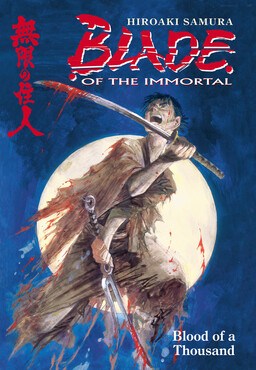
Yu's review of Blade of the Immortal — Manji is a ronin cursed with immortality by sacred bloodworms; to end the curse he must kill a thousand evil men, and he agrees to protect Rin Asano, a girl whose family was destroyed by the Itto-ryu sword school led by Anotsu Kagehisa. Hiroaki Samura's nineteen-year masterpiece, complete in 31 volumes from Dark Horse.
Action / Fantasy
Shaman King
Yu's review of Shaman King — a laid-back shaman who communes with spirits enters the Shaman Fight, a tournament held every 500 years to determine who becomes the Shaman King and reshapes the world.
Written by
Yu
Manga Enthusiast from Japan
I grew up in Japan and manga literally saved me during a tough time in elementary school. My English isn't perfect, but my love for manga is real — and I want to share it with you.
Disclosure: This post contains affiliate links. As an Amazon Associate, I earn from qualifying purchases at no extra cost to you.