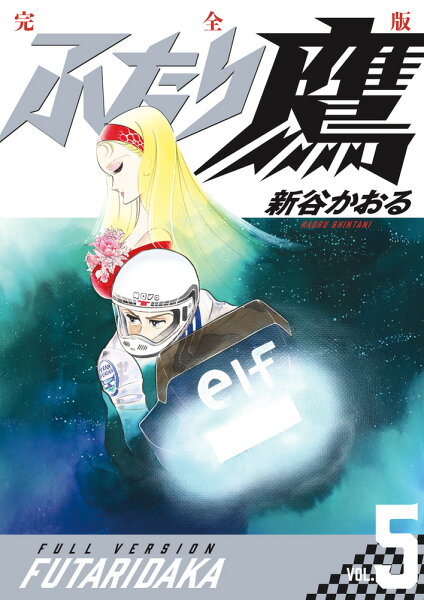
Futari Taka Review: The Motocross Manga Where Rivalry Was a Form of Love
by Kaoru Shintani
Read the first volume. If it doesn't hook you, put it down. It'll hook you.
Buy Futari Taka on Amazon →*Affiliate link — I earn a small commission at no extra cost to you.
What if your greatest rival was the only person who understood what you were trying to do?
Quick Take
- Shin Takahashi's motocross rivalry manga — two protagonists, both named Taka, whose competition spans the full 33 volumes
- Motocross as a subject allowed the series to go places road racing couldn't — off-road, unpredictable, dangerous in a different way
- One of the longest rivalry structures in sports manga: the two Takas need each other in a way neither will admit
Who Is This Manga For?
- Motocross and off-road racing fans who want their sport depicted accurately
- Sports manga readers who want a long-form rivalry structure
- Readers of Circuit Wolf who want another 1980s racing manga with genuine sport knowledge
- Anyone interested in rivalry as a narrative engine — this is one of manga's best examples
Content Warnings & Age Rating
Age Rating: T (Teen) Content Warnings: Motocross racing danger and accidents. Sports action throughout. Appropriate for the rating.
Suitable for teen readers.
Yu's Rating
| Category | Score |
|---|---|
| Story Depth | ★★★★☆ |
| Art Style | ★★★★☆ |
| Character Development | ★★★★★ |
| Accessibility for Non-Japanese Readers | ★★★★☆ |
| Reread Value | ★★★★☆ |
Story Overview
Taka Mutsu and Taka Mikuni enter the motocross world at approximately the same level and quickly identify each other as the only competition that matters. The series tracks their rivalry across amateur competitions, professional circuits, and eventually international events.
They are different riders with different styles — one more aggressive, one more precise — and these differences mean that their results against each other are genuinely unpredictable. Sometimes one wins. Sometimes the other. The rivalry is not a journey toward one triumph but an ongoing exchange between equals who push each other to levels neither could reach alone.
Takahashi depicts motocross with genuine knowledge — the bikes are accurately rendered, the track conditions matter, and the physical demands of off-road racing are shown honestly. The sport is not just backdrop; it is what the characters are really doing.
Characters
Taka Mutsu and Taka Mikuni: The structural choice of two protagonists with the same name is either a device or a statement — I think it's a statement. They are two expressions of the same obsession, and the series is interested in what happens when two people who are fundamentally the same compete for a long time.
The supporting teams: Mechanics, coaches, other racers who fill out the motocross world and give both Takas contexts beyond their rivalry.
Art Style
Takahashi's art handles the physical challenges of motocross depiction well — the bikes in the air, the dirt and mud of off-road conditions, the specific posture of motocross riders. The action sequences have kinetic energy without sacrificing legibility.
Cultural Context
Futari Taka ran in Weekly Shonen Magazine from 1981 to 1987. Motocross was experiencing a popularity surge in Japan during this period, and the manga both reflected and contributed to that interest. The sport's Japanese racing scene is depicted with documentary attention.
What I Love About It
I love that the series doesn't resolve the rivalry.
Most rivalry manga has an endpoint — one person wins definitively, or they reconcile, or one of them quits. Futari Taka maintains the rivalry as an ongoing condition because that's what genuine sporting competition actually is. You don't beat your rival once. You compete with them across time, and the competition changes both of you.
The two Takas don't become friends exactly. They become something more specific: people who know each other in the way only opponents know each other.
What English-Speaking Fans Say
Not known in English-speaking markets. Among readers of Japanese sports manga who seek out older racing titles, Futari Taka is appreciated as one of the more sophisticated rivalry structures in the genre — sustained over 33 volumes without becoming repetitive because the characters continue to develop.
Memorable Scene ⚠️ Spoiler Warning
A race where both Takas have reached a level that none of their other competitors can match — and the race becomes a private contest between them while the other riders are effectively in a different event. The scene makes explicit what the series has been building: the rivalry has created a category of two that no one else can enter.
Similar Manga
- Circuit Wolf: Contemporary racing manga — cars instead of bikes
- Shakotan Boogie: Street car manga — similar love of machines
- Initial D: Later racing manga — more famous, in the same tradition
Reading Order / Where to Start
Volume 1. The rivalry structure builds over the full run.
Official English Translation Status
Futari Taka has no official English translation.
Pros & Cons
Pros
- One of sports manga's finest long-form rivalry structures
- Genuine motocross knowledge embedded throughout
- Complete at 33 volumes
- Both protagonists develop in authentic ways
Cons
- No English translation
- 33 volumes is a significant commitment
- Motocross knowledge helps for full appreciation
Format Comparison
| Format | Notes |
|---|---|
| Physical | Japanese editions available |
| Digital | Available in Japanese |
| Omnibus | Collected editions available |
Where to Buy
No English release yet. That just means you find it before everyone else does.
*Affiliate link — I earn a small commission at no extra cost to you.
More Manga You Might Like
Action / Sports
Musashi no Ken
Musashi no Ken follows Musashi Nanaori, a boy born into a kendo family who grows up pursuing the sport that defines his father and his destiny — a classic Weekly Shonen Sunday kendo manga that tracked its protagonist from childhood through young adulthood.
Action / Sports
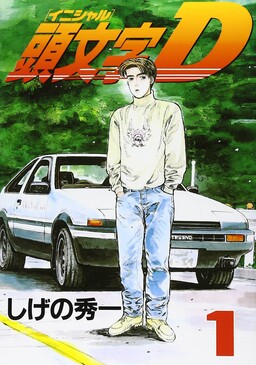
Initial D
Yu's review of Initial D — Takumi Fujiwara has been delivering tofu for his father up and down the mountain roads of Akina since he was a child; without knowing it, he has become Japan's most technically precise drift racer; the discovery of this fact is the beginning of the story.
Action / Sci-Fi
Cobra
Cobra is the greatest space pirate who ever lived — charming, unstoppable, and armed with the Psychogun fused to his arm — in a galaxy-spanning adventure that turned stylish cool into a manga philosophy.
Action / Martial Arts
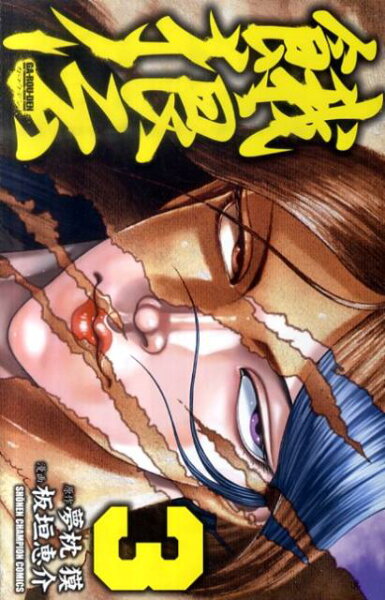
Garouden
Garouden follows Bunshichi Tanba, a former judoka who operates in the underground fighting world — a manga drawn by Jiro Taniguchi with psychological depth and physical authenticity rare in fighting manga.
Action / Adventure
Zatch Bell!
A review of Zatch Bell! — 33 volumes in Weekly Shonen Sunday. Genius middle schooler Kiyo Takamine partners with demon child Zatch Bell in a battle royale of 100 demon/human pairs competing to become King of the Mamodo World; Zatch wants to be a kind king. The manga that made an entire generation cry about a book burning. VIZ Media's English edition is complete.
Action / Supernatural
Yu Yu Hakusho
A review of Yu Yu Hakusho — 19 volumes in Weekly Shonen Jump. Yusuke Urameshi dies heroically saving a child, is recruited as a Spirit Detective to investigate supernatural cases, and grows from a delinquent who doesn't care about anything into someone with people worth protecting. The series Togashi made before Hunter x Hunter. VIZ Media's English edition is complete.
Written by
Yu
Manga Enthusiast from Japan
I grew up in Japan and manga literally saved me during a tough time in elementary school. My English isn't perfect, but my love for manga is real — and I want to share it with you.