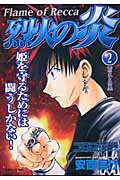
Flame of Recca Review: A High School Ninja Discovers He Can Control Fire and Is Heir to an Ancient Clan
by Nobuyuki Anzai
Read the first volume. If it doesn't hook you, put it down. It'll hook you.
Buy Flame of Recca on Amazon →*Affiliate link — I earn a small commission at no extra cost to you.
Quick Take
- A self-proclaimed ninja discovers real fire powers and a heritage that puts him in the middle of a war for immortality
- Peak 1990s shonen tournament action — creative weapon designs, ensemble battles, escalating stakes
- 33 volumes, complete; the Ura Butou Satsujin tournament arc is one of the best in shonen manga
Who Is This Manga For?
- Readers who want classic tournament-arc shonen with creative team battle structures
- Fans of 1990s manga who want to explore the genre's best mid-tier works
- Anyone who likes fire-elemental protagonists and weapon-based ability systems
- Readers who want complete series with satisfying endings
Content Warnings & Age Rating
Age Rating: T (Teen) Content Warnings: Tournament violence, fantasy battle content
Standard shonen violence, entirely in battle context.
Yu's Rating
| Category | Score |
|---|---|
| Story Depth | ★★★☆☆ |
| Art Style | ★★★★☆ |
| Character Development | ★★★★☆ |
| Accessibility for Non-Japanese Readers | ★★★★☆ |
| Reread Value | ★★★☆☆ |
Story Overview
Recca Hanabishi is a high school student who has always pretended to be a ninja, challenging classmates to fights and pledging allegiance to a girl named Yanagi who heals people with her touch. He discovers actual fire-summoning ability — and then discovers that the ability comes with a heritage: he is the son of the leader of the Hokage, a ninja clan with flame abilities, sent to the present from the past to escape a murderous warlord.
That warlord, Kurei, has followed him. Kurei also has flame powers and wants Yanagi's healing ability.
The series builds toward the Ura Butou Satsujin — an underground fighting tournament where Recca's team faces Kurei's organization and a variety of other teams with weapon-based abilities.
Characters
Recca Hanabishi — The fire-user protagonist; his loyalty and his specific relationship with Yanagi define him more than his power.
Fuko Kirisawa — A wind-weapon user; her competitive relationship with Recca and her own arc are the series' strongest supporting character work.
Domon Ishijima — The team's strength character whose comedic moments and genuine courage balance well.
Mikagami Tokiya — The ice-water blade user with his own tragedy; his arc about what he is fighting for is the series' most emotionally developed.
Kurei — An antagonist whose own situation is genuinely tragic; his relationship with his own captive Flame is one of the series' best ongoing elements.
Art Style
Anzai's art is classic 1990s shonen — the character designs are distinctive, the madougu (weapon devices) each have unique visual designs, and the battle sequences are energetically drawn. The flame and elemental effects are rendered with enthusiasm.
Cultural Context
Flame of Recca draws on ninja mythology as imagined in Japanese popular culture rather than historical fact — it is part of the 1990s shonen tradition of reimagining ninja as elemental ability users, which Naruto would later define for a generation.
What I Love About It
The Hokage flame dragons. Recca's fire is not a single ability but access to eight flame dragons, each with a different personality and style. As he bonds with each dragon across the series, each bond is its own small story. It's a creative extension of the fire-user premise that keeps the power fresh.
What English-Speaking Fans Say
Flame of Recca occupies an interesting place in Western fandom — highly regarded by readers who encountered it in the 1990s-2000s VIZ publication, less known to newer readers who came up with Naruto as their ninja reference point. It is consistently described as "better than you remember" by readers returning to it and "underappreciated" by fans of classic shonen action.
Memorable Scene ⚠️ Spoiler Warning
The resolution of the Kurei/Recca backstory — what their connection is and what that means for their final confrontation — recontextualizes the antagonist relationship in ways the series earned over many volumes.
Similar Manga
- Naruto — Ninja action, elemental abilities, similar era
- Yu Yu Hakusho — Tournament structure, team battles
- Zatch Bell! — Team battles with creative ability variety
- Rave Master — Similar 1990s adventure energy
Reading Order / Where to Start
Volume 1 — the premise establishes quickly and the tournament arc begins by volume 3-4.
Official English Translation Status
VIZ Media published the complete 33-volume series. All volumes available.
Pros & Cons
Pros
- 33 volumes, complete
- The tournament arc is one of shonen's best constructed
- Madougu weapon system is consistently inventive
- Supporting character arcs are well developed
Cons
- Earlier volumes are standard shonen before the tournament raises the stakes
- Art style is vintage 1990s — adjustment for newer readers
- Kurei's arc, while strong, takes time to fully develop
Format Comparison
| Format | Notes |
|---|---|
| Individual Volumes | VIZ Media; standard |
| Digital | Availability varies |
Where to Buy
Read the first volume. If it doesn't hook you, put it down. It'll hook you.
This post contains affiliate links. If you purchase through these links, I may earn a small commission at no extra cost to you. As an Amazon Associate, I earn from qualifying purchases.
*Affiliate link — I earn a small commission at no extra cost to you.
More Manga You Might Like
Action / Supernatural
Yu Yu Hakusho
A review of Yu Yu Hakusho — 19 volumes in Weekly Shonen Jump. Yusuke Urameshi dies heroically saving a child, is recruited as a Spirit Detective to investigate supernatural cases, and grows from a delinquent who doesn't care about anything into someone with people worth protecting. The series Togashi made before Hunter x Hunter. VIZ Media's English edition is complete.
Action / Adventure
Naruto
A review of Naruto — 72 volumes in Weekly Shonen Jump. Uzumaki Naruto is a boy with the Nine-Tailed Fox sealed inside him, rejected by his village, dreaming of becoming Hokage not for power but to be seen. The most emotionally resonant outcast-to-legend arc in manga. VIZ Media's English edition is complete.
Action / Adventure
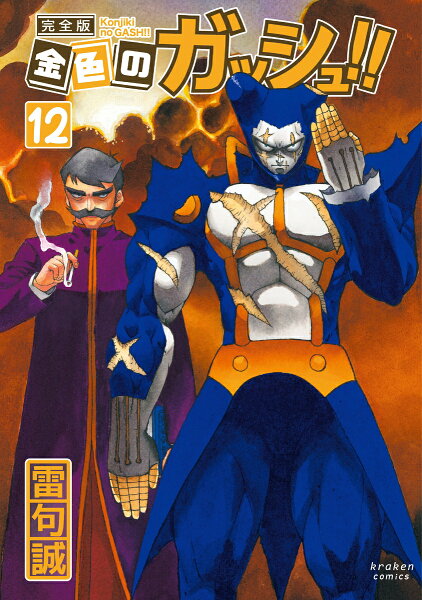
Zatch Bell!
A review of Zatch Bell! — 33 volumes in Weekly Shonen Sunday. Genius middle schooler Kiyo Takamine partners with demon child Zatch Bell in a battle royale of 100 demon/human pairs competing to become King of the Mamodo World; Zatch wants to be a kind king. The manga that made an entire generation cry about a book burning. VIZ Media's English edition is complete.
Action / Supernatural
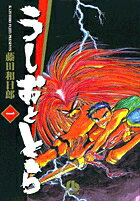
Ushio and Tora
Yu's review of Ushio and Tora — Ushio finds an ancient beast-spirit called Tora pinned under the temple floor; he releases Tora to fight other spirits threatening his town; Tora intends to eat Ushio eventually; they travel Japan fighting supernatural threats.
Action / Historical
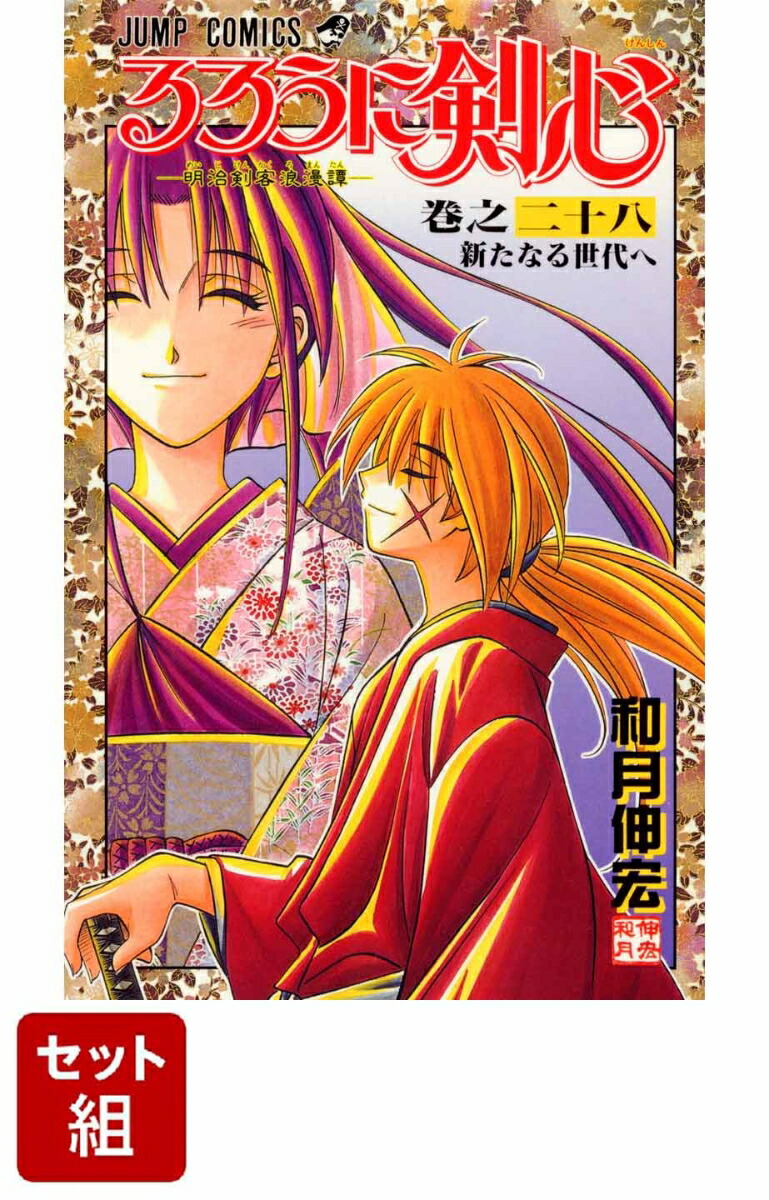
Rurouni Kenshin
A review of Rurouni Kenshin — 28 volumes in Weekly Shonen Jump. Himura Kenshin was Japan's most feared assassin of the Bakumatsu; he now wanders with a reverse-blade sword, trying to protect without killing. The Kyoto Arc is one of the greatest extended arcs in manga, and Shishio is the genre's finest villain. VIZ Media's English edition is complete.
Action / Comedy
Gintama
A review of Gintama — 77 volumes in Weekly Shonen Jump. Gintoki Sakata runs an odd-jobs business in an alternate Edo Japan where aliens conquered the country and samurai are forbidden to carry swords. The funniest manga ever made, hiding some of the most devastating serious arcs in the genre. VIZ Media's English edition is complete.
Written by
Yu
Manga Enthusiast from Japan
I grew up in Japan and manga literally saved me during a tough time in elementary school. My English isn't perfect, but my love for manga is real — and I want to share it with you.
Disclosure: This post contains affiliate links. As an Amazon Associate, I earn from qualifying purchases at no extra cost to you.