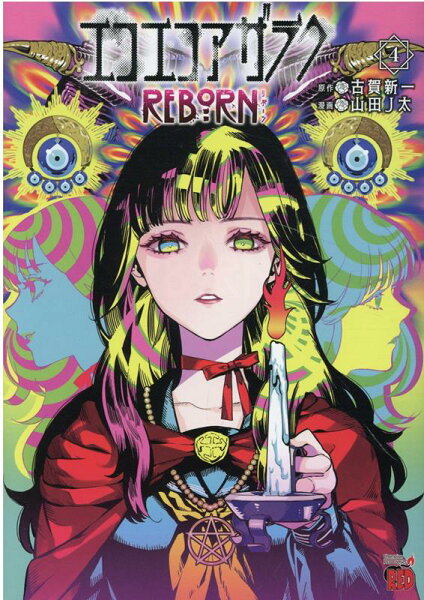
Eko Eko Azarak Review: The Witch Who Doesn't Save Anyone
by Shinichi Koga
Read the first volume. If it doesn't hook you, put it down. It'll hook you.
Buy Eko Eko Azarak on Amazon →*Affiliate link — I earn a small commission at no extra cost to you.
What if the girl with magic powers wasn't there to save you — just to make sure the thing hunting you got what it deserved?
Quick Take
- Horror manga with a genuinely dark witch protagonist — not a magical girl but an occult practitioner
- Each arc is a self-contained horror story; Misa Kuroi walks into disaster and walks out having settled things, but never tidily
- One of the most unusual protagonist concepts in 1970s manga — a girl whose power is real and frightening
Who Is This Manga For?
- Horror manga readers who want something older and darker than modern horror
- Fans of occult and dark supernatural fiction with genuine atmosphere
- Readers curious about 1970s manga's horror tradition — this is a key example
- Anyone who wants a witch protagonist handled without romanticization
Content Warnings & Age Rating
Age Rating: M (Mature) Content Warnings: Occult violence and death throughout. Dark supernatural themes. Mature horror content. Not appropriate for younger readers.
Mature content throughout — take the rating seriously.
Yu's Rating
| Category | Score |
|---|---|
| Story Depth | ★★★★☆ |
| Art Style | ★★★★☆ |
| Character Development | ★★★☆☆ |
| Accessibility for Non-Japanese Readers | ★★★★☆ |
| Reread Value | ★★★★☆ |
Story Overview
Misa Kuroi is a transfer student who arrives at a new school with jet-black hair, pale skin, and an unsettling calm. She is a witch — not the playful or heroic kind, but the kind who has genuine knowledge of dark forces and who uses that knowledge to engage with supernatural threats on their own terms.
The series is structured as episodic horror arcs: Misa encounters a supernatural situation, investigates it through occult knowledge, and resolves it — usually with collateral damage and without anyone getting off cleanly. The evil is defeated, but not everything is saved.
What makes the series unusual is Misa herself. She is not warm. She is not on anyone's side exactly. She engages with supernatural forces because they are there and because she has the ability to engage with them, not because she is inherently heroic. This makes her more frightening than most protagonists and more interesting.
Characters
Misa Kuroi: One of manga's most genuinely unsettling protagonists — a girl whose calmness in the face of horror is itself a form of horror. She is not cruel, but she is not gentle either. She does what needs doing.
Supporting cast: Each arc introduces people whose lives are threatened by supernatural forces. Some survive. Many don't. Misa doesn't promise otherwise.
Art Style
Koga's art has the scratchy, dense quality characteristic of 1970s horror manga — dark inking, expressive faces, atmospheric settings. The occult imagery is drawn with genuine attention to visual impact. The horror sequences are effective in ways that rely on suggestion as much as explicit content.
Cultural Context
Eko Eko Azarak ran in Weekly Shonen Champion from 1975 to 1979, during the period when Japan's horror manga tradition was establishing itself. Koga's decision to use a teenage witch as his protagonist — and to treat her as genuinely dark rather than cute — was unusual and influential.
Multiple film and TV adaptations followed in the 1990s, which gave the series renewed attention.
What I Love About It
I love that Misa doesn't pretend the work she does is clean.
Horror manga often provides a protagonist whose role is essentially protective — the monster is defeated and the innocent are saved. Eko Eko Azarak acknowledges that when you're dealing with genuine dark forces, the resolution is never complete. Things are lost. The supernatural threat is neutralized but the people involved are changed, or gone, or simply lucky to still be there.
This honesty about what horror actually is gives the series a texture that more reassuring horror manga lacks.
What English-Speaking Fans Say
Not known in English-speaking markets. Among readers of older Japanese horror manga, Eko Eko Azarak is cited as an important predecessor to the horror tradition that later produced Junji Ito and others. Misa Kuroi as a character concept is recognized as genuinely original.
Memorable Scene ⚠️ Spoiler Warning
An arc involving a school haunting that appears routine at first — a standard supernatural threat that Misa should be able to resolve cleanly — and then reveals a level of darkness that makes clean resolution impossible. Misa's response to this revelation, and the arc's ending, demonstrate exactly what the series is and isn't: it's not here to reassure you.
Similar Manga
- Junji Ito's work: Later Japanese horror — more extreme, same tradition
- Drifting Classroom: Same era, different approach — survival horror
- Parasyte: Later horror with a protagonist facing genuinely threatening forces
Reading Order / Where to Start
Volume 1. The episodic structure means any volume is approachable, but starting from the beginning establishes Misa properly.
Official English Translation Status
Eko Eko Azarak has no official English translation.
Pros & Cons
Pros
- Genuinely unusual protagonist concept
- Effective horror atmosphere
- Episodic format makes it easy to read in pieces
- Historically important for Japanese horror manga
Cons
- No English translation
- Mature content — not for all readers
- Misa's emotional distance may frustrate readers wanting warmth
Format Comparison
| Format | Notes |
|---|---|
| Physical | Japanese editions available |
| Digital | Available in Japanese |
| Omnibus | Collected editions available |
Where to Buy
No English release yet. That just means you find it before everyone else does.
*Affiliate link — I earn a small commission at no extra cost to you.
More Manga You Might Like
Action / Horror
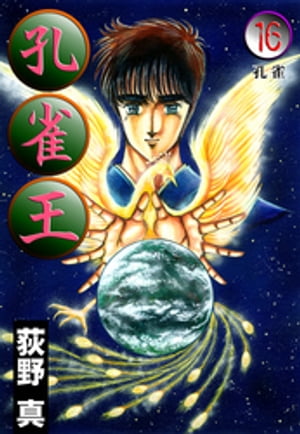
Peacock King
A review of Peacock King by Makoto Ogino — the late-80s esoteric action manga about a Buddhist monk who battles demons using powers drawn from Tantric Buddhism, set against a backdrop of genuine occult mythology.
Action / Sci-Fi
Cobra
Cobra is the greatest space pirate who ever lived — charming, unstoppable, and armed with the Psychogun fused to his arm — in a galaxy-spanning adventure that turned stylish cool into a manga philosophy.
Action / Martial Arts
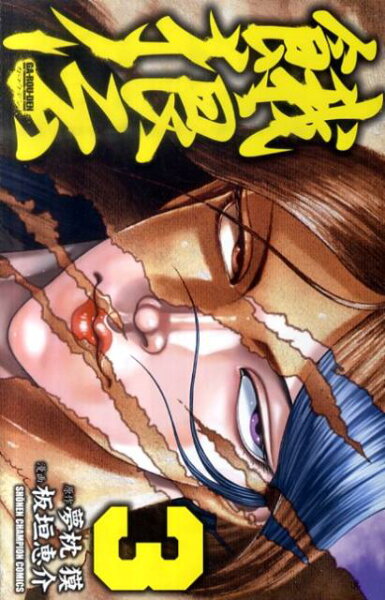
Garouden
Garouden follows Bunshichi Tanba, a former judoka who operates in the underground fighting world — a manga drawn by Jiro Taniguchi with psychological depth and physical authenticity rare in fighting manga.
Action / Adventure
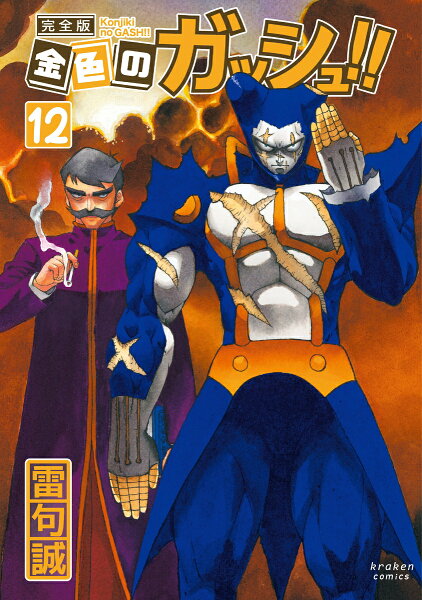
Zatch Bell!
A review of Zatch Bell! — 33 volumes in Weekly Shonen Sunday. Genius middle schooler Kiyo Takamine partners with demon child Zatch Bell in a battle royale of 100 demon/human pairs competing to become King of the Mamodo World; Zatch wants to be a kind king. The manga that made an entire generation cry about a book burning. VIZ Media's English edition is complete.
Action / Supernatural
Yu Yu Hakusho
A review of Yu Yu Hakusho — 19 volumes in Weekly Shonen Jump. Yusuke Urameshi dies heroically saving a child, is recruited as a Spirit Detective to investigate supernatural cases, and grows from a delinquent who doesn't care about anything into someone with people worth protecting. The series Togashi made before Hunter x Hunter. VIZ Media's English edition is complete.
Action / Supernatural
Ushio and Tora
Yu's review of Ushio and Tora — Ushio finds an ancient beast-spirit called Tora pinned under the temple floor; he releases Tora to fight other spirits threatening his town; Tora intends to eat Ushio eventually; they travel Japan fighting supernatural threats.
Written by
Yu
Manga Enthusiast from Japan
I grew up in Japan and manga literally saved me during a tough time in elementary school. My English isn't perfect, but my love for manga is real — and I want to share it with you.