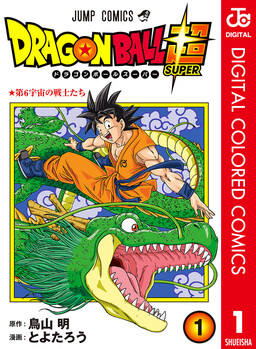
Dragon Ball Super Review: Goku and Friends Face New Gods, New Universes, and New Forms
by Akira Toriyama / Toyotaro
Read the first volume. If it doesn't hook you, put it down. It'll hook you.
Buy Dragon Ball Super on Amazon →*Affiliate link — I earn a small commission at no extra cost to you.
Quick Take
- Dragon Ball Super expands the franchise's scale to the multiverse — instead of the strongest on Earth or in the universe, the protagonists now face threats at the level of gods and universes
- Toyotaro's art captures Toriyama's character energy while adding his own visual approach to the new scale
- Ongoing with 21+ volumes; essential for Dragon Ball fans; the canonical sequel
Who Is This Manga For?
- Dragon Ball fans who want the canonical sequel to Z
- Readers who want to see Goku and Vegeta facing threats on a godly scale
- Anyone interested in the multiverse tournament structure applied to Dragon Ball's power system
- Readers looking for ongoing shonen action at the highest level
Content Warnings & Age Rating
Age Rating: T (Teen) Content Warnings: Martial arts violence; power-level escalation; universe-destruction level threats; comedy violence in lighter moments
T rating — Dragon Ball's standard content level.
Yu's Rating
| Category | Score |
|---|---|
| Story Depth | ★★★☆☆ |
| Art Style | ★★★★☆ |
| Character Development | ★★★☆☆ |
| Accessibility for Non-Japanese Readers | ★★★☆☆ |
| Reread Value | ★★★★☆ |
Story Overview
The Majin Buu arc is over. Earth is safe. Goku and Vegeta continue training. This peace lasts until Beerus, the God of Destruction, arrives looking for a legendary warrior he dreamed about — the Super Saiyan God. The encounter with Beerus introduces the series' new scale: not the strongest in the universe, but beings who exist to destroy universes as part of cosmic maintenance.
Dragon Ball Super then expands: the Golden Frieza arc, the multiverse tournament where fighters from twelve universes compete, the Goku Black arc that introduces an alternate-timeline villain, and the Galactic Patrol Prisoner arc. Each arc raises the power ceiling and introduces new concepts about how the Dragon Ball universe actually works at its highest levels.
Goku's Ultra Instinct form — a state that separates movement from conscious thought — is the series' signature new power development.
Characters
Goku — The eternal protagonist whose joy of fighting and limit-breaking drive remains the series' emotional engine even at godly power levels.
Vegeta — Whose parallel development — the Ultra Ego form, different from Goku's path — makes the Saiyan rivalry more philosophically interesting than the simple strongest/second-strongest dynamic of Z.
The new characters — Beerus, Whis, Jiren, and others whose power levels and motivations expand the series' conception of strength.
Art Style
Toyotaro's art is the series' visual achievement — he captures the Dragon Ball character designs with high fidelity while developing his own approach to the new scale of combat. The Ultra Instinct visual design and the multiverse tournament staging are the art's strongest moments.
Cultural Context
Dragon Ball Super began in 2015, with Toriyama providing story concepts and Toyotaro drawing. The manga version of Super differs from the anime in specific arc details. The multiverse tournament arc — twelve universes sending fighters to compete — is the series' most structurally elaborate arc and generated the most fan discussion.
What I Love About It
Vegeta's different path. In Z, Vegeta's arc was always about being second to Goku. In Super, his Ultra Ego form — which grows stronger as he takes damage, reflecting his specific fighting philosophy — gives him a distinct development that is not just "trying to catch up to Goku." The Saiyan rivals are finally developing differently.
What English-Speaking Fans Say
Western readers describe Dragon Ball Super as the genuine continuation Dragon Ball deserved — specifically noted for the multiverse tournament being one of the franchise's most engaging arc structures, for Vegeta's development being more interesting than anything in Z, and for Toyotaro's art capturing the Dragon Ball spirit while adding new visual energy. Debates about specific arc quality are ongoing in the fanbase.
Memorable Scene ⚠️ Spoiler Warning
Goku's Ultra Instinct awakening in the multiverse tournament — the moment the other Gods of Destruction actually react with concern — is the series' most iconic power reveal and the franchise's signature new image.
Similar Manga
- Dragon Ball — The original; essential context
- Dragon Ball Z — The direct predecessor
- One Punch Man — Power escalation comedy in different register
- My Hero Academia — Generation-spanning shonen with similar tournament structure
Reading Order / Where to Start
Read Dragon Ball and Dragon Ball Z first. Dragon Ball Super Volume 1 follows directly after Z.
Official English Translation Status
Viz Media is publishing the ongoing English series. 21+ volumes available.
Pros & Cons
Pros
- Multiverse scale expands the franchise appropriately
- Vegeta's development is more interesting than in Z
- Toyotaro's art is strong
- Canonical Toriyama sequel
Cons
- Requires Dragon Ball/Z context
- Power escalation continues to the point of abstraction
- Some arcs stronger than others
Format Comparison
| Format | Notes |
|---|---|
| Individual Volumes | Viz Media; ongoing |
| Digital | Available |
Where to Buy
Read the first volume. If it doesn't hook you, put it down. It'll hook you.
This post contains affiliate links. If you purchase through these links, I may earn a small commission at no extra cost to you. As an Amazon Associate, I earn from qualifying purchases.
*Affiliate link — I earn a small commission at no extra cost to you.
More Manga You Might Like
Action / Fantasy
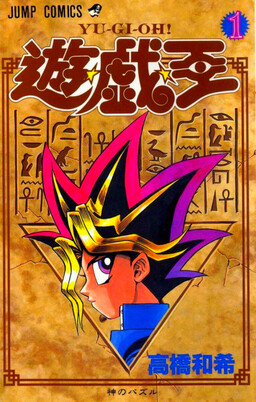
Yu-Gi-Oh!
Yu's review of Yu-Gi-Oh! — Yugi Mutou solves the Millennium Puzzle and his body becomes shared with a spirit of unknown origin; the early series follows the spirit's use of 'shadow games' to punish bullies and cheaters, eventually evolving into the card game tournament arc that the franchise became known for.
Action / Fantasy
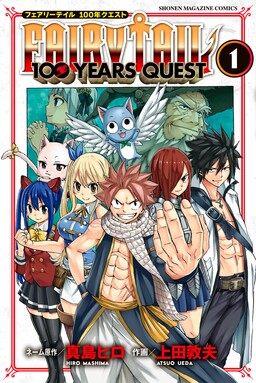
Fairy Tail: 100 Years Quest
Yu's review of Fairy Tail: 100 Years Quest — the direct sequel to Fairy Tail sends Natsu and Team Natsu on a quest that has gone uncompleted for 100 years, involving five Dragon Gods whose power exceeds anything they've previously faced; this is Fairy Tail continuing with the same team, same energy, and new antagonists.

Action
Rosario + Vampire: Season II
Yu's review of Rosario + Vampire: Season II — picking up from the end of Season I, Tsukune Aono and his monster companions return with higher stakes; the series shifts toward darker action with genuine monster-world political conflict while retaining the original's character relationships.
Action / Comedy
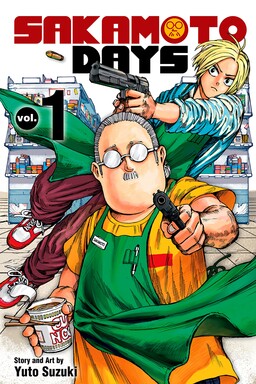
Sakamoto Days
Yu's review of Sakamoto Days — Taro Sakamoto was the most feared hitman in the world; he retired when he fell in love, married, and opened a convenience store; now overweight, domestically happy, and out of practice, he must repeatedly deal with the assassin world that cannot accept his retirement; an action comedy about a legendary fighter who would rather stock shelves.
Action
Kingdom
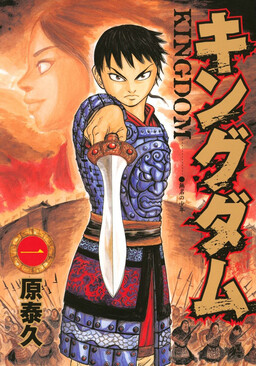
Yu's review of Kingdom — Xin is a war orphan in Warring States China who dreams of becoming the greatest general under the heavens; he encounters the young king Ying Zheng who intends to unify all of China; Yasuhisa Hara's historical epic about the birth of the Qin Empire through the eyes of soldiers and commanders who fought for it.
Comedy / Action
Dr. Slump
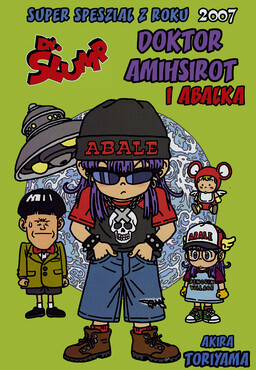
Yu's review of Dr. Slump — Senbei Norimaki is a not-very-good inventor who creates the perfect android girl, Arale, who is stronger than any human, has perfect vision but is terribly nearsighted without her glasses, and has the complete absence of self-preservation instinct that characterizes someone who cannot be hurt.
Written by
Yu
Manga Enthusiast from Japan
I grew up in Japan and manga literally saved me during a tough time in elementary school. My English isn't perfect, but my love for manga is real — and I want to share it with you.
Disclosure: This post contains affiliate links. As an Amazon Associate, I earn from qualifying purchases at no extra cost to you.