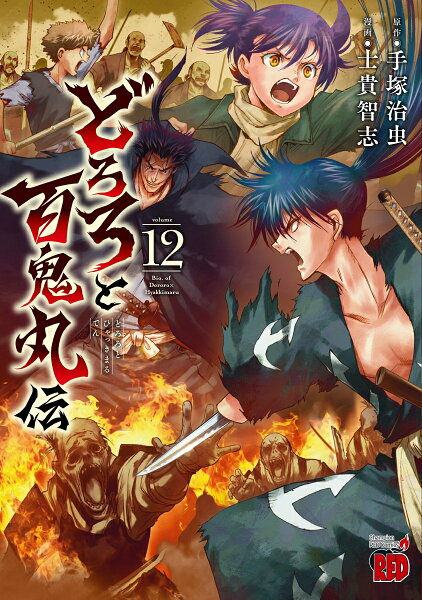
Dororo Review: The Boy Born Without a Body Who Fights to Take It Back
by Osamu Tezuka
Read the first volume. If it doesn't hook you, put it down. It'll hook you.
Buy Dororo on Amazon →*Affiliate link — I earn a small commission at no extra cost to you.
Quick Take
- A 4-volume Osamu Tezuka classic — compact, strange, and unlike anything else in the medium
- The premise: a lord traded his unborn son's body parts to 48 demons for power; now the son fights to get them back
- Dark fantasy before dark fantasy had a name, from the person who invented modern manga
Who Is This Manga For?
Dororo is for you if:
- You want to read manga history — Tezuka created this in 1967 and it still feels modern
- You love dark fairy tales: grotesque, sad, and morally serious
- You want something short and complete that delivers its entire story in 4 volumes
- You're curious about where manga's conventions came from
Content Warnings & Age Rating
Age Rating: T (Teen) Content Warnings: Violence; body horror in the concept of a person whose body parts have been removed and replaced with prosthetics and weapons; dark thematic content about parental abandonment and sacrifice; historical war settings
The body horror is conceptual rather than graphic. Tezuka's style is expressive rather than visceral.
Yu's Rating
| Category | Score |
|---|---|
| Story Depth | ★★★★★ |
| Art Style | ★★★★☆ |
| Character Development | ★★★★☆ |
| Accessibility for Non-Japanese Readers | ★★★★☆ |
| Reread Value | ★★★★☆ |
Story Overview
Lord Daigo Kagemitsu desires power. Power over his enemies, power over his land, power over his destiny. He goes to a hall of 48 demons and makes a deal: all power he desires, in exchange for the body parts of his unborn child.
His son is born without eyes, ears, nose, skin, or limbs — barely alive, barely human, set adrift in a river by his father's servants.
The boy survives. A wandering healer finds him, gives him prosthetic limbs with blades hidden inside them, and raises him. He learns to fight. He becomes terrifyingly good at it.
His name, given to him by a young thief named Dororo, is Hyakkimaru. His goal: hunt the 48 demons, defeat each one, and reclaim the body parts that were stolen from him before he was born.
For each demon he defeats, a body part returns. Eyes. Skin. A voice. His body rebuilds itself through violence, one piece at a time.
Characters
Hyakkimaru — One of the most unusual protagonists in manga history. Born without senses, he has developed an almost supernatural awareness of the spiritual world. He can sense demons where sighted people see nothing. As he reclaims parts of himself, he slowly becomes more human — and more vulnerable. The irony is the story.
Dororo — The child thief who gives Hyakkimaru his name and becomes his companion. Dororo's own secrets, revealed gradually, are the story's second surprise.
Lord Daigo Kagemitsu — The father who traded his son for power, and who watches his land prosper while something in himself corrodes. He is not a simple villain — he is a person who made a terrible choice for understandable reasons and now must live with what that choice created.
Art Style
Tezuka's art style is characteristic of its era: rounder, more expressive, drawing on Disney animation influences that Tezuka spent his career synthesizing into something distinctly Japanese. The demons Hyakkimaru fights are inventive and often disturbing despite the style's apparent lightness.
The visual contrast between the cartoony character designs and the genuinely dark subject matter is initially jarring and then becomes part of the series' effect — fairy tales are often like this.
Cultural Context
The Sengoku period — Dororo is set during Japan's Sengoku (Warring States) period, when the country was divided by constant warfare among feudal lords. The extreme suffering of civilians in this era — and the willingness of powerful men to sacrifice anything and anyone for advantage — is Tezuka's primary subject.
Osamu Tezuka's legacy — Tezuka is called the "God of Manga" for good reason: he essentially invented the visual language of modern manga, from panel composition to character expression to narrative structure. Reading Dororo is not just reading one story; it's reading the source of conventions that every manga since has inherited.
Body and wholeness — The Japanese concept of the body as something sacred, whose integrity must be maintained, underlies Hyakkimaru's quest. In Shinto thought, bodily wholeness has spiritual significance. What was done to Hyakkimaru is not just physical deprivation — it is a spiritual violation.
What I Love About It
There is a moment where Hyakkimaru, having just reclaimed his sense of touch, feels rain for the first time.
He has been fighting for so long. He has reclaimed so much. But this particular moment — the rain — is just a sensation. Just something ordinary that most people experience without thinking.
He stands in it.
Tezuka doesn't editorialize. He just lets the moment be what it is: a person, experiencing the world for the first time, in the most ordinary possible way.
That is what great storytelling does.
What English-Speaking Fans Say
Dororo gained significant Western attention through the 2019 anime adaptation, which expanded Tezuka's incomplete original story into a more fully realized narrative. The manga — shorter and stranger than the anime — is valued by readers interested in Tezuka's specific vision.
Common observation: the manga is unfinished — Tezuka was working on it when it was cancelled and never completed his intended story. What exists is still complete enough to be satisfying, but some threads remain unresolved.
Common praise: Hyakkimaru's concept, the atmospheric darkness, Tezuka's visual invention, the brief but affecting character dynamics.
Memorable Scene ⚠️ Spoiler Warning
Hyakkimaru regaining his voice.
When Hyakkimaru defeats the demon that holds his voice and can finally speak, the first thing he says — after years of being mute — reveals what he has been thinking about through all that silence.
It is not a battle cry. It is not a declaration of purpose. It is something much simpler and much more human, directed at the one person who has been there through all of it.
Tezuka understood what matters.
Similar Manga
If you liked Dororo, try:
- Berserk — Similar dark fantasy in a historical setting, much longer
- Vinland Saga — Historical violence with similar moral seriousness
- Vagabond — Historical manga by a different master of the medium
- Astro Boy — Tezuka's most famous work, completely different tone but same creator's DNA
Reading Order / Where to Start
Start from Volume 1. Four volumes, complete. Read it in a weekend.
Official English Translation Status
Status: Complete English Volumes: 4 (all volumes available) Translator: Vertical Translation Quality: Excellent — Vertical is the standard for Tezuka English translations
Pros & Cons
Pros
- A genuine classic from manga's most important creator
- The premise is one of the most original in dark fantasy
- 4 volumes — an accessible entry point to Tezuka's work
- Hyakkimaru is an unforgettable protagonist
Cons
- The manga is incomplete — Tezuka didn't finish his original vision
- The art style is dated for readers used to modern manga
- Four volumes may feel too brief for the premise's potential
Format Comparison
| Format | Volumes | Price per vol. (approx.) | Best for |
|---|---|---|---|
| Paperback (omnibus) | 1 volume | ~$25–30 | Complete collection |
| Paperback (individual) | 4 vols | ~$14–17 | Individual volumes |
Where to Buy
Read the first volume. If it doesn't hook you, put it down. It'll hook you.
This post contains affiliate links. If you purchase through these links, I may earn a small commission at no extra cost to you. As an Amazon Associate, I earn from qualifying purchases.
*Affiliate link — I earn a small commission at no extra cost to you.
More Manga You Might Like
Action / Historical
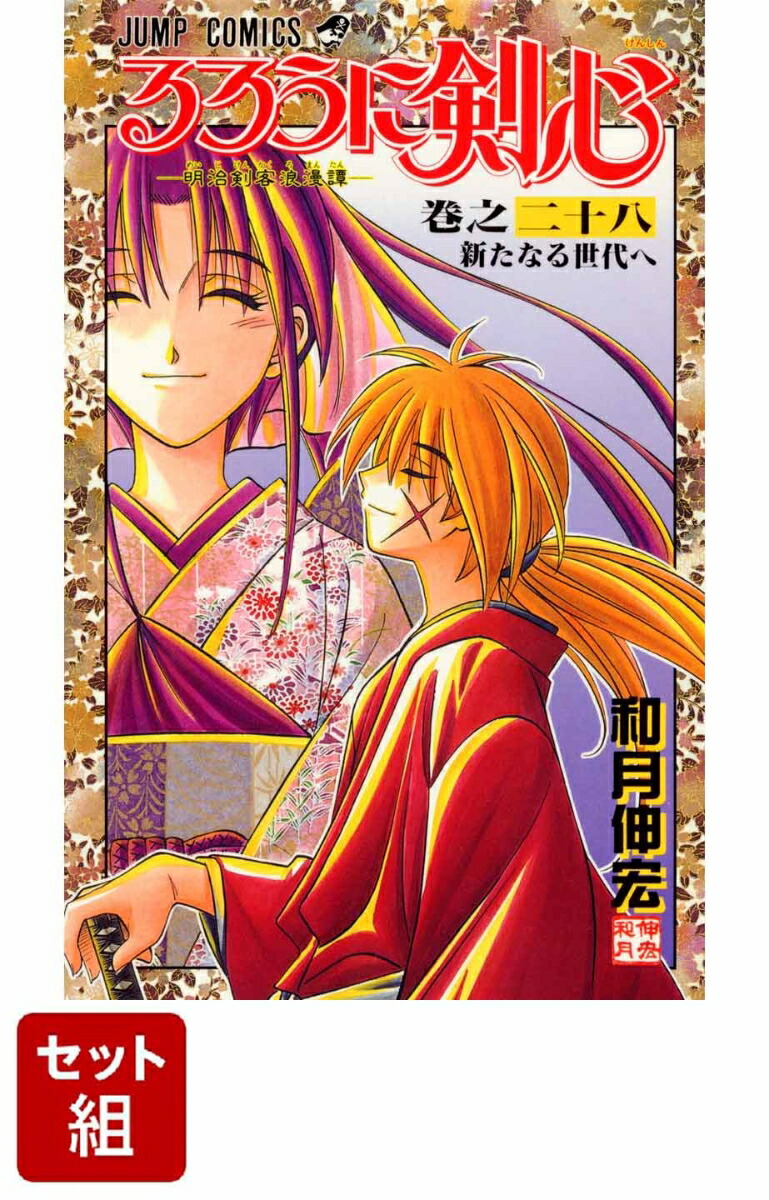
Rurouni Kenshin
A review of Rurouni Kenshin — 28 volumes in Weekly Shonen Jump. Himura Kenshin was Japan's most feared assassin of the Bakumatsu; he now wanders with a reverse-blade sword, trying to protect without killing. The Kyoto Arc is one of the greatest extended arcs in manga, and Shishio is the genre's finest villain. VIZ Media's English edition is complete.
Action / Historical
Lone Wolf and Cub
Yu's review of Lone Wolf and Cub — Ogami Ittō was the Shogunate's official executioner; framed for treason by the Yagyū clan, stripped of his position, his wife murdered; he chose the Meifumadō — the road to hell — placing his infant son Daigorō before a ball and a sword, and the child chose the sword; they travel as assassins for hire, seeking vengeance.
Action / Historical
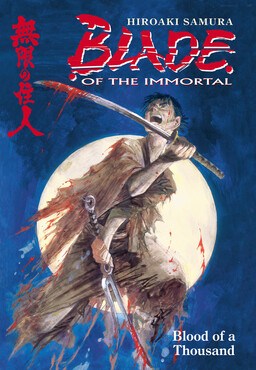
Blade of the Immortal
Yu's review of Blade of the Immortal — Manji is a ronin cursed with immortality by sacred bloodworms; to end the curse he must kill a thousand evil men, and he agrees to protect Rin Asano, a girl whose family was destroyed by the Itto-ryu sword school led by Anotsu Kagehisa. Hiroaki Samura's nineteen-year masterpiece, complete in 31 volumes from Dark Horse.
Action / Historical
Lady Snowblood
Yu's review of Lady Snowblood — Yuki Kashima was born in prison to a woman who had herself imprisoned to find the men who murdered her husband and son and raped her; Yuki's sole purpose, from birth, was to be the instrument of her mother's revenge; she was trained by a Buddhist monk and became exactly what her mother needed.
Action / Fantasy
InuYasha
Yu's review of InuYasha — a modern high school girl falls through a well into feudal Japan, meets a half-demon with dog ears, and must help collect the shards of a shattered magical jewel before an evil villain uses them to destroy everything.
Action / Sci-Fi
Cobra
Cobra is the greatest space pirate who ever lived — charming, unstoppable, and armed with the Psychogun fused to his arm — in a galaxy-spanning adventure that turned stylish cool into a manga philosophy.
Written by
Yu
Manga Enthusiast from Japan
I grew up in Japan and manga literally saved me during a tough time in elementary school. My English isn't perfect, but my love for manga is real — and I want to share it with you.
Disclosure: This post contains affiliate links. As an Amazon Associate, I earn from qualifying purchases at no extra cost to you.