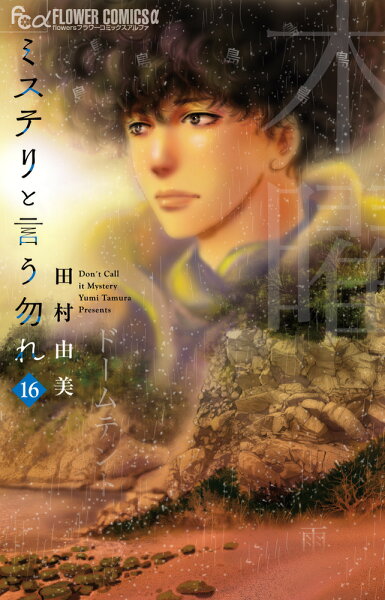
Do Not Say Mystery (Don't Call It Mystery) Review — A Curly-Haired Philosophy Student Who Solves Crimes by Refusing to Shut Up
by Yumi Tamura
Read the first volume. If it doesn't hook you, put it down. It'll hook you.
Buy Do Not Say Mystery on Amazon →*Affiliate link — I earn a small commission at no extra cost to you.
I have a friend who can't stop talking. At parties, in restaurants, at funerals. He notices everything and says all of it. Some people find him exhausting. I find him impossible to look away from, because the things he says are usually right, and usually the things nobody else is going to say.
I introduced him to Do Not Say Mystery and he read the first three volumes in one night. He wrote me afterward: "this is a manga about me, except I'm worse at it." He's not. But the manga is.
Quick Take
- A mystery manga where the detective wins by talking — Totono Kuonji's monologues are the genre's most distinctive feature in decades
- Yumi Tamura's 16-volume ongoing series, also known internationally as Don't Call It Mystery (the live-action drama title)
- Age rating: T (Teen) — mystery violence is present but restrained; the weight is in the social material
Do Not Say Mystery vs Don't Call It Mystery: Are These the Same Manga?
Yes. This is one manga with two English titles.
- Original Japanese: ミステリと言う勿れ (Mystery to Iu Nakare)
- VIZ Media manga translation: Do Not Say Mystery
- Live-action drama / movie translation: Don't Call It Mystery
The two English titles refer to the same work. Different licensors made different translation choices:
- VIZ went literal — iu nakare (言う勿れ) is archaic Japanese for "do not say"
- The live-action production (Fuji TV, 2022 drama / 2023 movie) used the more colloquial "don't call it"
If you search "Don't Call It Mystery manga" expecting to find a different series: this is the manga. The 2022 Fuji TV drama starring Masaki Suda is the adaptation of this manga.
What Is Do Not Say Mystery About?
Totono Kuonji is a young college student in Tokyo. He lives alone. He cooks elaborate curry. He has spectacular afro-style curly hair. He has no friends, which appears to be a choice he is not particularly unhappy about. He is also constitutionally unable to stop noticing things, and constitutionally unable to stop saying what he notices.
The manga's pattern: Totono is somewhere ordinary — visiting a relative, going to the police station for an unrelated reason, taking a bus, getting coffee — and a crime happens around him. He becomes a witness, a suspect, or simply someone in the room. The official investigators handle the case in the ordinary way.
Totono does not handle the case in the ordinary way.
He observes. He listens. He notices what people say without realizing they have said it. He notices what they don't say. He notices the social and emotional architecture of the situation, the patterns of behavior that produced the crime, the assumptions everyone in the room is making that they have not examined. And then he talks.
Totono's monologues are the series' signature. They run for pages. They begin with a small observation — about a piece of evidence, a sentence someone said, a way someone behaved — and they extend, patiently and without pause, into critique. The critique is usually directed at:
- A specific social pattern (gender expectations, family hierarchy, workplace culture, the Japanese justice system)
- The specific person or institution embodying that pattern in the current case
- The assumptions the listener has been making about themselves
By the end of the monologue, the case has not been solved in the procedural sense. The case has been rearranged — the social context that produced it has been articulated, and the people involved have been changed by hearing it articulated. Sometimes the murderer is identified along the way. Sometimes the murderer is the least important thing in the room.
This is the manga. Across 16 volumes (8 in English so far), Tamura builds case after case, each one a vehicle for a different Totono speech about a different aspect of Japanese society. The episodic structure is robust — readers can sample individual volumes — but cumulative themes emerge across the run.
What Topics Do Totono's Monologues Cover?
Across the series, his speeches address:
- The Japanese justice system's 99% conviction rate and what it implies about the assumption of innocence
- Family abuse and how Japanese family registry (koseki) laws can trap victims
- Gender expectations in marriage, motherhood, and workplace dynamics
- Mental health stigma in Japanese society
- The cultural function of silence — what we don't talk about, and what we pay for not talking about it
- Class and rural-urban inequality
- The educational system and its psychological costs
Each topic is approached through a specific case rather than as standalone commentary. Tamura is doing literary work — building characters and crimes that allow Totono's observations to land as observations about those specific people, not as abstract lectures. The social commentary works because it's grounded in narrative.
Who Is This Manga For?
- Mystery readers who like the genre with substance
- Social fiction readers — anyone who would read literary fiction with a critical angle
- Fans of dialogue-driven storytelling — Totono's speeches are the most engaging long monologues in current manga
- Readers of the drama / movie who want the source
- Josei readers — the series runs in Flowers and has the social register associated with that magazine
- Not for: readers who want pure puzzle-mystery; readers who find long monologues tedious
Content Warnings & Age Rating
Age Rating: T (Teen) — 13+ Content Warnings: Mystery violence (off-page mostly, some on-page); recurring themes of family abuse (described, not graphically depicted); discussions of mental illness and suicide; pointed social criticism that some readers may find heavy
The T rating is accurate for visual content. Thematically, the manga is mature in the literary sense — it asks the reader to think about Japanese society — without being mature in the graphic sense.
Story Overview
The manga's structure is episodic but cumulative. Each arc is a different case. Recurring characters and threads accumulate across volumes.
Volume 1 — The opening case: Totono is interrogated as a suspect in a murder. He spends most of the volume in the police station, talking to the officers. By the end, the case has been reframed, his innocence has been established, and the officers have heard the manga's first major monologue.
Volumes 2–4 — Various smaller cases that establish Totono's pattern. He is at his grandmother's, on a bus, at a wedding, at a hospital. Each setting becomes a case. The series' tonal range — comedy, sadness, anger, philosophical observation — comes into view.
Volumes 5–8 (current English) — Longer arcs. A bus hijacking. A complex multi-character case. A mystery involving Totono's own family history. The manga's most ambitious storytelling lives in this stretch.
Volumes 9–16 (Japanese-only currently) — The series continues, with longer arcs and the gradual development of recurring antagonists and allies. The manga is ongoing and has not concluded.
Characters
Totono Kuonji — One of the most distinctive protagonists in recent manga. The character is built on a specific combination of traits: high intelligence; high observational acuity; total absence of social filter; genuine empathy; constitutional inability to perform politeness over honesty. Totono is not a sociopath who happens to be smart. He is a deeply moral person who has chosen — or has been formed by experience — to refuse the social compromises that allow injustice to continue. He is also funny. The manga gets significant comic mileage from his obliviousness to ordinary social cues.
His backstory is revealed slowly. Family situation. Reasons for living alone. Why he became the kind of person who cannot stop noticing things. Tamura is patient with this material; Totono is a mystery the series unfolds across volumes, alongside the case-of-the-week mysteries.
The recurring police investigators — Several officers from the Tokyo Metropolitan Police become recurring figures. Their relationships with Totono — initially adversarial, gradually grudgingly respectful — provide the manga's continuity across episodic cases.
Various case-specific characters — Tamura is unusually careful with the supporting cast of each case. Suspects, witnesses, victims' families — each is rendered with enough texture that Totono's speeches about them land as speeches about specific people rather than abstract types.
Art Style
Tamura's art is clean and expressive. Character designs are realistic; Totono's hair is the most stylized element of the manga, and it's the kind of stylization that does narrative work — his hair is a visible refusal to fit in. Faces during dialogue sequences are where Tamura's craft shows most clearly. She can render shock, suppressed anger, dawning realization, and embarrassed self-recognition with very small adjustments. The monologue sequences would not work if the reaction shots didn't.
The manga is dialogue-heavy by design. Page layouts often consist of close-ups on Totono's face followed by reaction shots of his listeners, with the speech extending across multiple panels. This sounds boring. It isn't. Tamura controls the rhythm of the speeches with panel composition and reaction shot timing, and the cumulative effect is closer to watching a stage play than reading a procedural.
Cultural Context
Do Not Say Mystery is published in Flowers — Shogakukan's longstanding josei (women's manga) magazine. Yumi Tamura is one of the magazine's most respected names; her previous works include Basara (which won the Shogakukan Manga Award) and 7 Seeds. Tamura's voice is established and her authority to engage with Japanese social material seriously is recognized.
The series engages directly with Japanese social and legal specificity. Several arcs address features of Japanese law that have no clean Western equivalent — the koseki (family register) system, the structure of criminal procedure, the gender dynamics codified in family law. Western readers can follow the manga without prior knowledge, but readers familiar with these systems will find additional depth.
The 2022 Fuji TV drama adaptation, starring Masaki Suda as Totono, was a major commercial and critical success in Japan. The drama is faithful to the manga's tone and many of its individual cases. A theatrical film sequel was released in 2023. Both are available with English subtitles on streaming platforms.
What I Love About It
The bus hijacking arc.
I won't say which volumes specifically — it's a multi-volume arc in the middle of the English-released material. The premise: Totono is on a long-distance bus. The bus is hijacked. The hijackers have demands. The passengers are trapped.
What makes the arc work is what Totono does during it. He could solve the situation by deduction. He could identify the hijackers' weakness, exploit it, end the crisis. Tamura mostly declines that path. Instead, Totono spends the arc talking to the hijackers — and to the other passengers — and gradually unspooling the conditions that produced the hijacking in the first place.
The hijackers are not, in the manga's logic, just criminals. They are people who arrived at this bus with specific histories the manga unpacks across the arc. Some of those histories are heartbreaking. Some are infuriating. None of them excuse the hijacking. All of them complicate it.
The arc ends without a clean victory for anyone. The hijacking concludes — Tamura is not anti-resolution — but the resolution is moral rather than triumphant. Totono's speeches across the arc have rearranged how every character in the bus understands the situation, and the reader along with them. By the end, the question "who did this and how do we stop them" has been entirely replaced by "how did we get to a society where this would happen and what would it look like to actually address that."
That's the thing I love. Most mystery manga ends with the criminal caught. Do Not Say Mystery ends, repeatedly, with the criminal caught and the society that produced the criminal exposed. The mystery is solved and the manga refuses to call that an answer.
What English-Speaking Fans Say
Do Not Say Mystery has a dedicated English-language fan base, expanded significantly by the 2022 drama. The general consensus among readers is that Totono is one of the most distinctive protagonists in current manga, the monologues are the genre's most engaging long-form dialogue, and the social criticism is substantive rather than performative.
The most common criticism: monologue-heavy reading does not suit every reader. The manga rewards patience and a willingness to follow extended speeches. Readers who want fast-paced procedural mystery will find Do Not Say Mystery slower than they expected.
The drama is often cited as the best Japanese live-action manga adaptation of the 2020s. Masaki Suda's Totono is widely praised. Many English readers came to the manga through the drama and stayed.
Memorable Scene ⚠️ Light Spoiler
The police station scene in volume 1.
Totono has been brought in as a suspect in a murder. He is being interrogated by experienced detectives. The detectives have decided he is guilty. They are running standard pressure interrogation tactics. Totono is supposed to crack under pressure.
He does not crack.
What he does instead is talk about the Japanese justice system. He cites the conviction rate — 99% in Japan, vs roughly 80% in comparable Western systems. He observes that this number is sometimes praised as a sign of investigative competence. He observes that the same number can also be read as a sign that the system has been calibrated to convict, and that the burden of proof has shifted to defendants in ways that the rate's defenders would prefer not to discuss. He observes the specific things the detectives have just said to him in the past ten minutes and points out, mildly, what those things imply about the assumptions they brought into the room.
The detectives are not used to being talked back to. They are not used to suspects who do not crack. They are not used to suspects who have done their homework about the system that contains them.
The room goes quiet.
Totono continues.
That scene is the manga in 30 pages. The mystery is being solved — Totono is correct that he didn't do it, and he is also correct about who did, and that comes out later — but the scene is not actually about solving the mystery. The scene is about a young man with curly hair, alone in a room with the entire weight of Japanese law enforcement, talking calmly about why that weight has not earned the moral authority it claims for itself. He doesn't yell. He doesn't accuse. He just observes. The observation, accumulated across two dozen pages, is the most powerful thing in the volume.
That scene is why this manga matters.
Similar Manga
| Title | Its Approach | How Do Not Say Mystery Differs |
|---|---|---|
| Moriarty the Patriot | Brilliant protagonist using intellect against an unjust system | Moriarty acts; Totono talks. Same moral seriousness, opposite method |
| Detective Conan | Mystery procedural with episodic structure | Conan is puzzle-mystery; Do Not Say Mystery is social-mystery |
| Death Note | Intelligence-driven moral fiction | Death Note is high-stakes adversarial; Do Not Say is observational |
| Ron Kamonohashi | Detective with a unique gift | Ron's gift is dangerous; Totono's is verbal |
Reading Order / Where to Start
Volume 1. The series is episodic enough that you could sample later volumes, but Totono's character work and the gradual reveal of his backstory benefit from sequential reading.
For drama-first viewers: watch the Fuji TV drama, then start the manga at volume 1. The two are complementary; the manga has more depth and more arcs than the drama covers.
Official English Translation Status
VIZ Media publishes the English manga (8 volumes available as of 2026; ongoing). The original Japanese manga is at 16 volumes, ongoing. The 2022 Fuji TV drama and 2023 theatrical film are available with English subtitles on streaming platforms.
Pros & Cons
Pros
- Totono is one of the most distinctive protagonists in recent manga
- Social criticism is substantive and specific
- Each arc engages with a different aspect of Japanese society
- The monologue craft is the genre's most engaging in decades
- Drama adaptation is excellent
Cons
- Monologue-heavy reading requires patience
- Ongoing — the series has not yet concluded
- Some Japanese social specificity may require context for Western readers
- The talky, observational pace is an acquired taste. It won't land for everyone, especially readers who want fast procedural pacing.
Is Do Not Say Mystery Worth Reading?
Yes. One of the best mystery manga of the 2020s. The combination of distinctive protagonist, substantive social material, and Tamura's craft makes it a standout in current josei publishing.
Format Comparison
| Format | Notes |
|---|---|
| Physical (VIZ) | 8 volumes available in English, ongoing |
| Digital | Available via VIZ digital, Kindle |
| Drama (Fuji TV, 2022) | Available with English subtitles on Hulu Japan and other streaming services |
| Film (2023) | Theatrical sequel to the drama; check streaming availability |
Where to Buy
Read the first volume. If it doesn't hook you, put it down. It'll hook you.
This post contains affiliate links. If you purchase through these links, I may earn a small commission at no extra cost to you. As an Amazon Associate, I earn from qualifying purchases.
*Affiliate link — I earn a small commission at no extra cost to you.
More Manga You Might Like

Action / Drama
Oshi no Ko
Yu's review of Oshi no Ko — a doctor reincarnates as the son of the idol he worshipped, retaining his adult memories; he enters the entertainment industry to find his mother's killer while his twin sister becomes an idol herself.
Action / Drama
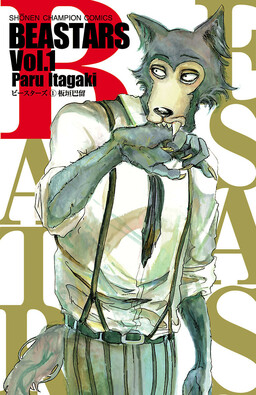
Beastars
Yu's review of Beastars — In a society of anthropomorphic animals where carnivores and herbivores live side by side, Legoshi is a gray wolf who is afraid of what he is. After a classmate is killed and eaten, he is pulled toward Haru, a tiny dwarf rabbit, and has to decide what kind of animal he wants to become.
Action
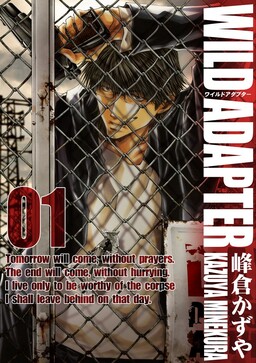
Wild Adapter
Yu's review of Wild Adapter — Makoto Kubota is a Yakuza boy genius who gets drawn into investigating Wild Adapter, a drug that turns users into monsters; he finds Tokito, a boy with no memory and a monster's hand, and takes him home; Kazuya Minekura's crime manga about an unlikely pair and the mystery of a transforming drug.
Action / Drama
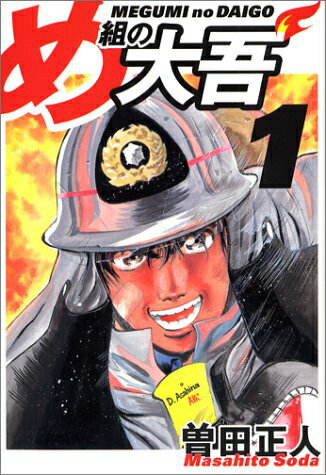
Daigo of Fire Company M
Daigo of Fire Company M follows Daigo Asahina, an extraordinary new firefighter who joins Company M — and the question of what drives a young man of exceptional ability to choose the most dangerous possible job.
Action
Tekkon Kinkreet
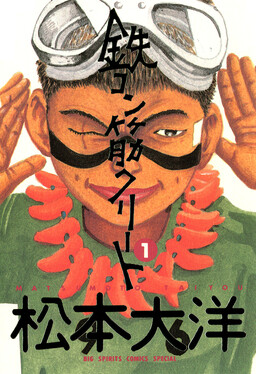
Yu's review of Tekkon Kinkreet — Black and White are two orphaned street kids who rule Treasure Town from the rooftops; when organized crime moves in to develop the city, Black and White must fight to keep what they consider theirs; a visually revolutionary manga about the psychic cost of violence and the specific love between two people who only have each other.
Action / Drama
Takopi's Original Sin
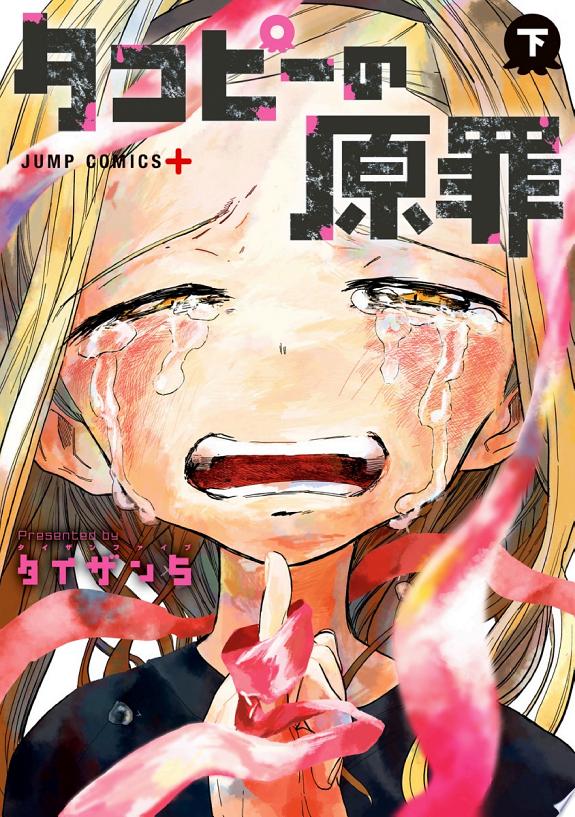
Yu's review of Takopi's Original Sin — Takopi is an alien from Happy Planet sent to spread happiness on Earth; he meets Shizuka, a girl who is being bullied and whose home life is deeply troubled; the series uses Takopi's happiness abilities to examine what happiness means when suffering is real.
Written by
Yu
Manga Enthusiast from Japan
I grew up in Japan and manga literally saved me during a tough time in elementary school. My English isn't perfect, but my love for manga is real — and I want to share it with you.
Disclosure: This post contains affiliate links. As an Amazon Associate, I earn from qualifying purchases at no extra cost to you.