Cobra Review: The Space Pirate Who Made Cool an Art Form
by Buichi Terasawa
Read the first volume. If it doesn't hook you, put it down. It'll hook you.
Buy Cobra on Amazon →*Affiliate link — I earn a small commission at no extra cost to you.
What if James Bond were a space pirate with a laser arm and an attitude the universe couldn't handle?
Quick Take
- Buichi Terasawa's stylish space adventure — one of the most visually distinctive manga of the late 1970s
- Cobra's charisma is the series' engine: he is always the coolest person in any room, and the room knows it
- Hugely influential on anime aesthetics — the 1982 film adaptation is still celebrated as a visual masterpiece
Who Is This Manga For?
- Fans of stylish action who want swagger and spectacle over gritty realism
- Readers of classic Jump manga who want to understand where the magazine's aesthetic came from
- Anyone who loves space opera done with panache rather than hard sci-fi
- Fans of the Cobra anime film (1982) who want the source material
Content Warnings & Age Rating
Age Rating: T (Teen) Content Warnings: Action violence throughout. Mild sexuality consistent with late-1970s manga. Space adventure themes with some dark elements.
Appropriate for teen readers and above.
Yu's Rating
| Category | Score |
|---|---|
| Story Depth | ★★★★☆ |
| Art Style | ★★★★★ |
| Character Development | ★★★★☆ |
| Accessibility for Non-Japanese Readers | ★★★★☆ |
| Reread Value | ★★★★★ |
Story Overview
Cobra is a legendary space pirate who has faked his own death to live in obscurity. Then his past catches up with him — and with it, all the adventure, danger, and impossible situations that made him famous.
His weapon is the Psychogun: a living gun implanted in his left arm, capable of destroying almost anything. His real weapon is his personality — an unshakeable confidence that functions as a force field against any situation the universe throws at him.
The series is structured as a series of adventures: Cobra encounters a woman in trouble, the trouble turns out to be enormous, and he resolves it with style. The formula never gets old because Terasawa keeps finding new settings, new villains, and new ways to make Cobra's coolness feel earned rather than just asserted.
Characters
Cobra: The rare manga protagonist whose defining characteristic is not determination or growth but taste. He is already who he needs to be. The series is not about his development — it's about watching someone fully realized operate in a universe designed to challenge him.
Lady: Cobra's android companion — a combination partner, foil, and emotional anchor. Her relationship with Cobra is one of the series' warmest elements.
The Guild: The criminal organization that hunts Cobra throughout the series — organized, relentless, and always several steps behind him.
Art Style
Terasawa's art is immediately distinctive — a fusion of Western sci-fi influence (Frank Frazetta, Western space opera) with manga storytelling. The character designs are bold, the space environments are lush, and the action sequences have a cinematic quality that was ahead of its time.
The Psychogun sequences are particularly striking: Terasawa designed the weapon's visual language so carefully that each shot is an event.
Cultural Context
Cobra ran in Weekly Shonen Jump from 1977 to 1984 and influenced an entire generation of manga and anime aesthetics. Terasawa's approach — stylish Western cool filtered through manga craft — was new at the time and became a template.
The 1982 anime film directed by Osamu Dezaki is considered one of the finest Japanese animated features of its era and introduced Cobra to international audiences.
What I Love About It
I love that the series doesn't apologize for Cobra's perfection.
Most manga protagonists have flaws that must be overcome. Cobra's flaws — his laziness, his love of luxury, his tendency to get into impossible situations — are expressions of his character, not weaknesses. He doesn't need to grow. He needs to be himself, and being himself is enough to save the galaxy.
This is a specific argument about what adventure fiction can do. Not every protagonist needs to be on a journey inward.
What English-Speaking Fans Say
The lack of an English translation is one of the more puzzling gaps in classic manga localization. Among readers who know the work — primarily through the anime film and occasional fan translations — Cobra is consistently described as a revelation: evidence that cool, as a manga philosophy, can sustain a series for 18 volumes without exhaustion.
Memorable Scene ⚠️ Spoiler Warning
A scene in which Cobra is captured, stripped of his weapons, and confronted by a villain who believes he has finally won — and Cobra's response is not panic or calculation but a particular kind of amused calm that makes the villain understand he hasn't won at all. The scene is entirely about personality, and it works completely.
Similar Manga
- Galaxy Express 999: Same era, similar space scope — more melancholy
- Space Adventure Cobra (anime): The 1982 film is the essential companion piece
- Trigun: Later space adventure with similar focus on a charismatic protagonist
Reading Order / Where to Start
Volume 1. The series is episodic enough to be approachable from any point, but starting from the beginning establishes the mythology properly.
Official English Translation Status
Cobra has no official English translation. The anime film has been released in English.
Pros & Cons
Pros
- One of manga's great stylish protagonists
- Terasawa's art is still stunning decades later
- Hugely influential on the visual language of anime
- Complete at 18 volumes
Cons
- No English translation
- The episodic structure means no cumulative arc
- The "effortlessly cool protagonist" formula may frustrate some readers
Format Comparison
| Format | Notes |
|---|---|
| Physical | Japanese editions available |
| Digital | Available in Japanese |
| Omnibus | Collected editions available |
Where to Buy
No English release yet. That just means you find it before everyone else does.
*Affiliate link — I earn a small commission at no extra cost to you.
More Manga You Might Like
Action / Martial Arts
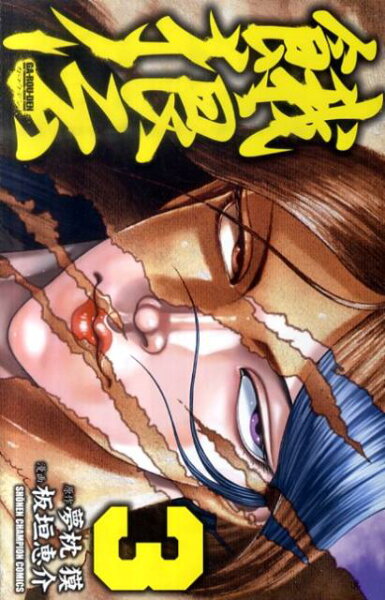
Garouden
Garouden follows Bunshichi Tanba, a former judoka who operates in the underground fighting world — a manga drawn by Jiro Taniguchi with psychological depth and physical authenticity rare in fighting manga.
Action / Sci-Fi
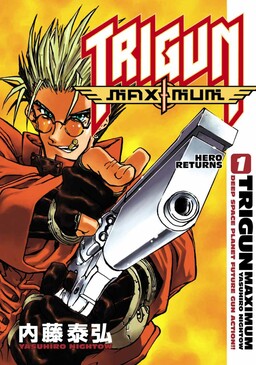
Trigun Maximum
Vash the Stampede walks a desert planet called Gunsmoke. He has a $$60 billion double-dollar bounty on his head, a gun arm hidden under his red coat, and a single rule he has never broken: he does not kill anyone. Yasuhiro Nightow's 14-volume sequel to Trigun is one of the most thematically serious action manga ever serialized.
Action / Adventure
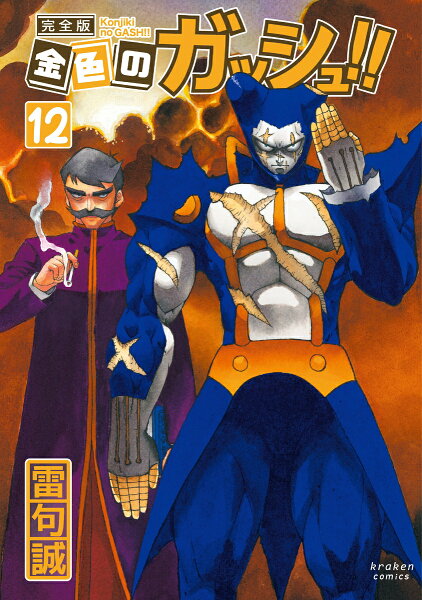
Zatch Bell!
A review of Zatch Bell! — 33 volumes in Weekly Shonen Sunday. Genius middle schooler Kiyo Takamine partners with demon child Zatch Bell in a battle royale of 100 demon/human pairs competing to become King of the Mamodo World; Zatch wants to be a kind king. The manga that made an entire generation cry about a book burning. VIZ Media's English edition is complete.
Action / Supernatural
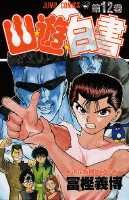
Yu Yu Hakusho
A review of Yu Yu Hakusho — 19 volumes in Weekly Shonen Jump. Yusuke Urameshi dies heroically saving a child, is recruited as a Spirit Detective to investigate supernatural cases, and grows from a delinquent who doesn't care about anything into someone with people worth protecting. The series Togashi made before Hunter x Hunter. VIZ Media's English edition is complete.
Action / Supernatural
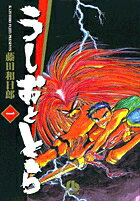
Ushio and Tora
Yu's review of Ushio and Tora — Ushio finds an ancient beast-spirit called Tora pinned under the temple floor; he releases Tora to fight other spirits threatening his town; Tora intends to eat Ushio eventually; they travel Japan fighting supernatural threats.
Action / Historical
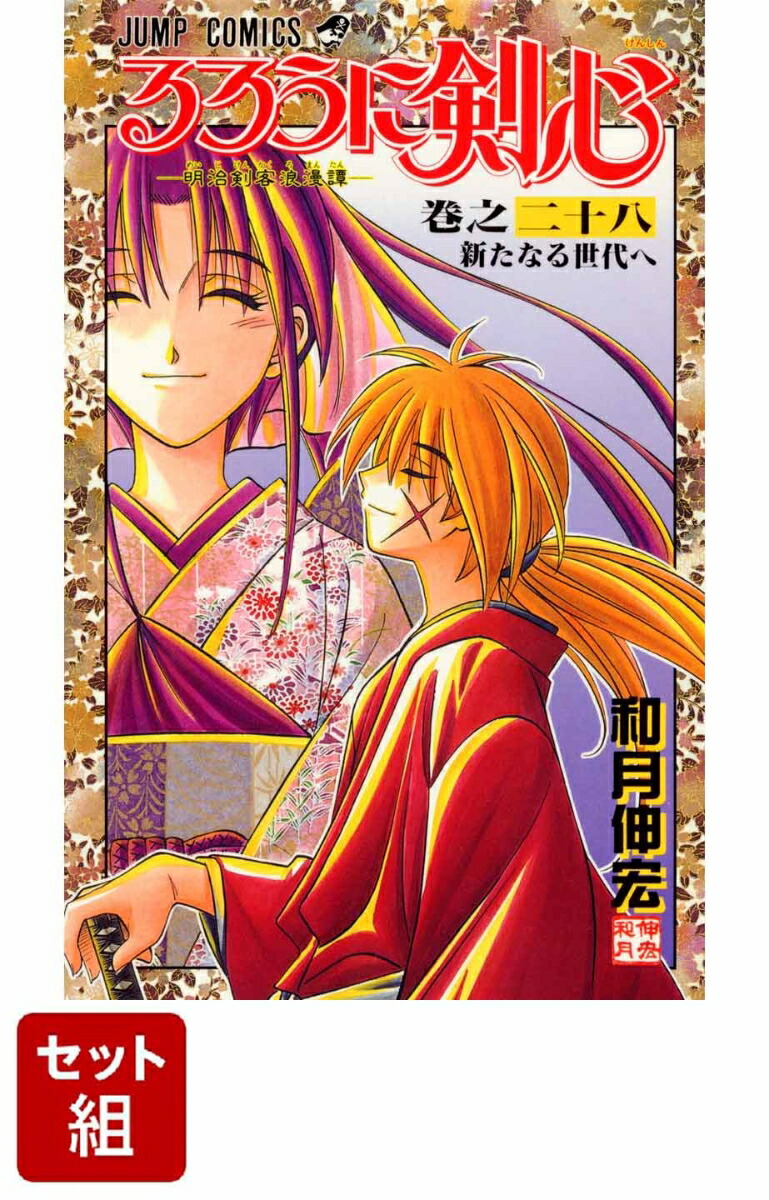
Rurouni Kenshin
A review of Rurouni Kenshin — 28 volumes in Weekly Shonen Jump. Himura Kenshin was Japan's most feared assassin of the Bakumatsu; he now wanders with a reverse-blade sword, trying to protect without killing. The Kyoto Arc is one of the greatest extended arcs in manga, and Shishio is the genre's finest villain. VIZ Media's English edition is complete.
Written by
Yu
Manga Enthusiast from Japan
I grew up in Japan and manga literally saved me during a tough time in elementary school. My English isn't perfect, but my love for manga is real — and I want to share it with you.