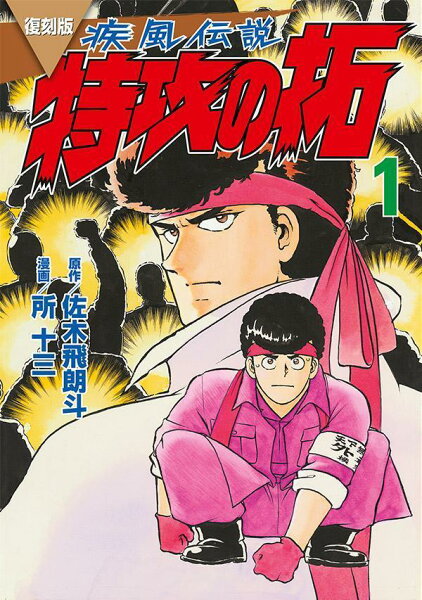
Bukko no Taku Review: The Bosozoku Manga That Rode Bikes Into a Cultural Memory
by Hiroto Saki (writer), Juzo Tokoro (art)
Read the first volume. If it doesn't hook you, put it down. It'll hook you.
Buy Bukko no Taku on Amazon →*Affiliate link — I earn a small commission at no extra cost to you.
Some manga document their subjects. This one was being its subject while writing about it.
Quick Take
- Yusuke Sato and Yoji Iwato's 27-volume Magazine bosozoku manga — Takuya Asama in the late-1980s motorcycle-gang world
- A primary document of bosozoku culture from inside its actual cultural moment
- One of Magazine's defining delinquent-genre works of its era
Who Is This Manga For?
- Bosozoku culture enthusiasts who want the subject treated by people inside it
- Delinquent manga readers who want one of the era's defining works
- 1980s/1990s Japanese pop culture historians who want a primary cultural source
- Anyone curious about the actual texture of motorcycle-gang subculture
Content Warnings & Age Rating
Age Rating: T (Teen) Content Warnings: Bosozoku violence, delinquent themes, period attitudes around gangs and crime, occasional drug references.
Suitable for older teens and adults familiar with the genre.
Yu's Rating
| Category | Score |
|---|---|
| Story Depth | ★★★★☆ |
| Art Style | ★★★★☆ |
| Character Development | ★★★★☆ |
| Accessibility for Non-Japanese Readers | ★★☆☆☆ |
| Reread Value | ★★★★☆ |
Story Overview
Takuya Asama transfers into a school in late-1980s Japan during the bosozoku subculture's peak cultural prominence. His introverted, ordinary persona changes when he is drawn into the local motorcycle gang's orbit. The series follows his progression from outsider to participant to figure of significance within the bosozoku world.
The structure is episodic but with strong continuity — gang conflicts, leadership changes, romantic complications, school dramas all weave through the volumes. The bosozoku culture is depicted with the texture of insider knowledge: the rituals, the hierarchies, the specific aesthetic codes (the bikes, the modifications, the uniforms, the language) that defined the subculture.
What gives the series enduring value is its position as a primary cultural document. Bosozoku culture peaked in the late-1980s and declined through the 1990s and 2000s. Bukko no Taku captured the culture during its actual moment, with the specificity that contemporary writing achieves and that retrospectives cannot. Reading it now is reading the culture's self-representation while it was still live.
Characters
Takuya Asama: The protagonist whose transformation from ordinary to bosozoku is the series' through-line — his arc is plausible because the cultural pull was plausible.
The gang members and rivals: Each rendered with the specificity that subcultural depiction requires — different roles, different motivations, different positions within the bosozoku ecosystem.
Art Style
Iwato's art captures the bosozoku aesthetic with knowledge — bike modifications drawn with attention to actual customs, gang uniforms and their codes depicted accurately, the visual culture of the subculture rendered with respect.
Cultural Context
Bukko no Taku ran from 1991 to 1997 in Weekly Shonen Magazine, during the bosozoku subculture's late peak and early decline. The series belongs to a wave of Magazine delinquent manga (Crows, Worst, others) that shared cultural attention to the period's youth subcultures.
Bosozoku culture has since become historical — formal motorcycle gangs of the era have largely disappeared, replaced by different youth subcultures. The manga's value as cultural memory has grown as the actual subculture has receded.
What I Love About It
I love how completely the manga is inside its subject.
This isn't a manga about bosozoku culture from outside — it's a manga from inside the culture, for readers inside the culture, with the assumption that the culture's references and values are shared between text and reader. The intimacy of that position is what makes the work primary documentation. You don't read it to learn about bosozoku culture; you read it as bosozoku culture writing about itself.
What English-Speaking Fans Say
Limited international audience without translation. Among Japanese-pop-culture historians and delinquent-manga enthusiasts familiar with it, regarded as essential to understanding the bosozoku era.
Memorable Scene ⚠️ Spoiler Warning
A late-series mass ride where the gang's identity, hierarchy, and mood are all expressed simultaneously through their riding — the kind of scene that captures what bosozoku culture was for, beyond the violence and crime that observers focused on.
Similar Manga
| Title | Its Approach | How Bukko no Taku Differs |
|---|---|---|
| Crows | Magazine delinquent classic | Bukko no Taku focuses specifically on bosozoku culture rather than school fights |
| Worst | Crows-universe extension | Same general genre but Bukko no Taku is more documentary in feel |
| Shonan Junai Gumi | Magazine delinquent classic | Bukko no Taku is more inside its subculture than this earlier work |
Reading Order / Where to Start
Volume 1. The cultural immersion depends on the foundation.
Official English Translation Status
Bukko no Taku has no official English translation.
Pros & Cons
Pros
- Primary cultural document of bosozoku subculture
- Depicted from inside the subject with insider's specificity
- Among the era's defining delinquent manga
- Complete at 27 volumes
Cons
- No English translation
- Bosozoku cultural context requires significant familiarity
- 1990s register feels dated to modern readers
- Niche subcultural focus limits broader appeal
Is Bukko no Taku Worth Reading?
For Japanese pop-culture historians, bosozoku enthusiasts, and delinquent manga readers, yes — this is one of the most essential primary documents of the subculture. For readers without prior cultural context, the work may feel dense and specific. As cultural memory in manga form, it's exceptional.
Format Comparison
| Format | Notes |
|---|---|
| Physical | Japanese editions available |
| Digital | Available in Japanese |
| Omnibus | Collected editions available |
Where to Buy
No English release yet. That just means you find it before everyone else does.
*Affiliate link — I earn a small commission at no extra cost to you.
More Manga You Might Like
Action / Drama
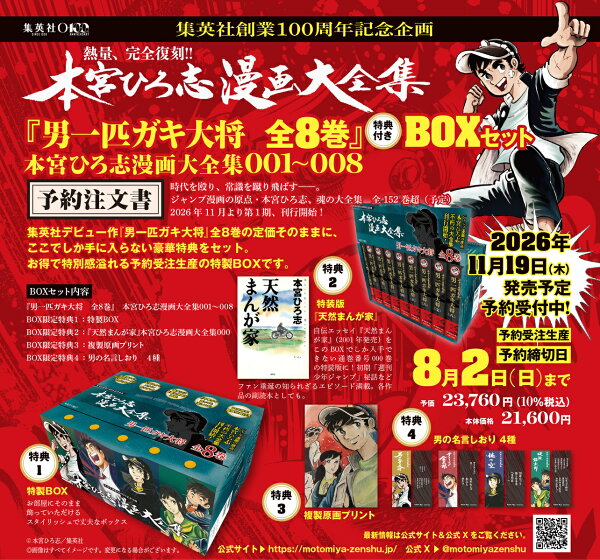
Otoko Ippiki Gaki Daisho
Otoko Ippiki Gaki Daisho follows Tora Otori, a young delinquent whose goal is not just to be the toughest kid in his school but to become the undisputed boss of the entire country — and who pursues this goal with a force of personality that makes followers out of former enemies.
Action
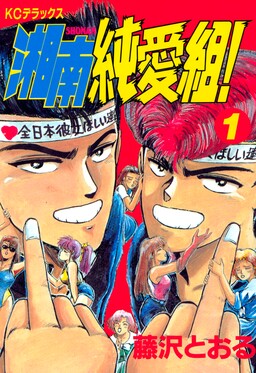
GTO: The Early Years (Shonan Junai Gumi)
Yu's review of GTO: The Early Years — Eikichi Onizuka is a high school delinquent in Shonan with his best friend Ryuji Danma; they're not yet teachers, just two teenagers who want to be with beautiful women and occasionally beat up yakuza; Toru Fujisawa's prequel to GTO that follows Onizuka's wild youth before teaching made him great.
Action
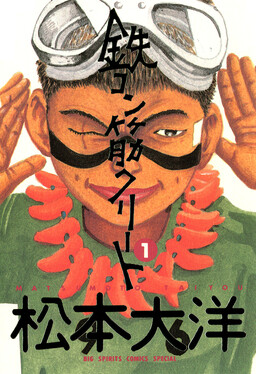
Tekkon Kinkreet
Yu's review of Tekkon Kinkreet — Black and White are two orphaned street kids who rule Treasure Town from the rooftops; when organized crime moves in to develop the city, Black and White must fight to keep what they consider theirs; a visually revolutionary manga about the psychic cost of violence and the specific love between two people who only have each other.
Action / Drama
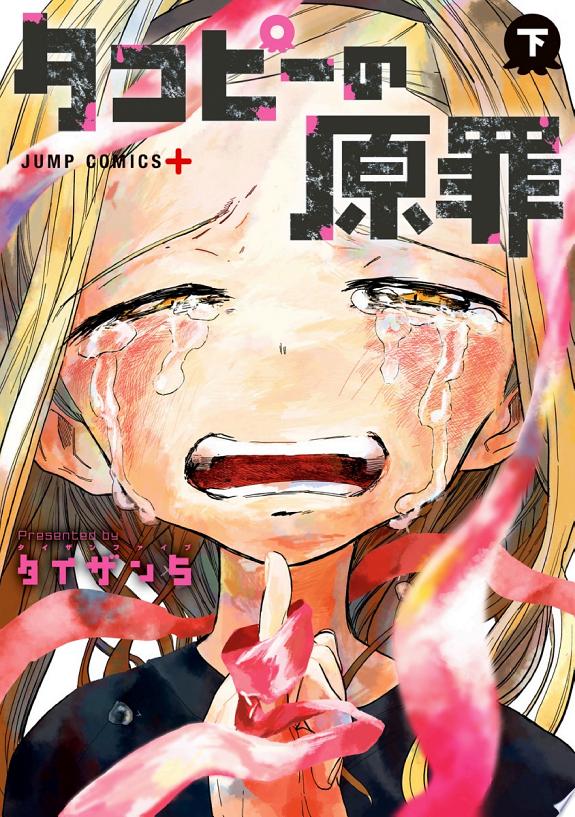
Takopi's Original Sin
Yu's review of Takopi's Original Sin — Takopi is an alien from Happy Planet sent to spread happiness on Earth; he meets Shizuka, a girl who is being bullied and whose home life is deeply troubled; the series uses Takopi's happiness abilities to examine what happiness means when suffering is real.
Action / Drama
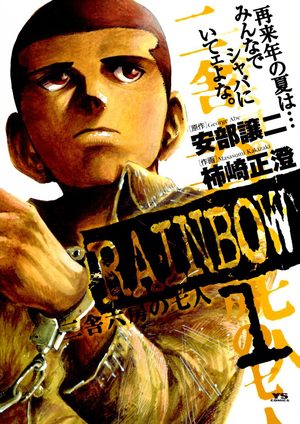
Rainbow: Nisha Rokubō no Shichinin
Yu's review of Rainbow — six juvenile delinquents are sent to a brutal reformatory in 1955 Japan and placed in Cell 6, where they bond with their cellmate Rokurouta Sakuragi, a former boxer who teaches them what it means to survive with dignity.
Action / Drama
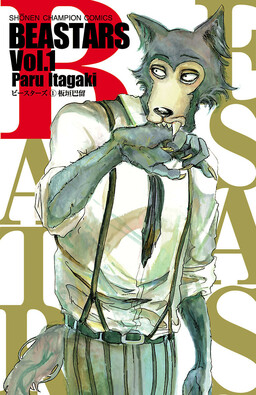
Beastars
Yu's review of Beastars — In a society of anthropomorphic animals where carnivores and herbivores live side by side, Legoshi is a gray wolf who is afraid of what he is. After a classmate is killed and eaten, he is pulled toward Haru, a tiny dwarf rabbit, and has to decide what kind of animal he wants to become.
Written by
Yu
Manga Enthusiast from Japan
I grew up in Japan and manga literally saved me during a tough time in elementary school. My English isn't perfect, but my love for manga is real — and I want to share it with you.