
Blue Exorcist Review: The Devil's Son Who Chose to Fight the Devil
by Kazue Kato
Read the first volume. If it doesn't hook you, put it down. It'll hook you.
Buy Blue Exorcist on Amazon →*Affiliate link — I earn a small commission at no extra cost to you.
Quick Take
- A compelling premise — the son of Satan becomes an exorcist — with genuine emotional weight in its early arcs
- The relationship between Rin and his twin brother Yukio is one of the most interesting sibling dynamics in manga
- An ongoing series with real ambition, currently in its most complex arc
Who Is This Manga For?
Blue Exorcist is for you if:
- You want a supernatural action manga where identity — who you are versus what you were born as — is the central question
- You love school-setting manga with a darker undertone
- You're interested in a long-running ongoing series with a dedicated fanbase
- You want compelling sibling dynamics in your story
Content Warnings & Age Rating
Age Rating: T (Teen) Content Warnings: Action violence with demonic imagery; parental death occurs in the early volumes and drives the protagonist's motivation; themes of rejection based on inherited identity
The violence is standard for action manga. The demonic imagery is atmospheric rather than truly disturbing.
Yu's Rating
| Category | Score |
|---|---|
| Story Depth | ★★★★☆ |
| Art Style | ★★★★☆ |
| Character Development | ★★★★☆ |
| Accessibility for Non-Japanese Readers | ★★★★★ |
| Reread Value | ★★★☆☆ |
Story Overview
Rin Okumura has always been a problem. He's hot-tempered, struggles in school, and gets into fights constantly. His twin brother Yukio is everything he isn't: calm, studious, responsible. They are raised by Father Fujimoto, an exorcist who has kept a secret from them their entire lives.
The secret: Rin and Yukio are the sons of Satan.
When the secret is violently revealed and Father Fujimoto dies protecting Rin, Rin makes a decision: he will become an exorcist and defeat Satan. He enrolls in True Cross Academy's cram school for exorcists, alongside his brother — who has secretly been training as an exorcist for years.
This premise — the devil's son choosing to fight the devil — gives Blue Exorcist a central tension that the series explores across dozens of volumes: what does it mean to be responsible for what you are? Can you choose to be different from what you were made to be? How do the people around you respond when they learn what you are?
Characters
Rin Okumura — Earnest, impulsive, and deeply kind underneath the aggression. His determination to define himself by his choices rather than his heritage is the series' moral center. His blue flames — Satan's power, which he's learning to control — are a constant visual reminder of what he's fighting against within himself.
Yukio Okumura — The more complex twin. While Rin's struggle is external — convincing others to trust him — Yukio's is internal: he was born without demonic power and has worked twice as hard to make up for it, and the resentment and self-doubt this created runs deep. His arc in the later volumes is the series' most interesting current thread.
Shiemi Moriyama — A gentle girl with a talent for spirit summoning. Her growth across the series — from sheltered and uncertain to capable and clear-eyed — is one of the better character arcs in the supporting cast.
Mephisto Pheles — The head of True Cross Academy, who is himself a demon and whose agenda is never quite clear. His role as a manipulative benefactor keeps the series' background intrigue alive.
Art Style
Kato's art is detailed and expressive, with a particular strength in character design and supernatural creature design. Rin's flames — which must convey both danger and identification — are rendered with care across the series.
The school setting is rendered warmly; the supernatural elements have a distinct visual darkness that creates effective contrast. The action sequences are clear and dynamic without being exceptional.
The art has improved steadily across 28 volumes, with the more recent chapters showing a confidence and polish that the early volumes lacked.
Cultural Context
Exorcism in Japanese religion — Exorcism (okiyome or harae) has roots in both Shinto and Buddhist practice, and the concept of spiritual contamination requiring ritual purification is a genuine part of Japanese religious culture. Blue Exorcist draws on this tradition while layering a Christian-influenced demon mythology on top of it — a hybrid that is distinctly Japanese in its approach.
Identity and belonging — Rin's situation — being rejected or feared because of what he is rather than what he does — resonates with Japanese cultural anxieties around group membership and exclusion. The specific fear that one's "true nature" will disqualify one from belonging is a theme that lands differently for Japanese readers.
The twin dynamic — Twins in Japanese folklore and popular culture carry specific associations. The rivalry and interdependence of Rin and Yukio draws on this cultural substrate while developing it into something more psychologically complex.
What I Love About It
There is an early scene where Rin, having just discovered what he is, sits alone with his flames. Everyone has left. The school that was starting to feel like somewhere he belonged is now somewhere he might never belong.
And he decides to try anyway.
I grew up knowing I was different from the people around me in ways I couldn't explain and couldn't change. The decision to try anyway — to show up even when belonging feels impossible — is one I made many times. Seeing it in Rin, explicitly, made me feel less alone in having made it.
What English-Speaking Fans Say
Blue Exorcist has a dedicated Western fanbase that grew significantly through the anime adaptation. The manga is generally preferred — it continues past where the anime ended and develops Yukio's arc in ways the anime could not.
Common praise: the core premise, Rin's characterization, the sibling dynamic between Rin and Yukio.
Common frustration: the publication schedule (monthly) means the story moves slowly. The series is currently in what appears to be its final arc, which readers are cautiously optimistic about.
Memorable Scene ⚠️ Spoiler Warning
Father Fujimoto's sacrifice.
In the opening arc, when Rin's identity is revealed and demons come for him, Father Fujimoto — his adoptive father, who has raised him and Yukio with genuine love — makes a choice that costs him everything.
The scene establishes exactly what kind of story Blue Exorcist is: one where love is real, where sacrifice is real, and where what you were born as is less important than what the people who love you see in you.
Similar Manga
If you liked Blue Exorcist, try:
- Demon Slayer — Similar supernatural action with a protagonist fighting against the demonic
- Noragami — Similar supernatural setting, similar questions about identity
- D.Gray-man — Similar gothic supernatural action aesthetic
- Soul Eater — Similar school setting with supernatural combat
Reading Order / Where to Start
Start from Volume 1. The series is continuous and the early arc is essential for everything that follows.
Official English Translation Status
Status: Ongoing English Volumes: 28+ Translator: VIZ Media Translation Quality: Excellent throughout
Pros & Cons
Pros
- A genuinely compelling premise with thematic depth
- Rin and Yukio's relationship is one of manga's best sibling dynamics
- The supernatural world-building is rich and detailed
- Ongoing with a passionate community
Cons
- Monthly publication makes the story feel slow
- Some mid-series arcs lose momentum
- The series has been ongoing for a long time without reaching its resolution
Format Comparison
| Format | Volumes | Price per vol. (approx.) | Best for |
|---|---|---|---|
| Paperback (individual) | 28+ vols | ~$9–11 | Collecting |
| Kindle | 28+ vols | ~$6–8 | Ongoing reading |
Where to Buy
Read the first volume. If it doesn't hook you, put it down. It'll hook you.
This post contains affiliate links. If you purchase through these links, I may earn a small commission at no extra cost to you. As an Amazon Associate, I earn from qualifying purchases.
*Affiliate link — I earn a small commission at no extra cost to you.
More Manga You Might Like
Action / Supernatural
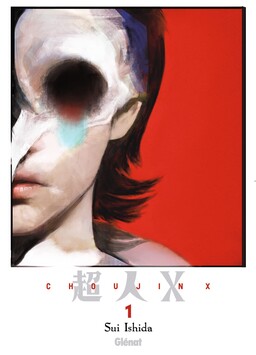
Choujin X
Yu's review of Choujin X — Tokyo Ghoul creator Sui Ishida's new series: in a world where some humans transform into 'Choujin' — superhuman beings with terrifying abilities — Tokio injects himself with a Choujin syringe to save his best friend, and both of them enter a new world.
Action / Supernatural
Dandadan
Yu's review of Dandadan — Momo believes in ghosts, Ken believes in aliens, and they make a deal to test each other's beliefs; both get immediately proven wrong and right simultaneously, and a bizarre supernatural romance begins.
Action / Supernatural
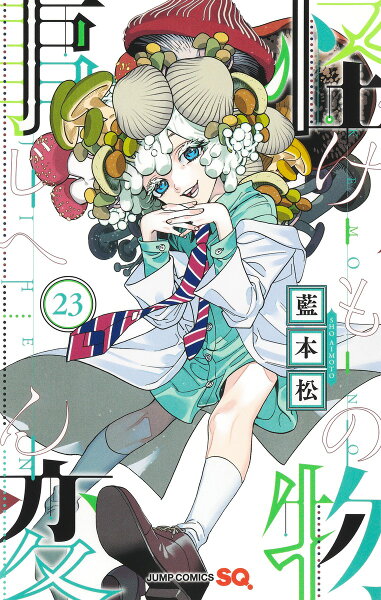
Kemono Jihen
Yu's review of Kemono Jihen — Kabane is a half-Kemono (supernatural monster-human) boy who was mistreated by his relatives; he is discovered by Kohachi Inugami, who runs a Tokyo detective agency investigating supernatural Kemono cases; Kabane joins and learns what he is.
Action / Supernatural
Yu Yu Hakusho
A review of Yu Yu Hakusho — 19 volumes in Weekly Shonen Jump. Yusuke Urameshi dies heroically saving a child, is recruited as a Spirit Detective to investigate supernatural cases, and grows from a delinquent who doesn't care about anything into someone with people worth protecting. The series Togashi made before Hunter x Hunter. VIZ Media's English edition is complete.
Action / Supernatural
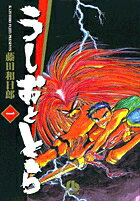
Ushio and Tora
Yu's review of Ushio and Tora — Ushio finds an ancient beast-spirit called Tora pinned under the temple floor; he releases Tora to fight other spirits threatening his town; Tora intends to eat Ushio eventually; they travel Japan fighting supernatural threats.
Action / Comedy
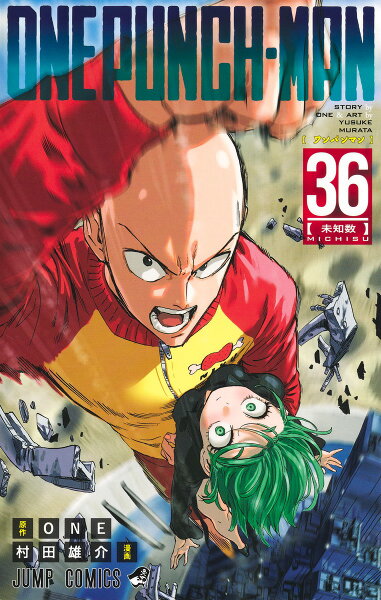
One Punch Man
Yu's review of One Punch Man — a manga about the most powerful hero in the world who can't feel excited about anything anymore because he always wins in one punch. Visually the most spectacular action manga alive. Philosophically surprisingly deep.
Written by
Yu
Manga Enthusiast from Japan
I grew up in Japan and manga literally saved me during a tough time in elementary school. My English isn't perfect, but my love for manga is real — and I want to share it with you.
Disclosure: This post contains affiliate links. As an Amazon Associate, I earn from qualifying purchases at no extra cost to you.