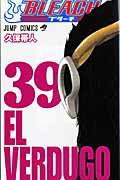
Bleach Review: The Coolest Manga Ever Drawn
by Tite Kubo
Read the first volume. If it doesn't hook you, put it down. It'll hook you.
Buy Bleach on Amazon →*Affiliate link — I earn a small commission at no extra cost to you.
Quick Take
- 74 volumes of the most visually iconic manga ever made — Kubo's fashion sense and character design are genuinely unmatched
- The Soul Society arc (volumes 9–21) is one of the greatest manga arcs ever written
- Story gets uneven in later volumes, but the Thousand-Year Blood War finale is a worthy ending
Who Is This Manga For?
Bleach is for you if:
- You want cool above all else — nobody draws cool like Tite Kubo
- You love a sprawling supernatural world with hundreds of distinctive characters
- You don't need the tightest plotting — you're here for the fights, the aesthetics, and the moments
- You're a fan of the anime and want to see the source material
Content Warnings & Age Rating
Age Rating: T (Teen) Content Warnings: Violence (sword fighting, some blood), themes of death and loss, mild language
The violence is intense but not graphic. Emotional themes include grief, identity, and betrayal. Appropriate for teens and above.
Yu's Rating
| Category | Score |
|---|---|
| Story Depth | ★★★☆☆ |
| Art Style | ★★★★★ |
| Character Development | ★★★★☆ |
| Accessibility for Non-Japanese Readers | ★★★★☆ |
| Reread Value | ★★★★☆ |
Story Overview
Ichigo Kurosaki is a fifteen-year-old high school student with orange hair and an unusual ability: he can see ghosts. He doesn't think much of it — the dead are everywhere if you can see them, and mostly they just want help moving on.
Then Rukia Kuchiki crashes through his bedroom wall.
She's a Soul Reaper — a death god charged with guiding the dead to the afterlife and destroying Hollows, corrupted spirits that feed on souls. When she's injured protecting Ichigo's family, she transfers her powers to him as a temporary measure. Temporary doesn't last. Now Ichigo is walking around as a full Soul Reaper, discovering that the world is much bigger and much stranger than he knew.
What starts as monster-of-the-week Soul Reaper work becomes something far more complex when Rukia is arrested by Soul Society — the realm of the Soul Reapers — and sentenced to execution for the crime of giving her powers to a human. Ichigo, with no idea how to navigate the bureaucratic nightmare of a vast supernatural military organization, decides he's going in to get her back.
The story that follows has conspiracies, betrayals, gods, and one of the greatest twists in shonen manga history.
Characters
Ichigo Kurosaki — Orange-haired, perpetually scowling, loyal to the point of recklessness. He's not the deepest protagonist in manga, but his straightforward refusal to abandon anyone he cares about is genuinely appealing.
Rukia Kuchiki — Ichigo's foil and the heart of the early series. Aristocratic, sarcastic, hiding how much she cares. Her character arc in the Soul Society arc is superb.
Uryu Ishida — The Quincy — a different kind of spirit hunter who initially opposes Ichigo. His rivalry-turned-friendship with Ichigo is one of the series' best relationships.
Byakuya Kuchiki — Rukia's older brother and one of the most popular characters in the series. Glacially composed, devastatingly powerful, and carrying more emotion underneath than he ever shows. His fight with Ichigo is iconic.
Kenpachi Zaraki — The embodiment of Bleach's "pure fighting spirit" philosophy. He fights because he loves fighting. There's something almost refreshing about a character whose entire identity is that direct.
Sosuke Aizen — The primary villain of the first half. I won't describe his role in the story, but he's one of the most satisfying villain reveals in manga.
Art Style
This is where Bleach is simply peerless.
Tite Kubo's character design is extraordinary. Every single Soul Reaper captain has a unique, instantly recognizable look — not just their powers, but their clothing, their posture, the way they occupy space on a page. The fashion alone has inspired more fan art than almost any other manga.
The action sequences are composed like films. Kubo uses negative space masterfully — white pages with minimal linework that make the action feel faster and more dangerous. His sense of dramatic timing — when to end a chapter, where to put the splash page — is as good as anyone in the industry.
The art also improves dramatically over the series. The Thousand-Year Blood War arc, which concluded the series, contains some of the most visually stunning pages in all of manga.
Cultural Context
Shinigami (Death Gods) are real figures in Japanese spiritual tradition, associated with guiding the dead rather than killing. Kubo takes this concept and turns it into a vast military bureaucracy with strict hierarchy, rankings, and internal politics — a very Japanese institutional structure applied to the supernatural.
The concept of Bankai — the ultimate form of a Soul Reaper's weapon — is a distinctly Bleach invention, but it draws on Japanese martial arts traditions around mastery and transformation. The moment a character reveals their Bankai is always a narrative event, not just a power reveal.
Spiritual presence (reiatsu) functions in Bleach much like ki in martial arts traditions — invisible force that represents power, will, and spiritual strength. Strong characters can literally crush weaker ones with their presence alone.
What I Love About It
There is a scene in the Soul Society arc that I have probably reread twenty times.
Byakuya Kuchiki — cold, perfect, unshakeable — finally faces what his silence has cost his sister. And in a single moment, everything he is cracks, just slightly, just enough.
It's not a long scene. Kubo doesn't linger. But the weight of what that moment means — given everything we know about who Byakuya is and what he values — hits like a physical thing.
That's what Bleach is best at: taking characters who seem like they're made of ice and showing you, in one perfectly timed moment, that they are not.
What English-Speaking Fans Say
Bleach has a complicated reputation in the West, but the conversation has shifted significantly since the Thousand-Year Blood War arc animated to near-universal praise.
Most fans agree: the Soul Society arc is near-perfect. The Hueco Mundo arc is great. The Fullbring arc (volumes 49–54) is generally considered the low point. The final arc (TYBW) is a spectacular return to form.
The overall consensus on r/bleach and manga forums: read it for the highs, which are extraordinarily high. Accept that it's not Fullmetal Alchemist in terms of plotting, and enjoy it for what it actually is — the most stylish thing in manga.
Memorable Scene ⚠️ Spoiler Warning
Ichigo's first Bankai.
After a desperate three-day training sequence with the Shoten characters, Ichigo manifests his Bankai — not the enormous, overwhelming power most Soul Reapers display, but something stripped down and purely fast. Small. Dark. Absolute.
The visual contrast between what was expected and what appears is perfect. It tells you everything about who Ichigo is in a single image.
Kubo knew exactly what he was doing.
Similar Manga
If you liked Bleach, try:
- Naruto — The same Jump generation, similar themes of identity and power, slightly tighter plotting
- Jujutsu Kaisen — Clearly influenced by Bleach, darker and more modern
- Blue Exorcist — Similar supernatural battles, exorcists instead of Soul Reapers
- D.Gray-man — Same era, similarly stylish, even darker tone
Reading Order / Where to Start
Start from Volume 1. The series has a clear arc structure, and the early volumes establish character relationships that matter deeply later.
The essential arcs:
- Vol. 1–8: Agent of the Shinigami arc (setup)
- Vol. 9–21: Soul Society arc (the peak — essential reading)
- Vol. 22–48: Hueco Mundo arc (very good)
- Vol. 55–74: Thousand-Year Blood War (excellent finale)
If you stall around volumes 49–54 (the Fullbring arc), you're not alone. Push through — the final arc is worth it.
Official English Translation Status
Status: Complete English Volumes: 74 (all volumes available) Translator: VIZ Media Translation Quality: Excellent throughout
The full 74-volume series is available in English in both digital and physical formats, including 3-in-1 omnibus editions.
Pros & Cons
Pros
- The best visual aesthetic in manga — Kubo's art and design are unmatched
- Soul Society arc is a masterpiece of shonen storytelling
- Enormous, distinctive cast with hundreds of memorable characters
- Great ending — the TYBW arc redeems any middle-series frustrations
Cons
- 74 volumes is a serious commitment
- The Fullbring arc (vol. 49–54) is widely considered a low point
- Plotting is less tight than FMA or Naruto — some readers find it frustrating
- The middle arcs have extensive flashback structures that slow momentum
Format Comparison
| Format | Volumes | Price per vol. (approx.) | Best for |
|---|---|---|---|
| Paperback (individual) | 74 vols | ~$8–10 | Collectors |
| Kindle | 74 vols | ~$6–8 | Most practical for 74 volumes |
| 3-in-1 Omnibus | ~25 vols | ~$13–15 | Best physical value |
Recommendation: Given the length, Kindle is the most practical option. If you want physical, the 3-in-1 omnibus editions reduce 74 volumes to a much more manageable shelf footprint.
Where to Buy
Read the first volume. If it doesn't hook you, put it down. It'll hook you.
This post contains affiliate links. If you purchase through these links, I may earn a small commission at no extra cost to you. As an Amazon Associate, I earn from qualifying purchases.
*Affiliate link — I earn a small commission at no extra cost to you.
More Manga You Might Like
Action / Supernatural
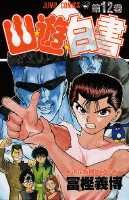
Yu Yu Hakusho
A review of Yu Yu Hakusho — 19 volumes in Weekly Shonen Jump. Yusuke Urameshi dies heroically saving a child, is recruited as a Spirit Detective to investigate supernatural cases, and grows from a delinquent who doesn't care about anything into someone with people worth protecting. The series Togashi made before Hunter x Hunter. VIZ Media's English edition is complete.
Action / Supernatural
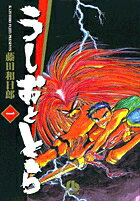
Ushio and Tora
Yu's review of Ushio and Tora — Ushio finds an ancient beast-spirit called Tora pinned under the temple floor; he releases Tora to fight other spirits threatening his town; Tora intends to eat Ushio eventually; they travel Japan fighting supernatural threats.
Action / Adventure
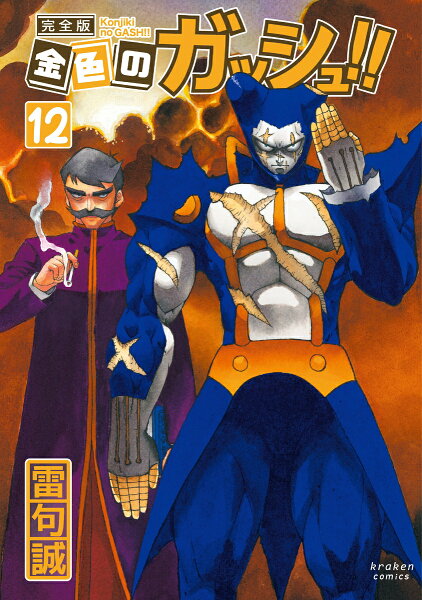
Zatch Bell!
A review of Zatch Bell! — 33 volumes in Weekly Shonen Sunday. Genius middle schooler Kiyo Takamine partners with demon child Zatch Bell in a battle royale of 100 demon/human pairs competing to become King of the Mamodo World; Zatch wants to be a kind king. The manga that made an entire generation cry about a book burning. VIZ Media's English edition is complete.
Action / Historical
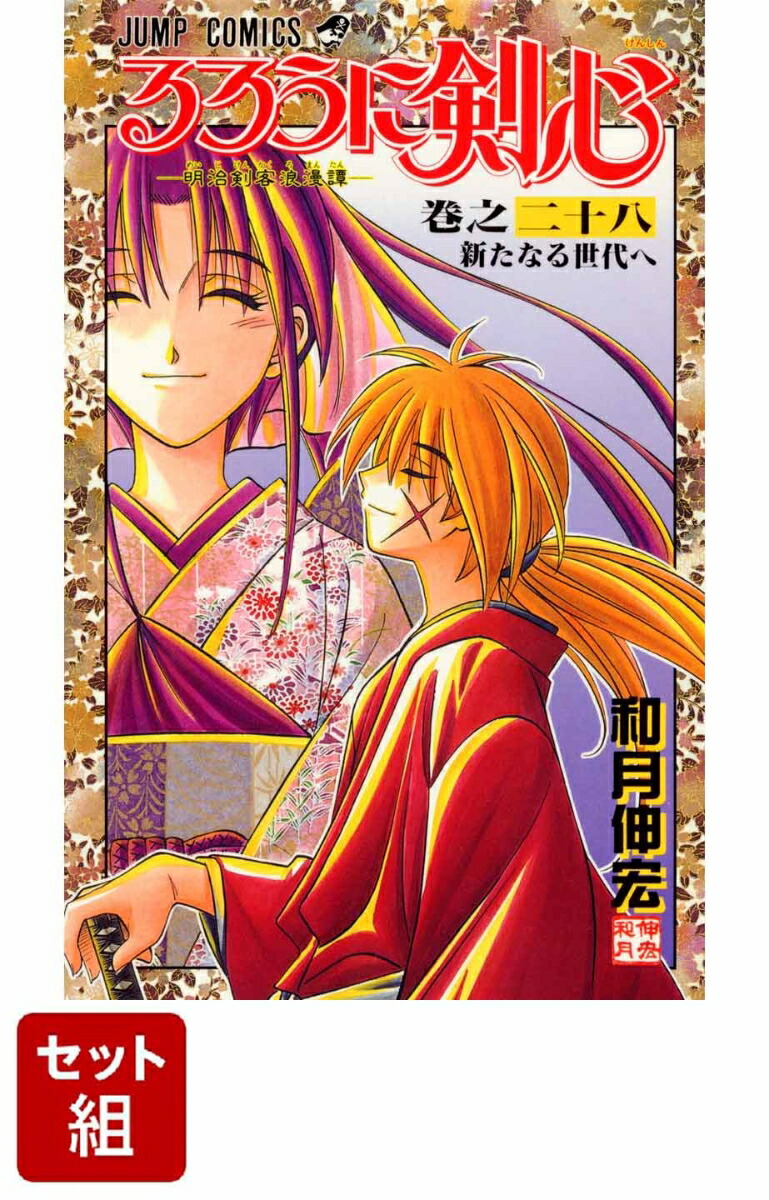
Rurouni Kenshin
A review of Rurouni Kenshin — 28 volumes in Weekly Shonen Jump. Himura Kenshin was Japan's most feared assassin of the Bakumatsu; he now wanders with a reverse-blade sword, trying to protect without killing. The Kyoto Arc is one of the greatest extended arcs in manga, and Shishio is the genre's finest villain. VIZ Media's English edition is complete.
Action / Adventure
Naruto
A review of Naruto — 72 volumes in Weekly Shonen Jump. Uzumaki Naruto is a boy with the Nine-Tailed Fox sealed inside him, rejected by his village, dreaming of becoming Hokage not for power but to be seen. The most emotionally resonant outcast-to-legend arc in manga. VIZ Media's English edition is complete.
Action / Comedy
Gintama
A review of Gintama — 77 volumes in Weekly Shonen Jump. Gintoki Sakata runs an odd-jobs business in an alternate Edo Japan where aliens conquered the country and samurai are forbidden to carry swords. The funniest manga ever made, hiding some of the most devastating serious arcs in the genre. VIZ Media's English edition is complete.
Written by
Yu
Manga Enthusiast from Japan
I grew up in Japan and manga literally saved me during a tough time in elementary school. My English isn't perfect, but my love for manga is real — and I want to share it with you.
Disclosure: This post contains affiliate links. As an Amazon Associate, I earn from qualifying purchases at no extra cost to you.