Blank Slate Review: A Killer With No Memory, and the Man Sent to Catch Him
by Aya Kanno
Read the first volume. If it doesn't hook you, put it down. It'll hook you.
Buy Blank Slate on Amazon →*Affiliate link — I earn a small commission at no extra cost to you.
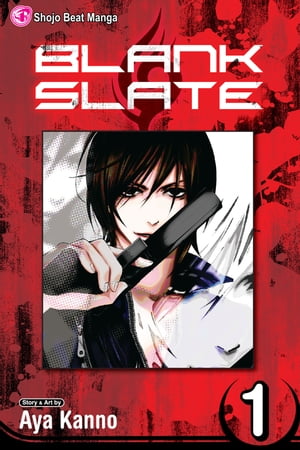
I picked up Blank Slate because the cover lied to me, and I am glad it did. I saw a beautiful man, a Hana to Yume Comics logo, and I thought, okay, another pretty shojo. Then in the first chapter that beautiful man walks into a room full of people and kills almost everyone in it. I sat there on my futon, a little stunned, and I thought: oh. This is not what I expected at all. By the end of the second volume I had read both books twice in one night.
Quick Take
- A two-volume shojo action-thriller from Aya Kanno, the artist who later drew Otomen and Requiem of the Rose King, about an amnesiac criminal and the bounty hunter who can't stop following him
- Dark, fast, and more interested in the question "who am I without my memories?" than in romance — it reads like a noir crime story wearing shojo clothes
- Rated T (Teen): there is gun violence, killing, and manipulation, but nothing graphically sexual or gory
Story Overview
The story is set in the nation of Galay, two decades after it conquered and occupied the neighboring country of Amata. Into this occupied, unstable world walks Zen — a man who woke up one day with no memory at all, and an overwhelming urge to destroy everything around him. He is a world-class criminal, and he doesn't know if he was always like this or if the blankness made him this way.
The opening sets the tone. A bounty hunter named Russo tracks Zen to an underground meeting room, planning to capture or control him. Instead Zen kills nearly everyone there, and Russo — instead of finishing his job — ends up drawn in, becoming Zen's reluctant partner. The whole opening is framed as Russo telling the story to a fortune teller, which gives the early chapters a confessional, looking-back weight.
From there Zen's path tangles with two people who change the trajectory. After a bank robbery he hijacks a car carrying Rian, the blind daughter of a Galay general, and her bodyguard Maka. And he crosses paths with Hakka, a pacifist underground doctor who patches him up and then quietly blackmails him into helping others. The turning point is that Zen, who claims to want nothing but destruction, keeps getting pulled toward other people. The ending takes him to an abandoned military base, where he finally finds the truth about who he was before the blankness — a revelation that recontextualizes everything, and that some readers found abrupt because Kanno only had two volumes to land it.
Characters
Zen — The amnesiac at the center. He says he runs purely on the urge to destroy, and he hates that even that urge controls him. But the cracks show: he treats Rian more gently than he needs to, he keeps Russo around when he could just leave. He's compelling because he genuinely does not know whether he is a monster or a man wearing a monster's reputation.
Russo — The bounty hunter who came to catch Zen and instead became his partner. His relationship with Zen is the spine of the first volume, and the framing device — Russo recounting it all to a fortune teller — tells you early that his story does not end well.
Rian — The blind daughter of a Galay general, kidnapped by Zen after his bank robbery. The thing I did not expect: she is happy he took her. For the first time in her sheltered, protected life she feels free, and that twist on the kidnapping trope is one of the most interesting things in the book.
Hakka — A gentle underground doctor who, as one reviewer put it, couldn't kill a fly. He treats Zen's wounds, then turns around and blackmails him with the threat of a fake virus to force his cooperation. He's the moral counterweight to Zen, and proof that "good" people in this world manipulate too.
What I Love About It
The scene I keep coming back to is Rian's kidnapping — not the violence of it, but her reaction. Zen takes her hostage after robbing a bank, the kind of moment that in any other story is pure terror for the victim. And Rian, who is blind and who has spent her whole life wrapped in cotton wool as a general's daughter, is grateful. Being dragged into Zen's chaos is the first time she has ever felt unguarded, unprotected, alive. Kanno draws her softening toward this dangerous man, and it does not read as Stockholm syndrome played for romance. It reads as someone tasting freedom for the first time and not caring that it came wrapped in danger.
What hit me is what it says about Zen, sideways. He has every reason to be cruel to her, and he isn't. He's nicer to Rian than the killer he claims to be would ever bother to be. That small inconsistency is the whole book in miniature: a man insisting he is empty, while his actions quietly argue otherwise. I grew up using manga as my escape when my real life felt like a cage, so a blind girl who finds her cage broken open by the scariest person she's ever met — that landed somewhere very specific in me. Freedom doesn't always arrive gently. Sometimes it arrives as a man with a gun, and you're just relieved the walls are gone.
Memorable Scene ⚠️ Spoiler Warning
The one that sticks is the very opening, but you only feel its full weight once you understand the framing. Russo, the bounty hunter, narrates the whole encounter to a fortune teller — how he found Zen at the underground meeting room, how Zen killed nearly everyone in it, how Russo ended up at his side instead of capturing him. The quiet horror is that Russo is telling this story after the fact, as a man recounting how he met the person who would end up costing him his life. You read the early chapters one way, then realize you've been listening to a dead man's confession the whole time. Kanno uses that structure to make the bloodshed feel less like action and more like fate closing in, and it's the smartest thing in the first volume.
Pros & Cons
Pros
- Aya Kanno's artwork is genuinely beautiful — Jason Thompson singled out the "sexy guys and more than adequate action scenes"
- The amnesia premise is treated as a real identity question, not a cheap twist
- Rian's inverted kidnapping arc and Russo's framing device are clever, unexpected touches
- A complete story in just two volumes — no endless waiting
Cons
- It's rushed: the series was cut short, and reviewers note the ending tries to do in eight-or-so chapters what wanted forty
- The vol. 2 revelation is divisive — one critic felt the twist "negates the point" of most of what came before
- Early chapters can feel choppy, with panel transitions that confused some readers (the work began as a one-shot)
- It's dark, plot-driven, and nearly romance-free shojo — if you came for a love story, this won't work for everyone.
Is Blank Slate Worth Reading?
Yes, with eyes open. It's a flawed, rushed, beautiful little book — two volumes of dark crime-thriller shojo with a killer you can't quite hate and a structure smarter than its page count. If you want a polished epic, this isn't it. If you want a short, strange, atmospheric story about identity that you can finish in an evening, it absolutely earns its place.
Where to Buy
Read the first volume. If it doesn't hook you, put it down. It'll hook you.
This post contains affiliate links. If you purchase through these links, I may earn a small commission at no extra cost to you. As an Amazon Associate, I earn from qualifying purchases.
*Affiliate link — I earn a small commission at no extra cost to you.
More Manga You Might Like
Action / Supernatural
Hands Off!
A review of Hands Off! — Kasane Ichikawa's eight-volume supernatural shojo about a boy who sees visions and memories when he touches people, and the cousin who tries to protect him from the world — and vice versa.
Action / Crime
The World Is Mine
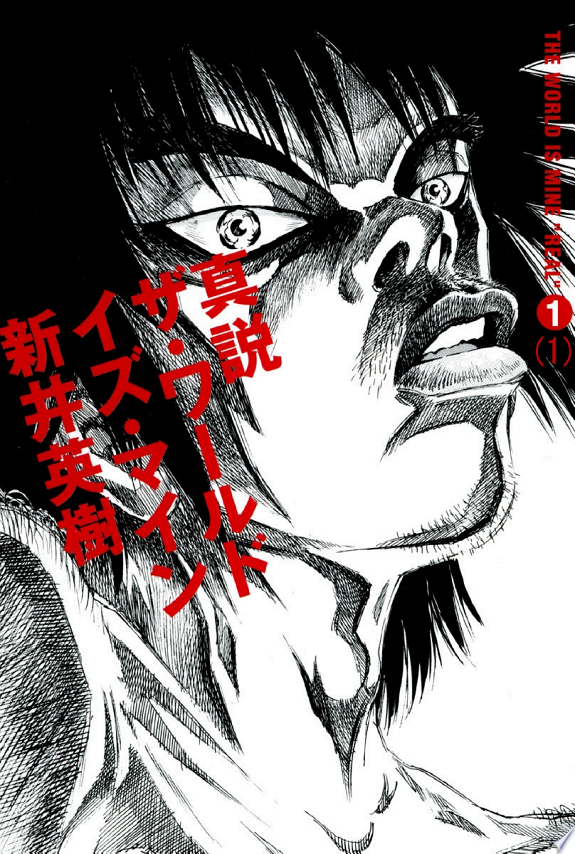
The World Is Mine follows two criminal partners — the unpredictable Mon and the calculating Toshi — on a violent crime spree across Japan, alongside a separate thread about a mysterious monster emerging in the wilderness.
Action / Drama
Gin to Kin
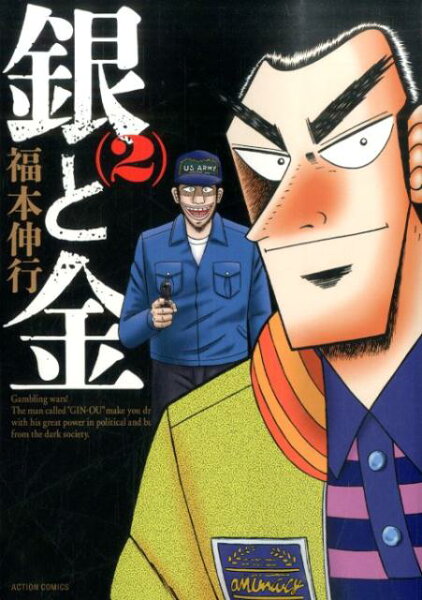
Gin to Kin is Nobuyuki Fukumoto's gambling manga about Morita Tetsuo, a young man drawn into the inner world of high-stakes underground gambling — a slower, denser predecessor to Kaiji where every game is a psychological war.
Action
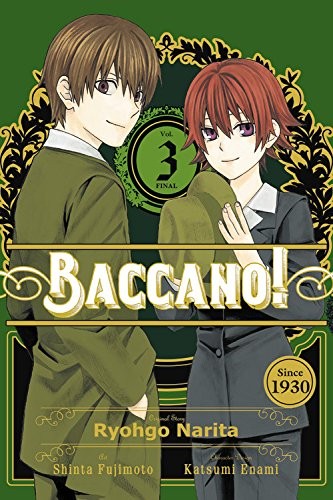
Baccano!
A review of the Baccano! manga by Shinta Fujimoto — the 3-volume Young Gangan adaptation of Ryohgo Narita's Grand Punk Railroad arc, where immortals, gangsters, and a bloody urban legend collide aboard the 1931 Flying Pussyfoot express.
Action
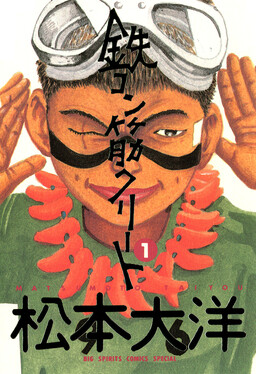
Tekkon Kinkreet
Yu's review of Tekkon Kinkreet — Black and White are two orphaned street kids who rule Treasure Town from the rooftops; when organized crime moves in to develop the city, Black and White must fight to keep what they consider theirs; a visually revolutionary manga about the psychic cost of violence and the specific love between two people who only have each other.
Action / Romance
Sailor Moon
Yu's review of Sailor Moon — a clumsy, crybaby middle schooler is revealed to be the legendary Sailor Moon, guardian warrior of love and justice, and eventually the reincarnated princess of the Moon Kingdom.
Written by
Yu
Manga Enthusiast from Japan
I grew up in Japan and manga literally saved me during a tough time in elementary school. My English isn't perfect, but my love for manga is real — and I want to share it with you.
Disclosure: This post contains affiliate links. As an Amazon Associate, I earn from qualifying purchases at no extra cost to you.