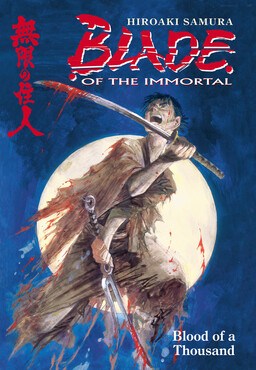
Blade of the Immortal Review: A Swordsman Who Can't Die, Tied to a Girl Who Wants Revenge
by Hiroaki Samura
Read the first volume. If it doesn't hook you, put it down. It'll hook you.
Buy Blade of the Immortal on Amazon →*Affiliate link — I earn a small commission at no extra cost to you.
I bought the first volume of Blade of the Immortal in a used bookstore in Jimbocho, mostly because of the cover. I didn't know the story yet. I just opened a random page and saw a drawing of a sword fight that looked nothing like the manga I grew up reading — heavy, scratchy, almost like charcoal, like someone had drawn it with their whole arm instead of a pen. I stood there flipping pages for too long. Then I bought it. That was a long time ago, and over the years I read all the way to the end. It is one of the few manga that I think actually grew up alongside me.
I want to be honest before anything else: this is a hard manga. It is violent in a way that is not fun, and it does not look away from what its violence does to people. But it is also one of the most beautiful and most serious things I have ever read in this medium.
Quick Take
- Hiroaki Samura's artwork is some of the best ever put in a manga — heavy, textured, drawn more like fine-art pencil work than typical ink-line manga
- The story is a revenge tale that slowly turns into a long meditation on what revenge actually costs the people who chase it
- 31 volumes complete in English (Dark Horse); rated M (Mature) — graphic violence, sexual violence, torture, and human experimentation throughout, genuinely adult material
Story Overview
Manji is a ronin in mid-Tokugawa Japan who has killed a hundred people, including his own sister's husband. As a curse and a punishment, an 800-year-old nun named Yaobikuni infects him with "sacred bloodworms" (kessen-chu), parasites that heal almost any wound and even reattach severed limbs. He cannot die. To be released from this immortality, he vows to kill a thousand evil men.
The turning point comes when Yaobikuni sends a girl to him. Rin Asano watched the Itto-ryu, a renegade sword school, murder her father and take her mother. The school is led by Anotsu Kagehisa, a man who believes Japan's rigid, ritualized sword traditions have made swordsmanship soft and false, and who intends to tear the whole system down by force. Rin asks Manji to be her bodyguard while she hunts the men responsible. He agrees, half because of the worms, half because of her.
From there the story spans years and dozens of characters. It runs through the shadowy Mugai-ryu, a death-row squad secretly working for the shogunate, and into a long, brutal stretch where Manji is captured and experimented on by the government to unlock the secret of his immortality. It ends with a final confrontation between Manji and Anotsu — and then, decades later, with Rin getting the vengeance she set out for, before a quiet epilogue ninety years on.
Characters
Manji — His immortality is written as a burden, not a power. Every wound still hurts, every regeneration is shown as ugly and slow, and he has to keep killing long past the point a normal person could bear it. His bond with Rin is the heart of the series: protective, sometimes possessive, not quite romantic. He carries her when she can't walk, and what he most wants is for her to come out of all this without becoming as hollowed-out as everyone else around her.
Rin Asano — She begins as a sixteen-year-old child trying to perform an adult's revenge, idealistic and out of her depth. Across the series she doesn't simply harden — she becomes more specific. She learns exactly what she is asking for, exactly what killing means, and the manga watches her grow into that understanding slowly and without flinching.
Anotsu Kagehisa — One of the great antagonists in manga, because his reasoning genuinely holds together. He is the man who destroyed Rin's family, and he is also a coherent reformer with real conviction. By the end, the manga has interrogated the line between him and Manji until it nearly dissolves.
Magatsu Taito — An Itto-ryu swordsman of peasant origin who wields a triple-bladed weapon. He starts as an enemy, but he and Rin develop an uneasy, surprisingly tender bond, and he eventually abandons the sword entirely to live as an anonymous farmer — one of the few characters who finds a way out.
What I Love About It
What I love most is how Samura draws the Mugai-ryu member Shira, and what he represents. Most manga villains are stylish. Shira is not stylish — he is the manga's argument about what violence actually turns a person into. He is a sadist, and after Manji takes one of his hands in an early fight, his hair goes white from trauma and he starts sharpening his own exposed arm-bones into weapons. By the time you see him fighting with bone blades jutting out of both forearms, he has stopped being a person in any normal sense. Samura draws him with this awful, fascinated detail, and it disturbed me in a way that few manga ever have.
What hit me is that Shira is the mirror of everyone else. Manji also cannot stop. Manji also keeps cutting and being cut. The difference between the hero and this monster is treated as fragile and conditional, not absolute. When I read Shira's final stretch — bloodworms failing in the cold, dying, still warning someone else not to chase vengeance — I realized the manga had quietly been making the same point about Rin and Manji the whole time. That's when I understood Blade of the Immortal isn't a story about cool swordsmen. It's a story about what happens to people who decide that killing is the answer, and how hard it is to ever stop once you start.
Memorable Scene ⚠️ Spoiler Warning
The arc I can't forget is the prison arc. The shogunate official Habaki Kagimura has Manji captured so the government can study his immortality, and a disgraced physician named Ayame Burando is brought in to do the research. What follows is Manji being dissected — dismembered over and over, kept alive by the worms specifically so the experiments can continue. Samura draws it with the same patient, anatomical precision he uses for everything, which makes it almost unbearable. The doctor's experiments yield results, and they slowly drive him insane.
It's the hardest part of the whole series to read, and it's also the most powerful, because it strips Manji's "power" down to its real meaning: he is a man who cannot be allowed to die, even when death would be mercy. The ending pays this off ninety years later, in the Meiji era. Manji is still alive, still barely aged, having spent a lifetime trying to forget. He meets a young girl who turns out to be Rin's descendant, and she hands him a small knife — the same one Rin once carried, its handle carved with Manji's symbol wreathed in Rin's flame. After everything, the one thing immortality let him keep was the memory of her. I closed the last volume and just sat with it for a while.
Content Warnings & Age Rating
Age Rating: M (Mature) Content Warnings: Extreme graphic violence, dismemberment, decapitation, sexual violence, prolonged torture and human experimentation, mass death.
The M rating honestly undersells it. This is adult material — the violence is depicted with photographic specificity and the series never softens what it shows. Read it as the serious adult work it is.
Art Style
Samura's draftsmanship is unlike anyone else's in manga. He works in heavy pencil-and-charcoal textures rather than clean ink lines, so bodies have real mass, steel has real weight, and fabric and skin have texture you can almost feel. The fights are choreographed with a spatial clarity that most action manga can't match. And he can shift, in the same volume, from horrifying carnage to genuine quiet and stillness without losing control of the tone.
Pros & Cons
Pros
- Some of the most accomplished artwork in all of manga
- 31 English volumes of consistent quality with real thematic depth
- Characters — heroes and villains alike — who resist easy moral sorting
- Complete, with an ending that earns its nineteen-year run
Cons
- The graphic violence is genuinely extreme and sometimes ugly on purpose
- The large cast and historical density reward patience
- 31 volumes is a real investment of time and money — this is a slow, heavy, brutal read, and that won't work for everyone.
Is Blade of the Immortal Worth Reading?
If you can handle the content, yes — completely. It's one of the best-drawn manga ever made, and underneath the carnage it's a serious, moving story about revenge and the impossibility of ever putting the sword down. It is not a casual read, and it is not for everyone, but for the right reader it is unforgettable.
Where to Buy
Read the first volume. If it doesn't hook you, put it down. It'll hook you.
This post contains affiliate links. If you purchase through these links, I may earn a small commission at no extra cost to you. As an Amazon Associate, I earn from qualifying purchases.
*Affiliate link — I earn a small commission at no extra cost to you.
More Manga You Might Like
Action / Historical
Lone Wolf and Cub
Yu's review of Lone Wolf and Cub — Ogami Ittō was the Shogunate's official executioner; framed for treason by the Yagyū clan, stripped of his position, his wife murdered; he chose the Meifumadō — the road to hell — placing his infant son Daigorō before a ball and a sword, and the child chose the sword; they travel as assassins for hire, seeking vengeance.
Action / Historical
Lady Snowblood
Yu's review of Lady Snowblood — Yuki Kashima was born in prison to a woman who had herself imprisoned to find the men who murdered her husband and son and raped her; Yuki's sole purpose, from birth, was to be the instrument of her mother's revenge; she was trained by a Buddhist monk and became exactly what her mother needed.
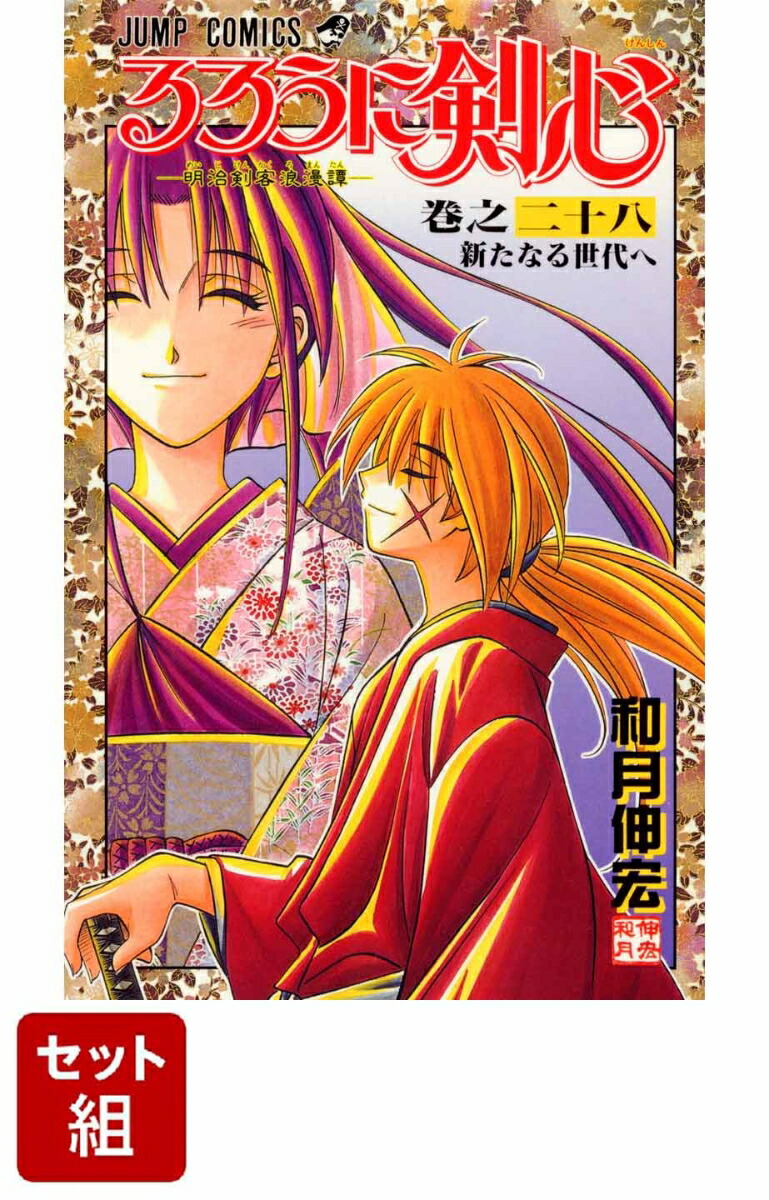
Action / Historical
Rurouni Kenshin
A review of Rurouni Kenshin — 28 volumes in Weekly Shonen Jump. Himura Kenshin was Japan's most feared assassin of the Bakumatsu; he now wanders with a reverse-blade sword, trying to protect without killing. The Kyoto Arc is one of the greatest extended arcs in manga, and Shishio is the genre's finest villain. VIZ Media's English edition is complete.

Action / Crime
Crying Freeman
Yu's review of Crying Freeman — Yo Hinomura is a Japanese potter brainwashed into becoming the world's greatest assassin for the Chinese crime syndicate 108 Dragons; he cannot resist the compulsion to kill, but weeps after each killing because he retains his soul; a woman who witnesses his first assassination and falls in love with him changes his life within the organization.
Action / Historical
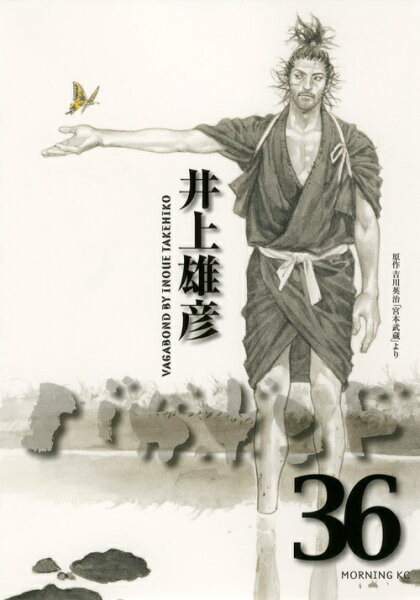
Vagabond
Yu's review of Vagabond — a manga about the historical Miyamoto Musashi's journey to become the greatest swordsman alive, and his gradual understanding that invincibility is not the same as wisdom. Visually the most beautiful manga ever published.
Action
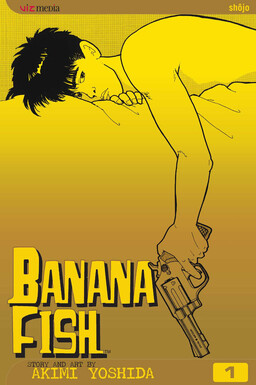
Banana Fish
Yu's review of Banana Fish — Ash Lynx is a seventeen-year-old gang boss in 1980s New York whose life collides with Eiji Okumura, a gentle Japanese photographer's assistant, when a dying man whispers the words 'Banana Fish.' Akimi Yoshida's 19-volume crime epic about a mind-control drug, the men who own the streets, and the one connection that almost saved a boy built only to kill.
Written by
Yu
Manga Enthusiast from Japan
I grew up in Japan and manga literally saved me during a tough time in elementary school. My English isn't perfect, but my love for manga is real — and I want to share it with you.
Disclosure: This post contains affiliate links. As an Amazon Associate, I earn from qualifying purchases at no extra cost to you.