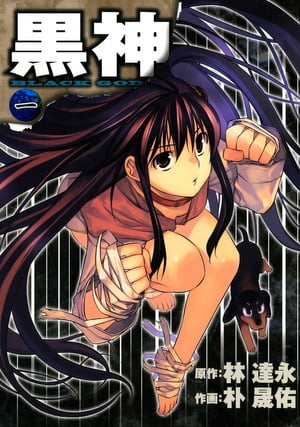
Black God Review: The Man Who Gave Away His Ramen and Got an Arm Back
by Dall-Young Lim (story), Park Sung-woo (art)
Read the first volume. If it doesn't hook you, put it down. It'll hook you.
Buy Black God on Amazon →*Affiliate link — I earn a small commission at no extra cost to you.
I bought the first volume of Black God at a used bookshop in Osaka mostly because of the cover — a small girl in a tracksuit with this fierce look. I did not know it was made by a Korean team for a Japanese magazine. I just knew the first chapter opened with a tired man at a ramen stand giving his bowl to a hungry stranger, and that small kindness was the thing that wrecked his whole life. I kept reading because I wanted to know what happened to that man. His name is Keita, and I still think about his arm.
Quick Take
- A Korean-Japanese action series with a sharp, specific premise: three identical people exist for each person, and when two meet, one dies
- Dall-Young Lim and Park Sung-woo build the mythology patiently across 19 complete volumes, with very clean fight art
- Rated T (Teen) — supernatural action violence and character death, but nothing graphic
Story Overview
Keita Ibuki is a nineteen-year-old freelance game programmer, broke and a little lost. The thing that sits heaviest on him is his mother — she died years ago, not long after the two of them once saw a woman who looked exactly like her on the street. One drunk night, on his way home, he stops at a ramen stand and gives his bowl to a strange, manic girl who is clearly starving. That girl is Kuro.
The turning point comes minutes later. Kuro is a Mototsumitama — a Tera Guardian who keeps watch over the flow of "Tera," the life energy of the world. When a hostile guardian ambushes her, Keita throws himself in to protect her and loses an arm in the crossfire. He wakes up in his apartment with the arm back — except it is not quite his arm anymore. To save his life, Kuro exchanged a limb with him, and that exchange seals a contract between them. It cuts her power in half at first, but once they synchronize it will push her to 200%.
From there the series explains its world: the "Doppeliner System." For every person, three identical bodies exist, sharing one fate. When two of them meet, the weaker dies, and their luck flows to the survivor, the "root." Keita's mother died because she met her own double. As Keita and Kuro fight through escalating guardian factions, the story builds toward Kuro's brother, Reishin Shishigami, and his plan to "correct" the world. The ending stretches decades: Keita lives to old age, surrounded by grandchildren, and Kuro stays with him to the end.
Characters
Keita Ibuki — He starts as a passive, depressed kid coasting on a half-finished video game project and grief he never processed. The contract drags him into a war he never wanted, and his arc is the slow decision to actually invest — to stop being someone things happen to. His mother's death and the doppelganger that caused it are the wound underneath everything.
Kuro — A Tera Guardian who fights with boxing techniques, loud and cheerful on the surface and genuinely dangerous underneath. She is a former princess of the guardians, and her real fight is against her own brother. Her need for Keita is not abstract — the contract literally keeps her powered — and that dependence shapes how she relates to him for the whole run.
Akane Sano — Keita's childhood friend, who carries quiet romantic feelings for him. She seems like an ordinary background figure for a long time, then the plot reveals she is the "ultimate Master Root" — central to the Doppeliner system itself. The love triangle between her, Keita, and Kuro gets a real resolution by the end.
Reishin Shishigami — Kuro's brother and the final antagonist. The endgame turns on how each side reads the "will of Tera": whether humans were meant to overpopulate or the gods were meant to wipe them out. He gives the late volumes their weight.
What I Love About It
What got me is the ramen stand. It is such a small, ordinary scene — a broke guy, half-drunk, hands his bowl to a hungry girl because she looks worse off than he does. There is no music swell, no destiny speech. He is just kind for a second. And the whole 19-volume story spins out of that one moment. I love that the inciting event is not a chosen-one prophecy but basic decency, and then the manga immediately punishes him for it by having him lose an arm protecting her.
The arm exchange is what makes it land for me. When Keita wakes up with his arm "restored" but not really his own — when the contract is sealed through their bodies literally trading parts — the partnership stops being a metaphor. It is physical, irreversible, written into him. He did not sign up for any of this; he just did one decent thing and now Kuro is part of his body. I have read a lot of "human gets supernatural partner" setups, and most of them are clean and convenient. Black God makes the bond cost him a limb on page one, and that honesty about consequence is the thing that kept me reading past the slower middle stretch.
Memorable Scene ⚠️ Spoiler Warning
The ending stayed with me more than any single fight. After the final battle in the Shishigami home territory — against Reishin and even the ancient Genuine Ones — the manga does something most long action series are too scared to do: it lets everyone grow old. Time jumps forward decades. Keita is an old man with grandchildren around him, having lived an entire ordinary human life. And Kuro, who needed him, who was bound to him through that traded arm, is still there. She thanks him and wishes him to rest in peace as he dies of old age.
For a series that opened with a man losing his arm in a violent ambush, ending on a quiet death-of-old-age and a goodbye from the girl he once fed at a ramen stand felt earned. The love triangle resolves, the cosmology resolves, but what I remember is the simple shape of it: he was kind once, it cost him everything and gave him everything, and at the end she stayed.
Pros & Cons
Pros
- The Doppeliner premise gives every encounter concrete, brutal stakes instead of vague power levels
- Park Sung-woo's fight art is clean, detailed, and energetic
- A complete 19-volume story with a real, time-skipping ending — no abandonment
- Kuro is a genuinely fun lead, and the contract bond has actual physical cost
Cons
- The middle volumes sag and the plot can get haphazard between major arcs
- The mythology piles up fast and can read as mechanical
- Heavy speed lines sometimes make the action panels hard to follow
- It is a solid genre piece, not a landmark — 19 volumes of escalating guardian battles won't work for everyone
Is Black God Worth Reading?
If you want a complete, self-contained supernatural action series with a premise sharper than most and an ending that actually lands, yes. It is not essential reading outside the genre, and the middle drags, but the bookends — the ramen stand and the old man's death — are worth the trip.
Where to Buy
Read the first volume. If it doesn't hook you, put it down. It'll hook you.
This post contains affiliate links. If you purchase through these links, I may earn a small commission at no extra cost to you. As an Amazon Associate, I earn from qualifying purchases.
*Affiliate link — I earn a small commission at no extra cost to you.
More Manga You Might Like
Fantasy / Action
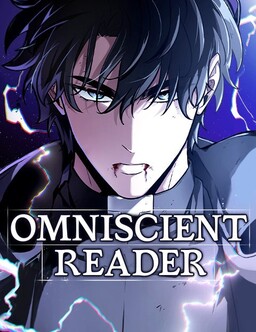
Omniscient Reader's Viewpoint
A review of Omniscient Reader's Viewpoint, the manhwa adaptation of singNsong's 551-chapter web novel, drawn by Sleepy-C — about Kim Dokja, the only person on Earth who read the web novel that is now coming true around him.

Action
Weak Hero
A review of Weak Hero — the Korean manhwa about a slender, bookish transfer student who defeats much larger bullies through precise, calculated violence and zero tolerance for injustice.
Action / Supernatural
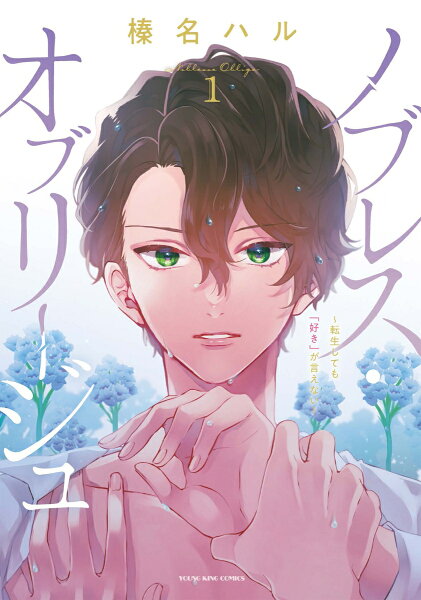
Noblesse
A review of Noblesse — 16 volumes on Naver Webtoon. Cadis Etrama Di Raizel (Rai), an ancient noble who has slept for 820 years, awakens in modern Korea, reunites with his loyal servant Frankenstein, and enrolls in high school to understand the present world while a secret organization hunts those around him. WEBTOON Unscrolled's English edition is complete.
Action
Mercenary Enrollment
A review of Mercenary Enrollment — the Korean manhwa about a boy who survived as a mercenary since age 8 and must now reintegrate into normal high school life while protecting his family.
Action
Eleceed
A review of Eleceed — the Korean manhwa about a kind-hearted boy with lightning-fast reflexes who discovers the secret world of Awakened ability users through a fat cat who is actually a legendary warrior.
Action / Fantasy
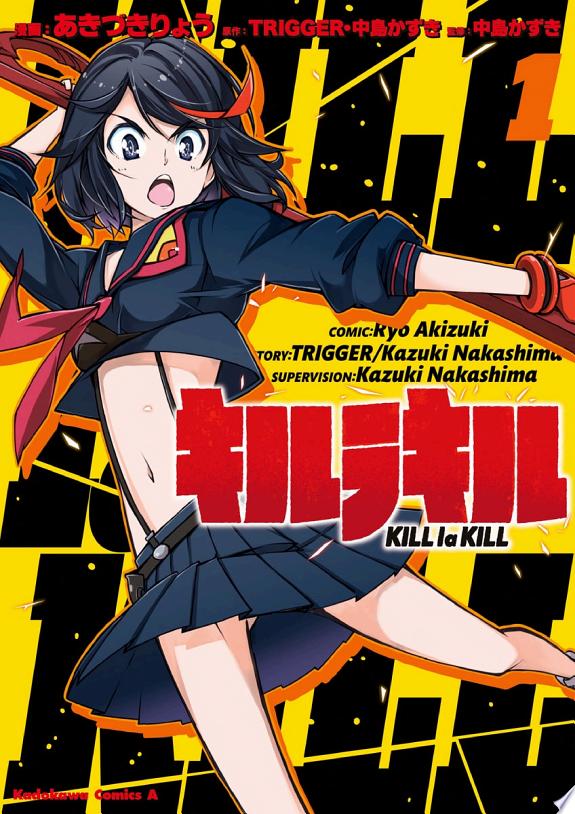
Kill la Kill
A review of Kill la Kill manga, the adaptation of Trigger's anime about a girl searching for her father's killer at a school where power is literally woven into clothing.
Written by
Yu
Manga Enthusiast from Japan
I grew up in Japan and manga literally saved me during a tough time in elementary school. My English isn't perfect, but my love for manga is real — and I want to share it with you.
Disclosure: This post contains affiliate links. As an Amazon Associate, I earn from qualifying purchases at no extra cost to you.