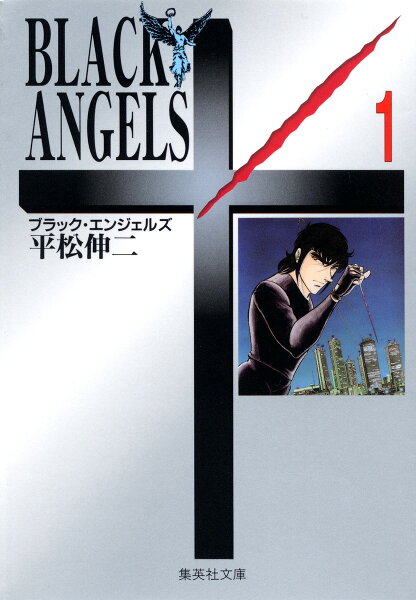
Black Angels Review: The Vigilante Manga That Asked Who Gets to Judge
by Shinji Hiramatsu
Read the first volume. If it doesn't hook you, put it down. It'll hook you.
Buy Black Angels on Amazon →*Affiliate link — I earn a small commission at no extra cost to you.
When I was a kid, the older boys at school used to take my lunch and dare me to tell a teacher about it. I never did, because telling never fixed anything — the teacher would nod, nothing would change, and the next day it started again. So when I first read about a quiet young man who rides a bicycle around Japan and kills the people the courts let walk free, something in me leaned forward. I knew that feeling of "the system is supposed to protect you and it just doesn't." Black Angels is built entirely out of that feeling, and then it spends twenty volumes asking whether doing something about it yourself is any better.
Quick Take
- Shinji Hiramatsu's 1980s vigilante action manga — the same man who drew Doberman Cop, here at his bleakest and most violent
- The hero kills with a bicycle spoke and the catchphrase "Go to hell!!" — pulpy on the surface, genuinely uncomfortable underneath
- Age rating: M (Mature) — graphic killing, sexual assault as a plot element, no English license
Story Overview
Yoji Yukito looks like nobody. He is a thin, glasses-wearing young man who travels Japan by bicycle, polite and easy to overlook. He is also a "Black Angel" — an assassin who hunts down the evil that the law cannot punish, and who takes no money from the victims who beg him for help. His weapon is a single spoke pulled from his own bicycle wheel, and his line, every time, is "地獄へ落ちろ" — "Go to hell."
The first stretch of the series is episodic: corrupt cops, kidnappers, killers who walked free on technicalities. The very first case sets the tone — a crooked detective frames a reforming diner worker named Seiji, then assaults Seiji's sister, and Yukito executes him for it. From there the scope keeps widening. The middle of the series turns into open war between the Black Angels (men and women who all carry a cross-shaped scar) and Ryuga-kai, a revolutionary organization running "Plan M," a scheme to destroy the Kanto region. Plan M is technically stopped — but Mt. Fuji erupts anyway, Kanto collapses, and the manga lurches into a post-apocalyptic wasteland reminiscent of Fist of the North Star.
The final third pulls the whole thing into stranger territory — mysterious coins, a "White Angels" faction wielding psychic powers, and a last enemy named Yuki who began as one of the good ones before being broken into something monstrous. The ending is not a clean, satisfying win. Yukito gathers the burdens of everyone who fought beside him and pays for the victory himself. Across 20 volumes Hiramatsu never lets "kill the bad guy" stay simple.
Characters
Yoji Yukito — The protagonist. An orphan with no family, drifting by bicycle, deliberately unremarkable so nobody sees the killer underneath. The cross-shaped scar on his chest marks him as a Black Angel, and the Christian image of "carrying the cross" sits under the whole series. He starts as an almost machine-like executioner and slowly grows real emotional weight as the people around him die.
Kyoji Matsuda — A former detective who joined the police to avenge his father, then quit. He fights bare-handed with karate so brutal he can catch a bazooka shell with his hands. His volume-2 line, "Are you telling me it's wrong to keep dreaming?!", is one of the series' most-quoted moments.
Reira — A woman who fights by throwing knives, a former killer who ends up on Yukito's side. She is one of the recurring core members who give the later war arcs their stakes.
Yuki — The final antagonist. Originally a righteous boy, he is brainwashed and corrupted into the most powerful fighter in the story, a psychic force the Black Angels can barely stand against. He is the dark mirror the whole series has been building toward: the same impulse to fix the world by force, taken all the way to monstrousness.
What I Love About It
What stays with me is the bicycle spoke. It sounds almost silly when you describe it — the hero spins his front wheel, snatches a single thin spoke out of it, and that is the murder weapon. But Hiramatsu draws it so seriously that it stopped being silly to me. The spoke is the perfect object for who Yukito is: invisible, ordinary, the kind of thing nobody would ever search a polite young man for. A gun says "I came here to kill." A spoke pulled from the bike you rode in on says "I was always going to be able to do this, and you never noticed."
The reason it hit me is that it makes the violence feel quiet and personal instead of explosive. There is no gunfire spectacle, just a man you underestimated, one motion, and "Go to hell." For a kid who used to fantasize about somebody finally stepping in when the adults wouldn't, that image — the smallest, most overlooked person turning out to be the one who acts — landed somewhere very specific. And then the series spends the rest of its run punishing me for finding it satisfying, which is exactly why I respect it.
Memorable Scene ⚠️ Spoiler Warning
The opening case is the one I cannot shake. A corrupt detective frames Seiji, a young diner worker who is genuinely trying to go straight, and then sexually assaults Seiji's sister — using his badge as cover the whole way. It is ugly on purpose. There is no clever plot, no twist; it is just power abusing the powerless, presented plainly. Then the meek young man everyone ignored steps out of his disguise, corners the detective, and kills him with the spoke.
What makes it stay is that it is the manga's thesis stated in chapter one. The law is the detective. The law is the thing that was supposed to stop this and instead became the predator. So when Yukito says "Go to hell," part of you cheers — and Black Angels spends 20 volumes making you wonder why you did, and whether a man who appoints himself executioner is really so different from the badge he just put in the ground.
Pros & Cons
Pros
- A vigilante premise taken more seriously than the pulpy surface suggests
- Yukito and the bicycle spoke are a genuinely iconic hero-and-weapon pairing
- Complete at 20 volumes with a real, downbeat ending
- A milestone of the 1980s "punishment manga" wave from one of Jump's heavy hitters
Cons
- No official English release — Japanese only
- Graphic violence and sexual assault used as plot material; genuinely mature, sometimes lurid
- The later arcs swerve into post-apocalypse and psychic powers, which is a tonal whiplash that won't work for everyone
Is Black Angels Worth Reading?
If you want a vigilante action manga that is darker, older, and more morally uneasy than the modern ones — and you can read Japanese or are willing to — yes. It is a 1980s Jump artifact with a hero who kills with a bicycle spoke and a story that refuses to let "killing bad people" feel clean. If you need a clear English release or a hero you can root for without flinching, this isn't the one.
Where to Buy
No English release yet. That just means you find it before everyone else does. The Japanese print and digital editions are the only legitimate way to read it for now.
Search Black Angels on Amazon.co.jp →
This post contains affiliate links. If you purchase through these links, I may earn a small commission at no extra cost to you. As an Amazon Associate, I earn from qualifying purchases.
*Affiliate link — I earn a small commission at no extra cost to you.
More Manga You Might Like
Action
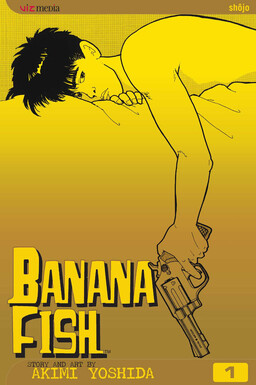
Banana Fish
Yu's review of Banana Fish — Ash Lynx is a seventeen-year-old gang boss in 1980s New York whose life collides with Eiji Okumura, a gentle Japanese photographer's assistant, when a dying man whispers the words 'Banana Fish.' Akimi Yoshida's 19-volume crime epic about a mind-control drug, the men who own the streets, and the one connection that almost saved a boy built only to kill.
Action / Crime
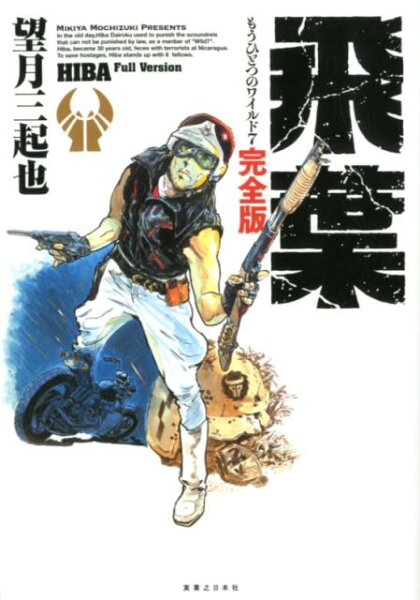
Wild 7
Wild 7 follows a special police unit composed of convicted criminals given a second chance — authorized to use lethal force against criminals the law cannot otherwise reach, operating on motorcycles and outside the normal rules of law enforcement.
Action / Crime
Crying Freeman
Yu's review of Crying Freeman — Yo Hinomura is a Japanese potter brainwashed into becoming the world's greatest assassin for the Chinese crime syndicate 108 Dragons; he cannot resist the compulsion to kill, but weeps after each killing because he retains his soul; a woman who witnesses his first assassination and falls in love with him changes his life within the organization.
Action / Sci-Fi
Cobra
Cobra is the greatest space pirate who ever lived — charming, unstoppable, and armed with the Psychogun fused to his arm — in a galaxy-spanning adventure that turned stylish cool into a manga philosophy.
Action / Martial Arts
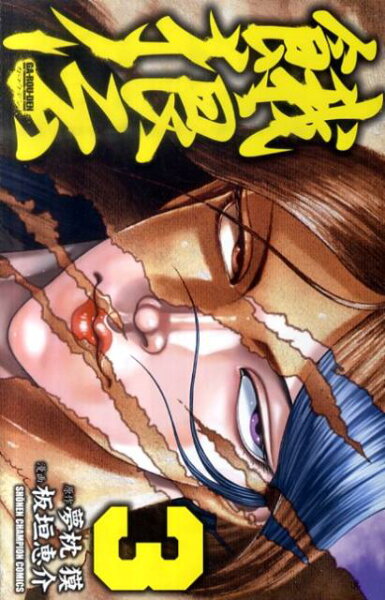
Garouden
Garouden follows Bunshichi Tanba, a former judoka who operates in the underground fighting world — a manga drawn by Jiro Taniguchi with psychological depth and physical authenticity rare in fighting manga.
Action / Crime
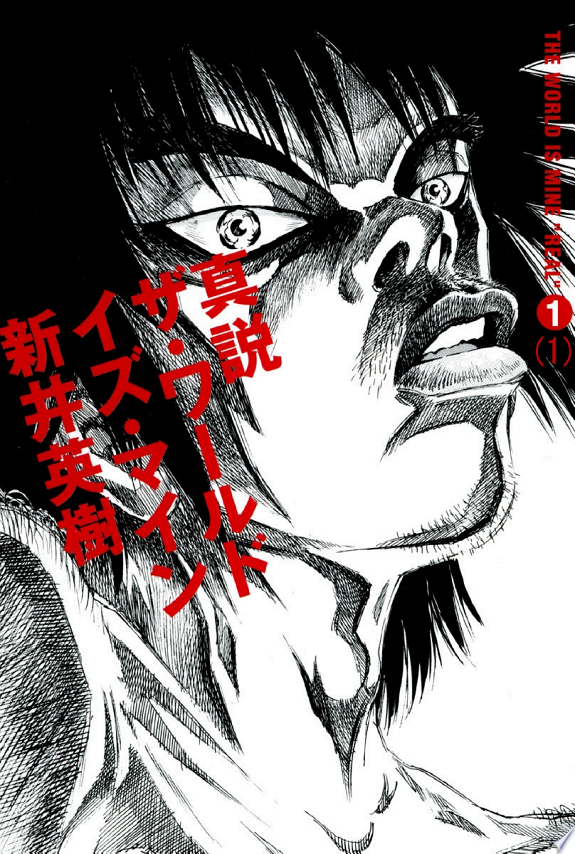
The World Is Mine
The World Is Mine follows two criminal partners — the unpredictable Mon and the calculating Toshi — on a violent crime spree across Japan, alongside a separate thread about a mysterious monster emerging in the wilderness.
Written by
Yu
Manga Enthusiast from Japan
I grew up in Japan and manga literally saved me during a tough time in elementary school. My English isn't perfect, but my love for manga is real — and I want to share it with you.