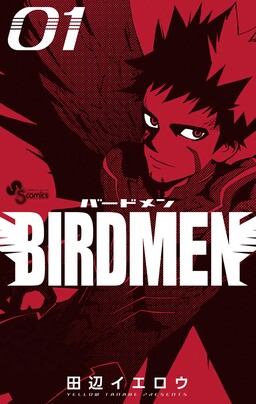
Birdmen Review: The Wings Save Your Life — and Quietly Stop Making You Human
by Yellow Tanabe
Read the first volume. If it doesn't hook you, put it down. It'll hook you.
Buy Birdmen on Amazon →*Affiliate link — I earn a small commission at no extra cost to you.
I read the first chapter of Birdmen on a train going home one night, on my phone, half asleep. The bus crash hit me before I was awake enough to brace for it. A boy who keeps telling himself he prefers being alone, a casual school day, and then a few pages later the bus is gone over the edge and everyone should be dead. They aren't. And the reason they aren't is the thing the whole series spends sixteen volumes turning over in its hands. I went past my stop. I remember standing on the platform of the wrong station, annoyed at myself and already wanting volume two.
Quick Take
- Yellow Tanabe (the author of Kekkaishi) trades demons for science fiction, and the result is a coming-of-age story disguised as a transformation manga
- The central question is never "can the winged kids win the fight" — it is "what does being something other than human take away from you"
- Complete in 16 volumes; rated T (Teen) for action violence, some body-transformation imagery, and a quiet but real reference to suicide
Story Overview
Eishi Karasuma is a fifteen-year-old who has decided that other people are too much trouble. He is smart, sour, and lonely on purpose. One ordinary evening he, his loud childhood friend Mikisada Kamoda, and two classmates — Rei Sagisawa and Tsubame Umino — end up on a bus that goes off the road. They should die. Instead a winged figure appears, and one of them, their classmate Takayama, shares his blood. The four wake up changed. They can grow black wings from their backs. They are what the series calls Seraphs.
The turning point is the slow realization that this is not a one-off miracle. Takayama becomes their guide, the five of them form a small "bird club," and each of them begins to wake a different ability — Eishi's voice can lead and command other Seraphs, Kamoda cannot die, Sagisawa can deceive, Umino can connect people. Behind it all sits EDEN, a vast international genetics organization, and the truth that Seraphs are not a natural mutation but something engineered — a designed step humanity might take next, with the loss of ordinary human feeling as the price.
The ending pushes that idea to its limit: rather than forcing evolution on the world, the surviving Seraphs fight to give people a choice — become a Seraph or stay human — and Takayama, his wings finally turned white, leaves to change the world from outside it. It is an ambitious, slightly rushed finish, but it lands on the question the series cared about the whole time.
Characters
Eishi Karasuma — The narrator and heart of the story. He starts out convinced that being alone is just easier, carrying a quiet hurt about an absent father and a mother who never praises him. Becoming a Seraph wakes his "Bellwether" ability — a voice that can lead and move other Seraphs — and the irony is exact: the boy who wanted no connection becomes the one everyone follows. Later he gains a second power, "Fire Starter," the ability to light something in another Seraph's heart.
Takayama Sou — The classmate who was already a Seraph and who saved the others by giving them his blood. He is the calm, knowing guide, and the longer you read the more you feel he has decided something about himself that he has not told anyone. His arc is the spine of the ending.
Mikisada Kamoda — Eishi's childhood friend, big and frightening to look at, completely straightforward underneath. He wakes the "Life Stealer" ability — regenerating by drawing on the strength of the Seraphs around him — which Tanabe uses to ask uncomfortable questions instead of just handing him a power.
Rei Sagisawa & Tsubame Umino — Sagisawa is the rich, handsome one who awakens as a "Trickster," and he carries a real wound: a brother who took his own life. Umino is the bright, open girl of the group whose "Connector" ability literally binds humans and Seraphs together — a fitting power for the one who keeps the group human.
What I Love About It
What I love is how honest the manga is that the wings are not free. Most transformation stories treat the new power as pure upside — you were weak, now you are strong, the end. Birdmen refuses that. The longer the characters live as Seraphs, the more the story shows that something about plain human feeling starts to thin out. There are moments where a Seraph community is described as a place where emotion slowly fades, and that quiet warning runs underneath every cool flight scene. The gift and the loss are the same gift.
That is what makes Eishi the right narrator. He is a boy who already pulled away from people on his own, before any of this, and the cruelest, kindest joke of the story is that the transformation forces him into the exact thing he was avoiding — being needed, being a leader, being connected. I felt that personally. I spent a lot of my own school years deciding that being alone was the smart choice so it wouldn't hurt. Watching Eishi get dragged out of that shell, not by a speech but by people who simply would not let him stay there, hit a part of me I don't usually let manga touch. The series never tells you that loneliness is a phase you grow out of. It just shows you, page by page, that connection costs something and is worth the cost anyway.
Memorable Scene ⚠️ Spoiler Warning
The image that stays with me is the very end, when Takayama's wings are no longer black like the others' but white, and he chooses to leave — to go "outside the world" and change it from there. For most of the series the black wings have been the shared mark of the group, the thing that binds these five kids together. Seeing his turn white is a gut punch precisely because it is quiet. It marks him as something further along than the rest, something they cannot fully follow, and it makes his goodbye feel less like a victory and more like a person walking off a cliff on purpose because someone has to.
I won't pretend the ending answers everything — it doesn't, and I'll get to that. But that single visual, the white wings against everyone else's black, did more emotional work for me than a dozen explained mysteries would have. It is the moment the story finally says out loud what it had been whispering: becoming the next thing means leaving the old thing, and the people in it, behind.
Pros & Cons
Pros
- The transformation-as-identity theme is developed with real care, not used as decoration
- Eishi's arc from chosen loneliness to reluctant leader is genuinely moving
- Strong ensemble — each Seraph's ability reflects who they already were
- Complete in 16 volumes, so the story actually ends
Cons
- The slow, negative opening with Eishi's sour narration takes a while to warm up
- The back half leans heavily on dialogue and explanation, and some readers feel it loses momentum
- The finish leaves several mysteries (Takayama's true nature, the white wings) only half-answered, and the revelation that Seraphs are engineered disappointed some readers — that ambiguity won't work for everyone.
Is Birdmen Worth Reading?
Yes — if you want a transformation story that treats the transformation as a question rather than a cheat code. Push through the slow first stretch and you get a thoughtful, complete coming-of-age science-fiction series about loneliness, connection, and the cost of becoming something new. If you only want clean fights and tidy answers, the talky, open-ended back half may frustrate you.
Where to Buy
No English release yet. That just means you find it before everyone else does.
The Japanese print and digital editions are the only legitimate way to read it for now.
Find Birdmen on Amazon.co.jp →
This post contains affiliate links. If you purchase through these links, I may earn a small commission at no extra cost to you. As an Amazon Associate, I earn from qualifying purchases.
*Affiliate link — I earn a small commission at no extra cost to you.
More Manga You Might Like

Action / Sci-Fi
Cobra
Cobra is the greatest space pirate who ever lived — charming, unstoppable, and armed with the Psychogun fused to his arm — in a galaxy-spanning adventure that turned stylish cool into a manga philosophy.
Action / Sci-Fi
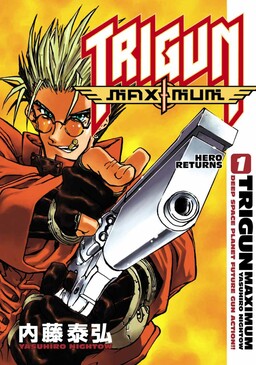
Trigun Maximum
Vash the Stampede walks a desert planet called Gunsmoke. He has a $$60 billion double-dollar bounty on his head, a gun arm hidden under his red coat, and a single rule he has never broken: he does not kill anyone. Yasuhiro Nightow's 14-volume sequel to Trigun is one of the most thematically serious action manga ever serialized.

Action / Supernatural
Spirit Circle
Yu's review of Spirit Circle — Fuuta Okeya has the ability to see spirits; when a new classmate, Kouko Ishigami, arrives and announces she is his enemy from a past life, their conflict forces both to revisit six shared past lives and understand what connected them across time.

Action / Comedy
Level E
Yu's review of Level E — a self-declared alien prince has crashed his ship on Earth and has conveniently developed amnesia; he moves in with Yukitaka Tsutsui, a freshman baseball prospect in rural Yamagata; the prince turns out to be the most intelligent and least cooperative being in the galaxy, and he treats everything around him as a long-running game designed for his own amusement.
Comedy / Action
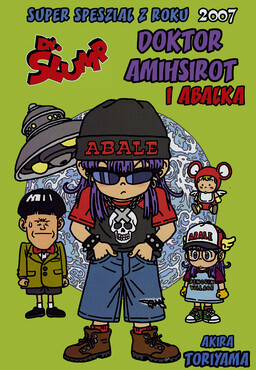
Dr. Slump
Yu's review of Dr. Slump — Senbei Norimaki is a not-very-good inventor who creates the perfect android girl, Arale, who is stronger than any human, has perfect vision but is terribly nearsighted without her glasses, and has the complete absence of self-preservation instinct that characterizes someone who cannot be hurt.
Action / Sci-Fi
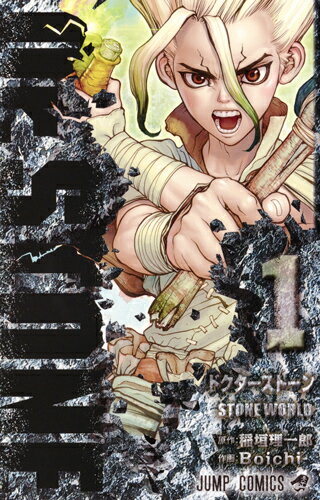
Dr. Stone
Yu's review of Dr. Stone — Senku Ishigami, a scientific genius, wakes from a millennia-long stone petrification to find human civilization erased; he decides to use science to rebuild everything humanity ever created, starting from zero.
Written by
Yu
Manga Enthusiast from Japan
I grew up in Japan and manga literally saved me during a tough time in elementary school. My English isn't perfect, but my love for manga is real — and I want to share it with you.
Disclosure: This post contains affiliate links. As an Amazon Associate, I earn from qualifying purchases at no extra cost to you.