
Basara Review: A Girl Buries Her Twin Brother and Wears His Name Into a War
by Yumi Tamura
Read the first volume. If it doesn't hook you, put it down. It'll hook you.
Buy Basara on Amazon →*Affiliate link — I earn a small commission at no extra cost to you.
I read Basara during a stretch when I felt like I was pretending to be someone every single day. Smiling at work, saying the right things, being the version of me that other people needed. So when I got to the part where Sarasa stands over her dead twin brother, picks up a blade, and cuts her own hair off to become him — not to trick anyone for a moment, but to be him for the rest of her life — I had to put the volume down. I knew that feeling of carrying a name that isn't yours so that the people around you don't fall apart. Hers just came with a sword and a war.
I went into Basara expecting a shoujo adventure. Twenty-seven volumes later I came out feeling like I'd read one of the great epics in any demographic, period. This is the manga I hand to anyone who tells me shoujo can't do scale.
Quick Take
- A post-apocalyptic revolution epic with one of manga's greatest female leads — a girl who lives her dead brother's life so an entire country can keep hoping
- The central twist is unbearable on purpose: the stranger Sarasa falls in love with at a hot spring is the king who burned her village and killed her brother
- 27 volumes, complete in English via Viz Media; rated T (Teen), though the war, loss, and slavery themes hit harder than that suggests
Story Overview
Three hundred years after a catastrophe turned Japan into desert, the land is ruled by the Golden Emperor and his children, who govern the regions as kings. A prophecy says a "child of destiny" will be born in the village of Byakko, unite the resistance, and end the tyranny. Twin children are born — Tatara and Sarasa — and the village decides the boy, Tatara, must be the one. He's raised as the hope of a nation. Sarasa is raised as nobody.
Then the Red King's forces ride into Byakko, and they execute Tatara. The prophecy is supposed to be over. Instead, fifteen-year-old Sarasa cuts her hair to her brother's length, puts on his clothes, and takes his name in front of the soldiers — buying time so they don't finish off the rest of the village. What starts as a desperate bluff becomes her entire life. "Tatara" becomes a legend, gathering the four legendary swords named for the Four Symbols — Byakko (white tiger), Suzaku (firebird), Seiryū (dragon), and Genbu (tortoise) — each one the banner of a different underground resistance.
And here's the engine of the whole series: Sarasa, exhausted from living as a man, slips away to a hot spring to be a girl again for one night. There she meets a young man named Shuri. They fall for each other. Neither knows the truth — that she is Tatara, the rebel leader he's hunting, and that he is the Red King, the man who destroyed her home. They keep meeting. The love deepens exactly as the war between them gets bloodier.
Characters
Sarasa / "Tatara" — The series lives or dies on her, and she carries it. Her arc is the slow, grinding question of whether the girl named Sarasa can survive inside the symbol named Tatara — whether the revolution she built out of grief has any room left for the actual person underneath. She didn't choose destiny; she inherited it off her brother's corpse, and the manga never lets her treat it as glory.
Shuri (the Red King) — Seventeen, the youngest imperial son, and genuinely capable as a ruler even as he's the cruelty Sarasa is fighting to destroy. His arc is the hardest in the book: confronting that the system he inherited and enforced cannot be defended, and eventually choosing to dismantle his own power rather than rule. He loses his left arm and gives up the throne — the inheritance he was raised to fight for.
Ageha — A former slave who survived the Blue Nobles, and the character who broke me. He saved a young Sarasa from the Red King and lost his left eye doing it. He loves Sarasa but believes himself unworthy of someone that pure, so he turns the love into protection — pushing her, sharpening her, refusing to let her quit. His devotion is the spine that keeps "Tatara" standing.
Nachi — A bold, optimistic merchant who speaks in a thick regional accent and runs in the Tengu youth group. He crosses paths with Sarasa while hunting whales off his coast and becomes one of her earliest, most loyal allies — comic relief that keeps turning out to matter.
What I Love About It
The identity trap, and how completely the series refuses to let Sarasa off the hook for it. She becomes Tatara to give the rebellion a face. It works — too well. Tatara's legend grows larger than any one person could ever be, and an entire country starts pinning its future on a figure who, at the core, is a grieving sister wearing her dead brother's haircut. Tamura builds the whole revolution on a beautiful lie told out of love and panic, and then makes Sarasa live inside that lie for twenty-seven volumes.
What gets me is that the manga treats the hot-spring romance as the one place that lie collapses. When Sarasa is with Shuri, she's not Tatara — she's a girl, with her own name, her own face, her own want. Every other relationship she has is mediated through the costume. So the cruelest joke in the series is that the only person who sees the real Sarasa is the one person who must never know who she really is. The thing keeping her human is built on top of the thing that will destroy them both. I've never read a romance where the tenderness and the dread come from the exact same source.
Memorable Scene ⚠️ Spoiler Warning
The reveal. After a whole series of near-misses and stolen nights, Sarasa and Shuri finally face each other on a battlefield — and their own people, not realizing what they're doing, shout the truth across the lines. That's Tatara. That's the Red King. The two of them stand there as every quiet, happy memory they share gets re-lit in a new and horrible color all at once. And then — because Tamura is merciless — the confrontation gets interrupted by a third party before either of them can do anything with it. No catharsis. They retreat, both carrying the full weight of it, unresolved.
What stays with me is the ending it eventually earns. By the close, Shuri has lost the arm, lost the throne, and at his lowest tells Sarasa she should have killed him for everything he's done. Her answer is the line I think about most: yes, he was the source of her greatest tragedy — and he was also the source of her happiness. Both true, neither cancels the other. The epilogue, "Wakaba," finds them alive, traveling, together, with twin children — a quiet rhyme with the twins the story opened on. After twenty-seven volumes of a girl living someone else's name, she finally gets to be Sarasa.
Pros & Cons
Pros
- One of the most complete female-protagonist arcs in all of manga — Sarasa earns every inch of her growth
- The enemies-to-lovers core is genuinely irresolvable, and the series handles it honestly instead of cheating
- Epic political scope with a specifically Japanese post-apocalyptic texture (regional kings, the Four Symbol swords)
- Complete, with an ending that pays off the entire 27-volume build
Cons
- 27 volumes is a real commitment, and the early chapters build slowly
- Tamura's art improves dramatically over the run, so volume 1 looks noticeably rougher than the later ones
- The huge cast means some allies get less room than they deserve
- The deliberate pacing is either the point or a dealbreaker — depending on whether you want to live in this world for that long, this won't work for everyone.
Is Basara Worth Reading?
If you want a sweeping revolution epic anchored by one of manga's best female leads and a romance built on an impossible, unforgivable secret, yes — without hesitation. It asks for patience and a lot of volumes, but it pays every debt it takes on. The only readers I'd steer away are those who want something short or fast.
Who Is This Manga For?
- Readers who want epic fantasy-adventure with a strong, flawed female protagonist
- Fans of star-crossed, enemies-to-lovers romance with real political stakes
- Anyone who thinks shoujo can't do scale and wants to be proven wrong
- Readers who enjoy long-form stories that build a whole world and then earn its ending
Similar Manga
| Title | Its Approach | How Basara Differs |
|---|---|---|
| Red River | Modern girl pulled into ancient-Hittite political conflict and war | Basara is post-apocalyptic future Japan, and its heroine leads the rebellion under a dead man's name |
| Yona of the Dawn | Princess loses everything, gathers legendary warriors to reclaim her country | Basara's lead hides her gender and identity entirely, and loves the very king she's overthrowing |
| Fushigi Yugi | Shoujo fantasy with a destined heroine and a guardian cast | Basara trades wish-fantasy for a grounded, brutal revolution with no easy magic to lean on |
Where to Buy
Read the first volume. If it doesn't hook you, put it down. It'll hook you.
This post contains affiliate links. If you purchase through these links, I may earn a small commission at no extra cost to you. As an Amazon Associate, I earn from qualifying purchases.
*Affiliate link — I earn a small commission at no extra cost to you.
More Manga You Might Like
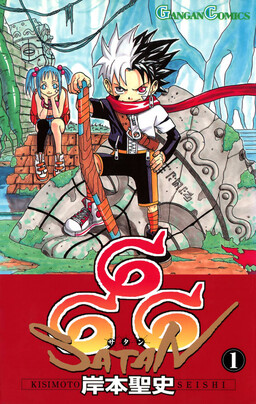
Action / Fantasy
O-Parts Hunter
Yu's review of O-Parts Hunter — Jio Freed is a boy who wants to rule the world but carries a demon called Satan inside him that awakens when he is in danger; he travels a post-apocalyptic world with Ruby, an OPT hunter, in search of legendary O-Parts — ancient relics with extraordinary power.
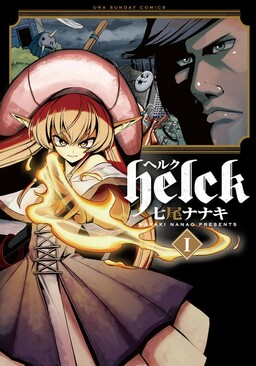
Action / Comedy
Helck
A review of Helck — 13 volumes in Shōnen Sunday S. A tournament is held to find the next Demon King; Helck, the most powerful human hero, arrives and enters claiming he wants to destroy humanity; demon captain Vermilio tries to expose him as a spy while he proves consistently, genuinely helpful. A fantasy comedy that earns its transition into something serious. VIZ Media's English edition is complete.
Action / Fantasy
Fullmetal Alchemist
A review of Fullmetal Alchemist — 27 volumes in Monthly Shonen Gangan. Edward and Alphonse Elric commit the taboo of human transmutation trying to revive their mother; what follows is 27 volumes with zero wasted chapters about two brothers trying to fix a terrible mistake — widely considered the best-written manga ever made. VIZ Media's English edition is complete.
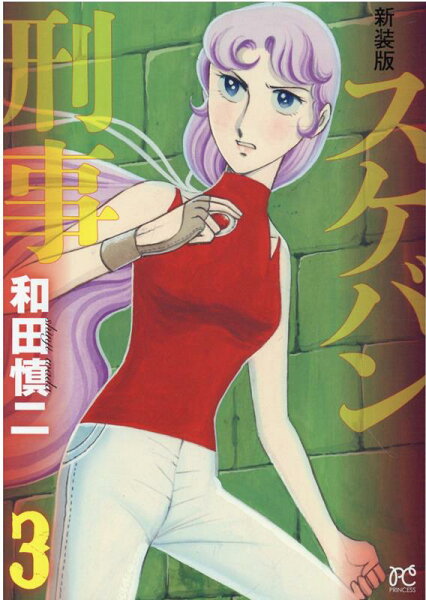
Action / Drama
Sukeban Deka
Sukeban Deka follows Saki Asamiya, a delinquent girl recruited by the police to work undercover at a series of schools — armed only with a steel yo-yo and her reputation as the toughest girl in Japan.
Action / Fantasy
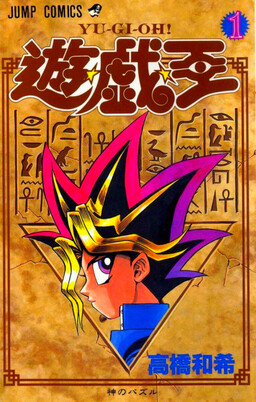
Yu-Gi-Oh!
Yu's review of Yu-Gi-Oh! — Yugi Mutou solves the Millennium Puzzle and his body becomes shared with a spirit of unknown origin; the early series follows the spirit's use of 'shadow games' to punish bullies and cheaters, eventually evolving into the card game tournament arc that the franchise became known for.
Action / Fantasy
Trinity Blood
Yu's review of Trinity Blood — in a post-apocalyptic future where vampires and humans are at war, a vampire-eating priest works for the Vatican to maintain the fragile peace.
Written by
Yu
Manga Enthusiast from Japan
I grew up in Japan and manga literally saved me during a tough time in elementary school. My English isn't perfect, but my love for manga is real — and I want to share it with you.
Disclosure: This post contains affiliate links. As an Amazon Associate, I earn from qualifying purchases at no extra cost to you.