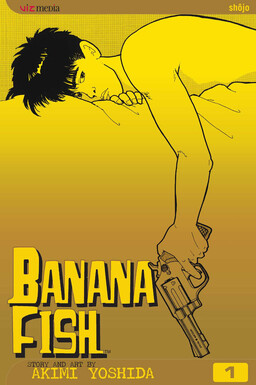
Banana Fish Review: The Boy Who Survived Everything Except Being Loved
by Akimi Yoshida
Read the first volume. If it doesn't hook you, put it down. It'll hook you.
Buy Banana Fish on Amazon →*Affiliate link — I earn a small commission at no extra cost to you.
I read Banana Fish over three nights, and on the third night I sat with the closed final volume on my chest for a long time before I could turn off the light. I grew up feeling like the world had decided early what I was and was never going to let me be anything else. Most stories tell you that love fixes that. Banana Fish is honest enough to suggest that sometimes love arrives, and it's real, and it's still not enough — and that the love mattered anyway. That honesty wrecked me. It's the most beautiful thing I have ever read, and I am still not over how it ends.
Quick Take
- A 1980s New York crime epic disguised as shojo — gang war, a Vietnam-era mind-control drug, and one of manga's greatest protagonists
- The bond between Ash Lynx and Eiji Okumura is the emotional spine; everything else, however brutal, serves it
- M (Mature) — explicit sexual abuse, graphic violence, and a famously devastating ending. Adults only.
Content Warnings & Age Rating
This manga depicts the sexual abuse and trafficking of minors, including Ash's own childhood. It is explicit, recurring, and central to the story — not a footnote.
Age Rating: M (Mature) Content Warnings: Childhood sexual abuse and exploitation; graphic gang violence; drug trafficking and forced drugging; murder; suicide and self-destruction themes.
This is one of the hardest stories I've recommended on this site. If that subject matter is something you can't read, that's a completely valid reason to skip it.
Story Overview
Ash Lynx is seventeen, beautiful, and runs a street gang on Manhattan's Lower East Side. He has already survived more than most people survive in a lifetime: sold as a child, abused by the Corsican crime boss Dino Golzine, trained into a killer. When a dying man hands him a vial and gasps the words "Banana Fish," Ash recognizes them — they're the same words his brother Griffin has muttered in a catatonic daze since coming home broken from Vietnam.
Around the same time, a Japanese magazine crew arrives to photograph New York's street gangs. Among them is Eiji Okumura, a gentle former pole-vaulter with no frame of reference for the violence around him. He and Ash meet, and something neither of them has a name for begins.
The investigation peels back what "Banana Fish" actually is: a mind-control drug developed by an American military doctor during the Vietnam War, tested on soldiers like Griffin, and now perfected. Golzine holds the formula and plans to sell it to government factions who want to destabilize South American regimes. Ash, who only wants to be free and to keep Eiji safe, is pulled into a war that runs from the gutters to the top of American power.
The middle volumes are a gauntlet — Ash is captured, tortured, drugged, and betrayed, and forced into an impossible choice with his best friend Shorter that he never recovers from. By the end, Golzine is dead and Banana Fish and its evidence are destroyed. Ash has won. Eiji, sending word from the airport before flying home to Japan, writes that his soul is always with Ash, that they will meet again. Reading that letter, Ash — already stabbed by a rival — walks into the New York Public Library, sits down, and dies at the table with the letter in his hands, smiling. A librarian later assumes the boy is only sleeping.
Characters
Ash Lynx (Aslan Jade Callenreese) — One of manga's greatest protagonists, and the reason the whole thing works. He is genius-level intelligent, a frighteningly capable killer, and a survivor of childhood sexual slavery under Golzine. The cruelty done to him taught him that any tenderness he shows can be used to destroy him. His arc is the slow, terrified discovery that Eiji is someone who will not do that — and the tragedy is that he discovers it just barely too late to live in it.
Eiji Okumura — The Japanese photographer's assistant whose ordinariness is the point. He can't shoot, can't fight, and brings nothing useful to a gang war. What he brings is a refusal to treat Ash as a weapon, a monster, or a possession. His famous line — that distance and even oceans are nothing, because his soul stays with Ash — is the emotional payload the whole series builds toward.
Shorter Wong — Leader of the Chinatown gang and Ash's closest friend. Captured and dosed with Banana Fish, he loses his mind and attacks Eiji. Lucid for one final moment, he begs Ash to end it — and Ash, with no other way to save Eiji, shoots him. It is the wound Ash carries through the rest of the story.
Dino Golzine — The Corsican mob patriarch who bought, abused, and weaponized Ash as a boy and still calls him his prized possession. He is the rot at the center of everything, the embodiment of a world that turns children into property.
Yut-Lung Lee — A beautiful, venomous young heir of a Chinese crime family, himself a product of abuse, who allies and clashes with Ash. He's a dark mirror: another broken boy who chose poison and manipulation where Ash, against all odds, kept reaching for something cleaner.
Max Lobo, Blanca, and Sing Soo-Ling — Max is the journalist and Vietnam vet who served alongside Griffin and becomes a reluctant father figure. Blanca is the master assassin who once trained Ash and treats him almost tenderly even as an adversary. Sing is the teenage Chinatown gang leader whose own people set in motion the blade that finally reaches Ash.
What I Love About It
What Eiji makes possible. Ash spent his entire life in a world where being cared for was a setup, where softness got you owned. Eiji walks in from a place that has no such rules and simply refuses to play by them. He doesn't try to fix Ash, doesn't flinch from him, doesn't ask him to be useful. He just stays. And watching Ash slowly figure out that this is allowed — that someone can know exactly what he is and want nothing from him but his safety — is the most moving thing in the book.
Yoshida is ruthless about it, though, and that's why I love it instead of just liking it. She doesn't pretend that one good person erases a lifetime of damage. The love is real and it still loses to the world that made Ash. But the manga insists, in its final pages, that the love was not wasted — that being seen, even briefly, even at the end, is its own kind of completion. I have never read a story that held both of those truths at once so steadily.
Memorable Scene ⚠️ Spoiler Warning
Shorter's death is the scene I can't shake. Drugged with Banana Fish and turned into a puppet, Shorter attacks Eiji, his own will buried under the chemical. For a single clear moment he surfaces — sees what he's become, sees the angel statue in the room, looks at Ash — and asks his best friend to set him free. Ash pulls the trigger. There's no last-minute rescue, no antidote, no cheat. Yoshida makes the reader sit in the full horror of a boy executing the person he loves most to save the person he loves second-most.
And then the ending, which mirrors it. Ash, already stabbed and bleeding, doesn't run for a hospital. He walks back into the library to finish Eiji's letter, reads that Eiji's soul is always with him, lays his head on the table, and lets go with a faint smile — close enough to peace that a passing librarian thinks he's only dozed off over his reading. After everything done to that boy, his last conscious feeling is being loved. It's the gentlest and most devastating final page I know.
Pros & Cons
Pros
- Ash Lynx, full stop — one of the most fully realized protagonists in the medium
- A crime plot that genuinely works as a thriller, not just a backdrop for the relationship
- The Ash–Eiji bond is among the most affecting in all of manga
- Complete at 19 volumes, with a true ending
Cons
- The sexual abuse content is explicit, recurring, and integral — impossible to read around
- Relentlessly heavy; there's very little relief
- The ending leaves some readers hollowed out for days
- The 1980s setting and conspiracy plotting can feel dense early on. This is a brutal, grief-soaked book — that's either exactly what you want or absolutely not, and only you can call it.
Is Banana Fish Worth Reading?
If you can handle the subject matter, yes — without hesitation. It's a complete, ambitious crime drama anchored by one of manga's greatest characters and a relationship that earns every bit of its reputation. The only honest caveat is the content: the abuse is explicit and the ending is merciless. Go in knowing that, and it may become one of the most important things you ever read.
Similar Manga
| Title | Its Approach | How Banana Fish Differs |
|---|---|---|
| Wild Adapter | Crime drama built around a tense two-person bond | Banana Fish is a larger conspiracy epic with a far more devastating arc |
| Nana | Ai Yazawa's emotionally precise adult drama | Banana Fish channels that emotional precision into violence and crime |
| Monster | A morally complex thriller chasing one evil across a continent | Banana Fish keeps a tighter, more intimate focus on a single damaged boy |
Where English Fans Stand
Western readers consistently rank Banana Fish among the essential works in the medium — singled out for Ash as an extraordinary protagonist, for a crime plot that actually delivers as a thriller, and for an ending that remains one of the most discussed and most grieved-over in manga history. The 2018 anime adaptation brought a whole new generation to it, and the reaction to the finale is its own well-documented phenomenon.
Where to Buy
Read the first volume. If it doesn't hook you, put it down. It'll hook you.
VIZ Media publishes the complete 19-volume English series, including hardcover omnibus editions and digital.
This post contains affiliate links. If you purchase through these links, I may earn a small commission at no extra cost to you. As an Amazon Associate, I earn from qualifying purchases.
*Affiliate link — I earn a small commission at no extra cost to you.
More Manga You Might Like
Action
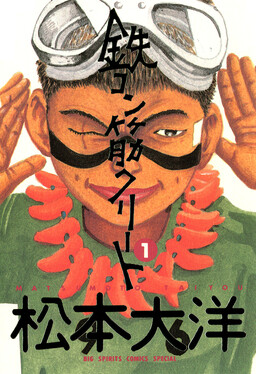
Tekkon Kinkreet
Yu's review of Tekkon Kinkreet — Black and White are two orphaned street kids who rule Treasure Town from the rooftops; when organized crime moves in to develop the city, Black and White must fight to keep what they consider theirs; a visually revolutionary manga about the psychic cost of violence and the specific love between two people who only have each other.
Action / Crime
Crying Freeman
Yu's review of Crying Freeman — Yo Hinomura is a Japanese potter brainwashed into becoming the world's greatest assassin for the Chinese crime syndicate 108 Dragons; he cannot resist the compulsion to kill, but weeps after each killing because he retains his soul; a woman who witnesses his first assassination and falls in love with him changes his life within the organization.
Action / Crime
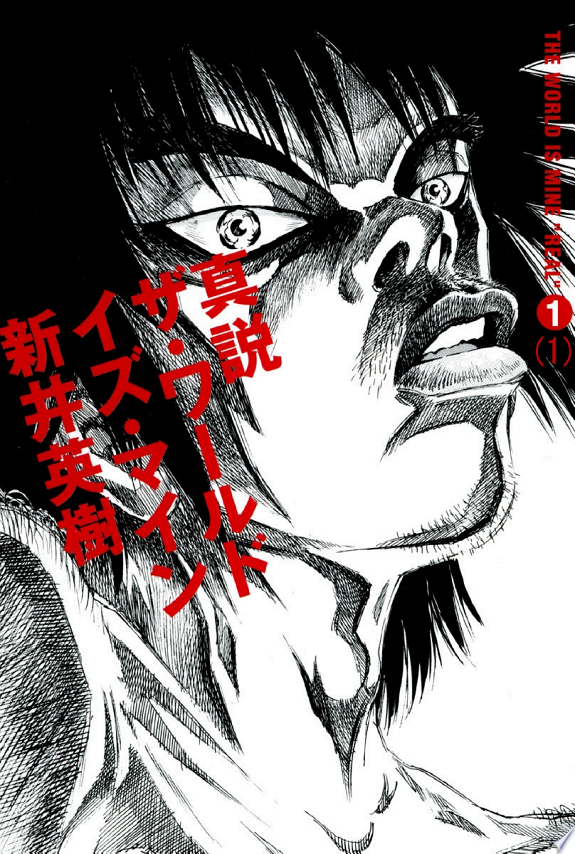
The World Is Mine
The World Is Mine follows two criminal partners — the unpredictable Mon and the calculating Toshi — on a violent crime spree across Japan, alongside a separate thread about a mysterious monster emerging in the wilderness.
Action / Historical
Lone Wolf and Cub
Yu's review of Lone Wolf and Cub — Ogami Ittō was the Shogunate's official executioner; framed for treason by the Yagyū clan, stripped of his position, his wife murdered; he chose the Meifumadō — the road to hell — placing his infant son Daigorō before a ball and a sword, and the child chose the sword; they travel as assassins for hire, seeking vengeance.
Comedy / Action
Dr. Slump
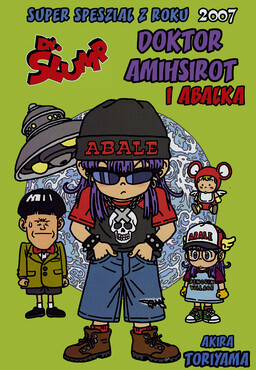
Yu's review of Dr. Slump — Senbei Norimaki is a not-very-good inventor who creates the perfect android girl, Arale, who is stronger than any human, has perfect vision but is terribly nearsighted without her glasses, and has the complete absence of self-preservation instinct that characterizes someone who cannot be hurt.

Action / Romance
Call of the Night
Yu's review of Call of the Night — Ko Yamori cannot sleep; unable to feel anything during the day, he starts sneaking out at night and discovers that he actually belongs in the night; when he meets Nazuna, a vampire who drinks blood from sleeping humans, he asks her to turn him into a vampire — but the only way to become one is to fall in love.
Written by
Yu
Manga Enthusiast from Japan
I grew up in Japan and manga literally saved me during a tough time in elementary school. My English isn't perfect, but my love for manga is real — and I want to share it with you.
Disclosure: This post contains affiliate links. As an Amazon Associate, I earn from qualifying purchases at no extra cost to you.